The Quick Answer: Is the Electric Cadillac Escalade Worth It?
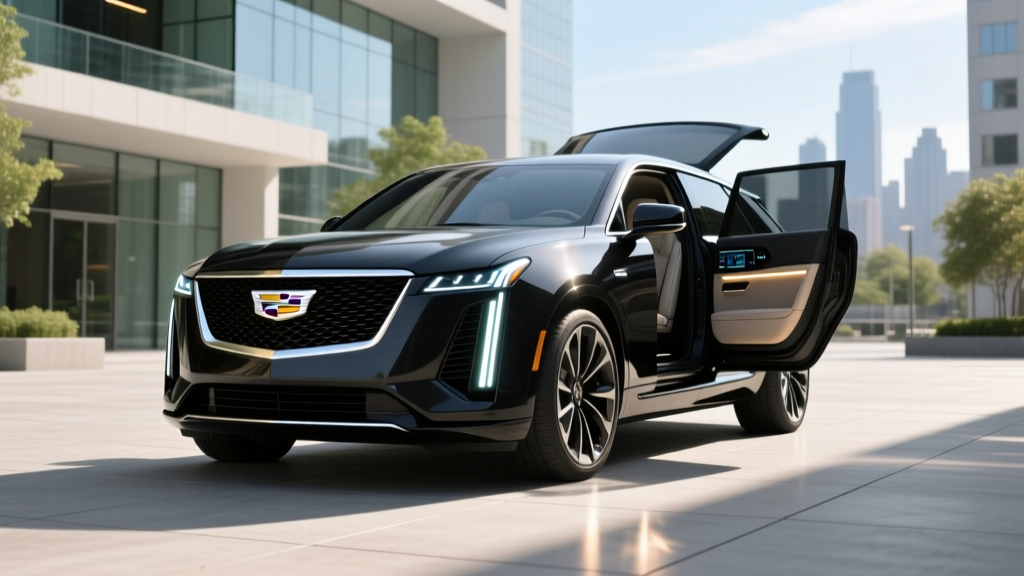
If you're researching the EV Cadillac Escalade — officially named the Cadillac Escalade IQ — here is what matters most for 2026 buyers. The Escalade IQ delivers an EPA-estimated 460 miles of range from a massive 200+ kWh Ultium battery, starts around $129,990 (Luxury 1 trim), and can add roughly 100 miles of range in 10 minutes at a 350 kW DC fast charger. Compared to the gas Escalade, you'll save an estimated $3,500–$5,000 per year in fuel and maintenance if you charge primarily at home, but you'll pay significantly more upfront and face real limitations on public charging infrastructure for a vehicle this size. The IQ does not qualify for the federal §30D tax credit due to its MSRP exceeding the $80,000 SUV cap.
2026 Escalade IQ Specs: Range, Battery, and Charging Numbers
The Escalade IQ rides on GM's BT1 electric platform (shared with the Silverado EV and Sierra EV), which gives it class-leading battery capacity and competitive charging performance. Here are the exact figures you need:
| Specification | Escalade IQ (2026) |
|---|---|
| EPA Range | ~460 miles (Luxury 1 AWD) |
| Battery Capacity | ~200+ kWh usable (Ultium, NMC chemistry) |
| Peak DC Fast Charge Rate | 200 kW (800V architecture capable) |
| 10–80% DC Fast Charge Time | ~35–40 minutes (est.) |
| Level 2 Home Charging Rate | 11.5 kW (19.2 kW capable with optional module) |
| Horsepower | 680 hp (AWD dual-motor) |
| 0–60 mph | ~4.5 seconds (est.) |
| Towing Capacity | ~8,000 lbs (est.) |
| Base MSRP (Luxury 1) | $129,990 |
| Battery/Powertrain Warranty | 8 years / 100,000 miles |
Real-World Range vs. EPA Sticker
The 460-mile EPA figure is impressive on paper, but real-world conditions compress that number. Expect approximately 370–400 miles in mixed highway driving at 70–75 mph, and potentially 300–340 miles in cold weather (below 32°F) with cabin heating active. The enormous battery helps offset cold-weather losses better than smaller packs, but physics still applies — a 200+ kWh battery has more absolute capacity to lose 15–25% of. Towing will reduce range dramatically, likely to 200–250 miles depending on trailer weight and terrain.
EV Cadillac Escalade vs. Gas Escalade: Cost and Efficiency Compared
The gas-powered 2026 Cadillac Escalade with the 6.2L V8 starts around $83,000 and returns approximately 16 MPG combined per fueleconomy.gov data for the 4WD model. That's a nearly $47,000 gap at the base trim level before options. Let's break down what ownership actually costs over five years.
| Factor | Escalade IQ (EV) | Escalade Gas (6.2L V8) |
|---|---|---|
| Starting MSRP | $129,990 | $83,000 |
| Federal Tax Credit (§30D) | $0 (exceeds $80K SUV cap) | N/A |
| Annual Fuel/Energy Cost* | ~$1,200 (home charging) | ~$4,800 (premium gas) |
| Annual Maintenance | ~$400 | ~$1,200 |
| 5-Year Fuel + Maintenance | ~$8,000 | ~$30,000 |
| 5-Year Insurance (est.) | ~$18,000 | ~$14,000 |
| EPA Efficiency | ~56 MPGe / 60 kWh/100mi | 16 MPG combined |
*Based on 15,000 miles/year, $0.14/kWh home electricity, and $4.00/gallon premium unleaded. Your costs will vary by utility rate and local fuel prices.
The IQ saves roughly $22,000 in fuel and maintenance over five years, but with a $47,000 higher purchase price and $4,000 more in insurance, the gas Escalade remains cheaper on a pure total-cost basis for most buyers over that timeframe. The IQ's value proposition is about the driving experience, technology, and operating refinement — not purely financial payback.
Charging the Escalade IQ at Home: What You Actually Need
A 200+ kWh battery is the largest in any consumer EV sold in the US, and that creates specific home-charging challenges you must plan for before taking delivery.
| Charging Level | Power (kW) | Miles Added Per Hour | Full Charge Time (0–100%) |
|---|---|---|---|
| Level 1 (120V standard outlet) | ~1.4 kW | ~3–4 miles | ~60+ hours |
| Level 2 (240V, 48A circuit) | 11.5 kW | ~30 miles | ~18 hours |
| Level 2 (240V, 80A / 19.2 kW optional) | 19.2 kW | ~50 miles | ~11 hours |
| DC Fast Charging (200 kW peak) | 200 kW | ~600+ mi/hr (peak) | 10–80% in ~35 min |
Home Charging Installation: Real Costs
| Item | Estimated Cost |
|---|---|
| Level 2 EVSE (hardwired, 48A–80A capable) | $600–$1,200 |
| Electrical panel upgrade (100A → 200A, if needed) | $1,500–$3,500 |
| Wiring & conduit run (50–100 ft typical) | $800–$2,500 |
| Permits & inspection | $150–$500 |
| Total estimated install | $1,500–$7,700 |
Because the Escalade IQ's battery is so large, a 60-amp circuit with a 48A continuous charger is the minimum practical setup. An 80A circuit supporting 19.2 kW charging is strongly recommended — it cuts overnight charge time from 18 hours to roughly 11, which matters if you drive 100+ miles daily or need a full battery after arriving home with a depleted pack. Always consult a licensed electrician for your specific panel capacity and local code requirements.
Critical reality check: If you cannot install a Level 2 charger at home — because you rent, live in an apartment, or have street parking only — owning the Escalade IQ becomes significantly more challenging. Public DC fast charging a 200+ kWh battery is expensive ($0.35–$0.50/kWh at networks like Electrify America, meaning $70–$100+ per session) and time-consuming. Home charging access is nearly mandatory for this vehicle.
Federal Tax Credit and Incentive Reality for the Escalade IQ
This is where many buyers encounter disappointment. Under current IRS §30D rules, the federal clean vehicle credit caps eligible SUVs at an MSRP of $80,000. The Escalade IQ starts at roughly $129,990 — well above that threshold. This means:
- §30D Federal Credit: $0 — MSRP exceeds the $80,000 SUV cap regardless of battery sourcing or buyer income
- State incentives: Vary by jurisdiction. Some states (e.g., California, Colorado, New York) offer additional rebates that may or may not have MSRP caps. Check your state energy office or DMV for current programs.
- Utility rebates: Many utilities offer $250–$1,500 rebates for home EVSE installation — these are not vehicle-price-dependent and you should pursue them.
- Commercial clean vehicle credit (§45W): If purchased through a qualifying business entity, different rules and caps may apply. Consult a tax professional.
The lack of a federal credit widens the price gap against the gas Escalade by up to $7,500, making the financial case for the IQ rely almost entirely on fuel/maintenance savings and the intangible value of electric drivetrain refinement.
Common Misconceptions About the Electric Escalade
| Myth | Fact |
|---|---|
| "It qualifies for the $7,500 tax credit." | It does not. The MSRP far exceeds the §30D $80,000 SUV cap. |
| "460 miles means I'll never need to charge on road trips." | Real-world highway range is ~370–400 miles. Cold weather and towing reduce it further. Plan stops on trips over 300 miles. |
| "It charges as fast as a Tesla at Superchargers." | The IQ peaks at ~200 kW. Tesla Model X peaks at 250 kW. The IQ's larger battery means 10–80% takes longer in absolute minutes despite competitive peak rates. |
| "Any home outlet will work for overnight charging." | A 120V outlet adds only ~3–4 miles per hour. With a 200+ kWh battery, a full Level 1 charge takes 60+ hours. Level 2 (240V) is essential. |
| "The battery will need expensive replacement in a few years." | GM warranties the Ultium battery for 8 years/100,000 miles against degradation below 60% capacity. NMC chemistry in a large pack with active thermal management typically retains 85–90% capacity at 100K miles based on industry data. |
| "It's self-driving with Super Cruise." | Super Cruise is an SAE Level 2 driver-assistance system. You must remain attentive and keep your hands available. It operates only on mapped divided highways. |
Who Should Buy the Escalade IQ — And Who Shouldn't
Decision Framework: Is the EV Cadillac Escalade Right for You?
Choose the Escalade IQ if:
- You have reliable Level 2 home charging (garage or driveway with a 240V circuit)
- You drive 40–150 miles per day and want to virtually eliminate fuel stops
- You value silent, vibration-free luxury and instant torque in a full-size SUV
- Your budget accommodates a $130,000+ vehicle without relying on tax credits
- You live in a region with moderate-to-warm climate, or accept 15–25% winter range loss
- You want the latest GM technology (Super Cruise, Ultium platform, 55-inch LED dash)
Stick with the gas Escalade (or wait) if:
- You cannot install a home charger — apartment living or street parking makes IQ ownership impractical
- You regularly tow heavy trailers over long distances (range drops to 200–250 miles)
- The $47,000+ price premium over the gas model doesn't make sense for your budget
- You frequently drive in remote areas with limited DC fast-charging infrastructure
- You plan to keep the vehicle 10+ years and are concerned about long-term battery replacement costs (potentially $25,000–$35,000+ out of warranty)
First-Time EV Buyer Essentials: What to Know Before You Order
If the Escalade IQ would be your first electric vehicle, these ownership realities deserve attention before you sign:
Charging curve taper is real. The 200 kW peak charge rate only applies at low states of charge (roughly 10–30% SoC). As the battery fills, charge speed throttles to protect the cells. Expect an average rate closer to 120–140 kW across a 10–80% session, which is why the full session takes 35–40 minutes rather than the ~20 minutes you'd calculate from peak rate alone.
Preconditioning matters. The Escalade IQ's navigation system can precondition the battery before you arrive at a DC fast charger, warming it to optimal temperature for faster charging. Always route through the built-in nav when heading to a fast charger — showing up with a cold battery can add 10–15 minutes to your stop.
Insurance costs more. EVs — especially high-value luxury models — carry higher insurance premiums due to repair complexity, battery replacement costs, and specialized labor. Expect quotes 20–35% above the gas Escalade equivalent. Shop multiple carriers before purchase.
Tire wear accelerates. The Escalade IQ's estimated 8,500+ lb curb weight and instant electric torque wear tires faster than the gas model. Budget for replacement tires every 25,000–35,000 miles rather than the 40,000–50,000 typical of lighter vehicles.
Public charging reliability varies. While the IQ uses the CCS connector (with NACS adapter access to Tesla Superchargers as GM expands integration), public charger uptime averages 80–90% depending on the network. For a vehicle this size, always have a backup charging plan on road trips. The NHTSA and owner forums are good resources for real-world reliability data by corridor.
Frequently Asked Questions
How long does it take to fully charge the Escalade IQ at home?
With an 11.5 kW Level 2 charger (48A), expect roughly 18 hours from empty to full. With the available 19.2 kW setup (80A), that drops to about 11 hours. In practice, most owners rarely charge from 0% — a typical overnight session from 30% to 80% takes 5–7 hours at 11.5 kW, which is sufficient for daily driving needs.
Can the Escalade IQ tow, and how does towing affect range?
GM targets approximately 8,000 lbs of towing capacity. However, towing a 5,000–7,000 lb trailer at highway speeds will reduce range to roughly 200–250 miles depending on aerodynamics, terrain, and speed. If you tow frequently over long distances, the gas Escalade remains the more practical choice today.
Does the Escalade IQ use NACS or CCS for charging?
The 2026 Escalade IQ launched with a CCS1 port. GM has been transitioning its lineup to NACS (the Tesla-standard connector), and a NACS adapter is available for Supercharger access. Confirm the exact connector for your delivery configuration with your dealer, as GM's transition timeline has shifted across model years.
What happens if the battery degrades significantly?
GM's Ultium battery warranty covers 8 years or 100,000 miles against capacity loss below 60% of original capacity. Based on data from GM's earlier Ultium vehicles and industry-wide NMC degradation curves, most owners can expect to retain 85–90% of original capacity at 100,000 miles with normal use and proper charging habits (avoiding frequent 100% charges and deep discharges). Out-of-warranty replacement, if ever needed, is estimated at $25,000–$35,000+ for a pack this size — a significant financial consideration for second owners.
Is Super Cruise on the Escalade IQ actually self-driving?
No. Super Cruise is classified as SAE Level 2 automation. It provides hands-free driving on pre-mapped divided highways, but the system monitors your attention via a driver-facing camera and requires you to remain alert and ready to take over at any time. You are legally and practically the driver at all times. For context, only dedicated robotaxi services like Waymo operate at SAE Level 4 (driverless in defined areas).
What's the real annual cost to charge the Escalade IQ at home?
At the US average residential electricity rate of ~$0.16/kWh (per EIA data) and driving 15,000 miles per year at approximately 60 kWh/100mi efficiency, annual home charging costs about $1,440. Compare that to roughly $4,800 per year in premium gasoline for the V8 Escalade at 16 MPG combined and $4.00/gallon. If your utility offers time-of-use rates with off-peak pricing around $0.08–$0.10/kWh, you could cut that to $720–$900 annually.