Quick Verdict: The Electric Escalade Arrives in Full Force
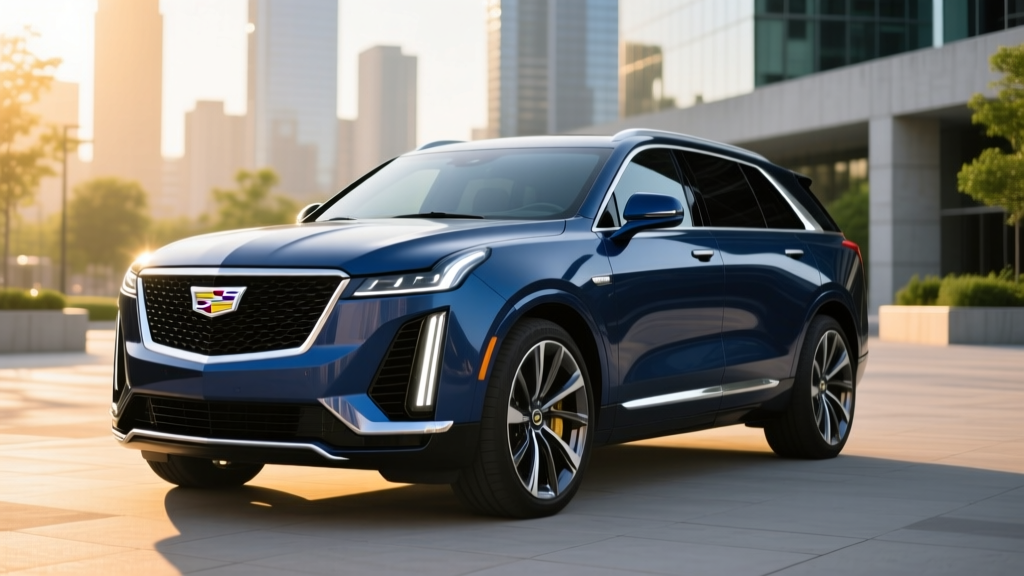
The 2026 Cadillac Escalade IQ is GM's answer to a question nobody thought Detroit would ask: what if the most opulent full-size American SUV went fully electric? Built on GM's BT1 battery-electric truck platform (shared with the Silverado EV and Sierra EV), the Escalade IQ ditches the 6.2L V-8 for a dual-motor AWD powertrain producing up to 750 horsepower, paired with a massive 200+ kWh Ultium battery pack targeting 460 miles of EPA-estimated range.
For buyers researching Cadillac Escalade IQ harga — the Indonesian/Malay term for pricing — the numbers are steep: a starting MSRP around $129,990, climbing past $150,000 in top Sport Luxury trim. But for the target demographic, the Escalade IQ isn't about value. It's about presence, technology, and the ability to haul seven passengers in whisper-quiet electric luxury.
| Spec | Value |
|---|---|
| EPA Range (est.) | ~460 miles |
| Battery Capacity | ~200 kWh usable (NMC, Ultium) |
| Max DC Fast Charge | 350 kW (800V architecture) |
| 10–80% DC Charge Time | ~25 minutes (est.) |
| Level 2 Home Charge | 19.2 kW (~52 mi/hr) |
| Powertrain | Dual-motor AWD (e4) |
| Horsepower | Up to 750 hp (Velocity trim) |
| 0–60 mph | ~4.0 seconds (Velocity, est.) |
| MPGe (est.) | ~80 MPGe combined |
| Towing Capacity | ~8,000 lbs (est.) |
| Base MSRP | ~$129,990 (Luxury) |
| Battery Warranty | 8 yr / 100,000 mi |
Range & Efficiency: 460 Miles on Paper, What About Reality?
The Escalade IQ's headline number is its EPA-estimated range of approximately 460 miles, enabled by the largest Ultium battery pack GM has deployed in a passenger vehicle — roughly 200 kWh of usable capacity using NMC (nickel manganese cobalt) chemistry. For context, that battery is nearly double the size of a Tesla Model Y Long Range pack.
Real-World Range Expectations
EPA Sticker: ~460 miles
Highway (70–80 mph, 75°F): Expect ~370–400 miles. Aerodynamic drag on a 9,000+ lb box-shaped SUV is brutal at speed.
Cold Weather (20°F, heater on): ~300–340 miles. NMC chemistry loses 20–30% in deep cold, though the heat pump mitigates some loss.
City/Suburban (moderate climate): ~430–460 miles. Regenerative braking shines in stop-and-go driving.
Efficiency is the Escalade IQ's weakest statistical suit. At an estimated ~80 MPGe combined (roughly 42–45 kWh/100 mi), it consumes electrons at a prodigious rate. That's expected for a vehicle this size, but it means home electricity costs add up. At the US average of $0.16/kWh, a full 200 kWh charge costs approximately $32 — though most owners will charge incrementally rather than from zero.
According to fueleconomy.gov, the gas Escalade AWD achieves 16 MPG combined, meaning the IQ roughly halves fuel costs on a per-mile basis despite its enormous battery.
Charging Speed: 800V Architecture and 350 kW Peak
The Escalade IQ uses GM's 800-voltage architecture, enabling DC fast-charging at up to 350 kW on compatible stations. That's among the fastest rates available on any production SUV, rivaling the Porsche Taycan and Hyundai Ioniq 5.
| Level | Power | Speed |
|---|---|---|
| Level 1 (120V household) | ~1.4 kW | ~3 miles/hour |
| Level 2 (240V home) | Up to 19.2 kW | ~52 miles/hour |
| DC Fast Charge | Up to 350 kW | ~100 miles in 10 min (peak) |
| 10–80% DC Fast Charge | — | ~25 minutes (est.) |
Charging curve reality check: The 350 kW figure is a peak, not a sustained rate. Expect the Escalade IQ to hold its maximum charge rate from roughly 10–40% State of Charge, then taper progressively. The 10–80% time of approximately 25 minutes assumes a 350 kW-capable charger (like those from Electrify America or EVgo). On a 150 kW station, plan for 40–50 minutes for the same 10–80% session.
For home charging, the 19.2 kW Level 2 onboard charger is a standout. A full overnight charge (10 hours) adds roughly 520 miles of range — more than the battery can hold, meaning a depleted pack fully replenishes in under 8 hours. Installation of a 240V/80A dedicated circuit typically costs $1,500–$3,500 depending on your electrical panel capacity, per licensed electrician estimates. Many Escalade IQ buyers will already have upgraded panels given the home sizes this demographic occupies.
The Escalade IQ ships with a NACS (North American Charging Standard) port, granting native access to Tesla's Supercharger network — over 20,000 stations in North America — without adapters. This is a major practical advantage for road-trip charging reliability.
Performance: 750 HP in a Three-Row Luxury SUV
The Escalade IQ's dual-motor e4 AWD system produces up to 750 horsepower and an estimated 785 lb-ft of torque in the Velocity performance trim. Cadillac targets a 0–60 mph time of approximately 4.0 seconds — absurd for a vehicle with the footprint of a small studio apartment.
The standard Luxury and Sport trims produce a still-impressive ~600 hp with 0–60 times in the low 5-second range. All trims feature GM's Ultium battery platform with a low center of gravity, which helps manage the vehicle's substantial weight through corners. Expect adaptive air suspension, Magnetic Ride Control 4.0, and rear-wheel steering (up to 10 degrees) to shrink the turning radius to roughly 40 feet — critical for a vehicle over 225 inches long.
Towing capacity is estimated at 8,000 pounds, adequate for most boat and camper trailers. However, towing at maximum capacity will slash range by 40–50%, bringing real-world range down to approximately 200–250 miles. Plan charging stops accordingly.
Interior, Tech & Cargo: Screens Everywhere, Space to Match
The Escalade IQ's cabin is dominated by what Cadillac calls the "Pillar-to-Pillar" display — a 55-inch diagonal LED screen spanning the entire dashboard. The driver gets a dedicated instrument cluster, while the front passenger gets a dedicated entertainment screen (with anti-glare filtering so the driver isn't distracted). Rear passengers get available 12.6-inch seatback displays.
Other standout technology:
- Super Cruise: GM's Level 2 hands-free driver assistance on 750,000+ miles of compatible highways. This is not self-driving — the driver must remain attentive, and a camera monitors eye direction. See NHTSA guidance on Level 2 systems.
- AKG Studio Reference audio: Up to 38 speakers, including headrest-mounted units.
- Executive rear seating: Available power-reclining, heated, ventilated, and massaging second-row captain's chairs with fold-out tables.
- Power-opening/closing frunk: A front trunk enabled by the absence of an engine bay, adding roughly 10+ cubic feet of lockable storage.
Cargo and passenger space:
- Seating: Up to 7 passengers (2-3-2) or 6 with second-row captain's chairs
- Second-row legroom: ~42 inches (est.)
- Third-row legroom: ~36 inches (est.)
- Cargo behind 3rd row: ~25 cu ft
- Cargo behind 2nd row: ~65 cu ft
- Max cargo (all rows folded): ~120 cu ft (est.)
Notable drawbacks: The sheer size of the Escalade IQ (expected 225+ inches long, ~82 inches wide) makes it challenging in tight urban garages. The pillar-to-pillar screen, while visually stunning, may overwhelm drivers who prefer tactile controls. And at nearly 10,000 pounds curb weight, tire wear will be accelerated — budget for premium 275/50R24 replacements every 25,000–35,000 miles.
Pricing, Trims & Federal Tax Credit Eligibility
For buyers researching Cadillac Escalade IQ harga, here is the expected 2026 pricing breakdown by trim:
| Trim | Est. MSRP | §30D Federal Credit |
|---|---|---|
| Luxury | $129,990 | Not eligible (MSRP cap exceeded) |
| Sport | $134,990 | Not eligible (MSRP cap exceeded) |
| Premium Luxury | $144,990 | Not eligible (MSRP cap exceeded) |
| Sport Luxury / Velocity | $149,990+ | Not eligible (MSRP cap exceeded) |
Federal tax credit reality: Under current IRS §30D rules, SUVs must have an MSRP at or below $80,000 to qualify for the up-to-$7,500 federal EV tax credit. Every Escalade IQ trim exceeds this cap, meaning no trim qualifies for the federal credit. Buyers should also be aware of income caps ($300,000 joint / $150,000 single filer) and battery critical-mineral sourcing requirements that further restrict eligibility. See IRS clean vehicle credit rules for current details.
Some states offer additional EV rebates or HOV lane access that may partially offset the lack of federal credit — check your state's energy office for specifics. Additionally, the commercial clean vehicle credit (§45W) may apply if the vehicle is purchased through a business entity for business use; consult a tax professional.
Warranty & Ownership Costs
GM provides the following coverage for the Escalade IQ:
- Battery & propulsion warranty: 8 years / 100,000 miles (capacity retention threshold typically 70% of original)
- Bumper-to-bumper: 4 years / 50,000 miles
- Corrosion protection: 6 years / 100,000 miles
- Roadside assistance: 6 years / 70,000 miles
Insurance premiums will be substantial. Early estimates for luxury EVs in this price bracket suggest $4,000–$7,000 annually depending on driver profile, state, and coverage levels. Maintenance costs are lower than the gas Escalade (no oil changes, no transmission fluid, fewer brake replacements thanks to regenerative braking), but tire costs are higher due to the vehicle's weight.
Depreciation is a wild card. The gas Escalade holds value exceptionally well, but full-size luxury EVs have shown steeper depreciation curves. Early adopters should budget for 40–55% depreciation over 5 years.
Pros
- Class-leading 460-mile EPA range for a full-size SUV
- 350 kW DC fast charging with NACS native access
- 750 hp Velocity trim delivers supercar-rivaling acceleration
- Pillar-to-pillar display and Super Cruise are tech flagships
- Silent, vibration-free luxury cruising experience
- Significant per-mile fuel cost savings vs. gas Escalade
- Rear-wheel steering improves maneuverability
Cons
- Starting at ~$130K, no federal tax credit eligibility
- ~9,000+ lb curb weight impacts tire wear and efficiency
- Real-world highway range drops to ~370–400 miles
- Massive footprint challenges tight garages and parking
- Towing cuts range by 40–50%
- Insurance and depreciation costs likely steep
- Touchscreen-heavy interior may lack tactile feedback
Who Should Buy the Escalade IQ?
Best for: Large families who prioritize silent, luxurious daily driving and have reliable home charging. The 460-mile range eliminates range anxiety for most commutes and weekend trips. Executives who want a statement vehicle with cutting-edge tech will find the Escalade IQ delivers presence that rivals the Mercedes EQS SUV and surpasses the Rivian R1S in sheer opulence.
Skip it if: You regularly tow heavy loads over long distances (range collapses), you lack home charging access (200 kWh at public DC chargers gets expensive fast), or you prioritize value-per-dollar. At this price point, the Rivian R1S Quad-Motor ($99,000) and Tesla Model X Plaid ($95,000) offer compelling alternatives with more agility, though neither matches the Escalade IQ's interior grandeur.
Frequently Asked Questions
What is the real-world range of the Cadillac Escalade IQ?
The EPA estimates approximately 460 miles, but real-world highway driving at 70–80 mph will yield around 370–400 miles. In cold weather (below freezing), expect 300–340 miles. City driving with regenerative braking can approach the EPA figure.
How fast does the Escalade IQ charge?
On a 350 kW DC fast charger, it peaks at 350 kW and charges from 10–80% in approximately 25 minutes. At home on a 19.2 kW Level 2 charger, it adds roughly 52 miles of range per hour, meaning a full charge takes about 8 hours overnight.
Does the Cadillac Escalade IQ qualify for the federal EV tax credit?
No. Under IRS §30D rules, SUVs must have an MSRP of $80,000 or less. Every Escalade IQ trim starts well above that threshold. State incentives may partially apply — check local programs.
Is the Escalade IQ worth buying over the gas Escalade?
If you have home charging and drive primarily in suburban/city environments, the IQ delivers lower per-mile energy costs, silent operation, and instant torque. If you tow frequently over long distances or lack reliable charging, the gas Escalade (or a diesel alternative) may be more practical. The IQ's $130K+ starting price also significantly exceeds the gas Escalade's ~$82K base.
What is the Escalade IQ's biggest competitor?
The Mercedes-Benz EQS 580 SUV ($120K+), Rivian R1S ($99K Quad-Motor), and Tesla Model X ($80K–$95K) are the closest EV competitors. The gas Escalade and Lincoln Navigator remain cross-shopping alternatives for buyers not ready to commit to electric.
Can the Escalade IQ use Tesla Superchargers?
Yes. The Escalade IQ features a native NACS charge port, providing direct access to Tesla's Supercharger network without adapters — a significant advantage for road-trip charging infrastructure.