Is the Cadillac Escalade IQ the Right Electric SUV for You?
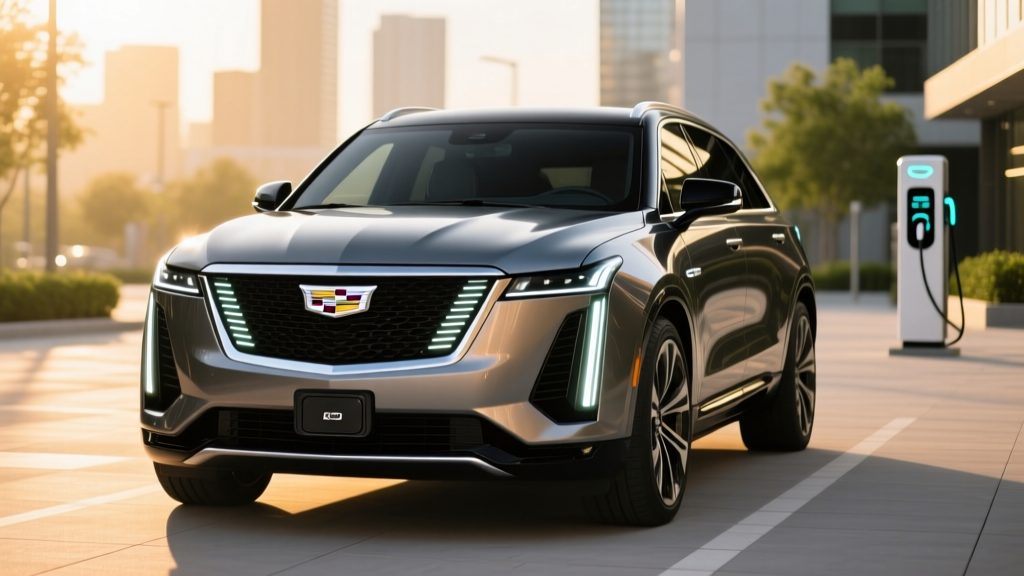
The short answer: The 2026 Cadillac Escalade IQ (Cadillac's all-electric Escalade EV) delivers an EPA-estimated 460 miles of range from a massive 200+ kWh Ultium battery, peaks at 200 kW DC fast charging (10–80% in roughly 35 minutes), and starts around $130,000. It's best suited for buyers who need three-row luxury, tow up to 7,500 lbs, and have reliable home Level 2 charging. Compared to the gas Escalade, the IQ saves roughly $2,500–$3,500 per year in fuel and maintenance for a typical driver — but only if you can charge at home. If you rely exclusively on public DC fast charging or live in an apartment without charging access, the cost advantage narrows significantly.
The Cadillac Escalade IQ rides on GM's BT1 electric platform (shared with the Silverado EV and Sierra EV) and represents the first fully electric version of GM's flagship luxury SUV. With dual-motor AWD, up to 750 horsepower in Velocity mode, and a cabin that rivals anything from Mercedes or BMW, it's a serious contender — but at this price point, the math matters. Let's break down every number you need.
2026 Cadillac Escalade IQ: Core Specifications
| Specification | 2026 Escalade IQ Luxury | 2026 Escalade IQ Sport |
|---|---|---|
| Base MSRP | ~$129,990 | ~$130,990 |
| EPA Range | 460 miles | 460 miles |
| Battery Capacity (usable) | ~200 kWh (NMC, Ultium) | ~200 kWh (NMC, Ultium) |
| Drivetrain | Dual-motor AWD (e4) | Dual-motor AWD (e4) |
| Horsepower | 680 hp (750 hp Velocity) | 680 hp (750 hp Velocity) |
| 0–60 mph | ~3.4 sec (Velocity mode) | ~3.4 sec (Velocity mode) |
| Max DC Fast Charge | 200 kW (800V architecture) | 200 kW (800V architecture) |
| 10–80% DC Charge Time | ~35 minutes | ~35 minutes |
| Level 2 Charging (AC) | 19.2 kW (est. ~35 mi/hr) | 19.2 kW (est. ~35 mi/hr) |
| MPGe (combined) | ~83 MPGe (est.) | ~83 MPGe (est.) |
| Towing Capacity | 7,500 lbs | 7,500 lbs |
| Battery/Powertrain Warranty | 8 yr / 100,000 mi | 8 yr / 100,000 mi |
Note: Pricing and specifications reflect Cadillac's announced figures for the 2025–2026 model year. Final EPA certification numbers may vary slightly. Always verify at fueleconomy.gov before purchasing.
Real-World Range Reality: The 460-mile EPA estimate is impressive on paper — and this is one of the longest-range EVs on the market. However, in real-world highway driving at 70–80 mph, expect roughly 370–400 miles. In cold weather (below 32°F), range can drop 15–25%, putting you closer to 345–390 miles. If you're towing a 5,000-lb trailer, plan for 220–280 miles between charges. The 200+ kWh battery is enormous, but physics still applies: the Escalade IQ is a 9,000+ lb vehicle pushing a brick wall of air.
Charging the Escalade IQ: Home, Public, and What You'll Actually Spend
The Escalade IQ uses GM's 800-volt Ultium architecture, which enables 200 kW peak DC fast charging via the NACS (Tesla-style) connector — Cadillac has transitioned to NACS for the 2025+ model years, giving you native access to the Tesla Supercharger network without an adapter.
| Charging Level | Power (kW) | Miles Added per Hour | Full Charge Time (0–100%) | Typical Cost |
|---|---|---|---|---|
| Level 1 (120V household) | ~1.4 kW | ~3 mi/hr | ~60+ hours | $0.13–$0.18/kWh (home) |
| Level 2 (240V home charger) | 11.5–19.2 kW | 25–40 mi/hr | 10–18 hours | $0.10–$0.18/kWh (home) |
| DC Fast Charge (public) | 50–200 kW (peak) | 150–350 mi/hr (at peak) | 10–80% in ~35 min | $0.30–$0.55/kWh |
Critical kW vs. kWh distinction: The battery stores ~200 kWh (kilowatt-hours) of energy. A 200 kW (kilowatt) DC fast charger delivers power at that rate — but only at peak. The Escalade IQ's charge curve tapers significantly above 80% State of Charge (SoC) to protect the NMC cells. Don't expect a linear 200 kW for the full session. Real-world 10–80% sessions average closer to 130–150 kW sustained.
Home Charging Setup: What You'll Need
With a 200+ kWh battery, Level 1 (120V) charging is essentially useless — it would take days to fill the pack. A Level 2 home charger is mandatory for practical ownership.
| Item | Estimated Cost |
|---|---|
| Level 2 Charger (48A, hardwired, e.g., ChargePoint Home Flex or Tesla Wall Connector) | $500–$800 |
| Electrician labor (240V/60A circuit run, ~30 ft) | $800–$2,500 |
| Permit & inspection | $100–$300 |
| Electrical panel upgrade (if needed: 100A → 200A) | $1,500–$3,500 |
| Total (no panel upgrade) | $1,400–$3,600 |
| Total (with panel upgrade) | $2,900–$7,100 |
Pro tip: The Escalade IQ's large battery means you'll want a 48-amp or higher hardwired charger to maximize overnight charging speed. A 48A charger on a 240V circuit delivers ~11.5 kW, adding roughly 25 miles per hour — enough to replenish ~250 miles overnight (10 hours). For the full 19.2 kW capability, you'll need a 80A circuit, which requires heavier-gauge wiring and a 100A breaker. Consult a licensed electrician for your specific setup.
Escalade IQ vs. Gas Escalade: Real Cost of Ownership
This is the calculation that matters most. The gas-powered 2026 Escalade starts around $83,000 and gets roughly 16 MPG combined (per EPA data). The IQ starts ~$47,000 higher but eliminates fuel costs and reduces maintenance. Here's a 5-year comparison assuming 15,000 miles/year:
| Cost Category (5 Years / 75,000 mi) | Gas Escalade (4WD, 6.2L V8) | Escalade IQ (AWD, Electric) |
|---|---|---|
| Purchase Price (base MSRP) | $83,000 | $129,990 |
| Fuel / Electricity | $18,750 (16 MPG, $4.00/gal) | $5,625 (home L2, $0.15/kWh, ~2.5 kWh/mi) |
| Maintenance (oil, filters, brakes, transmission) | $5,500 | $1,800 (cabin filter, tires, wiper fluid) |
| Insurance (est. avg) | $12,500 | $15,000 (EVs typically 15–20% more) |
| Federal Tax Credit (§30D) | $0 | Up to $7,500 (see eligibility below) |
| 5-Year Total Cost | $119,750 | $144,915 |
| Cost Per Mile | $0.25/mi (fuel + maint) | $0.10/mi (energy + maint) |
The verdict: Over 5 years, the gas Escalade still costs less in total ownership because of the $47,000 purchase-price gap. The IQ saves roughly $2,500–$3,500/year in fuel and maintenance, but it takes 13–19 years to break even on the price premium through operating savings alone. You're buying the IQ for the driving experience, instant torque, silence, and tech — not for a short-term financial payback. If you keep the vehicle 10+ years, the gap narrows, especially if gas prices rise.
Federal Tax Credit: Does the Escalade IQ Qualify for $7,500?
This is where things get complicated. Under current IRS §30D rules, the federal EV tax credit offers up to $7,500 — but eligibility depends on multiple factors:
- MSRP Cap: SUVs must have an MSRP at or below $80,000. The Escalade IQ starts at ~$130,000 — it exceeds the cap and does NOT qualify for the new-vehicle §30D credit.
- Buyer Income Limits: Even if it qualified, AGI caps apply ($300k joint / $225k HOH / $150k single).
- Battery Sourcing: Critical minerals and battery components must meet phased-in domestic-content thresholds.
- Point-of-Sale Transfer: Eligible credits can be applied at the dealership as an instant discount.
Bottom line: At ~$130,000, the Escalade IQ is above the $80,000 SUV MSRP cap. Buyers should not count on the $7,500 federal credit. Always verify current rules at IRS.gov and consult a tax professional. Some states offer separate EV rebates that have different price caps — check your local DMV or energy office.
Common Misconceptions About the Escalade IQ
| Myth | Fact |
|---|---|
| "The battery will need replacing in 5 years." | GM's Ultium NMC batteries carry an 8-year/100,000-mile warranty guaranteeing at least 70% capacity retention. Industry data shows modern NMC packs losing 10–15% capacity over 150,000+ miles. Replacement cost, if ever needed, is estimated at $20,000–$30,000+ for a pack this size. |
| "It charges as fast as a Tesla." | At 200 kW peak, it's competitive — but Tesla's V4 Superchargers can deliver 250+ kW, and lighter vehicles like the Model X (smaller battery) charge 10–80% in ~25 minutes vs. the IQ's ~35 minutes. Physics favors lighter vehicles with smaller packs. |
| "I can road-trip anywhere without planning." | With 460 miles EPA, the IQ has extraordinary range. But towing cuts that nearly in half, and rural charging infrastructure remains sparse in parts of the Mountain West and Great Plains. Preconditioning the battery before DC fast stops is essential for hitting peak charge rates. |
| "It's self-driving with Super Cruise." | GM's Super Cruise is an SAE Level 2 driver-assistance system. It handles steering, acceleration, and braking on mapped highways — but you must remain attentive and keep your eyes on the road. It is NOT autonomous driving. |
| "Electricity is always cheaper than gas." | At home on Level 2 (~$0.15/kWh), yes — dramatically. At public DC fast chargers ($0.40–$0.55/kWh), the Escalade IQ's ~2.5 kWh/mile consumption means you're paying $0.10–$0.14 per mile, which approaches the cost of gas in a 20-MPG SUV at $3.50/gallon. Home charging is where the savings live. |
SAE Automation Level Reminder: The Escalade IQ's Super Cruise and available Ultra Cruise are classified as SAE Level 2 — partial automation. The driver must supervise at all times and be ready to take over instantly. Only robotaxi services like Waymo operate at Level 4 (no driver needed, geofenced areas). Do not treat any Level 2 system as "self-driving."
Real-World Ownership: What First-Time EV Buyers Must Know
Buying a $130,000 electric SUV is not the same as buying its gas counterpart. Here's what changes in your daily life:
Home charging is non-negotiable at this price. If you can't install a Level 2 charger at home (apartment living, HOA restrictions, no dedicated parking), you'll rely on public DC fast charging. At $0.40–$0.55/kWh, filling the IQ's 200+ kWh battery costs $80–$110 per session — and sessions take 35+ minutes. That erodes the cost advantage and adds inconvenience.
Cold weather matters — a lot. If you live in the upper Midwest, Northeast, or Mountain states, expect 15–25% range loss in sub-freezing temperatures. The IQ's heat pump helps, but a massive battery in a heavy vehicle still loses energy to cabin heating and battery warming. A 460-mile range becomes ~345–390 miles in January in Minneapolis.
Tire costs are higher. The IQ's weight (9,000+ lbs) and instant torque wear tires faster than a gas Escalade. Budget $1,500–$2,500 for a set of replacement EV-rated tires every 30,000–40,000 miles.
Insurance premiums run 15–20% higher. EVs cost more to repair (specialized body shops, battery safety protocols, high-voltage training for technicians). Get a quote before signing the purchase agreement.
Preconditioning is your fast-charging secret weapon. Navigate to a DC fast charger using the IQ's built-in navigation, and the battery management system will warm or cool the pack to optimal temperature before you arrive. Skipping this step can cut your peak charge rate by 30–50%, adding 10–15 minutes to your stop.
Decision Framework: Should You Buy the Escalade IQ?
Choose the Cadillac Escalade IQ if:
- You have home Level 2 charging (or can install it)
- You want 400+ miles of real-world range without range anxiety
- You value instant torque, silent acceleration, and one-pedal driving
- You drive in a region with robust Supercharger or Electrify America coverage
- You plan to keep the vehicle 7+ years (to spread the premium over time)
- You want the latest in GM's Super Cruise / Ultra Cruise hands-free driving tech
Stick with the gas Escalade (or wait) if:
- You cannot install home charging and would rely solely on public DC fast charging
- You regularly tow heavy loads over 300+ miles in a single day (towing halves range)
- You live in an extreme cold-weather climate and need maximum winter range certainty
- The $47,000+ price premium over the gas model doesn't fit your budget calculus
- You want federal tax credit eligibility (the IQ exceeds the $80,000 SUV MSRP cap)
Consider a competitor if:
- You want a more affordable electric luxury SUV: the BMW iX, Mercedes EQS SUV, or Tesla Model X start $40,000–$60,000 lower (though none match the IQ's size or range)
- You need a smaller footprint for city driving — the IQ is over 18 feet long
Frequently Asked Questions
What is the real-world range of the Cadillac Escalade IQ?
The EPA rates the Escalade IQ at 460 miles. In mixed real-world driving (highway + city, moderate temps), expect 370–420 miles. Cold weather and towing reduce this significantly — plan for 220–280 miles when towing a 5,000-lb trailer, and 345–390 miles in sub-freezing temperatures.
How long does it take to charge the Escalade IQ at home?
On a 48-amp Level 2 home charger (11.5 kW), a full charge from near-empty takes roughly 17–18 hours. Most owners charge overnight and never deplete below 20%, so a typical overnight session (8–10 hours) adds 200–250 miles — more than enough for daily use.
Does the Escalade IQ use NACS or CCS?
The 2025–2026 Escalade IQ uses the NACS (North American Charging Standard) connector, the same as Tesla. This gives native access to the Tesla Supercharger network. CCS adapters are available if you need to use legacy CCS stations.
Is the Escalade IQ eligible for the $7,500 federal EV tax credit?
No. Under current IRS §30D rules, SUVs must have an MSRP at or below $80,000. The Escalade IQ starts at approximately $129,990, which exceeds the cap. State-level incentives may still apply — check your local energy office. Always verify at IRS.gov.
How does the Escalade IQ compare to the Tesla Model X?
The IQ is significantly larger (three full rows vs. the Model X's cramped third row), offers more cargo space, and has a longer EPA range (460 vs. ~348 miles for the Model X Long Range). The Model X starts roughly $50,000 lower, charges faster on the Supercharger network (250 kW peak), and offers Ludicrous-mode performance. The IQ wins on luxury, space, and range; the Model X wins on price and charging speed.
What happens if the battery degrades?
GM warranties the Ultium battery for 8 years or 100,000 miles against dropping below 70% of original capacity. Industry data on large NMC packs suggests 10–15% degradation over 150,000 miles is typical. If the battery ever needs replacement out of warranty, expect $20,000–$30,000+ given the pack's ~200 kWh size. However, most EV batteries outlast the vehicle's useful life.
Can I tow with the Escalade IQ?
Yes — it's rated for up to 7,500 lbs, matching the gas Escalade. However, towing a 5,000+ lb trailer will reduce range by roughly 40–50%. Plan charging stops accordingly and use the IQ's navigation-based preconditioning to optimize DC fast charging on the route.