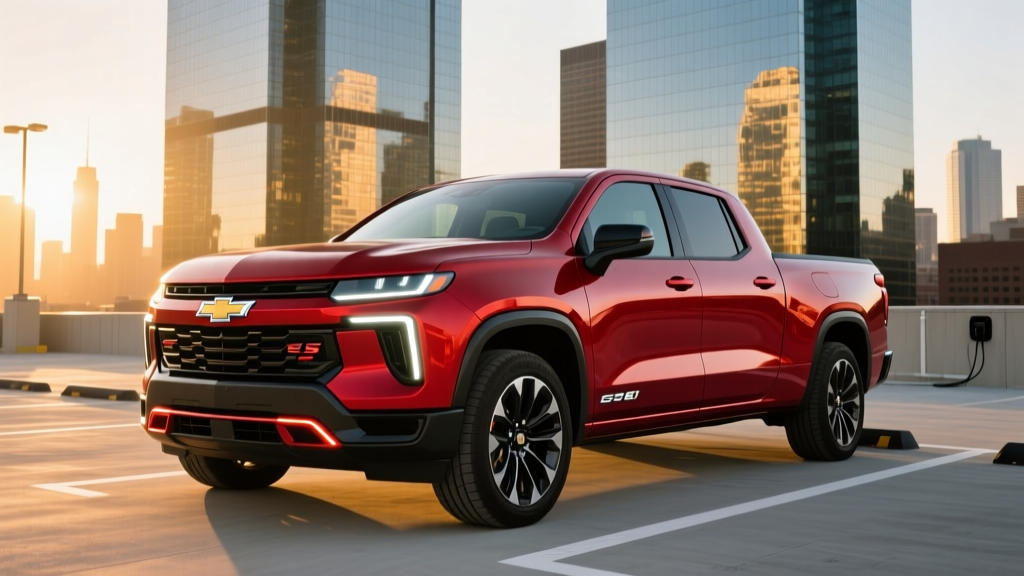
Quick Answer: The 2026 Chevrolet Silverado EV SS is a high-performance electric pickup offering up to 440 miles of EPA-estimated range, 754 horsepower, and peak DC fast charging at 350 kW (10–80% in roughly 20 minutes). Starting around $87,300 before incentives, it targets buyers who want muscle-truck acceleration with daily-driver efficiency — but its premium price, 234-foot length, and cold-weather range loss mean it isn't the right truck for every garage.
If you've been searching for an electric SS badge that actually means something in the truck world, the Silverado EV SS is Chevrolet's answer. It slots at the top of the Silverado EV lineup as the performance-oriented variant, borrowing engineering from GM's Ultium platform and wrapping it in a full-size crew-cab body. But does a 9,000-pound electric pickup with a sport-truck badge make financial and practical sense compared to a gas V8 Silverado or a hybrid alternative? This guide breaks down every number that matters.
Silverado EV SS Specs: Range, Battery, and Charging at a Glance
| Spec | 2026 Silverado EV SS (4SS) |
|---|---|
| EPA Range | ~440 miles (est., Max Range pack) |
| Battery (usable) | ~200+ kWh, NMC (Ultium, double-stacked) |
| Peak DC Fast Charge | 350 kW (10–80% ~20 min) |
| Level 2 Charging | 19.2 kW onboard (~40 mi/hr) |
| Horsepower | 754 hp (Wide Open Watts mode) |
| 0–60 mph | ~4.5 seconds |
| Towing Capacity | 10,000 lbs (max, properly equipped) |
| Payload | ~1,300 lbs |
| Base MSRP | ~$87,300 (4SS trim) |
| Battery/Powertrain Warranty | 8 years / 100,000 miles |
Real-World Range Reality: The 440-mile EPA figure assumes moderate temperatures and mixed driving. On a 75-mph highway run in summer, expect closer to 350–380 miles. In freezing weather (below 30°F), lithium-ion chemistry and cabin heating can reduce range by 20–30%, bringing real-world figures to roughly 300–350 miles. For towing a 7,000-lb trailer at highway speed, plan on 180–230 miles before needing a charge stop. These are physics, not flaws — every EV behaves similarly under load and cold.
Charging the Silverado EV SS: Home, Public, and the 350 kW Promise
The Silverado EV SS supports up to 350 kW peak DC fast charging on 800-volt architecture. That headline number is impressive, but real charging sessions follow a curve: the truck will peak near 350 kW only between roughly 10–30% state of charge, then taper progressively. A 10–80% session takes approximately 20 minutes at a capable 350 kW station (like newer Electrify America or EVgo stalls). On a 150 kW charger, the same session stretches to roughly 35–40 minutes.
| Level | Power | Miles Added per Hour | Typical Use Case |
|---|---|---|---|
| Level 1 (120V) | ~1.4 kW | ~3–4 mi/hr | Emergency / trickle top-off |
| Level 2 (240V, 48A) | 11.5 kW | ~28 mi/hr | Standard home overnight |
| Level 2 (240V, 80A) | 19.2 kW | ~40 mi/hr | Home/work fast top-off (full onboard) |
| DC Fast (150 kW) | 150 kW | ~300+ mi/hr (peak) | Road-trip mid-charge |
| DC Fast (350 kW) | 350 kW | ~600+ mi/hr (peak) | Fastest public stops, 10–80% ~20 min |
Home charging note: To unlock the Silverado EV SS's 19.2 kW onboard charger, you need a hardwired Level 2 station on a 100-amp circuit. Many homes with 200-amp service panels will require a panel upgrade — budget $1,500–$3,500 for electrician labor, permit, and hardware. If your panel is maxed out, a load-management device or a lower-amperage charger (48A on a 60A breaker) is a practical alternative. Always consult a licensed electrician for final specs.
Silverado EV SS vs. Gas Silverado vs. Hybrid: What the Numbers Say
The most common question from truck shoppers: how does the electric SS stack up against the gas V8 Silverado and the Silverado hybrid? Here's a data-driven comparison based on 2025–2026 model-year figures from fueleconomy.gov and manufacturer specs.
| Metric | Silverado EV SS (4SS) | Silverado 1500 6.2L V8 (gas) | Silverado 1500 Hybrid (3.0L Duramax) |
|---|---|---|---|
| MSRP (comparable trim) | ~$87,300 | ~$58,000 (LTZ) | ~$62,000 (LTZ) |
| EPA Combined Efficiency | ~67 MPGe | 17 MPG | 24 MPG |
| Energy Cost per 15,000 mi/yr | ~$900–$1,200 (electricity) | ~$2,800–$3,200 (gas) | ~$2,000–$2,400 (diesel) |
| 0–60 mph | ~4.5 sec | ~6.1 sec | ~6.8 sec |
| Max Towing | 10,000 lbs | 13,300 lbs | 9,300 lbs |
| Annual Maintenance (est.) | ~$300–$500 | ~$800–$1,200 | ~$700–$1,000 |
| Federal Tax Credit (§30D) | Up to $7,500 (eligibility varies) | None | None |
The gas Silverado wins on upfront price and max towing. The EV SS wins decisively on acceleration, per-mile fuel cost, and maintenance. The hybrid sits in between — better fuel economy than gas, lower sticker than the EV, but none of the performance or tax-credit upside.
Real Costs of Owning the Silverado EV SS: A 5-Year Breakdown
Purchase price is only the starting line. Here's a realistic 5-year / 75,000-mile ownership projection comparing the EV SS to a gas V8 Silverado. Assumes national-average electricity ($0.16/kWh) and gas ($3.50/gal) prices as of early 2026.
| Cost Category (5 years) | Silverado EV SS | Silverado 1500 V8 Gas | |
|---|---|---|---|
| Purchase Price (MSRP) | $87,300 | $58,000 | |
| Federal Tax Credit (§30D) | –$7,500 (if eligible) | $0 | |
| Home Charger Install | $2,000 | $0 | |
| Fuel / Electricity (75k mi) | $5,200 | $15,000 | |
| Maintenance (5 yr) | $2,000 | $5,000 | |
| Insurance (5 yr est.) | $12,500 | $9,000 | |
| Estimated Depreciation | $35,000 | $25,000 | |
| Net 5-Year Cost | ~$101,500 | ~$112,000 |
Key takeaway: Despite the higher sticker and insurance premiums (EVs typically cost 15–25% more to insure due to battery replacement risk), the Silverado EV SS can break even or come out ahead over five years thanks to fuel and maintenance savings — especially if you qualify for the full §30D federal tax credit.
§30D Tax Credit Eligibility Checklist (2026 rules):
- Vehicle MSRP must not exceed $80,000 for trucks/pickups (the 4SS may exceed this cap — verify with dealer)
- Buyer AGI limits: $300k joint / $225k head of household / $150k single
- Battery components and critical minerals must meet escalating domestic-sourcing thresholds
- Credit can be transferred to the dealer at point of sale for an instant price reduction
- Confirm eligibility at fueleconomy.gov and with your tax professional
Common Misconceptions About the Electric SS — and the Facts
| Myth | Fact |
|---|---|
| "The battery will need replacing in 5 years." | GM warranties the Ultium battery for 8 years/100,000 miles with a capacity-retention threshold (typically 70%). Real-world data from earlier Ultium vehicles shows ~5–8% degradation over 100k miles with proper charging habits. |
| "You can't tow with an electric truck." | The Silverado EV SS is rated for 10,000 lbs. Range drops significantly while towing (expect ~200 miles), but the torque (785 lb-ft) and stability are genuinely impressive. Plan charge stops accordingly. |
| "Charging takes hours on road trips." | At a 350 kW DC fast charger, 10–80% takes roughly 20 minutes. A typical road-trip stop (adding 200 miles) takes 12–15 minutes — comparable to a gas fill-up plus a restroom break. |
| "EVs don't work in cold climates." | The Silverado EV SS includes a heat pump and battery preconditioning. Range loss in sub-freezing weather is real (~20–30%), but preconditioning while plugged in and using seat/steering-wheel heaters mitigate the impact significantly. |
| "I need to install solar panels to charge it." | Average US electricity costs make home charging roughly $0.04–$0.06 per mile — already cheaper than gas without solar. Solar can further reduce costs but is not required. |
Who Should Buy the Silverado EV SS — and Who Shouldn't
Choose the Silverado EV SS if:
- You have reliable home charging (garage or driveway with 240V access)
- Your daily commute is under 100 miles round-trip, with occasional 300+ mile road trips
- You want sports-sedan acceleration in a full-size truck body
- You're eligible for the §30D tax credit or your state offers EV rebates
- You value low per-mile operating costs and minimal scheduled maintenance
Look elsewhere if:
- You regularly tow over 8,000 lbs for long distances (the gas Silverado 6.2L offers 13,300 lbs and no range penalty under load)
- You live in an apartment or lack home/workplace charging access
- Your budget tops out around $60,000 (consider the Silverado EV WT or a hybrid instead)
- You frequently drive in extreme cold with long highway stretches between chargers
- You need the deepest bed and highest payload for commercial work (EV battery weight reduces payload to ~1,300 lbs)
First-Time EV Buyer? What You Need to Know Before Signing
If the Silverado EV SS is your first electric vehicle, here's the practical checklist no brochure will give you:
- Get a home electrical assessment first. Before putting down a deposit, have an electrician evaluate your panel. A 200-amp panel with spare capacity can typically support a 48A Level 2 charger. If you're maxed out, a panel upgrade adds $1,500–$3,500.
- Download the charging apps now. Electrify America, EVgo, ChargePoint, and Tesla Supercharger (with NACS adapter or if equipped) are your road-trip lifelines. Check coverage along your most common routes before buying.
- Learn the charge curve. Peak kW is not sustained kW. Charging from 80–100% takes nearly as long as 10–80%. On road trips, plan to charge to 80% and go — it's faster overall.
- Precondition the battery. When you set a DC fast-charger as your navigation destination, the Silverado EV SS warms the battery to optimal temperature, unlocking faster charge speeds. This matters enormously in cold weather.
- Don't obsess over 100% charges. For daily driving, set your charge limit to 80–90% (NMC chemistry prefers it). Save 100% for road-trip mornings.
- Insurance will be higher. Get a quote before purchasing. EV insurance premiums run 15–25% above comparable gas trucks due to battery repair costs. Shop multiple carriers — some now offer dedicated EV policies.
Silverado EV SS: Frequently Asked Questions
Does the Silverado EV SS qualify for the $7,500 federal tax credit?
It depends. The §30D credit for trucks requires an MSRP at or below $80,000. The 4SS trim starts around $87,300, which may exceed the cap. However, lower trims in the Silverado EV lineup (like the LT) may qualify. Always verify current eligibility at fueleconomy.gov and consult a tax professional, as battery-sourcing rules and income limits also apply.
How long does it take to charge the Silverado EV SS at home?
From near-empty to full on a 19.2 kW Level 2 home charger, expect roughly 11–13 hours for the large Ultium pack. In practice, most owners plug in nightly and add 100–150 miles of range in 3–4 hours, which covers daily driving easily.
Can the Silverado EV SS power my home during an outage?
GM has announced vehicle-to-home (V2H) capability for Ultium-based trucks, but it requires a compatible bidirectional charger (like the Powerup home energy system) and proper transfer-switch installation. Availability and compatible hardware were still rolling out as of early 2026 — confirm with your dealer.
What's the real-world range when towing a boat or camper?
With a 7,000–8,000 lb trailer at highway speeds, expect range to drop to approximately 180–230 miles depending on aerodynamics, terrain, and temperature. This is the biggest practical limitation of any electric truck today. For frequent heavy towing over long distances, a diesel or gas truck remains more practical.
How does the Silverado EV SS compare to the Ford F-150 Lightning or Rivian R1T?
The F-150 Lightning (Platinum, ~$96,000, 320-mile range, 580 hp) offers lower towing capacity and range but a more established dealer network. The Rivian R1T (Tri Motor, ~$99,000, 420-mile range, 850 hp) is quicker and more off-road capable but smaller and pricier. The Silverado EV SS sits between them on price with the longest range of the three and competitive power.
Is the Ultium battery reliable long-term?
GM's NMC-based Ultium platform includes active thermal management and a robust 8-year/100,000-mile warranty. Early fleet data and GM's internal testing suggest less than 10% capacity loss over 150,000 miles under normal use. Replacement cost, if ever needed out of warranty, is estimated at $15,000–$25,000 for a pack this size — a figure that is expected to decline as battery manufacturing scales.