Quick Verdict: The Electric Flagship Arrives
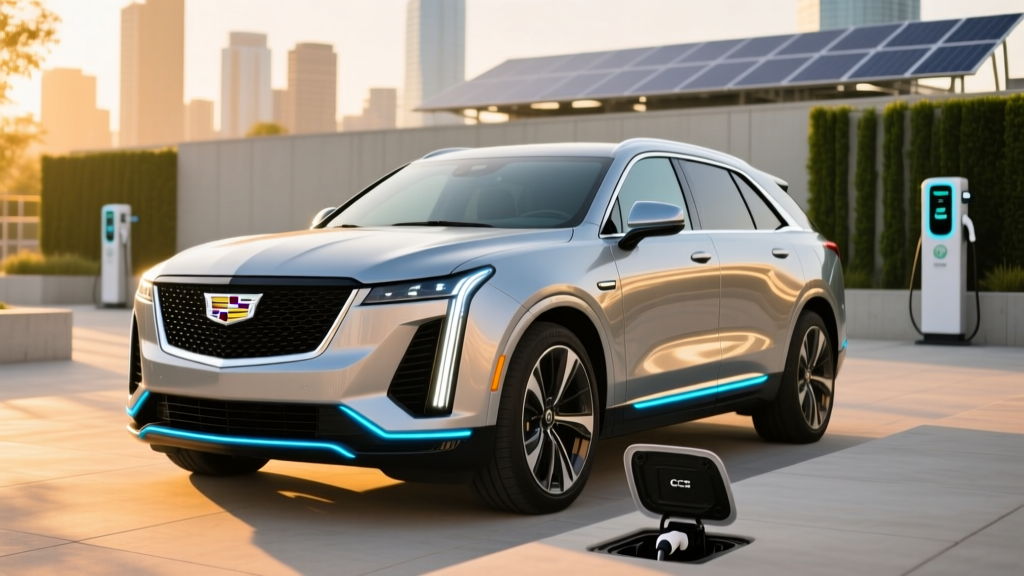
The 2025 Cadillac Escalade IQ is the brand's first all-electric full-size luxury SUV, built on GM's Ultium platform and aimed squarely at buyers who want three-row space, flagship technology, and silent propulsion without sacrificing presence. With an EPA-estimated 460 miles of range, a massive 200+ kWh battery, and a starting price near $130,000, the Escalade IQ is less a mass-market EV and more a rolling statement of what electric luxury means at the top of the market.
We've spent time with the specs, cross-referenced GM's official data, and compared it against the Rivian R1S, Tesla Model X, and Mercedes EQS SUV to give you the numbers that actually matter for ownership. Here's the full breakdown.
Range, Battery, and Real-World Expectations
Real-World Expectation: Expect 370–400 miles on mixed highway driving at 70-75 mph. In cold weather (below 32°F), plan for 290–340 miles depending on cabin heating demands and terrain. City driving with regenerative braking may approach or slightly exceed the EPA figure.
The Escalade IQ uses an Ultium battery pack with an estimated 200+ kWh usable capacity — one of the largest battery packs ever fitted to a production passenger vehicle. GM has confirmed the pack uses NMC (nickel manganese cobalt) chemistry, which prioritizes energy density over the cycle-life advantages of LFP. That trade-off makes sense here: a vehicle this heavy (estimated 8,000+ lbs curb weight) needs every kilowatt-hour it can carry.
The 460-mile EPA figure is impressive on paper, but physics still applies. At highway speeds, aerodynamic drag on a vehicle with this frontal area consumes energy rapidly. Cold weather compounds the loss — NMC chemistry is more susceptible to low-temperature range reduction than LFP, and the thermal management system will divert energy to keep the pack in its optimal temperature window. Cadillac equips the IQ with a heat pump, which helps, but buyers in northern climates should budget for 25-35% range loss in winter conditions.
| Specification | Value |
|---|---|
| EPA Range (est.) | 460 miles |
| Battery Capacity (usable) | ~200+ kWh (NMC) |
| Max DC Fast Charge | 200 kW (est.) |
| 10–80% DC Charge Time | ~45 minutes (est.) |
| Level 2 Home Charge Rate | 11.5 kW (est. ~25 mi/hr) |
| Horsepower (AWD) | ~750 hp |
| 0–60 mph | Under 5.0 seconds (est.) |
| Drivetrain | Dual-motor AWD (eAWD) |
| Efficiency (est.) | ~43 kWh/100 mi (~79 MPGe) |
| Base MSRP | $129,990 (incl. destination) |
| Battery/Powertrain Warranty | 8 years / 100,000 miles |
| Seating | Up to 7 passengers |
Charging Speed: DC Fast and Home Level 2
Charging a 200+ kWh battery is fundamentally different from charging a 75–100 kWh pack. Even at 200 kW peak DC fast-charging, filling the Escalade IQ from 10% to 80% takes an estimated 45 minutes — considerably longer than smaller-pack EVs that accomplish the same in 18–25 minutes. This is simple math: more kWh to push through the same power ceiling means more time at the charger.
The charge curve on a pack this large will likely sustain peak rates longer in the mid-SoC window, but expect tapering above 80% as the battery management system protects cell health. On a road trip, plan charging stops around the 300-mile mark for comfort, giving you a buffer for detours, elevation changes, or charger outages.
| Charging Level | Power | Estimated Speed | Use Case |
|---|---|---|---|
| Level 1 (120V) | ~1.4 kW | ~3 mi/hr | Emergency top-up only |
| Level 2 (240V, 48A) | 11.5 kW | ~25 mi/hr | Overnight home charging — full charge in ~18 hrs |
| DC Fast Charge | Up to 200 kW | ~150 mi in 30 min (est.) | Road trips; 10–80% in ~45 min |
For home charging, a Level 2 wallbox at 11.5 kW adds roughly 25 miles of range per hour. A full 0–100% charge at home will take approximately 18 hours — meaning you'll want to plug in nightly if you drive 100+ miles daily. Most owners will arrive home at 50–60% SoC and wake up fully charged, which is the practical workflow. We strongly recommend a hardwired 60-amp Level 2 charger (such as the ChargePoint Home Flex or Emporia V2) installed by a licensed electrician on a dedicated 240V/50A circuit. Panel upgrades may be necessary for older homes.
The Escalade IQ uses the NACS (North American Charging Standard) connector, giving it native access to the Tesla Supercharger network via the NACS-to-CCS adapters available across GM's EV lineup, plus the growing number of NACS-native stations from Electrify America and others.
Performance and Drivetrain
The Escalade IQ is expected to feature a dual-motor all-wheel-drive (eAWD) configuration producing an estimated 750 horsepower. For a vehicle likely weighing over 8,000 pounds, that power output translates to a 0–60 mph time under 5.0 seconds — remarkably quick for a three-row luxury SUV and in line with the instant torque delivery that EVs provide off the line.
GM's Ultium platform supports low center-of-gravity packaging with the battery slab mounted under the floor, which should give the Escalade IQ better body control than its internal-combustion predecessor despite the massive weight. Air suspension and available rear-wheel steering (a feature carried over from the ICE Escalade) will aid both ride comfort and low-speed maneuverability — important for a vehicle with a wheelbase exceeding 130 inches.
Towing capacity has not been officially finalized, but the Ultium platform's architecture and the torque available from dual motors should support a rating competitive with the segment — likely in the 7,000–8,000 lb range when properly equipped. Note that towing will dramatically reduce range, potentially by 40–50%.
Interior, Cargo, and Technology
The Escalade IQ's interior is where Cadillac makes its strongest luxury case. The centerpiece is a 55-inch diagonal LED display spanning the dashboard — a pillar-to-pillar screen that combines the instrument cluster, infotainment, and front-passenger entertainment into one seamless surface. This is paired with Google Built-in (Google Maps, Google Assistant, Play Store apps) and wireless Apple CarPlay and Android Auto.
Seating and cargo: The IQ offers up to three rows with seating for seven. Exact cargo volume figures behind each row have not been fully confirmed by Cadillac, but the dedicated EV platform's flat floor and available front trunk (frunk) should provide competitive storage. Expect approximately:
- Behind third row: ~22–25 cu ft (estimated)
- Behind second row: ~60–70 cu ft (estimated)
- Maximum (all rows folded): ~110–120 cu ft (estimated)
- Frunk: ~10–12 cu ft (estimated)
Available features include AKG Studio Reference audio (up to 40 speakers), massaging front seats, heated and ventilated second-row captain's chairs, a rear-seat entertainment system with dual screens, and Executive Second Row seating with deployable tables and tray surfaces.
On the driver-assistance front, the Escalade IQ comes equipped with Super Cruise, GM's hands-on-wheel-free highway driving system on compatible mapped roads. Importantly, Super Cruise is an SAE Level 2 system — it requires driver attention at all times and does not make the vehicle autonomous. It works on over 750,000 miles of compatible highways in the US and Canada, using a driver-monitoring camera to ensure engagement. It's one of the best-executed Level 2 systems available, but it is not self-driving.
Pricing, Trims, and Federal Tax Credit
The 2025 Escalade IQ launches in four trims across Luxury and Sport design themes:
| Trim | MSRP (incl. destination) | Federal Tax Credit Eligibility |
|---|---|---|
| Luxury 1 | $129,990 | See §30D rules below |
| Sport 1 | $130,490 | See §30D rules below |
| Luxury 2 | ~$149,990 (est.) | See §30D rules below |
| Sport 2 | ~$150,490 (est.) | See §30D rules below |
Federal tax credit reality check: Under current IRS §30D rules, the Escalade IQ faces a significant hurdle: the federal EV tax credit caps eligible SUVs at an MSRP of $80,000. At $129,990 and up, the Escalade IQ exceeds this cap on every trim and does not qualify for the $7,500 federal tax credit. Additionally, buyer income limits apply ($300,000 joint / $150,000 single MAGI), and battery component and critical mineral sourcing requirements must be met — but the MSRP cap alone disqualifies it regardless.
Some buyers may find state-level incentives (California, Colorado, and others offer rebates for EVs regardless of price in some programs), but these vary by jurisdiction and change frequently. Check your state's energy office or DMV for current programs. Consult a tax professional for personalized guidance.
Efficiency and Ownership Costs
Efficiency in a vehicle this heavy and aerodynamically challenged will be modest by EV standards. We estimate the Escalade IQ at approximately 43 kWh per 100 miles, translating to roughly 79 MPGe combined. That's significantly less efficient than a Tesla Model X (102 MPGe combined per fueleconomy.gov) or a Rivian R1S (84–87 MPGe), but it's in line with the Mercedes-Benz EQS 580 SUV (79 MPGe) and reflects the physics of moving 8,000+ pounds.
At the US average residential electricity rate of ~$0.17/kWh, charging the IQ at home costs approximately $0.073 per mile — compared to roughly $0.18–$0.22 per mile for the gasoline Escalade at $3.70/gallon and 16 MPG combined. That's a meaningful per-mile savings, though the higher purchase price and insurance premiums (typically 15–25% above ICE equivalents for luxury EVs) offset some of the operating advantage.
How It Compares: Escalade IQ vs. Key Rivals
The Escalade IQ doesn't have a direct legacy-brand rival at its price point and size, but several EVs compete for the same buyer:
- Tesla Model X Plaid ($110,990): Faster, more efficient, and more charging infrastructure — but smaller, less luxurious interior, and no three-row comfort comparable to the Escalade's footprint.
- Rivian R1S ($79,900–$109,000): More off-road capable, qualifies for the federal credit on lower trims, and offers strong real-world range. Less brand cachet, smaller third row.
- Mercedes-Benz EQS 580 SUV ($105,550): Closest in luxury positioning, similar efficiency, but less range (305 mi EPA) and a smaller cargo area.
- GMC Hummer EV SUV ($99,995–$112,595): Shares the Ultium platform, more off-road focused, but only seats five and sacrifices interior refinement for ruggedness.
The Escalade IQ's unique value proposition is range + size + luxury in one package. No other EV offers 460 miles of EPA range with three-row seating and flagship-level interior technology. If those three criteria are non-negotiable, the IQ stands alone.
Look elsewhere if: You want federal tax credit eligibility (consider Rivian R1S or Model X), prioritize efficiency over presence, need fast DC charging for frequent road trips, or prefer proven long-term reliability data on a new platform.
Pros and Cons
- 460-mile EPA range — longest of any three-row EV
- 55-inch pillar-to-pillar display is genuinely impressive
- Super Cruise on 750,000+ miles of highways
- NACS connector provides broad charging network access
- Quiet, torque-rich driving experience
- Air suspension and rear-wheel steering for ride and maneuverability
- 8-year/100,000-mile battery warranty
- $129,990+ starting price — no federal tax credit due to MSRP cap
- Estimated 45-minute 10–80% DC charge time is slow for road trips
- Efficiency (~79 MPGe) means high electricity cost per fill-up
- 8,000+ lb weight impacts tire wear, braking, and handling limits
- First model year on a new platform — limited long-term reliability data
- Cold-weather range loss could bring real-world miles below 300
- Requires robust home electrical infrastructure for Level 2 charging
Who Should Buy the Escalade IQ?
The 2025 Cadillac Escalade IQ is built for a specific buyer: someone who currently owns or cross-shops a gasoline Escalade, Range Rover, or Mercedes GLS, wants to electrify, and prioritizes space, range, and technology above charging speed or efficiency. It's ideal for:
- Families who need genuine three-row comfort and cargo space for road trips and daily school runs
- Executives and professionals who want a flagship vehicle with a quiet, premium cabin for long commutes
- Home-charging-primary owners who can install a robust Level 2 setup and rarely need DC fast charging
- Brand-loyal Cadillac buyers who want to stay within the GM ecosystem and Super Cruise network
It is not the right choice for buyers who road-trip frequently and need 20-minute charge stops, those who need the $7,500 federal credit to make the math work, or anyone who prefers a lighter, more agile driving experience.
Frequently Asked Questions
What is the real-world range of the 2025 Cadillac Escalade IQ?
The EPA estimates 460 miles, but real-world highway driving at 70-75 mph will likely yield 370–400 miles. In cold weather below freezing, expect 290–340 miles. City driving with regenerative braking may approach the EPA figure.
How fast does the Escalade IQ charge?
On a DC fast charger, the IQ peaks at an estimated 200 kW, taking approximately 45 minutes to charge from 10% to 80%. At home on a Level 2 charger (11.5 kW), it adds about 25 miles per hour, with a full charge taking roughly 18 hours.
Does the Escalade IQ qualify for the federal EV tax credit?
No. Under current IRS §30D rules, SUVs must have an MSRP at or below $80,000 to qualify. The Escalade IQ starts at $129,990, exceeding the cap on all trims. State incentives may still apply depending on your jurisdiction.
How much does the Escalade IQ cost after incentives?
With no federal credit eligibility, the effective price starts at $129,990 for the Luxury 1 trim. Some states offer rebates or tax credits that don't have MSRP caps — check your state's energy office. Dealer markups or discounts may also affect final pricing.
Is the Escalade IQ worth buying vs. the Tesla Model X or Rivian R1S?
If three-row comfort, maximum range, and flagship luxury are your top priorities, the IQ has no equal. If you want federal credit eligibility, faster charging, or better efficiency, the Rivian R1S and Tesla Model X are stronger choices at lower price points.
What battery warranty does the Escalade IQ carry?
GM provides an 8-year / 100,000-mile limited warranty on the Ultium battery pack and electric drive components, covering defects and excessive capacity degradation (typically below 60–70% of original capacity, per GM's warranty terms).
Is Super Cruise on the Escalade IQ self-driving?
No. Super Cruise is an SAE Level 2 driver-assistance system. It allows hands-free driving on compatible mapped highways, but the driver must remain attentive and ready to take control at all times. It is not autonomous.