Quick Answer: What Cadillac Electric Coupes Can You Buy?
As of early 2026, Cadillac's electric coupe lineup is extremely limited. The Cadillac Celestiq is the brand's sole production electric coupe — an ultra-luxury, hand-built grand tourer starting around $340,000 with an EPA-estimated 300+ miles of range, a ~111 kWh battery, and peak DC fast charging near 200 kW. If you're shopping for an affordable Cadillac electric coupe in the $50,000–$80,000 range, one does not yet exist in production. The closest alternatives are the Cadillac Lyriq (an electric SUV coupe-ish crossover starting ~$58,590) or waiting for future Cadillac EV announcements built on GM's Ultium platform. Below, we break down everything a buyer needs to know about owning a Cadillac electric vehicle in 2026 — costs, charging, tax credits, and how these EVs compare to gas and hybrid alternatives.
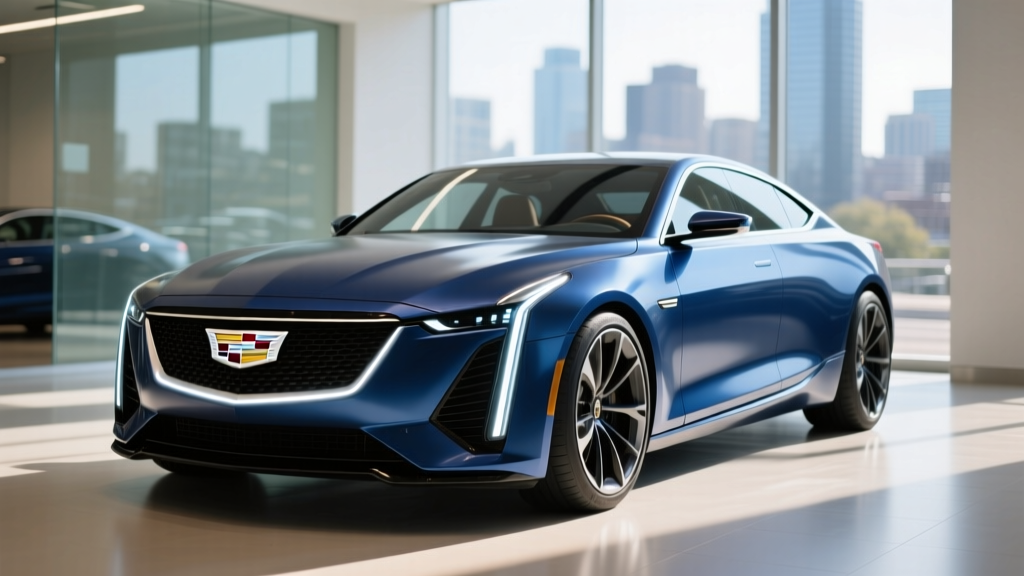
The Cadillac Celestiq: America's Ultra-Luxury Electric Coupe
The Celestiq is not a mass-market vehicle. Cadillac positions it as a bespoke, coach-built flagship — think Rolls-Royce Spectre territory, not Tesla Model S. Each unit is hand-assembled at GM's Factory Zero in Detroit, and buyers work directly with Cadillac's design team on customization. For the handful of buyers in this segment, here's what the spec sheet looks like:
| Spec | Value |
|---|---|
| Body Style | 4-door fastback coupe |
| Drivetrain | Dual-motor AWD |
| Horsepower | ~600 hp |
| Torque | ~640 lb-ft |
| 0-60 mph | ~3.8 seconds |
| Battery (usable) | ~111 kWh, NMC (Ultium) |
| EPA Range (est.) | ~300 miles |
| Peak DC Fast Charge | ~200 kW |
| 10-80% DC Charge | ~30 minutes |
| Level 2 AC Charge | 19.2 kW (~11.5 kW sustained typical) |
| Starting MSRP | ~$340,000 |
| Battery/Powertrain Warranty | 8 years / 100,000 miles |
Real-World Range Expectations
The Celestiq's estimated 300-mile EPA range assumes mixed driving at moderate temperatures. In real-world conditions:
- Highway cruising (75 mph): Expect ~250–270 miles due to aerodynamic drag at speed.
- Cold weather (below 32°F): Range can drop 20–30%, yielding ~210–240 miles. The Celestiq's heat pump helps mitigate this, but physics wins in deep cold.
- City/regenerative driving: You may exceed the EPA estimate slightly thanks to regen braking in stop-and-go traffic.
For a $340,000 grand tourer, 300 miles is adequate for most journeys but not class-leading. The Lucid Air Grand Touring achieves 516 miles EPA for roughly a third of the price, though it occupies a different luxury tier.
What About an Affordable Cadillac Electric Coupe?
This is the question most searchers actually want answered. As of 2026, Cadillac has not announced a mainstream electric coupe below six figures. The brand's EV strategy has focused on SUVs and crossovers:
- Cadillac Lyriq — Mid-size electric crossover with coupe-like styling cues. 2026 models start around $58,590, offer up to 314 miles EPA range (RST AWD with the larger Ultium pack), and charge at up to 190 kW DC.
- Cadillac Optiq — A smaller, more affordable electric SUV expected for the 2025–2026 model years, targeting the ~$50,000 segment. Not a coupe.
- Cadillac Vistiq — Three-row electric SUV, also not a coupe.
If Cadillac does introduce a true electric coupe for the mainstream market, it would likely ride on GM's Ultium platform with BEV3 architecture and potentially share components with the Chevrolet lineup. Until then, the Lyriq is the closest proxy for buyers wanting Cadillac electric styling without Celestiq pricing.
EV vs. Gas vs. Hybrid: Cadillac Ownership Cost Comparison
Let's compare a hypothetical 5-year ownership scenario for the Cadillac Lyriq (the most accessible Cadillac EV) against a comparably priced gas luxury SUV and a plug-in hybrid alternative. This gives buyers a framework for understanding what Cadillac electric ownership actually costs.
| Category | Cadillac Lyriq (EV) | Cadillac XT5 (Gas) | BMW X5 xDrive50e (PHEV) |
|---|---|---|---|
| Purchase Price (MSRP) | $58,590 | $47,895 | $72,500 |
| Federal Tax Credit (§30D) | Up to $7,500* | $0 | Up to $7,500* |
| Effective Purchase | ~$51,090 | $47,895 | ~$65,000 |
| Fuel/Energy (5 yrs) | ~$4,200 (home L2)** | ~$13,500 | ~$7,800 |
| Maintenance (5 yrs) | ~$1,800 | ~$4,500 | ~$4,000 |
| Insurance (5 yrs, avg) | ~$14,500 | ~$11,000 | ~$13,000 |
| Estimated Depreciation | ~$22,000 | ~$18,000 | ~$28,000 |
| Total 5-Year Cost | ~$93,590 | ~$94,895 | ~$117,800 |
* Federal §30D credit eligibility depends on MSRP caps (SUVs: $80,000; other vehicles: $55,000), buyer income limits ($150K single / $300K joint), battery sourcing requirements, and point-of-sale transfer availability. Check current IRS rules before purchasing. The Lyriq, classified as an SUV, may qualify for the higher MSRP cap — but critical mineral and battery component sourcing requirements change annually.
** Home charging at $0.14/kWh average. Public DC fast charging at $0.35–$0.50/kWh would raise this to ~$7,000–$9,000 over 5 years. Your utility rate is the single biggest variable.
The numbers reveal a key insight: the Lyriq EV roughly matches the gas XT5 on total 5-year cost despite a higher sticker price, thanks to dramatically lower fuel and maintenance expenses. Insurance is the EV penalty — expect 15–30% higher premiums on electric Cadillacs due to repair costs and parts pricing.
Charging a Cadillac EV: What You Actually Need at Home
Home charging access is the make-or-break factor for EV ownership. Here's what Cadillac EV buyers need to budget for:
| Item | Cost Range |
|---|---|
| Level 2 Charger (40A–48A, hardwired) | $400–$750 |
| Electrician: 240V/50A circuit install (near panel) | $500–$1,500 |
| Electrician: long run (50+ ft from panel) | $1,200–$3,000 |
| Electrical panel upgrade (100A → 200A, if needed) | $2,000–$4,500 |
| Permit & inspection | $50–$300 |
| Total (typical install, no panel upgrade) | $950–$2,550 |
| Total (with panel upgrade) | $2,950–$7,050 |
With a 48-amp Level 2 charger on a 240V circuit, the Lyriq adds roughly 30–35 miles of range per hour of charging. A full overnight charge (8 hours) replenishes ~240–280 miles — more than enough for daily driving. The Celestiq's larger battery will take longer to fill from empty but follows the same daily-charging logic.
Common EV Misconceptions — Fact Check
| Myth | Fact |
|---|---|
| "EV batteries need replacing every 5 years." | GM's Ultium batteries carry an 8-year/100,000-mile warranty covering capacity below 60–70% of original. Real-world degradation for NMC packs is typically 10–15% over 8 years. Most EV batteries outlast the vehicle. |
| "Public charging is unreliable everywhere." | Tesla Supercharger network reliability exceeds 95%. Non-Tesla networks (Electrify America, EVgo) average 80–85% uptime. Cadillac EVs using NACS adapters can access Superchargers as of 2025+. |
| "EVs don't work in cold climates." | Range drops 20–30% in sub-freezing temps, but preconditioning (warming the battery while plugged in) recovers much of that loss. EVs start instantly in cold — no cranking a frozen engine. |
| "I'll save $7,500 on any EV." | The §30D credit has MSRP caps, buyer income limits, and battery-sourcing rules that change annually. Many luxury EVs and high-income buyers won't qualify. Always verify on irs.gov. |
| "Level 2 charging is too slow." | At 11.5 kW, you add ~35 miles/hour. Most EV owners charge overnight and wake up "full" every morning — something gas car owners never do. The "slow" charge happens while you sleep. |
First-Time Cadillac EV Buyer Checklist
If you're transitioning from a gas Cadillac (or any ICE vehicle) to electric, here's what to evaluate before signing:
Decision Framework: Is a Cadillac EV Right for You?
Choose a Cadillac EV (Lyriq/Celestiq) if:
- You have access to home charging (garage or driveway with 240V capability) OR reliable workplace Level 2 charging.
- Your daily driving is under 150 miles round-trip (covers 95%+ of American commutes).
- You want near-silent acceleration, minimal maintenance, and lower per-mile energy cost.
- You can absorb higher insurance premiums and potentially higher depreciation in the short term.
- You value Cadillac's luxury interior, Super Cruise hands-free driving (SAE Level 2 — you must remain attentive), and brand cachet.
Consider a gas or hybrid alternative if:
- You live in an apartment or condo without charging access and public infrastructure is sparse in your area.
- You regularly drive 300+ miles in a single day through regions with limited DC fast charging.
- You tow heavy loads frequently (EV range drops significantly under towing — expect 40–50% reduction).
- Your budget is under $50,000 and you need Cadillac luxury — the XT5 or XT4 gas models serve this segment at lower upfront cost.
Super Cruise and Driver Assistance: What Cadillac EVs Offer
Cadillac's Super Cruise is one of the most capable SAE Level 2 driver-assistance systems available. It enables hands-free driving on over 750,000 miles of pre-mapped divided highways in the US and Canada, using a combination of LiDAR-mapped road data, GPS, cameras, and radar.
SAE Automation Level: Level 2
Super Cruise is not self-driving. It is an SAE Level 2 system, meaning the driver must remain engaged, monitor the road, and be prepared to take over at any time. A driver-monitoring camera tracks your eye gaze and will issue escalating alerts — then disengage — if you look away. Only Level 4 systems (like Waymo's robotaxi in limited metro areas) operate without a human driver. Never treat Super Cruise, Tesla Autopilot, Ford BlueCruise, or any consumer system as autonomous.
The Celestiq is expected to feature an evolved version of Super Cruise with expanded road coverage and potentially urban-assist features, though GM has not announced Level 3 or Level 4 capability for consumer vehicles. The Lyriq offers Super Cruise on higher trims (Sport and above) as an option or standard feature depending on model year.
Federal Tax Credit and Incentive Reality for Cadillac EVs
The federal §30D clean vehicle credit offers up to $7,500 for qualifying new EVs, but eligibility is complex and changes as battery-sourcing rules tighten annually:
- MSRP cap: $80,000 for SUVs/pickups/vans; $55,000 for sedans/coupes. The Lyriq (classified as SUV) falls under the $80K cap. The Celestiq at $340,000 does not qualify.
- Buyer income cap: Modified AGI ≤ $150,000 (single), $225,000 (head of household), $300,000 (joint). Exceed this and you're ineligible regardless of the vehicle.
- Battery sourcing: Increasing percentages of critical minerals and battery components must be sourced from the US or FTA-partner countries. These thresholds tighten each year, potentially disqualifying vehicles that qualified previously.
- Point-of-sale transfer: As of 2024+, you can transfer the credit to the dealer at purchase, reducing your out-of-pocket cost immediately rather than waiting for tax filing. The dealer must be IRS-registered.
- Final assembly: Vehicle must undergo final assembly in North America. All current Cadillac EVs qualify.
Always verify current eligibility at fueleconomy.gov and consult a tax professional before relying on the credit in your purchase decision.
Frequently Asked Questions
Does Cadillac make an electric coupe under $100,000?
Not as of 2026. The only Cadillac electric coupe in production is the Celestiq at ~$340,000. The Lyriq electric crossover starts around $58,590 and is the most affordable Cadillac EV, but it's an SUV-style body, not a traditional coupe. Buyers wanting an affordable luxury electric coupe should also evaluate the BMW i4, Audi e-tron GT, or Porsche Taycan.
How long does it take to charge a Cadillac EV at home?
On a 48-amp Level 2 home charger (240V), the Lyriq adds roughly 30–35 miles of range per hour. A full charge from 10% to 100% takes about 9–10 hours — easily done overnight. The Celestiq's larger ~111 kWh battery would take ~11–12 hours on the same setup. Most EV owners rarely charge from empty; topping up from 30–80% takes 4–5 hours overnight.
What is the real-world range of the Cadillac Lyriq?
The 2026 Lyriq with the larger battery pack achieves up to 314 miles EPA (RWD) and around 284–307 miles EPA (AWD trims). Real-world highway driving at 70–75 mph yields approximately 250–280 miles. In cold weather (below freezing), expect 210–250 miles depending on cabin heating use and whether you precondition the battery while plugged in.
Can I use Tesla Superchargers with a Cadillac EV?
Yes, with an adapter. Starting in 2025, GM vehicles equipped with NACS (North American Charging Standard) ports or using a CCS-to-NACS adapter can access Tesla's Supercharger network. This dramatically expands fast-charging options, adding 17,000+ Supercharger stalls to the public charging map. Verify adapter compatibility with your specific model year and trim.
Is the Cadillac Celestiq worth $340,000?
For its target buyer — ultra-high-net-worth individuals seeking an American-made, bespoke electric grand tourer — the Celestiq competes with the Rolls-Royce Spectre (~$420,000) and Bentley's electrified offerings. Its value proposition is exclusivity and customization, not efficiency or range-per-dollar. If you're asking whether it's worth it, it's likely not aimed at you. For everyone else, the Lyriq delivers Cadillac EV luxury at a fraction of the cost.
How does Cadillac EV maintenance compare to gas cars?
EVs eliminate oil changes, spark plugs, transmission fluid, exhaust system repairs, and timing belts. Cadillac EV maintenance is limited to tire rotations (EVs are heavier and may wear tires faster), cabin air filters, brake fluid checks (regen braking extends pad life significantly), and windshield washer fluid. Expect annual maintenance costs of $300–$500 vs. $800–$1,200 for a comparable gas Cadillac.
Sources: Cadillac Lyriq official specs, fueleconomy.gov (EPA range and efficiency data), IRS §30D clean vehicle credit rules.