Quick Verdict: The Celestiq Is a Coachbuilt EV Like No Other
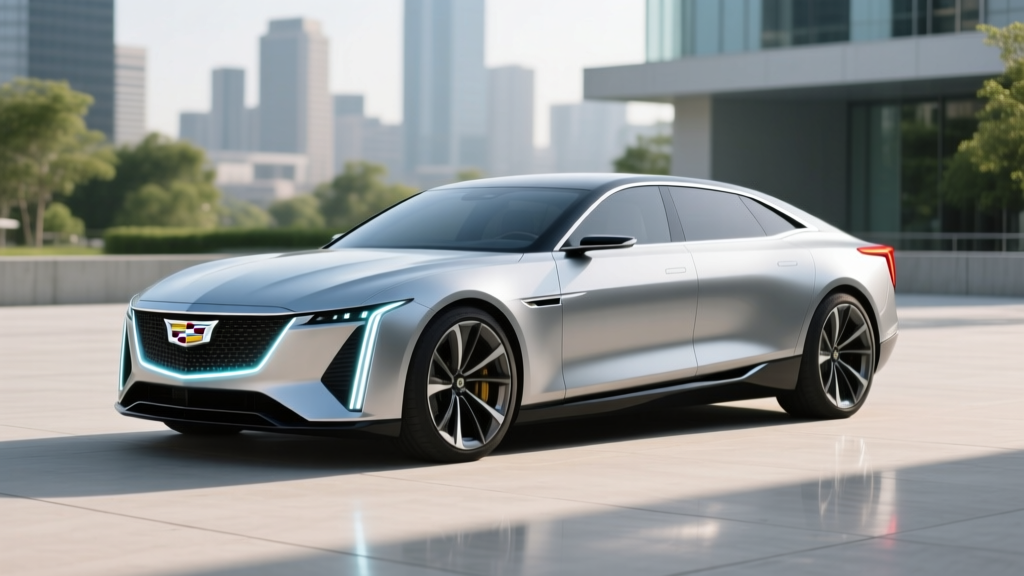
The 2026 Cadillac Celestiq is not a mass-market electric sedan. It is a hand-built, ultra-luxury flagship with a starting price north of $340,000 — and a physical footprint to match. If you've searched for the Cadillac Celestiq length, you already suspect this car dominates any garage, valet lane, or country-club driveway it occupies. At roughly 213 inches long and riding on a 126-inch wheelbase, the Celestiq stretches well past the Mercedes-Benz EQS (207.3 in.) and the BMW i7 (212.5 in.), placing it squarely in ultra-luxury land traditionally reserved for the Rolls-Royce Spectre.
But the Celestiq is more than a dimension story. Built on GM's BT1 battery-electric platform (a bespoke evolution of the Ultium architecture), it packs a 111 kWh NMC lithium-ion battery, a dual-motor all-wheel-drive powertrain producing approximately 600 horsepower, and an EPA-estimated range in the low 300s. Below, we break down every spec that matters — from real-world range and DC fast-charging behavior to the §30D tax-credit math that, frankly, won't apply to most buyers in this price bracket.
Cadillac Celestiq Length, Width & Exterior Dimensions
Let's address the keyword directly. The Celestiq's exterior proportions are the single most polarizing aspect of its design — and a practical concern for owners with standard residential garages.
| Dimension | Measurement |
|---|---|
| Overall Length | ~213 inches (5,410 mm) |
| Wheelbase | ~126 inches (3,200 mm) |
| Overall Width (mirrors out) | ~82 inches (2,083 mm) |
| Overall Width (mirrors folded) | ~77 inches (1,956 mm) |
| Overall Height | ~56.5 inches (1,435 mm) |
| Curb Weight (est.) | ~5,900 lbs (2,676 kg) |
| Turning Circle | ~42 ft (curb-to-curb) |
For context, a standard US single-car garage door is 8–9 feet wide and 7 feet tall, with an interior depth of 20–22 feet. The Celestiq will fit, but with inches to spare front and rear — and only if the garage is free of shelving or wall-mounted chargers that protrude. Plan your Level 2 home charging install accordingly: a wall-mounted J1772/NACS unit must be positioned to accommodate the Celestiq's length without forcing you to thread the cable around the vehicle's rear quarter.
EPA Range & Real-World Efficiency
Real-World Expectation: 250–275 mi at sustained 70 mph highway speeds; 215–240 mi in sub-30°F winter conditions with cabin heat on.
Battery: 111 kWh usable capacity, NMC (nickel manganese cobalt) chemistry.
The Celestiq's 111 kWh battery is among the largest in any production passenger EV. GM has not published an official MPGe figure at this writing, but based on the vehicle's weight, aerodynamic profile, and dual-motor AWD layout, expect a combined efficiency in the neighborhood of 70–75 MPGe — or roughly 45–48 kWh per 100 miles. That is thirsty by EV standards, though typical for a 6,000-lb luxury sedan with a flat, slab-sided fastback silhouette optimized more for presence than low-drag efficiency.
NMC chemistry is the right call here: it delivers higher energy density than LFP (lithium iron phosphate), which matters when you need to pack 111 kWh into a sedan floor without raising the ride height. The trade-off is a slightly faster degradation curve over 150,000+ miles and a lower thermal runaway threshold — though GM's active liquid thermal management system mitigates both concerns in normal use.
Charging Speed: DC Fast & Level 2 Home Charging
Charging a 111 kWh battery is a patience exercise, even at high power. Here's what the Celestiq supports:
| Level | Power / Rate | Time / Output |
|---|---|---|
| Level 1 (120V, 12A) | ~1.4 kW | ~2–3 mi/hr added |
| Level 2 (240V, 48A) | ~11.5 kW | ~22–25 mi/hr; full charge ~10 hrs |
| DC Fast Charge (peak) | ~200 kW (CCS/NACS w/ adapter) | 10–80% in ~33 minutes |
| DC Fast Charge (sustained avg) | ~140 kW | 80–100% taper adds ~25 min |
The Celestiq's peak 200 kW DC rate is respectable but not class-leading — the Hyundai Ioniq 5 peaks at 240 kW, and the Porsche Taycan at 320 kW (800V architecture). The limiting factor here is the 400V electrical architecture and the sheer size of the 111 kWh pack. Expect the charge curve to taper noticeably above 60% state of charge (SoC), with power dropping to under 80 kW past 80%. Preconditioning the battery via the navigation-routed fast-charge prep feature is essential to hitting that 200 kW peak; without it, cold-soaked charging can start as low as 50–70 kW.
For home charging, a 48A Level 2 station (such as a ChargePoint Home Flex or Tesla Wall Connector in J1772 mode) is the minimum practical setup. Budget for a 60A dedicated circuit and a panel evaluation — many older homes with 100A service will need a 200A panel upgrade, which typically runs $1,500–$3,500 before the charger itself. Reference fueleconomy.gov's EV charging guide for circuit-sizing basics, but always defer to a licensed electrician for final specs.
Performance: 0–60, Horsepower & Drivetrain
| Spec | Value |
|---|---|
| Powertrain | Dual-motor AWD |
| Horsepower | ~600 HP (combined) |
| Torque | ~640 lb-ft (combined) |
| 0–60 mph | ~3.8 seconds (est.) |
| Top Speed | ~130 mph (electronically limited) |
| Drive Modes | Tour, Sport, Snow/Ice, Custom |
| Suspension | Adaptive air suspension w/ magnetic ride control |
For a vehicle approaching three tons, a sub-4-second 0–60 time is genuinely impressive. The dual permanent-magnet motors deliver instantaneous torque with zero drivetrain lash, and the adaptive air suspension keeps the ride composed even under hard acceleration. The Celestiq is not a track car — its mission is effortless, silent, surge-on-demand grand touring. In that role, the powertrain is overqualified.
Interior, Cargo & Standout Technology
The Celestiq seats four — not five — in individual, heated/ventilated/massaging captain's chairs separated by a full-length center console. Key interior dimensions:
- Front legroom: ~42.5 inches
- Rear legroom: ~41.0 inches
- Cargo volume (trunk): ~18 cu ft (no frunk due to HVAC and electronics packaging)
- Rear headroom: ~37.5 inches (fastback roofline compromises slightly)
The technology story is dominated by a 55-inch diagonal pillar-to-pillar LED display spanning the entire dashboard — not a single pane of glass, but a composite of multiple high-resolution OLED panels. Each rear passenger receives a dedicated 12.6-inch entertainment screen integrated into the front seatbacks, plus a rear-seat center console with its own touchscreen for climate and media control.
Driver assistance is handled by GM's Super Cruise system, which offers hands-free driving on over 750,000 miles of compatible highways in the US and Canada. Critically, Super Cruise remains an SAE Level 2 driver-assist system — the driver must remain attentive, and the cabin camera monitors head and eye position continuously. This is not autonomous driving.
Other notable tech: 4-wheel steering (for a tighter turning circle despite the Celestiq's length), a 36-speaker AKG Studio Reference audio system, power rear-hinged coach doors on early build examples, and a panoramic glass roof with variable electrochromic tint zones.
Pricing, Trims & Federal Tax Credit Eligibility
| Item | Amount |
|---|---|
| Base MSRP | ~$340,000 |
| As-Tested (typical bespoke config) | $375,000–$425,000+ |
| Destination Charge | Included |
| Production Volume | ~400 units/year (hand-built) |
Every Celestiq is essentially a bespoke commission. Buyers work with Cadillac's Concierge team to select paint, interior materials, trim inlays, and personalization elements — there is no online configurator in the traditional sense, and no dealer-lot inventory.
- MSRP Cap: The §30D credit caps eligibility at $55,000 for sedans. The Celestiq's ~$340,000 base price exceeds this by a factor of six. Not eligible.
- Buyer Income Cap: Even if the price qualified, AGI limits ($150K single / $300K joint) would exclude most buyers in this segment.
- Battery Sourcing & Critical Minerals: Moot at this price point, but GM's North American battery cell production (Ultium Cells JV in OH and TN) would likely satisfy the sourcing thresholds for other GM EVs.
- Point-of-Sale Transfer: Not applicable — credit is non-transferable when MSRP cap is exceeded.
For buyers in this price range, the absence of a federal credit is immaterial. State-level incentives (California's CVRP, for example, has its own income and MSRP caps) are similarly unlikely to apply. Expect to pay full MSRP plus your state's luxury tax, registration fees, and any applicable gas-guzzler-equivalent EV weight surcharges.
Warranty & Ownership Considerations
| Coverage | Term |
|---|---|
| Limited Vehicle Warranty | 4 years / 50,000 miles |
| Powertrain Warranty | 6 years / 70,000 miles |
| Battery Pack Warranty | 8 years / 100,000 miles (≥70% capacity retention) |
| Corrosion Protection | 6 years / unlimited miles |
| Roadside Assistance | 6 years / 70,000 miles |
| Concierge / Scheduled Maintenance | Complimentary for ownership duration (est.) |
Cadillac's battery warranty guarantees at least 70% state of health (SoH) over 8 years or 100,000 miles — the industry-standard threshold. Given the NMC chemistry and active thermal management, real-world degradation is expected to be modest (likely 8–12% over 8 years under normal use). Battery replacement cost out of warranty is not published but, for a 111 kWh NMC pack, expect $25,000–$40,000 at current cell pricing — a non-trivial sum, though proportionally smaller against a $340K vehicle.
Insurance premiums will be steep. The Celestiq's low production volume, bespoke body panels, and carbon-fiber structural elements mean collision repair is both specialized and expensive. Expect annual premiums in the $8,000–$15,000 range depending on your profile and state.
Pros, Cons & Competitor Comparison
- Bespoke, coachbuilt exclusivity — fewer than 400 units/year
- 111 kWh battery delivers 300+ mi EPA range despite 6,000-lb weight
- 55-inch pillar-to-pillar display is a segment first
- Super Cruise hands-free highway driving on 750K+ miles of roads
- 4-wheel steering mitigates the Celestiq's massive length in urban use
- Silent, surge-on-demand 600 HP dual-motor AWD
- $340K+ price eliminates most buyers and all federal/state EV incentives
- ~213-inch length is a genuine garage and valet logistics challenge
- 200 kW peak DC charge rate is modest vs. 800V rivals (Taycan, Ioniq 5)
- No front trunk (frunk); 18 cu ft rear cargo is tight for the vehicle's footprint
- 4-seat-only configuration limits family/passenger versatility
- Insurance and out-of-warranty battery costs are significant
Against the Rolls-Royce Spectre (~$420K, 260 mi EPA, 577 HP), the Celestiq offers more range, more technology, and a lower entry price — but less brand prestige and a less proven luxury pedigree. The Mercedes-Benz EQS 580 (~$125K, 345 mi EPA) is a fraction of the cost and more practical, but it is a mass-market product with none of the Celestiq's exclusivity. The BMW i7 xDrive60 (~$120K, 318 mi EPA) is similarly more rational. The Celestiq's true competitor is not another EV — it is the buyer's willingness to pay bespoke prices for a low-volume American luxury statement.
Frequently Asked Questions
What is the real-world range of the Cadillac Celestiq?
The EPA estimates approximately 303 miles. In real-world highway driving at 70 mph, expect 250–275 miles. In cold weather (below 30°F) with cabin heating, range may drop to 215–240 miles. The 111 kWh battery provides a large buffer, but the Celestiq's weight and aerodynamic profile work against efficiency.
How fast does the Celestiq charge at home and on DC fast chargers?
On a 48A Level 2 home charger (11.5 kW), expect a full charge in roughly 10 hours, adding about 22–25 miles per hour of charging. On DC fast chargers, the Celestiq peaks at approximately 200 kW, achieving a 10–80% charge in about 33 minutes — with significant taper above 80% SoC.
Does the Cadillac Celestiq qualify for the federal EV tax credit?
No. The IRS §30D Clean Vehicle Credit caps sedan eligibility at $55,000 MSRP. The Celestiq starts at approximately $340,000, exceeding the cap by over $285,000. Buyer income limits ($150K single / $300K joint) would also exclude most purchasers. Always verify current rules at irs.gov.
How long is the Cadillac Celestiq, and will it fit in a standard garage?
The Celestiq is approximately 213 inches (17.75 feet) long. A standard US single-car garage is typically 20–22 feet deep, so the Celestiq will fit — but with minimal clearance. Measure your garage depth and plan your Level 2 charger placement carefully before delivery.
Is the Celestiq worth buying vs. the Rolls-Royce Spectre or Mercedes EQS?
If exclusivity and American luxury provenance are your priorities, the Celestiq is unmatched in its price tier. If you want the most prestigious badge, the Spectre wins. If you want the best value-per-mile of range, the EQS or i7 are dramatically more rational. The Celestiq is a passion purchase, not a spreadsheet decision.
What battery chemistry does the Celestiq use?
The Celestiq uses NMC (nickel manganese cobalt) lithium-ion cells, chosen for their higher energy density versus LFP. This allows 111 kWh to fit within a sedan floorpan. The trade-off is a slightly higher degradation rate over 150K+ miles, mitigated by GM's active liquid thermal management.