Quick Verdict: A Hand-Built Electric Flagship
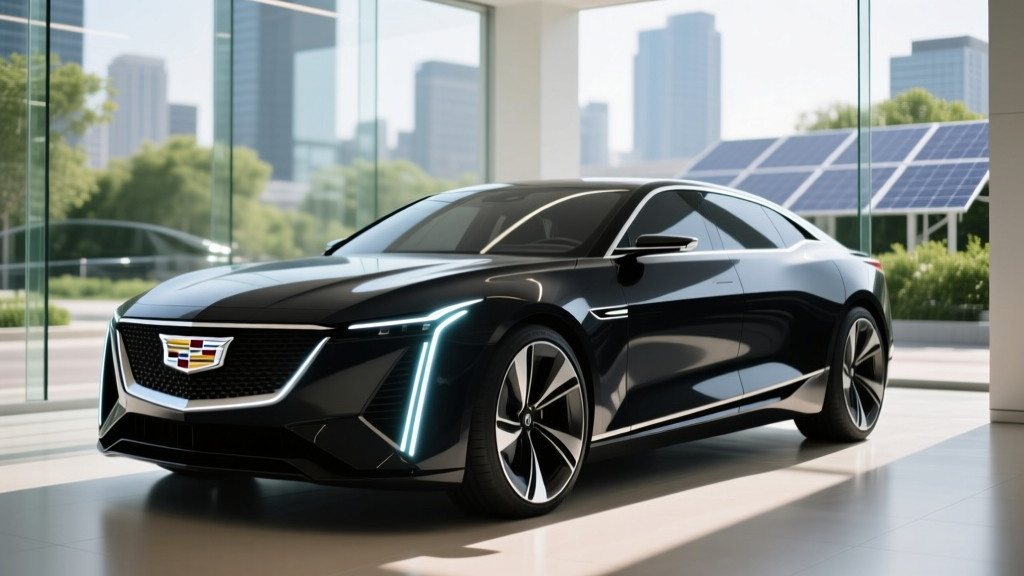
The Cadillac Celestiq EV is not a volume car. It is a low-production, hand-assembled electric ultra-luxury sedan that Cadillac positions against the Rolls-Royce Spectre and Bentley Flying Spur Hybrid. Built at GM's Factory ZERO in Michigan with extensive bespoke customization, the Celestiq is a statement vehicle first and an EV second. For buyers who want a coachbuilt electric flagship with cutting-edge Ultium architecture, it delivers. For everyone else, the ~$340,000 starting price and limited production run make it an object of fascination rather than a practical purchase.
| Spec | Value |
|---|---|
| EPA Range | 303 miles |
| Battery Capacity | 111 kWh (usable), NMC lithium-ion |
| Drivetrain | Dual-motor AWD |
| Horsepower | ~600 hp |
| Torque | ~640 lb-ft |
| 0–60 mph | 3.8 seconds |
| Peak DC Fast Charge | 200 kW |
| 10–80% DC Charge | ~28 minutes (est.) |
| Level 2 Home Charging | 19.2 kW (AC) |
| EPA Efficiency | ~71 MPGe / ~47 kWh/100 mi |
| Cargo Volume | ~16.1 cu ft (trunk) |
| Base MSRP | ~$340,000 (before customization) |
| Battery Warranty | 8 years / 100,000 miles |
Range and Efficiency: Real-World Expectations
The Celestiq's EPA-estimated range sits at 303 miles on a full charge, drawing from a massive 111 kWh usable Ultium battery pack. That capacity is among the largest in any production passenger EV, rivaling the GMC Hummer EV. However, the Celestiq's weight — well over 5,500 pounds — and its large frontal area mean real-world efficiency is modest for its class.
EPA sticker: 303 miles. In mixed highway driving at 70–75 mph, expect approximately 255–275 miles before needing to charge. In cold weather (below 32°F), range can drop to 210–240 miles due to cabin heating demands and increased battery resistance, even with the Celestiq's heat pump system. City driving with frequent regenerative braking recovers more energy, often yielding closer to the EPA figure.
The Celestiq's efficiency rating of roughly 71 MPGe (or about 47 kWh per 100 miles) reflects the physics of moving a heavy, luxury-appointed sedan. For comparison, the Lucid Air Grand Touring achieves around 131 MPGe with a smaller battery, and the Tesla Model S Long Range hits roughly 120 MPGe. The Celestiq trades efficiency for mass, presence, and a bespoke build philosophy. According to fueleconomy.gov, large luxury EVs in this weight class typically consume 45–55 kWh/100 mi in combined driving.
Charging Speed: DC Fast and Home Level 2
The Celestiq runs on GM's Ultium platform with an 800-volt-class architecture, enabling DC fast-charging at up to 200 kW. That peak rate is competitive with the Porsche Taycan and Audi e-tron GT but falls short of the Lucid Air (up to 300 kW) and Hyundai Ioniq 5 (up to 250 kW on 800V). Here is how charging breaks down across levels:
| Charging Level | Power (kW) | Miles Added per Hour | Notes |
|---|---|---|---|
| Level 1 (120V) | ~1.4 kW | ~3 mi/hr | Emergency/trickle only |
| Level 2 (240V, 19.2 kW) | 19.2 kW | ~40 mi/hr | Full charge in ~6 hours |
| DC Fast Charge | Up to 200 kW | ~180 mi in 10 min (peak) | 10–80% in ~28 min |
At a DC fast charger, the Celestiq can add roughly 70–80 miles of range in a 10-minute session during the peak portion of the charge curve. However, like all large NMC packs, charging speed tapers significantly above 80% state of charge (SoC) to protect cell longevity. Expect the final 20% to take as long as the first 60%. For road trips, planning stops at 200+ kW chargers (such as Electrify America or EVgo 350 kW stations) is essential to minimize downtime.
At home, the Celestiq supports up to 19.2 kW on Level 2 AC charging — that requires a hardwired 100-amp circuit and a capable Level 2 station such as the ChargePoint Home Flex or FLO Home X8. Most residential panels will need an electrician to verify capacity; a 200-amp panel upgrade may be necessary, adding $1,500–$3,000 to installation costs. On a 19.2 kW home charger, the 111 kWh pack fills from empty in roughly 6 hours, easily replenishing overnight.
Performance and Drivetrain
The Celestiq's dual-motor all-wheel-drive system produces approximately 600 horsepower and 640 lb-ft of torque. The 0–60 mph sprint takes about 3.8 seconds — quick for a vehicle of this size but not supercar territory. The Lucid Air Sapphire does it in under 2 seconds, and even the Tesla Model S Plaid hits 60 in 1.99 seconds. The Celestiq prioritizes effortless, silent thrust over lap times.
GM's Ultium platform gives the Celestiq a low center of gravity thanks to the underfloor battery pack. Air suspension with Magnetic Ride Control adjusts damping in real time, and rear-wheel steering tightens the turning radius for a car stretching over 213 inches in length. The drive experience is tuned for isolation and composure: road noise is aggressively suppressed, and the cabin remains library-quiet even at highway speed. This is a chauffeur-grade sedan that happens to be electric.
Interior, Tech, and Cargo Space
The Celestiq seats four passengers in individual executive-style rear seats separated by a full-length center console. Every interior surface is customizable: buyers work with Cadillac's design team to select hides, wood veneers, metal finishes, and stitching. The dashboard is dominated by a 55-inch diagonal pillar-to-pillar LED display, one of the largest single screens in any production vehicle. Each rear passenger gets a dedicated 12.6-inch infotainment screen.
Standard technology includes:
- Super Cruise hands-free driving on compatible highways (SAE Level 2 — driver attention required)
- Head-up display with augmented-reality navigation overlay
- AKG Studio Reference 38-speaker audio system
- Wireless Apple CarPlay and Android Auto
- Over-the-air software updates via GM's Ultifi platform
- Power-opening rear doors with gesture control
Cargo space is limited to a conventional trunk offering approximately 16.1 cubic feet. There is no front trunk (frunk) because the Ultium battery layout and front motor packaging leave no room. For a car of this price, the trunk is adequate for luggage but not generous — the Rolls-Royce Spectre offers a similar 17.4 cu ft.
Pricing, Tax Credits, and Ownership Costs
The Celestiq starts at approximately $340,000, and that is before customization. Cadillac has stated that every Celestiq will be bespoke, meaning final transaction prices can climb well above $400,000 depending on materials, finishes, and commissioned features. Only a few hundred units are planned per model year, keeping exclusivity high.
| Item | Amount |
|---|---|
| Base MSRP | ~$340,000 |
| Typical As-Tested / Customized | $375,000–$425,000+ |
| Federal EV Tax Credit (§30D) | $0 (exceeds MSRP cap) |
| Estimated Annual Insurance | $8,000–$12,000+ |
| Estimated Annual Electricity Cost (12,000 mi) | ~$900–$1,100 (at $0.16/kWh) |
The Celestiq does not qualify for the federal §30D EV tax credit. Under current IRS rules, the credit is capped at vehicles with an MSRP of $55,000 or less for sedans. At $340,000+, the Celestiq exceeds this cap by a factor of six. Additionally, buyer income limits ($150,000 single / $300,000 joint modified AGI) and critical-mineral battery-sourcing requirements further restrict credit eligibility for most luxury EVs. Buyers in this price bracket typically do not factor the $7,500 credit into their purchase decision.
Ownership costs beyond the purchase price are significant. Insurance premiums for a hand-built, $400,000 EV will be steep. However, electricity costs are modest relative to the fuel bills of a V12 Rolls-Royce or Bentley W12. At a national average of $0.16/kWh and an efficiency of 47 kWh/100 mi, annual charging for 12,000 miles costs roughly $900 — compared to $3,000+ in premium gasoline for a comparable ICE luxury sedan.
Warranty and Battery Longevity
Cadillac backs the Celestiq with the standard GM EV warranty package:
- Battery: 8 years / 100,000 miles (covers defects and capacity loss below 70% of original)
- Powertrain: 6 years / 70,000 miles
- Bumper-to-Bumper: 4 years / 50,000 miles
- Concierge Service: White-glove pickup/delivery for maintenance during warranty period
The 111 kWh NMC battery pack is engineered for longevity with active liquid thermal management. At an annual driving distance of 12,000 miles, the battery warranty covers roughly 8+ years of typical use. NMC chemistry generally retains 85–90% of original capacity after 100,000 miles based on data from other Ultium-platform vehicles and third-party studies. Replacement cost for a pack this size would be substantial — likely $25,000–$35,000 out of warranty — though that scenario is unlikely within the ownership period of most Celestiq buyers.
Who Is the Celestiq For?
The Celestiq targets a narrow buyer profile: ultra-high-net-worth individuals who want a bespoke, American-built electric flagship with exclusivity that a Mercedes EQS or BMW i7 cannot offer. It suits buyers who:
- Commission luxury goods (watches, yachts, couture) and expect the same from their car
- Want a chauffeur-driven daily with the quietness of electric propulsion
- Value American manufacturing heritage (Factory ZERO, Detroit) alongside EV technology
- Do not need the $7,500 tax credit and are indifferent to depreciation curves
It does not suit buyers looking for a practical daily EV, a family road-trip vehicle, or anyone sensitive to charging speed and range anxiety. The Celestiq is a luxury object that happens to be electric — not an efficiency-optimized commuter.
- Hand-built, fully bespoke customization — every car is unique
- Massive 111 kWh battery provides 303-mile EPA range
- 55-inch pillar-to-pillar display is visually stunning
- Super Cruise Level 2 hands-free driving on 400,000+ miles of roads
- Silent, composed ride quality with air suspension and rear steering
- Exclusivity: only a few hundred built per year
- Starting price ~$340,000; customized examples exceed $400,000
- No federal EV tax credit eligibility (MSRP far exceeds $55K cap)
- 200 kW peak DC charge rate trails Lucid Air (300 kW) and Porsche Taycan (270 kW)
- Efficiency of ~71 MPGe is low for an EV — heavy mass is the tradeoff
- No frunk; trunk space is modest at ~16 cu ft
- Depreciation on a niche, low-volume luxury EV is unpredictable
Celestiq vs. the Competition
The Celestiq competes in rarefied air. Its most direct rival is the Rolls-Royce Spectre, which starts around $420,000 and offers 264 miles of EPA range. The Bentley Flying Spur Hybrid (a PHEV, not a BEV) starts near $220,000. Within the broader luxury EV sedan market, the Lucid Air Grand Touring ($125,000, 516-mile range) and Mercedes-Benz EQS 580 ($120,000, 345-mile range) offer more range and efficiency at a fraction of the price — but none offer the Celestiq's bespoke, coachbuilt experience.
If your priority is maximum range and charging speed, the Lucid Air is objectively superior. If you want a brand name that signals old-world luxury, the Spectre wins. The Celestiq occupies a third lane: American-made, electric-native, and hand-tailored for buyers who reject mass production at any price point. IIHS and NHTSA safety ratings for low-volume vehicles like the Celestiq may be limited, so buyers should verify crash-test data directly with Cadillac before purchase.
Frequently Asked Questions
What is the real-world range of the Cadillac Celestiq EV?
The EPA estimates 303 miles. In real-world highway driving at 70–75 mph, expect approximately 255–275 miles. In cold weather below freezing, range can drop to 210–240 miles due to increased battery resistance and cabin heating loads.
How fast does the Celestiq charge?
On DC fast charging, it peaks at 200 kW and can go from 10–80% in roughly 28 minutes. At home on a 19.2 kW Level 2 charger, a full charge takes about 6 hours. On a standard 120V outlet, expect only about 3 miles of range per hour.
Does the Celestiq qualify for the federal EV tax credit?
No. Under IRS §30D rules, the credit is limited to sedans with an MSRP of $55,000 or less. The Celestiq's ~$340,000 base price far exceeds this cap. Buyer income limits and battery-sourcing requirements add further restrictions that make the credit unavailable at this price point.
Is the Celestiq worth buying vs. the Rolls-Royce Spectre?
It depends on what you value. The Spectre carries more brand prestige and a slightly longer 264-mile range from a larger battery, but the Celestiq offers a fully bespoke customization process, American manufacturing provenance, and a more modern Ultium platform. Both are niche vehicles for buyers unconcerned with value metrics.
What battery chemistry does the Celestiq use?
The Celestiq uses an NMC (nickel-manganese-cobalt) lithium-ion battery pack as part of GM's Ultium platform. NMC offers high energy density suitable for a large, heavy luxury sedan but requires careful thermal management to maintain long-term health. It is covered by an 8-year/100,000-mile warranty.
Is Super Cruise on the Celestiq self-driving?
No. Super Cruise is an SAE Level 2 driver-assistance system. It provides hands-free steering, acceleration, and braking on pre-mapped divided highways, but the driver must remain attentive and ready to take over at all times. It is not autonomous driving.