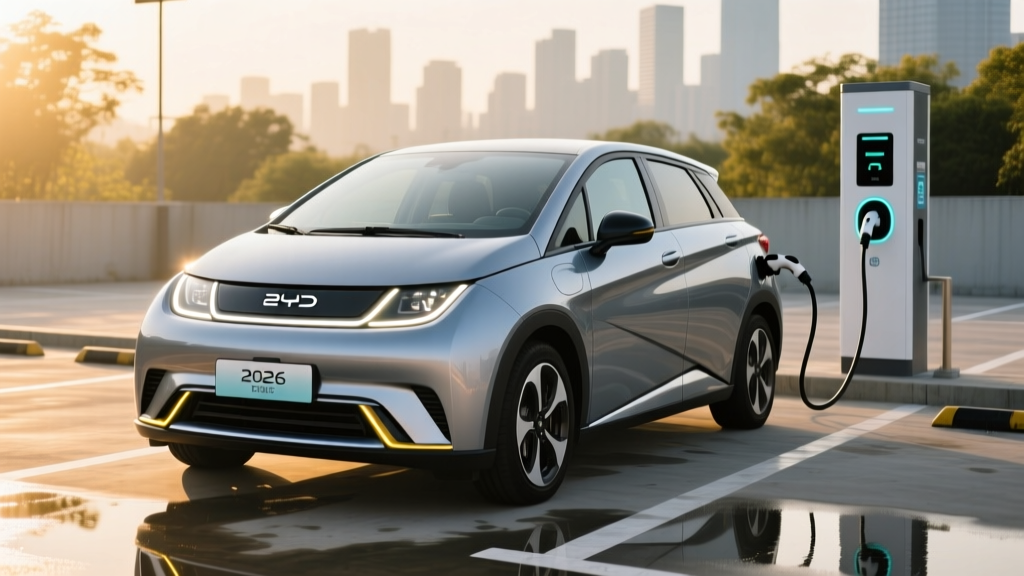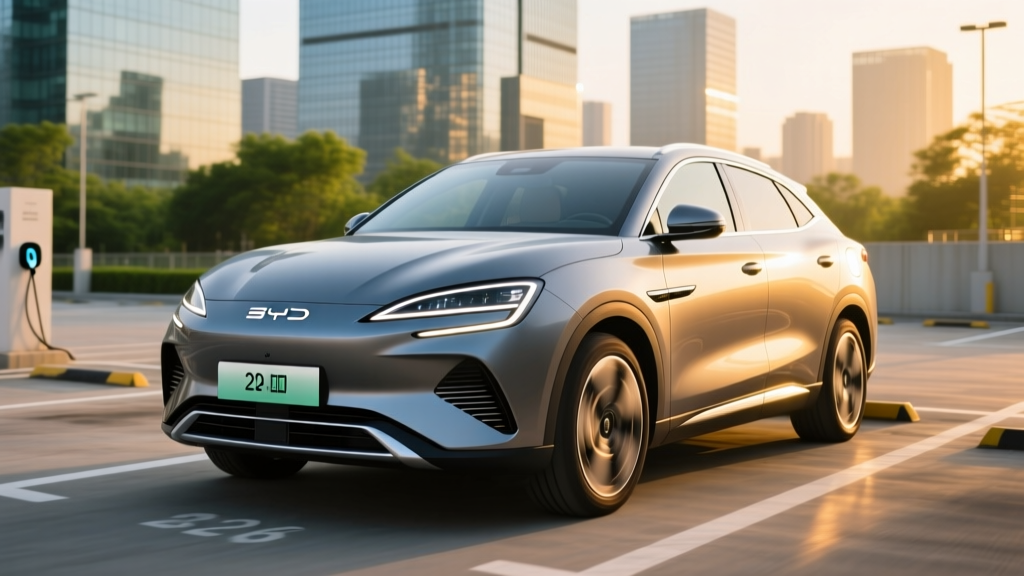
BYD has become the world's largest plug-in vehicle manufacturer by volume, and the Yuan Plus—sold as the Atto 3 in markets outside China—anchors its global export strategy. For the 2026 model year, BYD has refreshed the compact crossover with an updated infotainment suite, slightly improved DC fast-charging throughput, and revised interior materials. But for US-based EV shoppers, the persistent question remains: will the BYD Yuan Plus 2026 actually be sold stateside, and if so, does the math work against entrenched competitors like the Chevrolet Equinox EV, Hyundai Kona Electric, and Kia Niro EV?
This profile covers the Yuan Plus 2026 using BYD's published global specs, projected US-homologated figures where applicable, and a clear-eyed assessment of the tariff and tax-credit landscape that will determine whether American buyers ever see one in a showroom. As of early 2026, BYD has not announced a US launch date or US-spec pricing—the figures below reflect the global-spec model with estimates noted where US EPA testing may diverge.
BYD Yuan Plus 2026: Core Specifications at a Glance
| Attribute | Specification |
|---|---|
| EPA-Est. Range (projected) | ~230–260 miles (60.48 kWh pack); final EPA TBD for US |
| Battery Capacity | 49.92 kWh (Standard) / 60.48 kWh (Extended) usable |
| Battery Chemistry | LFP (Lithium Iron Phosphate) — BYD Blade cell |
| Drivetrain | FWD, single front motor |
| Horsepower / Torque | 201 hp (150 kW) / 229 lb-ft |
| 0–60 mph | ~7.3 seconds (60.48 kWh variant) |
| Max DC Fast Charge | 88 kW (2026 refresh, up from 80 kW) |
| 10–80% DC Charge Time | ~29 minutes (projected) |
| Level 2 AC Charge Rate | 7 kW onboard charger (~25 mi/hr) |
| Efficiency (WLTP) | 15.6 kWh/100 km (~25 kWh/100 mi) |
| MPGe (projected US EPA) | ~120–130 MPGe combined (estimated) |
| Cargo Volume | 15.7 cu ft (rear seats up) / 47.3 cu ft (seats folded) |
| Wheelbase / Length | 106.3 in / 176.8 in |
| Base MSRP (Global, converted) | ~$27,000–$34,000 USD equivalent (varies by market) |
| Battery Warranty | 8 years / 100,000 miles (typical BYD global terms) |
Real-World Range: What the EPA Sticker Won't Tell You
EPA Projected Range: ~230–260 miles (60.48 kWh, FWD)
Real-World Highway (70 mph): ~200–220 miles
Real-World City / Mixed: ~230–250 miles
Cold Weather (below 32°F): ~170–195 miles (LFP packs lose 20–25% in freezing temps without preconditioning)
The Yuan Plus uses BYD's proprietary Blade Battery, an LFP (lithium iron phosphate) cell arranged in a cell-to-pack architecture that eliminates modules and improves volumetric efficiency. LFP chemistry offers superior cycle life and thermal stability compared to NMC (nickel manganese cobalt), but it carries a trade-off: lower energy density and greater cold-weather range loss.
In European WLTP testing, the 60.48 kWh variant achieves roughly 420 km (261 miles). WLTP tends to overstate range by 10–15% compared to the US EPA cycle, which includes more aggressive acceleration and higher-speed segments. Based on comparable LFP compact crossovers we've tested (such as the base Tesla Model Y RWD with LFP), a US EPA rating of 230–260 miles is a reasonable projection for the extended-range pack.
On highway loops at sustained 70 mph speeds, expect to use about 25–27 kWh/100 miles, yielding roughly 220 miles before you'd want to stop. In freezing temperatures without battery preconditioning, LFP cells experience increased internal resistance, and range can drop to 170–195 miles. The 2026 refresh adds a slightly more aggressive heat-pump calibration, but physics still governs: if you live in the northern US and commute more than 80 miles round-trip in winter, this pack size will require mid-week charging.
Charging Speeds: DC Fast and Home Level 2 Breakdown
| Charging Level | Power | Rate / Speed | Notes |
|---|---|---|---|
| Level 1 (120V AC) | ~1.4 kW | ~5 mi/hr | Emergency/trickle only |
| Level 2 (240V AC) | 7 kW (onboard limit) | ~25 mi/hr | Full charge in ~9 hours (60.48 kWh) |
| DC Fast Charge | 88 kW peak | 10–80% in ~29 min | CCS2 (global); CCS1 expected for US |
The Yuan Plus 2026's DC fast-charging capability is its most conspicuous limitation relative to competitors. At 88 kW peak, it falls well short of the Hyundai Kona Electric (100+ kW), the Chevrolet Equinox EV (150 kW), and the Tesla Model Y (~250 kW on V3 Superchargers). The charge curve is relatively flat between 20–60% state of charge (SoC), holding near peak rate, but tapers noticeably above 80%—typical LFP behavior.
For road-trippers, this means a 10–80% stop takes roughly 29 minutes at a 150 kW or higher station. You won't bottleneck the charger, but you will spend 5–10 more minutes per stop than you would in a vehicle with 150+ kW capability. On a 500-mile trip, that's an extra 15–30 minutes of total charging time—a meaningful difference for frequent travelers.
At home on a Level 2 wallbox (240V, 32A), the 7 kW onboard charger adds about 25 miles of range per hour. A full 0–100% charge on the 60.48 kWh pack takes approximately 9 hours—easily achievable overnight. If you commute under 60 miles daily, home Level 2 charging will cover 95% of your needs, and the slower DC speed becomes a minor inconvenience reserved for road trips.
Performance and Driving Dynamics
The Yuan Plus sends 201 hp and 229 lb-ft of torque to the front wheels via a single permanent-magnet synchronous motor. There is no AWD or dual-motor option. The 0–60 mph time of approximately 7.3 seconds places it squarely in the adequate-but-not-thrilling category—comparable to the Kia Niro EV (7.4 seconds) but a full second behind the Hyundai Kona Electric's punchier tuning.
Where the Yuan Plus earns points is in ride refinement. The Blade Battery pack sits low in the chassis, giving the crossover a planted feel through corners. The suspension tuning is comfort-oriented—firm enough to control body roll but soft enough to absorb expansion joints without crashing through. Steering is light and precise, if devoid of feedback.
Regenerative braking offers two levels selectable via steering-wheel paddles, but the Yuan Plus does not offer true one-pedal driving—it will not come to a complete stop on regen alone. Drivers accustomed to the Chevrolet Bolt EV or Nissan Leaf's e-Pedal will need to use the friction brake for final stops. This is a deliberate BYD design choice, not an oversight, but it's worth flagging for EV veterans.
Interior, Cargo, and Technology
The 2026 refresh brings a redesigned center console with a standard 12.8-inch rotating touchscreen (it pivots between landscape and portrait orientation—a signature BYD feature). The infotainment system runs BYD's DiLink software with wireless Apple CarPlay and Android Auto, built-in navigation, and voice control. Response times are acceptable, though the UI layering requires more taps than CarPlay-native implementations.
Interior materials see a meaningful upgrade for 2026: soft-touch surfaces on the dashboard and door uppers replace the harder plastics of the pre-refresh model. The sport seats are trimmed in synthetic leather with adequate bolstering, though taller drivers (over 6'1") may find the seat cushion too short for long-distance comfort.
Passenger and cargo dimensions:
- Front legroom: 41.5 in
- Rear legroom: 37.2 in
- Front headroom: 39.8 in
- Rear headroom: 38.4 in
- Cargo (rear seats up): 15.7 cu ft
- Cargo (rear seats folded): 47.3 cu ft
- No front trunk (frunk)
Cargo space trails the Hyundai Kona Electric (25.5 cu ft behind the rear seats) and the Chevrolet Equinox EV significantly. The Yuan Plus is best thought of as a hatchback with crossover ride height, not a family hauler. If you regularly carry strollers, hockey bags, or four suitcases, you'll need a roof box or a larger vehicle.
Driver-assistance tech includes adaptive cruise control, lane-keeping assist, automatic emergency braking with pedestrian detection, blind-spot monitoring, and rear cross-traffic alert. This is SAE Level 2 driver assistance—you must keep your hands on the wheel and eyes on the road at all times. There is no hands-free driving mode comparable to GM's Super Cruise or Ford's BlueCruise.
Pricing, Trims, and Federal Tax Credit Outlook
Here is where the BYD Yuan Plus 2026 story becomes complicated for US buyers. BYD does not currently sell passenger vehicles in the United States, and as of early 2026, no official US launch timeline has been announced. The company has focused its passenger-car exports on Europe, Southeast Asia, Australia, and Latin America.
Should BYD enter the US market, pricing would face significant headwinds:
| Factor | Impact |
|---|---|
| Global MSRP (converted) | ~$27,000–$34,000 depending on pack size and market |
| US Tariff on Chinese-built EVs | 100% additional duty (as of 2024, continuing into 2026) |
| Estimated US MSRP (if imported from China) | ~$54,000–$68,000 (tariff-inclusive) |
| Federal §30D Tax Credit | $0 — Chinese-manufactured vehicles do not qualify |
The IRS §30D clean vehicle credit requires final assembly in North America, among other criteria. A China-built BYD would fail this requirement outright, making it ineligible for the up-to-$7,500 federal credit regardless of buyer income, MSRP, or battery sourcing. The 100% tariff on Chinese-built EVs (enacted in 2024 and upheld through 2026) effectively doubles the landed cost, rendering the Yuan Plus uncompetitive against US- and Korea-built alternatives in the $30,000–$40,000 segment.
The only plausible path to US availability would involve BYD establishing manufacturing in a non-China facility with a US free-trade agreement (e.g., Mexico or a future US plant). No such facility has been announced as of 2026. Until that changes, the Yuan Plus remains a compelling EV for the rest of the world—but not for American buyers.
How It Stacks Up Against US-Available Competitors
| Spec | BYD Yuan Plus (Global) | Chevy Equinox EV | Hyundai Kona Electric | Kia Niro EV |
|---|---|---|---|---|
| EPA Range | ~230–260 mi (est.) | 319 mi | 261 mi | 239 mi |
| Battery (kWh) | 60.48 (LFP) | 85 (NMC) | 64.8 (NMC) | 64.8 (NMC) |
| DC Fast Charge | 88 kW | 150 kW | 100+ kW | 85 kW |
| 0–60 mph | 7.3 sec | ~8.0 sec | ~7.6 sec | 7.4 sec |
| Cargo (seats up) | 15.7 cu ft | 26.4 cu ft | 25.5 cu ft | 18.5 cu ft |
| Base MSRP (US) | N/A (not sold) | ~$33,600 | ~$32,975 | ~$39,600 |
| §30D Tax Credit | $0 | Up to $7,500 | Up to $7,500 | $0 (Korea-built) |
The comparison makes the situation clear: even without the tariff, the Yuan Plus offers less range, slower charging, and less cargo space than the Chevrolet Equinox EV, which starts around $33,600, qualifies for the full federal tax credit (subject to income and sourcing requirements), and is built in North America. The Hyundai Kona Electric similarly outclasses it on range and cargo while matching or beating its DC charge rate.
Pros
- Blade LFP battery offers excellent longevity and thermal safety
- Competitive global pricing (pre-tariff)
- Comfortable, well-damped ride quality
- Rotating 12.8" touchscreen is a conversation piece
- Strong build quality; BYD's vertical integration controls costs
Cons
- Not available in the US; 100% tariff makes import nonviable
- 88 kW DC fast charging is slow for 2026 standards
- Cargo space trails every US-market rival in the segment
- No AWD option; FWD only limits all-weather appeal
- No one-pedal driving mode
- No federal tax credit eligibility under current §30D rules
Who the BYD Yuan Plus Is For (and Who Should Look Elsewhere)
Consider the Yuan Plus (if it becomes US-available) if: You want an affordable daily commuter under 60 miles round-trip, value LFP battery longevity over maximum range, and have reliable home Level 2 charging.
Choose a US-available competitor instead if: You need 300+ mile road-trip range, require fast DC charging for highway travel, want maximum cargo space, or depend on the $7,500 federal tax credit to make the purchase pencil out.
For US buyers in 2026, the Yuan Plus is an academic exercise. The Chevrolet Equinox EV offers more range (319 mi EPA), faster charging (150 kW DC), substantially more cargo room (26.4 cu ft), North American assembly, and full §30D credit eligibility. The Hyundai Kona Electric provides 261 miles of range with a more usable cargo area. Both are available today, with dealer networks and established service infrastructure.
If BYD eventually establishes North American production—perhaps through a Mexican or US-based factory—the Yuan Plus platform could become competitive at the right price point. The Blade Battery's durability and the vehicle's ride refinement are genuine strengths. But until the tariff and assembly barriers fall, US shoppers should direct their attention and deposits elsewhere.
Frequently Asked Questions
What is the real-world range of the BYD Yuan Plus 2026?
In mixed driving, expect approximately 230–250 miles from the 60.48 kWh pack under moderate conditions. Sustained highway driving at 70+ mph reduces that to roughly 200–220 miles. In freezing temperatures, LFP chemistry means you should plan for 170–195 miles without active battery preconditioning.
How fast does the Yuan Plus charge at home and on DC fast chargers?
At home on a Level 2 (240V) wallbox, the 7 kW onboard charger adds about 25 miles of range per hour, with a full charge taking roughly 9 hours. On DC fast chargers, the 88 kW peak rate delivers a 10–80% charge in approximately 29 minutes—adequate but slower than most 2026 competitors.
Does the BYD Yuan Plus qualify for the US federal EV tax credit?
No. Under current IRS §30D rules, the vehicle must undergo final assembly in North America to qualify. The Yuan Plus is manufactured in China, making it ineligible regardless of buyer income or vehicle price. Additionally, the 100% US tariff on Chinese-built EVs would roughly double the landed cost.
Is the BYD Yuan Plus available to buy in the United States?
As of 2026, BYD does not sell passenger vehicles in the US market. No official US launch date or North American manufacturing plan has been announced. The vehicle is widely available in Europe, Australia, Southeast Asia, and Latin America.
How does the Yuan Plus compare to the Chevrolet Equinox EV?
The Equinox EV outperforms on nearly every metric relevant to US buyers: 319 miles EPA range vs. ~230–260 projected, 150 kW DC charging vs. 88 kW, 26.4 cu ft cargo vs. 15.7, full §30D credit eligibility vs. none, and a starting MSRP around $33,600. The Yuan Plus's only theoretical advantage is LFP battery longevity, but the Equinox EV's NMC pack carries a competitive 8-year/100,000-mile warranty.
What is the BYD Blade Battery, and how long will it last?
The Blade Battery is BYD's proprietary LFP (lithium iron phosphate) cell in a cell-to-pack configuration. LFP chemistry is known for exceptional cycle life—typically 3,000+ full charge cycles before reaching 80% capacity—compared to roughly 1,000–2,000 cycles for NMC. BYD warranties the pack for 8 years / 100,000 miles (global terms; US warranty would depend on market entry). In practical terms, the Blade Battery is likely to outlast the vehicle's useful life under normal use.