Quick Verdict: BYD's Flagship EREV Pushes Every Boundary
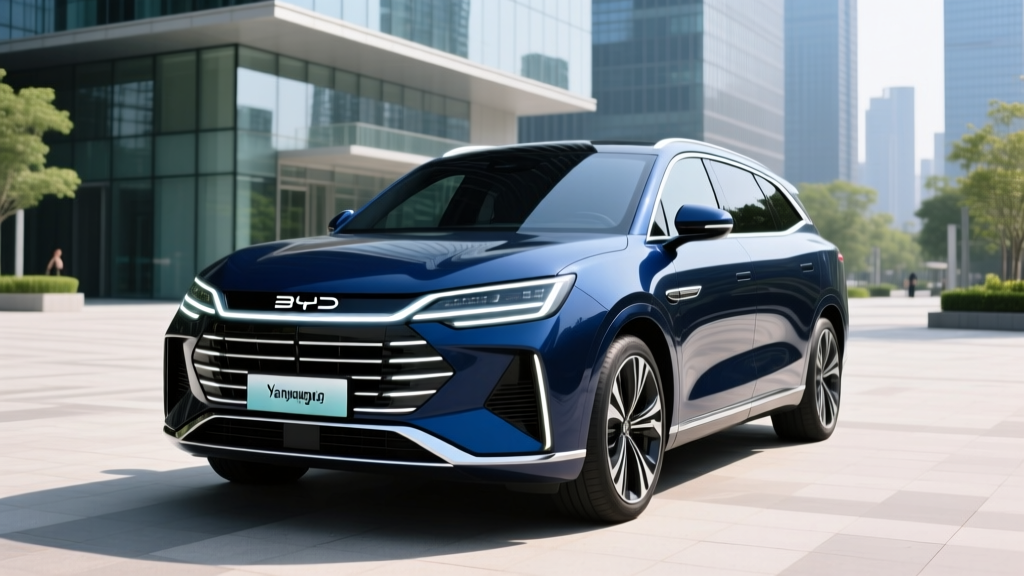
The BYD Yangwang U8 is not a conventional battery-electric vehicle. It's an extended-range electric vehicle (EREV) — a 1,180-horsepower luxury SUV that runs on four independent electric motors while carrying a 2.0-liter turbocharged range-extender generator to keep its massive 49.05 kWh LFP blade battery charged on the go. Priced at roughly $150,000 USD (1.08 million RMB in China), the U8 targets the Land Rover Defender, Mercedes G-Class, and Rivian R1T buyer who wants amphibious capability, 360-degree tank turns, and genuine off-road credibility wrapped in a tech-forward package.
For US buyers, the Yangwang U8 remains a China-market-only product as of early 2026. BYD has not announced US availability, and the vehicle has not undergone NHTSA or IIHS crash testing. This review evaluates the U8 based on published manufacturer specifications, Chinese-market testing data (CLTC), and converted estimates to help prospective importers, industry watchers, and global luxury-SUV shoppers understand what this EREV delivers — and where its limitations lie.
| Spec | Value |
|---|---|
| Powertrain Type | EREV (Extended-Range Electric Vehicle) |
| Drivetrain | Quad-motor AWD (e4 platform) |
| Total System Output | 1,180 hp / 1,280 lb-ft torque |
| 0-60 mph | ~3.6 seconds |
| Battery (usable) | 49.05 kWh — LFP Blade Battery |
| Range Extender | 2.0L turbocharged 4-cylinder generator (180 kW output) |
| EV-Only Range (CLTC) | 112 miles (est. ~62 miles EPA-equivalent) |
| Total Range (CLTC, EV + fuel) | 621 miles (est. ~400–450 miles EPA-equivalent) |
| Fuel Tank | 19.8 gallons (75 liters) |
| DC Fast Charge (peak) | 110 kW |
| 10–80% DC Charge Time | ~18 minutes (claimed) |
| Level 2 AC Charge | 7 kW onboard charger |
| Length / Width / Height | 209.1" / 81.1" / 73.6" |
| Wheelbase | 119.3" |
| Curb Weight | ~7,600 lbs (3,460 kg) |
| Ground Clearance (max, air suspension) | ~11.0 inches |
| Wading Depth | 39.4 inches (1,000 mm) |
| China MSRP | ~1.08M RMB (~$150,000 USD) |
| US Availability | Not available — China market only (as of 2026) |
Range and Efficiency: What the Numbers Actually Mean
The Yangwang U8 uses a dual-energy architecture: a 49.05 kWh LFP (lithium iron phosphate) BYD Blade Battery for electric-only driving, plus a 2.0-liter turbocharged inline-four that acts solely as a generator — it never mechanically drives the wheels. This is the EREV concept, similar in architecture to the original Chevrolet Volt but scaled to a 7,600-pound luxury SUV.
Efficiency figures are complex for an EREV. On electric-only power, the U8's heavy curb weight and boxy aerodynamics push consumption to an estimated 55–65 kWh/100 miles (roughly 50–55 MPGe). When the range extender activates, fuel economy depends heavily on load: light cruising may return 22–26 mpg equivalent, while aggressive driving or off-road use can drop this below 15 mpg. The 180 kW generator output is sufficient to sustain highway speeds indefinitely, but it cannot fully replenish the battery under heavy acceleration demand.
The LFP chemistry is a deliberate choice. LFP offers superior thermal stability, longer cycle life (3,000+ cycles before significant degradation), and no cobalt or nickel — but it sacrifices energy density compared to NMC. In a vehicle this large, the weight penalty is absorbed; in a compact car, it would be a problem.
Charging: DC Fast, Level 2, and the Range-Extender Advantage
Charging an EREV is different from charging a pure BEV because the battery is smaller and the range extender provides a backup. The U8's 49.05 kWh pack charges at up to 110 kW on DC fast chargers — modest by 2026 standards (vehicles like the Hyundai Ioniq 5 peak at 240 kW), but adequate for this battery size.
| Charging Level | Power | Time / Rate | Notes |
|---|---|---|---|
| Level 1 (120V household) | ~1.4 kW | ~35 hours (0–100%) | Emergency use only; range extender makes this viable |
| Level 2 (240V home) | 7 kW (onboard charger limit) | ~7 hours (0–100%) | Full overnight charge; 4–5 mi of EV range per hour of charging |
| DC Fast Charge | 110 kW peak | ~18 min (10–80%) | Tapers above 80%; LFP chemistry tolerates frequent 100% charges better than NMC |
A critical ownership note: the 7 kW onboard AC charger is the bottleneck for home charging. Even with a 48-amp Level 2 wall connector capable of delivering 11.5 kW, the U8 will only accept 7 kW. For daily use this is perfectly adequate — a full charge in 7 hours covers any overnight need — but it means the U8 cannot take advantage of higher-power home chargers or workplace Level 2 stations delivering 19.2 kW.
The range extender fundamentally changes the charging calculus. Owners who drive beyond the 60–70 mile EV range simply burn gasoline via the generator. This makes the U8 practical for road trips and remote areas where DC fast chargers are sparse — a genuine advantage over pure BEVs in charging-desert regions.
Performance: 1,180 Horsepower and the e4 Quad-Motor System
The Yangwang U8's e4 platform assigns one electric motor to each wheel, enabling torque vectoring at a resolution impossible with mechanical differentials. Total system output is 1,180 horsepower and an estimated 1,280 lb-ft of torque, delivered through individual motor controllers that can apply positive or negative torque to any wheel in milliseconds.
The headline number — 0-60 mph in approximately 3.6 seconds — is remarkable for a 7,600-pound vehicle. For context, that matches a Porsche Cayenne Turbo GT and beats the Rivian R1T Quad-Motor (3.0 seconds, but the R1T is 400 pounds lighter). The physics of moving this much mass at that acceleration requires enormous current draw, which is why the U8's battery management system limits consecutive full-power launches to prevent thermal overload.
The e4 system enables capabilities beyond straight-line speed:
- 360-degree tank turns: Opposing wheels spin in opposite directions, rotating the vehicle on its center axis — useful for tight off-road switchbacks and dramatic parking-lot exits.
- Emergency flotation mode: The U8 can seal its body and use wheel rotation as water propulsion for short-duration water crossings at up to 39.4 inches of wading depth, with an emergency buoyancy mode for deeper water (BYD explicitly warns this is for emergencies, not recreational use).
- Adaptive air suspension: Up to 11 inches of ground clearance with adjustable ride height, rivaling the Land Rover Defender's terrain response system.
Driver-assistance tech includes BYD's DiPilot system — a Level 2 (SAE) driver-assist suite with adaptive cruise control, lane-centering, and automated parking. It is not autonomous driving and requires continuous driver supervision. BYD has announced higher-level autonomy features for future OTA updates, but as of 2026, the U8 ships with Level 2 capabilities comparable to Tesla Autopilot or GM Super Cruise in feature scope, though without the hands-free highway mapping of Super Cruise.
Interior, Cargo, and Technology
The U8's cabin reflects its $150,000 positioning. The dashboard features a triple-screen layout: a 12.8-inch OLED center touchscreen, a 23.6-inch digital instrument cluster, and a 12.8-inch passenger entertainment display. BYD's DiLink infotainment system supports voice control, OTA updates, and a 5G-connected app ecosystem. Audio is handled by a 22-speaker Dynaudio system.
Seating is configured for five passengers in two rows. Front legroom is generous at an estimated 41+ inches, with rear legroom around 38 inches — competitive with the Mercedes G-Class but tighter than a Range Rover due to the U8's floor-mounted battery pack raising the floor height.
Cargo space is the U8's compromise. The rear cargo area offers approximately 30 cubic feet behind the second row, expanding to roughly 65 cubic feet with seats folded. The under-floor battery and range-extender engine eliminate any frunk (front trunk) space. For a vehicle of this exterior size, cargo volume is below the Rivian R1S (~90 cu ft max) and significantly below the Mercedes GLS. The U8 prioritizes mechanical packaging and ground clearance over cargo versatility.
Notable tech features:
- Galaxy panoramic roof with electrochromic dimming
- NFC key card and smartphone-as-key
- Thermal imaging night-vision camera for off-road and low-visibility driving
- Vehicle-to-load (V2L) capability — the U8 can power external devices up to 6 kW, making it a mobile power station for camping or job sites
- Satellite phone integration (China-market BeiDou satellite system)
Pricing, Tax Credits, and the US Availability Question
The Yangwang U8 is priced at approximately 1.08 million RMB in China, which converts to roughly $150,000 USD. A Premium Edition with additional luxury packages pushes the price closer to $165,000. For comparison, the Mercedes G550 starts around $145,000, the Land Rover Defender V8 around $120,000, and the Rivian R1T Quad-Motor around $87,000.
| Item | Amount / Status |
|---|---|
| China MSRP (Standard) | ~$150,000 USD (1.08M RMB) |
| China MSRP (Premium Edition) | ~$165,000 USD |
| US MSRP | Not available — no US pricing |
| Federal EV Tax Credit (§30D) | Not eligible — BYD vehicles are not sold in the US and do not meet North American final-assembly requirements |
| Estimated US Import Cost (if legalized) | $170,000–$195,000 (including tariffs, homologation, dealer markup) |
The IRS §30D federal EV tax credit requires final assembly in North America, MSRP caps ($80,000 for SUVs), buyer income limits ($300,000 joint / $150,000 single), and battery critical-mineral and component sourcing from the US or free-trade-agreement partners. The Yangwang U8 fails every one of these requirements: it is assembled in China, exceeds the MSRP cap by nearly double, and its BYD-manufactured LFP battery uses Chinese-sourced materials. Even if BYD entered the US market, the U8 would not qualify for the credit.
The broader question is whether BYD will bring the Yangwang brand to the US at all. As of 2026, BYD has focused its international expansion on Southeast Asia, Europe, Latin America, and Australia, primarily with more affordable models like the Atto 3, Seal, and Dolphin. US market entry faces significant political and tariff headwinds, including 100% tariffs on Chinese-made EVs enacted in 2024. Industry analysts consider a US Yangwang launch unlikely before 2028 at the earliest.
Ownership Costs, Warranty, and Long-Term Considerations
BYD offers a comprehensive warranty in China for the Yangwang U8: 6 years or 150,000 km (~93,000 miles) on the vehicle, and 8 years or 150,000 km on the battery pack with a guaranteed capacity retention threshold of 70%. The e4 motor system and range-extender generator are covered under the powertrain warranty for the same 8-year period. These terms are competitive with global luxury-EV warranties, though US buyers of imported vehicles would have no manufacturer warranty support.
Long-term ownership considerations include:
- Battery longevity: LFP chemistry is among the most durable in production, with demonstrated 3,000+ full-cycle life before reaching 80% capacity. At the U8's 60-mile EV range per cycle, that equates to 180,000+ miles of electric-only driving before significant degradation — well beyond the warranty period.
- Range-extender maintenance: The 2.0L turbo generator requires standard internal-combustion maintenance: oil changes, air filters, coolant. Owners who drive primarily on electric power may need to run the generator periodically to prevent fuel degradation and engine seizing — BYD's software manages this automatically.
- Insurance: At $150,000+ with 1,180 hp, expect insurance premiums in the $4,000–$7,000/year range, comparable to a Mercedes G63 AMG.
- Depreciation: Chinese luxury EVs have limited track records in global markets. Depreciation is likely to be steep compared to established luxury brands, particularly without a US dealer network.
Pros, Cons, and Who Should Consider the Yangwang U8
Pros
- 1,180 hp with 3.6-second 0-60 in a full-size SUV
- EREV eliminates range anxiety — 400+ total miles with generator backup
- Best-in-class off-road capability: 360° tank turns, 39.4" wading, air suspension
- LFP battery offers exceptional cycle life and thermal safety
- 6 kW V2L capability for off-grid power
- Tech-forward cabin with triple displays, night vision, and 5G connectivity
Cons
- Not available in the US — no sales, service, or warranty infrastructure
- 7 kW AC onboard charger limits home-charging speed
- EV-only range is just 60–70 miles (EPA-equivalent) — the rest burns gas
- ~7,600 lb curb weight hurts efficiency and tire wear
- Cargo space (30 cu ft) is modest for the vehicle's footprint
- No NHTSA/IIHS crash testing or US safety certification
- $150,000+ price competes with established luxury brands that offer dealer support
Who this EV suits best: The Yangwang U8 is built for affluent buyers who want a statement vehicle combining extreme off-road capability with electric-first daily driving and the security of a gasoline range extender. In China, it competes directly with the Mercedes G-Class and Land Rover Defender for buyers who value technology differentiation. For US buyers, the U8 is currently an aspirational benchmark rather than a purchasable option — it demonstrates what EREV technology can achieve at the luxury end of the market.
If you're a US buyer seeking similar capability today, the closest alternatives are the Rivian R1T/R1S Quad-Motor (pure BEV, ~320-mile range, US-built, tax-credit eligible on some trims) or the Mercedes G550 (ICE, established dealer network, no electric range). The U8 occupies a unique niche that no current US-market vehicle fills.
Frequently Asked Questions
What is the real-world range of the BYD Yangwang U8?
On electric-only power, expect approximately 60–70 miles (EPA-equivalent estimate) from the 49.05 kWh LFP battery. With the range-extender generator and full 19.8-gallon fuel tank, total range is an estimated 400–450 miles in mixed driving. Cold weather and sustained highway speeds will reduce EV-only range by 20–35%, but the generator compensates by burning additional fuel.
How fast does the Yangwang U8 charge?
DC fast charging peaks at 110 kW, achieving a 10–80% charge in approximately 18 minutes. Home Level 2 charging is limited to 7 kW by the onboard charger, requiring about 7 hours for a full 0–100% charge. The relatively small battery means even modest charge rates fill it quickly.
Can I buy the BYD Yangwang U8 in the United States?
No. As of 2026, the Yangwang U8 is sold exclusively in China. BYD has not announced US market entry plans, and 100% US tariffs on Chinese-made EVs make importation economically impractical. The vehicle also lacks NHTSA certification and US-spec safety equipment.
Does the Yangwang U8 qualify for the federal EV tax credit?
No. The IRS §30D credit requires North American final assembly, MSRP below $80,000 for SUVs, buyer income within caps, and compliant battery sourcing. The U8 is assembled in China, priced at ~$150,000, and uses a fully Chinese-manufactured battery — it does not qualify under any provision.
Is the Yangwang U8 self-driving?
No. The U8's DiPilot system is an SAE Level 2 driver-assist feature, meaning it can manage steering, acceleration, and braking under specific conditions, but the driver must remain fully engaged and supervising at all times. It is not autonomous.
How does the U8 compare to the Rivian R1T or Mercedes G-Class?
The U8 offers more horsepower (1,180 vs. R1T's 850 or G63's 577) and unique EREV flexibility. The R1T wins on cargo versatility, US availability, charging infrastructure access, and tax-credit eligibility. The G-Class wins on brand prestige, dealer support, and resale value outside China. The U8's advantage is its combination of electric daily driving, off-road extremes, and range-extender security — a niche no competitor currently fills in the US market.
What is the battery warranty on the Yangwang U8?
In China, BYD provides 8 years or 150,000 km (~93,000 miles) of battery coverage with a guaranteed minimum capacity retention of 70%. The LFP Blade Battery chemistry is among the most durable available, with demonstrated cycle life exceeding 3,000 full charge-discharge cycles.