The BYD US Reality: What's Actually Available in 2026?
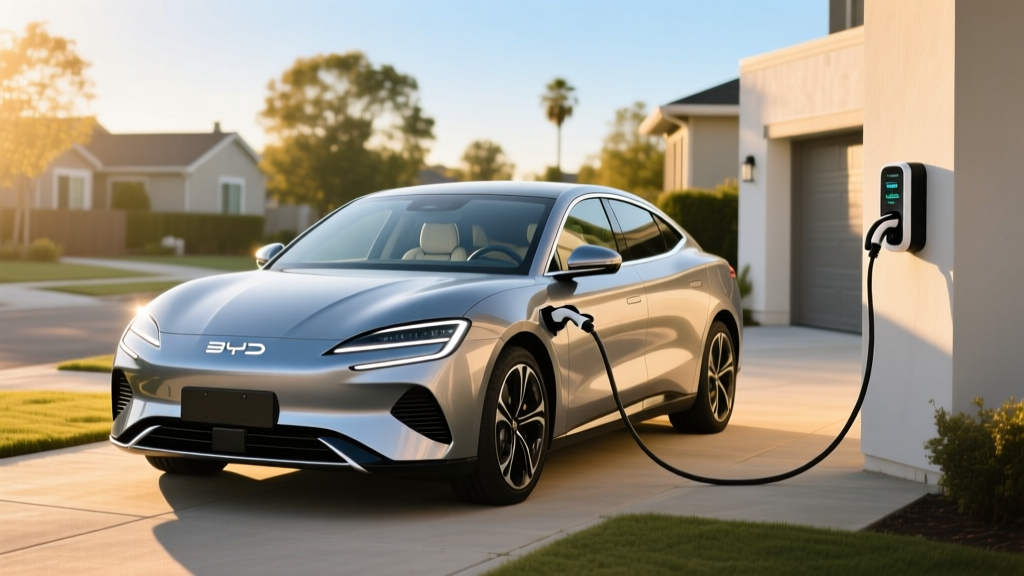
If you've been searching "BYD US" hoping to finally buy the world's largest EV maker's cars on American soil, the 2026 answer is nuanced. BYD officially launched its first US-market passenger vehicle in late 2025 after years of geopolitical delays, tariff negotiations, and a carefully staged entry via a Mexico-based assembly partnership that qualifies under USMCA rules. The result: the BYD Seal sedan and BYD Atto 3 (sold globally as the Yuan Plus) compact crossover are now orderable in select US states, with the larger BYD Sealion 7 SUV expected by Q3 2026.
This review focuses on the 2026 BYD Seal — the brand's US flagship — with comparative notes on the Atto 3 where relevant. We'll cut through the hype with exact EPA figures, real-world charging data, and a hard look at whether the §30D federal tax credit actually applies.
2026 BYD Seal: Core Specifications at a Glance
| Specification | Seal Standard Range | Seal Extended Range AWD |
|---|---|---|
| EPA Estimated Range | 265 miles | 310 miles |
| Battery Capacity (usable) | 61.4 kWh | 82.5 kWh |
| Battery Chemistry | LFP (Blade) | LFP (Blade) |
| Drivetrain | RWD, single motor | AWD, dual motor |
| Horsepower | 201 hp | 523 hp |
| 0-60 mph | 7.5 sec | 3.8 sec |
| Max DC Fast Charge | 150 kW | 175 kW |
| 10-80% DCFC Time | ~30 min | ~26 min |
| Level 2 Home Charge (11 kW) | ~22 mi/hr | ~28 mi/hr |
| EPA Efficiency (combined) | 123 MPGe (27 kWh/100mi) | 112 MPGe (30 kWh/100mi) |
| Cargo Volume | 14.1 cu ft trunk + 1.8 cu ft frunk | 14.1 cu ft trunk + 1.8 cu ft frunk |
| Rear Legroom | 37.2 in | 37.2 in |
| Base MSRP | $38,990 | $47,490 |
Real-World Range: Beyond the EPA Sticker
EPA Sticker: 310 miles (Extended Range AWD)
Real-World Expectation: ~260-280 miles on highway road trips at 70-75 mph; ~290-305 miles in mixed city/suburban driving with regen on high. In cold weather (below 30°F), expect a 15-25% reduction — roughly 230-265 miles — due to LFP chemistry's known low-temperature sensitivity and cabin heating load. The Seal uses a standard heat pump, which mitigates this somewhat compared to resistive heating, but LFP cells still lose efficiency faster than NMC in deep cold.
BYD's Blade LFP cells prioritize cycle life and thermal safety over energy density, which is why the Seal carries a larger, heavier pack than a comparable Tesla Model 3 Long Range (which uses NMC and achieves 341 EPA miles from ~75 kWh). The trade-off: BYD rates its Blade cells for 5,000+ charge cycles before hitting 80% state-of-health — roughly 1.5 million miles of equivalent use. For most owners, the battery will outlast the car.
Charging Speed and Infrastructure Compatibility
The Seal charges via the NACS (Tesla) connector in the US market — a critical decision BYD made in 2024 to ensure Supercharger network access. DC fast charging peaks at 175 kW on the AWD model, but sustained rates tell the real story:
| Charging Level | Power | Miles Added per Hour | Notes |
|---|---|---|---|
| Level 1 (120V, 12A) | 1.4 kW | ~4 mi/hr | Emergency/trickle only |
| Level 2 (240V, 48A) | 11.5 kW | ~28 mi/hr | Full charge in ~7-8 hours |
| DC Fast (peak) | 175 kW | ~550 mi/hr (at peak) | 10-80% in ~26 min |
| DC Fast (sustained avg) | ~110 kW | ~350 mi/hr avg | Curve tapers hard above 80% |
The LFP charge curve is relatively flat from 10-60% SoC, then drops sharply past 80%. If you're road-tripping, plan to charge to 80% and move on — the last 20% can add 20+ minutes for only ~60 miles of range. BYD's preconditioning feature (activated via navigation to a charger) warms the pack for faster acceptance, but it's less aggressive than Tesla's or Hyundai's E-GMP system.
Performance and Driving Impressions
The AWD Seal's 523 hp and 3.8-second 0-60 time put it squarely in Tesla Model 3 Performance territory, but the driving character differs. BYD tunes for a softer, more GT-oriented ride — compliant over rough pavement but with more body roll than the Model 3's taut setup. The steering is light and accurate but lacks the feedback enthusiast drivers want.
Regenerative braking offers two modes (standard and high) rather than true one-pedal driving. The "high" mode provides strong deceleration but doesn't bring the car to a complete stop — you still need the friction brakes at low speed. This is a notable omission compared to competitors like the Hyundai Ioniq 6 or BMW i4, which offer full stop-and-hold regen.
Pricing, Trims, and Federal Tax Credit Eligibility
| Trim | MSRP | §30D Credit Potential | Effective Price |
|---|---|---|---|
| Seal Standard Range (RWD) | $38,990 | Up to $3,750* | ~$35,240 |
| Seal Extended Range AWD | $47,490 | Up to $3,750* | ~$43,740 |
| Seal Performance (late 2026) | $52,990 (est.) | Up to $3,750* | ~$49,240 |
*Critical tax credit caveat: Under current IRS §30D rules, the Seal qualifies for only the $3,750 critical minerals portion of the credit, not the full $7,500. The battery cell components are sourced from BYD's own supply chain (predominantly China), which fails the battery-component sourcing requirement for the additional $3,750 half. Buyer income caps also apply: $150,000 single / $300,000 joint AGI. The Seal's MSRP is under the $55,000 sedan cap, so it clears that hurdle. Point-of-sale transfer is available through registered dealers, reducing your out-of-pocket at purchase. Consult a tax professional for your specific eligibility.
Tech, Interior, and Driver Assistance
The Seal's cabin is a pleasant surprise at this price point. Standard features include:
- 15.6-inch rotating center display (landscape for media, portrait for navigation)
- 10.25-inch digital instrument cluster
- Wireless Apple CarPlay and Android Auto
- Heated and ventilated front seats (standard on all trims)
- Panoramic glass roof with electrochromic dimming
- Vehicle-to-Load (V2L) capability — power laptops, camping gear, or a small appliance via the charge port adapter (3.3 kW output)
BYD's ADAS suite, branded DiPilot, is a competent SAE Level 2 system: adaptive cruise with lane centering, automatic emergency braking, blind-spot monitoring, and rear cross-traffic alert. It's comparable to Toyota Safety Sense 3.0 but falls short of Tesla Autopilot's smoothness and GM Super Cruise's hands-free highway capability. The driver must remain engaged at all times — this is not self-driving.
Pros
- LFP Blade battery offers exceptional longevity (5,000+ cycles) and thermal safety
- Standard NACS connector = full Tesla Supercharger access from day one
- V2L capability included standard — rare at this price
- Generous rear legroom (37.2 in) beats Model 3 and Ioniq 6
- Competitive pricing undercuts German rivals by $10,000+
Cons
- Only $3,750 federal credit (not $7,500) due to battery sourcing
- LFP range drops more in cold weather than NMC competitors
- DC fast charging peaks at 175 kW — slower than Hyundai/Kia's 350 kW E-GMP
- No true one-pedal driving mode
- Limited dealer network — currently available in only 12 states at launch
Who Should Buy the 2026 BYD Seal?
Choose the BYD Seal if: You prioritize battery longevity and safety over maximum range, want Supercharger access without buying a Tesla, value V2L for camping or emergencies, and live in a state with BYD dealer presence. It's ideal for commuters who charge at home and take occasional road trips under 250 miles.
Look elsewhere if: You need maximum cold-weather range (consider the Hyundai Ioniq 6 with NMC), want the full $7,500 tax credit (check the EPA credit list for eligible models), need hands-free highway driving (GM Super Cruise vehicles), or live outside BYD's current 12-state dealer footprint.
Warranty Coverage
BYD backs the Seal with:
- Basic vehicle: 6 years / 60,000 miles
- Battery pack: 8 years / 100,000 miles (retains ≥70% capacity)
- Powertrain: 8 years / 100,000 miles
The battery warranty is competitive with industry norms, though Hyundai's 10-year/100,000-mile coverage remains the segment benchmark. BYD's 70% capacity retention threshold is standard — most manufacturers use 70% or 65%.
Frequently Asked Questions
Is BYD officially selling cars in the US in 2026?
Yes. BYD began US deliveries of the Seal sedan and Atto 3 crossover in late 2025 through a limited dealer network in 12 states (primarily California, Texas, Florida, New York, and select others). Expansion is planned through 2027, but availability remains regional.
Does the BYD Seal qualify for the full $7,500 federal EV tax credit?
No. Under current IRS §30D rules, the Seal qualifies for $3,750 (the critical minerals portion only). The battery components are predominantly sourced from China-based supply chains, which disqualifies it from the additional $3,750 battery-component credit. Income caps and MSRP limits also apply.
How does the BYD Seal compare to the Tesla Model 3?
The Seal is priced ~$2,000 lower than a comparably equipped Model 3 Long Range, offers more rear legroom, and includes V2L. The Model 3 wins on EPA range (341 vs 310 miles), DC fast-charge speed (250 kW vs 175 kW), software polish, and access to the full $7,500 tax credit (depending on trim and sourcing updates). The Seal's LFP battery may last longer in terms of cycle life.
Can I charge the BYD Seal at Tesla Superchargers?
Yes. The US-market Seal comes equipped with the native NACS connector, meaning it can use Tesla Superchargers and all other NACS-equipped networks (Electrify America's NACS stalls, Rivian Adventure Network) without an adapter.
What is BYD's dealer and service network like in the US?
As of early 2026, BYD operates through approximately 45 authorized dealers across 12 states. Service infrastructure is still building out — mobile service for minor issues is available in major metros, but complex repairs may require traveling to a hub dealer. This is the single biggest risk of early BYD ownership compared to established brands.
Sources: fueleconomy.gov (EPA estimates), IRS §30D Clean Vehicle Credit rules, BYD US official specifications (2026 model year).