Why BYD Song 2023 Sales Units Still Matter in 2026
When BYD reported its full-year 2023 results, one number dominated the global EV conversation: the BYD Song family crossed 600,000 units sold across its plug-in hybrid (DM-i/DM-p) and battery-electric (EV) variants. That single model line accounted for roughly one in every three BYD passenger vehicles sold worldwide, making it the best-selling electrified SUV on the planet for that year. For context, Tesla delivered approximately 1.2 million Model Y units globally in 2023 — and the Song came remarkably close when combining all its powertrain variants.
Now in 2026, the BYD Song continues to dominate in China, Southeast Asia, Latin America, and Europe (badged as the BYD Seal U in some markets). But for US-based EV shoppers, the Song remains a forbidden fruit. BYD has no official passenger-vehicle presence in the United States, and 100% tariffs on Chinese-built EVs effectively wall off this price-disrupting SUV from American driveways.
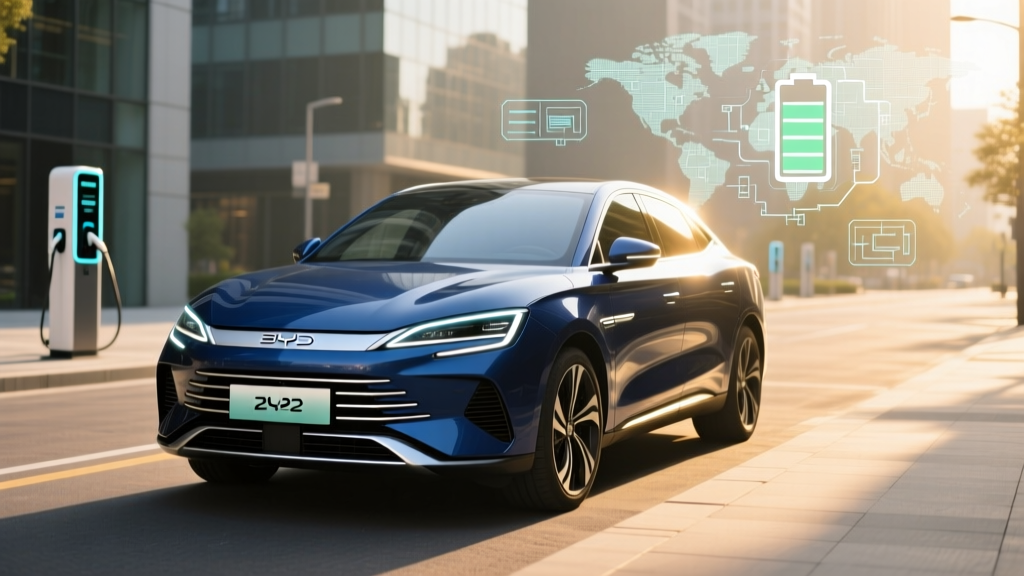
Still, understanding the Song's engineering, pricing, and real-world capabilities is essential for any EV buyer benchmarking what the global market offers — and what US competitors must match on value. Below, we break down the latest BYD Song Plus EV (the pure battery-electric variant most relevant to US shoppers) with exact specs, real-world range expectations, and a clear-eyed look at whether you should care about a vehicle you can't buy stateside.
BYD Song Plus EV: Core Specifications at a Glance
| Specification | Value |
|---|---|
| EPA-Estimated Range | Not EPA-rated (not sold in US); WLTP: ~267–310 mi (430–505 km) depending on battery pack |
| Battery Capacity | 71.8 kWh (standard) / 87.0 kWh (extended) — BYD Blade LFP |
| Battery Chemistry | LFP (Lithium Iron Phosphate) |
| Drivetrain | FWD single-motor (AWD dual-motor available in select markets) |
| Horsepower | 201 hp (FWD) / 315 hp (AWD) |
| 0–60 mph | ~7.9 sec (FWD) / ~5.9 sec (AWD) |
| Max DC Fast Charge | 90 kW (71.8 kWh) / 140 kW (87.0 kWh) |
| 10–80% DC Charge Time | ~30 min (71.8 kWh) / ~35 min (87.0 kWh) |
| Level 2 AC Charge Rate | 7 kW (single-phase) / 11 kW (three-phase, where available) |
| Efficiency (WLTP) | ~16.7 kWh/100 km (~27 kWh/100 mi) |
| Cargo Volume | 20.1 cu ft (rear seats up) / 55.4 cu ft (rear seats folded) |
| Wheelbase | 107.5 in (2,765 mm) |
| Rear Legroom | ~37.0 in (estimated) |
| Curb Weight | ~4,300 lb (FWD, 71.8 kWh) |
| Battery Warranty (China) | 8 years / 150,000 km (~93,000 mi); first-owner unlimited in some trims |
| Base MSRP (China) | ~¥159,800 (~$22,000 USD direct conversion) |
| US Availability | Not available — no US sales; 100% tariff on Chinese-built EVs |
Note: The BYD Song lineup includes the Song Pro, Song Plus DM-i (PHEV), Song Plus DM-p (performance PHEV), and Song Plus EV (BEV). Specs above reflect the latest BEV variant. Chinese-market MSRP converted at approximate exchange rates; local pricing in export markets (Europe, SE Asia, Latin America) is significantly higher due to tariffs, shipping, and dealer margins.
Real-World Range: What WLTP Numbers Don't Tell You
WLTP testing cycles are gentler than the EPA's, with more city-style driving and lower average speeds. Based on independent European testing of the closely related BYD Seal U (the Song's European-market sibling), real-world highway range at 70 mph drops to roughly 195–220 miles for the standard pack. In cold weather (below 32°F / 0°C), LFP chemistry loses a larger percentage of usable capacity than NMC — expect a 25–35% range reduction in freezing conditions, bringing the standard-range Song down to approximately 160–180 miles on a full charge.
The LFP Blade battery does offer one real-world advantage: it tolerates repeated 100% charging better than NMC cells, meaning daily full charges won't accelerate degradation the way they would in an NMC pack. BYD recommends periodic 100% charges to help the battery management system recalibrate cell balance — a practice that's actually discouraged in most NMC vehicles.
Charging Speed: Functional but Not Class-Leading
Charging is where the BYD Song Plus EV reveals its value-oriented engineering. While competitors like the Hyundai Ioniq 5 (peaking at 240 kW on 800V architecture) or the Tesla Model Y (up to 250 kW on V3 Superchargers) leave it behind, the Song's charging rates are adequate for its price segment.
| Charging Level | Power (kW) | Approximate Speed | Notes |
|---|---|---|---|
| Level 1 (120V household) | ~1.4 kW | ~4 mi/hr | Emergency/trickle only; full charge in 50+ hours |
| Level 2 (240V, single-phase) | 7 kW | ~22 mi/hr | Full charge in ~10 hr (71.8 kWh) / ~12 hr (87.0 kWh) |
| Level 2 (three-phase, where available) | 11 kW | ~35 mi/hr | Not common in US residential; full charge in ~6.5–8 hr |
| DC Fast Charge (standard pack) | Peak 90 kW | 10–80% in ~30 min | Sustained rate tapers significantly above 60% SoC |
| DC Fast Charge (extended pack) | Peak 140 kW | 10–80% in ~35 min | Larger pack absorbs more energy despite similar taper curve |
The Song uses a 400V electrical architecture, which limits peak charge rates compared to 800V competitors. On a DC fast charger, the charge curve is relatively flat through 50% State of Charge (SoC), then tapers progressively. The 90 kW peak on the standard pack means you'll spend meaningful time at chargers on road trips — a 10–80% session takes roughly 30 minutes, and if you need to push past 80%, expect another 20+ minutes for the remaining 20%.
For home charging, the 7 kW single-phase onboard charger is the limiting factor. US buyers accustomed to 11.5 kW Level 2 chargers (like those on the Tesla Model Y or Ford Mustang Mach-E) would find overnight charging slightly slower, though still practical for daily use if you drive under 60 miles per day.
Performance, Efficiency, and Driving Dynamics
The BYD Song Plus EV is tuned for comfort and efficiency, not performance. The 201-hp front-wheel-drive motor delivers adequate acceleration for city and suburban driving, with the 0–60 mph time of roughly 7.9 seconds putting it in the same ballpark as a base Toyota RAV4 Hybrid. The AWD dual-motor variant, at 315 hp and ~5.9 seconds to 60 mph, is genuinely quick but adds weight and reduces range.
Efficiency sits at approximately 27 kWh per 100 miles (WLTP), which translates to roughly 124 MPGe if EPA-rated. That's competitive but not exceptional — the Tesla Model Y RWD achieves about 28 kWh/100 mi (122 MPGe EPA), while the Hyundai Ioniq 5 RWD manages around 30 kWh/100 mi (114 MPGe EPA) with a larger, heavier platform. The Song's efficiency is respectable for its class.
Ride quality is a highlight. The suspension is softly tuned, absorbing road imperfections well, though body roll is noticeable in aggressive cornering. Steering is light and numb — a deliberate choice for the Chinese market's preference for effortless urban driving. Regenerative braking offers two modes (standard and high) but does not provide true one-pedal driving with a full stop, a feature many EV veterans expect.
Pricing, Tax Credits, and the US Availability Problem
| Market | Approximate Price | Notes |
|---|---|---|
| China (MSRP) | ~¥159,800–¥189,800 ($22,000–$26,000 USD) | Before local incentives; highly competitive domestically |
| Europe (as Seal U) | ~€38,000–€44,000 ($41,000–$48,000 USD) | Includes shipping, EU tariffs, dealer margin |
| Southeast Asia / Latin America | ~$32,000–$40,000 USD | Varies by import duty structure |
| United States | Not available | 100% tariff on Chinese-built EVs; no BYD dealer network |
Federal Tax Credit (§30D) Eligibility: Because the BYD Song is manufactured in China and BYD has no US sales operation, the vehicle does not qualify for the IRS §30D Clean Vehicle Credit. Even if BYD established US sales, the 100% tariff imposed in 2024 on Chinese-built electric vehicles (raised from 25%) would add an insurmountable cost penalty. Additionally, §30D requires final assembly in North America for the new-vehicle credit, and the Song's battery and critical minerals would need to meet escalating domestic-content thresholds. In short: there is no realistic path to a tax-credited BYD Song in the US under current policy.
For US buyers drawn to the Song's value proposition, the practical alternatives are vehicles like the Tesla Model Y (starting ~$44,990, eligible for $7,500 point-of-sale credit if income and sourcing requirements are met), the Hyundai Ioniq 5 (now assembled in Georgia, qualifying for §30D), or the Chevrolet Equinox EV (starting ~$33,000, US-built and credit-eligible). Each costs more than the Song's China MSRP but offers EPA certification, a US dealer network, and warranty support.
Tech, Interior, and Daily Livability
The Song Plus EV's interior is where BYD makes its strongest value case. Standard features on mid-range trims include a 12.8-inch rotating center touchscreen (a BYD signature), a 12.3-inch digital instrument cluster, synthetic leather upholstery, heated and ventilated front seats, a panoramic glass roof, and a 15-wireless phone charger. The infotainment system runs BYD's DiLink platform, which supports over-the-air updates, voice control, and a wide app ecosystem in Chinese-market versions.
Driver assistance is provided through BYD's DiPilot suite, which includes adaptive cruise control, lane-keeping assist, automatic emergency braking, blind-spot monitoring, and a 360-degree camera system. This is SAE Level 2 driver assistance — it requires the driver to remain fully engaged with hands on the wheel and eyes on the road at all times. It is not autonomous driving and should not be confused with Level 4 systems like Waymo's driverless robotaxis.
Cargo space is competitive: 20.1 cubic feet behind the rear seats and 55.4 cubic feet with them folded compares favorably to the Tesla Model Y (30.2 / 72.1 cu ft — though the Model Y has a deeper cargo area and available third row) and the Hyundai Ioniq 5 (27.2 / 59.3 cu ft). Rear-seat legroom is generous at approximately 37 inches, making the Song a comfortable family hauler.
Notable drawbacks include the absence of a front trunk (frunk), limited third-party app integration in export markets, and an infotainment UI that some reviewers have described as cluttered compared to Tesla's minimalist approach or Hyundai's conventional layout.
Understanding BYD Song 2023 Sales Units in Context
The original keyword that brings many researchers here — BYD Song 2023 sales units — reflects genuine curiosity about how this one model line achieved such staggering volume. Here's the breakdown:
- Song family total (2023): Approximately 636,000 units across all variants (DM-i PHEV, DM-p PHEV, and BEV)
- Song Plus DM-i (PHEV): ~340,000 units — the volume leader, offering 31–68 miles of electric-only range with a gasoline backup
- Song Plus EV (BEV): ~105,000 units — the pure-electric variant profiled in this article
- Song Pro (smaller, budget variant): ~190,000 units — a more affordable option primarily for the Chinese domestic market
For perspective, the Song family alone outsold the entire US EV output of most legacy automakers in 2023. BYD's vertical integration — it manufactures its own batteries (the Blade cell), semiconductors, and electric motors — allows pricing that undercuts competitors by 20–40% in comparable segments. This cost advantage is precisely why Western governments have erected tariff barriers: a $22,000 Song Plus EV with this level of equipment would severely pressure domestic automakers' margins.
According to BYD's investor disclosures, the company sold over 3 million new-energy vehicles (BEV + PHEV combined) in 2023, surpassing Tesla in total electrified vehicle volume for the first time. The Song was the single largest contributor to that milestone.
Pros, Cons, and the Verdict for US Shoppers
- Exceptional value — $22,000 base in China with premium features standard
- LFP Blade battery offers strong safety, long cycle life, and 100% charge tolerance
- Spacious interior with generous rear legroom and competitive cargo volume
- Well-equipped: rotating screen, heated/ventilated seats, panoramic roof standard on mid trims
- Strong global availability and growing charging compatibility (CCS2 in Europe, GB/T in China)
- Not available in the United States — no sales, no service, no warranty support
- DC fast charging peaks at 90–140 kW — slow compared to 800V competitors
- No EPA certification means no verified US range or efficiency figures
- Infotainment UI can feel cluttered; limited English-language app ecosystem
- No frunk; no true one-pedal driving mode
- 100% US tariff makes import economically unviable even if desired
The verdict: The BYD Song Plus EV is a genuinely compelling compact electric SUV — if you live outside the United States. For US buyers, it serves as a benchmark for what value-oriented EVs could cost in a tariff-free market, but it is not a purchase option. Your best alternatives remain the Tesla Model Y, Hyundai Ioniq 5, Chevrolet Equinox EV, and upcoming models from Kia and Nissan, all of which offer US warranty coverage, EPA-verified range, and federal tax credit eligibility.
Frequently Asked Questions
What is the real-world range of the BYD Song Plus EV?
Expect approximately 215–250 miles from the 71.8 kWh pack and 255–280 miles from the 87.0 kWh pack under mixed conditions. Highway driving at 70 mph reduces range to roughly 195–220 miles (standard pack). In freezing weather, LFP chemistry can lose 25–35% of usable capacity, dropping real-world range to 160–180 miles for the smaller pack.
How fast does the BYD Song Plus EV charge?
DC fast charging peaks at 90 kW (standard pack) or 140 kW (extended pack), with 10–80% taking approximately 30–35 minutes. Home Level 2 charging at 7 kW adds about 22 miles of range per hour, requiring 10–12 hours for a full charge depending on pack size.
Does the BYD Song qualify for the US federal EV tax credit?
No. The BYD Song is not sold in the United States, is manufactured in China (subject to a 100% tariff), and does not meet §30D requirements for North American final assembly or battery-sourcing thresholds. See IRS.gov for current credit rules.
Is the BYD Song worth buying vs. US-market competitors?
You cannot buy the BYD Song in the US. If you could, its ~$22,000 China pricing would make it the best value in the segment. In practice, US buyers should compare the Tesla Model Y (~$44,990 before credit), Hyundai Ioniq 5 (~$42,000), or Chevrolet Equinox EV (~$33,000) — all offering EPA-verified range, US service networks, and potential §30D eligibility.
What battery chemistry does the BYD Song use, and how long will it last?
The Song Plus EV uses BYD's proprietary Blade cell, an LFP (lithium iron phosphate) chemistry known for excellent thermal stability and long cycle life. BYD claims 3,000+ charge cycles before significant degradation. The Chinese-market warranty covers 8 years / 150,000 km (~93,000 miles), with some first-owner trims offering unlimited battery coverage.
Why did BYD sell so many Song units in 2023?
BYD Song 2023 sales units exceeded 600,000 because the model line spans three powertrains (DM-i PHEV, DM-p PHEV, BEV) at multiple price points, all sharing a popular compact SUV form factor. BYD's vertical integration — making its own batteries, motors, and chips — keeps costs 20–40% below competitors, while China's aggressive NEV purchase subsidies and license-plate incentives drove massive domestic demand.
Will BYD ever sell the Song in the United States?
Not under current conditions. The 100% tariff on Chinese-built EVs (enacted in 2024), combined with §30D tax credit requirements for North American assembly and battery sourcing, make US sales economically unviable. BYD has stated it is evaluating a potential manufacturing plant in Mexico, but even that path faces political and trade-policy uncertainty as of 2026.