The BYD Shark Is Real — Just Not for US Buyers
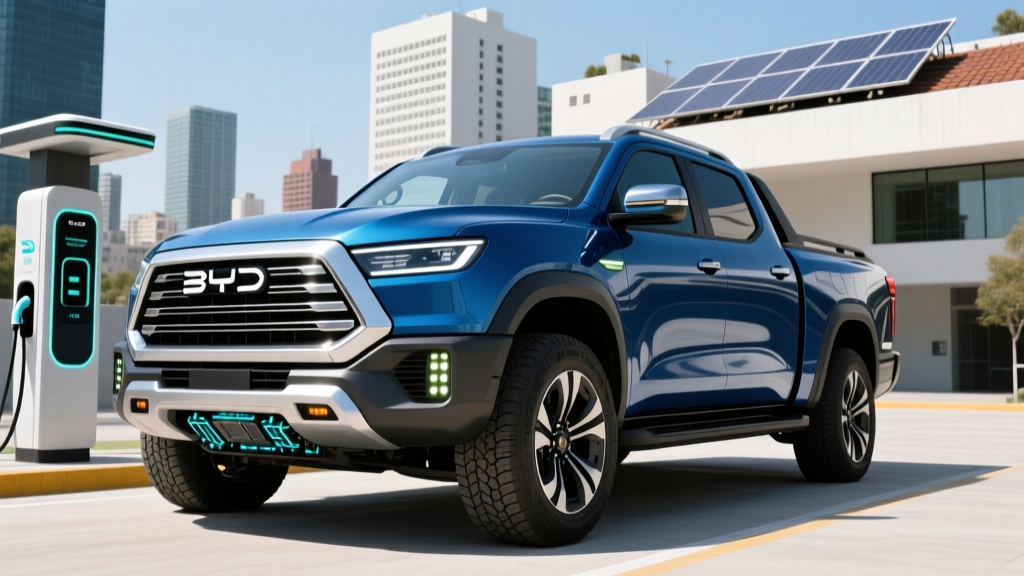
If you've been searching for information on a BYD truck Mexico launch, you've likely seen the headlines: China's largest EV maker finally rolled out a pickup, and it debuted not in Shenzhen or Shanghai, but in Mexico. The BYD Shark (sometimes called the Shark 6 in certain markets) is a plug-in hybrid electric vehicle (PHEV) midsize pickup that launched in Mexico in mid-2024 and has continued into the 2025–2026 model year with growing availability across Latin America and Australia.
Here's the critical detail for US-based shoppers: the BYD Shark is not sold in the United States and cannot be imported for road use under current NHTSA and EPA regulations. There is no homologated US-spec version, no EPA certification, and no pathway to the federal §30D tax credit. This review covers the Shark as it exists in the Mexican and export markets — its real specs, real limitations, and what it signals for the global electrified truck segment — so you can understand the vehicle behind the search results and what it means if you're cross-border shopping or tracking BYD's eventual North American ambitions.
BYD Shark PHEV Powertrain: What's Under the Hood
The BYD Shark is not a battery-electric vehicle (BEV). It uses BYD's Dual Mode Off-Road (DMO) plug-in hybrid platform, which pairs a turbocharged 1.5-liter inline-four gasoline engine with two electric motors — one on each axle — delivering electronic four-wheel drive without a mechanical driveshaft.
| Spec | Value |
|---|---|
| Powertrain | PHEV (1.5L turbo I4 + dual electric motors) |
| System Output | ~430 kW (577 hp combined) |
| 0–100 km/h (0–62 mph) | 5.7 seconds (manufacturer claim) |
| Drivetrain | Electronic AWD (dual-motor, no mechanical link) |
| Battery Chemistry | LFP (Lithium Iron Phosphate) — BYD Blade |
| Battery Capacity | ~26.7 kWh (usable) |
| Electric-Only Range (NEDC) | 100 km (~62 miles) |
| Electric-Only Range (WLTP est.) | ~80 km (~50 miles) |
| Total Range (hybrid mode) | ~840 km (~522 miles) combined |
| Max DC Fast Charge | Not equipped (AC charging only) |
| Level 2 AC Charge Rate | ~6.6 kW (estimated 4–5 hours 10–100%) |
| Towing Capacity | 2,500 kg (~5,510 lbs) braked |
| Payload | ~815 kg (~1,797 lbs) |
| Cargo Bed Length | ~1,520 mm (~59.8 in) |
| Base MSRP (Mexico) | ~MXN $899,000 (~USD $46,500 at current exchange) |
| US Federal Tax Credit (§30D) | Not eligible (not sold/certified in US) |
BYD rates the combined system at approximately 430 kW (577 horsepower), which puts the Shark in the same output bracket as a Ford F-150 Lightning extended-range or a Rivian R1T dual-motor — except the Shark achieves it through a blended gas-electric system rather than a pure battery pack. The 5.7-second 0–100 km/h time is quick for a midsize pickup, though the 0–60 mph equivalent will be roughly 5.4 seconds given the shorter distance.
Real-World Electric Range vs. the Sticker Number
The 26.7 kWh LFP Blade battery pack is modest by BEV standards but competitive for a PHEV truck. For context, the Ford Maverick hybrid has no electric-only mode at all, while the upcoming Ramcharger (EREV) targets a much larger battery. The Shark's LFP chemistry is a deliberate choice: LFP sacrifices some energy density compared to NMC but offers superior cycle life (3,000+ cycles to 80% capacity), better thermal stability, and no cobalt or nickel in the cathode. For a work truck that may sit at partial state-of-charge for long periods, LFP is arguably the right call.
In hybrid mode, the 1.5L turbo engine acts primarily as a generator and highway cruise assist. BYD claims a combined range of approximately 840 km (522 miles), which is plausible given the ~60-liter fuel tank and the electric motors handling low-speed and city driving where ICE engines are least efficient.
Charging: The Shark's Biggest Practical Limitation
This is where US-oriented EV buyers need to recalibrate expectations. The BYD Shark does not have DC fast-charging capability. There is no CCS, no NACS, no CHAdeMO port. The vehicle charges exclusively via AC — either a standard Mexican household outlet (Level 1, ~1.8 kW) or a Level 2 wallbox at up to approximately 6.6 kW.
| Charging Level | Power (kW) | 10–100% Time | Miles of EV Range Added/Hour |
|---|---|---|---|
| Level 1 (120V household) | ~1.8 kW | ~14–16 hours | ~4–5 mi/hr |
| Level 2 (240V wallbox) | ~6.6 kW | ~4–5 hours | ~10–12 mi/hr |
| DC Fast Charge | N/A — not equipped | N/A | N/A |
For a PHEV with ~40–50 miles of electric range, AC-only charging is defensible — most owners will plug in overnight at home and wake up with a full battery. A 6.6 kW Level 2 charger replenishes the 26.7 kWh pack in roughly 4 hours, which is adequate for daily use. But if you were hoping to DC fast-charge the Shark on a road trip and run the last 30 miles to a campsite on electric power alone, that's not an option. The gasoline engine handles all long-distance duty.
This design choice reflects BYD's assessment of the target market: Mexican and Latin American buyers who may lack reliable public DC charging infrastructure but can charge at home or at a workplace Level 2 station. It also keeps vehicle cost down, as DC charging hardware and thermal management add significant expense.
Pricing, Tax Credits, and the US Import Question
In Mexico, the BYD Shark launched at approximately MXN $899,000 (roughly USD $46,500 at early-2026 exchange rates), with higher trims pushing past MXN $1,000,000. This positions it against the Toyota Hilux, Ford Ranger, and Chevrolet Colorado in the Mexican midsize truck segment, undercutting them on powertrain technology while competing on price.
For US buyers researching this truck, the tax credit question comes up constantly. Here is the definitive answer:
- The BYD Shark is not sold in the United States and has no EPA certification or NHTSA homologation.
- Even if privately imported (which is effectively prohibited for vehicles under 25 years old), it would not qualify for the §30D new clean vehicle credit.
- The §30D credit requires the vehicle to be manufactured by a qualified manufacturer, assembled in North America (with limited exceptions), and meet battery component and critical mineral sourcing thresholds — none of which apply to the Mexico-market Shark.
- Per IRS guidelines on the §30D credit, MSRP caps ($80,000 for trucks/vans/SUVs), buyer income limits ($300,000 joint / $150,000 single), and battery sourcing rules all apply to eligible vehicles — but only if the vehicle is first sold in the US through an authorized dealer.
Bottom line: Do not buy a BYD Shark in Mexico expecting to drive it across the border and claim a $7,500 credit. US Customs and Border Protection will not register it for road use, and the IRS will not process a credit claim for a non-homologated vehicle.
Interior, Tech, and Driver Assistance
The Shark's cabin follows BYD's current design language: a large rotating 12.8-inch central touchscreen (portrait or landscape orientation), a 10.25-inch digital instrument cluster, and a flat-bottom steering wheel with haptic controls. The infotainment system runs BYD's DiLink platform, which supports wireless Apple CarPlay and Android Auto.
Notable tech features include:
- V2L (Vehicle-to-Load): The Shark can output up to 6 kW of AC power from its battery to run tools, appliances, or campsite equipment — a genuine differentiator for a work truck.
- 360-degree camera system with transparent chassis view for off-road and tight-space maneuvering.
- BYD DiPilot ADAS: Adaptive cruise control, lane-keeping assist, automatic emergency braking, and blind-spot monitoring. This is an SAE Level 2 driver-assistance system — the driver must remain fully engaged at all times. It is not autonomous or self-driving.
- Multiple drive modes: Including dedicated sand, mud, and snow modes that vary torque distribution between the front and rear electric motors.
Drawbacks are worth noting. The infotainment system, while feature-rich, has drawn criticism for inconsistent English-language translations and occasional lag in the Mexico-market software build. The rear seat is upright and firm — acceptable for short trips but not class-leading for passenger comfort on long drives. And the cargo bed, at roughly 59.8 inches, is shorter than a Ford Ranger or Toyota Tacoma bed, limiting what you can haul without a trailer.
Warranty and Long-Term Ownership
BYD offers an 8-year / 160,000 km (~100,000 mile) warranty on the Blade battery pack in most export markets, with a capacity retention threshold of 70% — meaning if the battery drops below 70% of its original 26.7 kWh capacity within the warranty period, BYD will repair or replace it. The powertrain (engine + electric motors) carries a similar 8-year term. The basic vehicle warranty is typically 6 years / 150,000 km.
For Mexican buyers, BYD has been expanding its dealer and service network since entering the market in 2023, with over 50 locations as of early 2026. However, parts availability and service turnaround times remain a concern reported by early adopters, particularly for body panels and infotainment components.
For anyone outside Mexico considering a gray-market import: you will have zero warranty support, no authorized service centers, and no parts supply chain. This is not a theoretical risk — it's a practical ownership barrier.
Who Is the BYD Shark Actually For?
Choose the BYD Shark if:
- You live in Mexico, Latin America, or Australia (where it's sold) and want a PHEV truck for daily electric commuting with weekend gas-powered road trips.
- You need V2L capability for job-site power or camping and value the 6 kW output.
- You want LFP battery chemistry for long-term durability and thermal safety in hot climates.
- You prioritize system horsepower (577 hp) over pure electric range.
Look elsewhere if:
- You are a US-based buyer — the Shark is not legal for import or road registration.
- You want DC fast-charging capability for long electric-only highway stretches.
- You need a full-size bed or best-in-class rear-seat comfort.
- You want a pure BEV truck with 250+ miles of zero-emission range (consider the Ford F-150 Lightning, Rivian R1T, or Chevrolet Silverado EV instead).
Pros, Cons, and the Competitive Picture
Pros
- 577 hp system output is best-in-class for a midsize PHEV truck
- LFP Blade battery offers excellent cycle life and thermal safety
- ~40–50 miles real-world electric range covers most daily commutes
- 6 kW V2L output is a genuine work-site and camping asset
- Competitive pricing in Mexico (~$46,500 USD equivalent)
- Electronic AWD with dedicated off-road modes
Cons
- Not available or legal for US purchase/import
- No DC fast-charging capability whatsoever
- Short cargo bed (~59.8 in) limits utility without a trailer
- Infotainment software polish lags behind competitors
- Rear seat comfort is below class average
- No EPA certification means no US range/efficiency data
- Service network still maturing outside China
Against the Ford Ranger PHEV (sold in Europe/Australia, not the US), the Shark offers more horsepower but a shorter bed. Against the Toyota Hilux (conventional hybrid in some markets), the Shark delivers far more electric-only range and V2L capability. And against US-market trucks like the Ford Maverick hybrid, the Shark is larger and more powerful but unavailable and without the Maverick's proven dealer network and EPA certification.
Frequently Asked Questions
Can I buy a BYD Shark in the United States?
No. As of 2026, BYD does not sell the Shark or any passenger vehicle in the United States. The vehicle lacks EPA certification and NHTSA homologation, making it illegal to import for road use. BYD has not announced a timeline for US passenger vehicle sales, and ongoing US tariffs on Chinese-manufactured vehicles (currently 100% on EVs under 2024 tariff rules) make a near-term launch economically unviable.
What is the real-world electric range of the BYD Shark?
BYD claims 100 km (62 miles) on the NEDC cycle, but this is optimistic. On the more realistic WLTP cycle, expect ~80 km (50 miles). In real-world driving with climate control and mixed speeds, plan for 40–45 miles of usable electric range. Highway driving at sustained speeds above 70 mph will reduce this to approximately 35 miles.
Does the BYD Shark qualify for the US federal EV tax credit?
No. The §30D new clean vehicle credit applies only to vehicles purchased new in the United States from an authorized dealer, meeting MSRP caps, buyer income limits, and battery sourcing requirements. Since the Shark is not sold in the US, it is categorically ineligible. See IRS §30D guidelines for full eligibility rules.
How fast does the BYD Shark charge?
The Shark charges only via AC power. On a 240V Level 2 wallbox at ~6.6 kW, the 26.7 kWh battery charges from empty to full in approximately 4–5 hours. On a standard 120V household outlet at ~1.8 kW, a full charge takes 14–16 hours. There is no DC fast-charging port.
Is the BYD Shark a fully electric truck?
No. The Shark is a plug-in hybrid electric vehicle (PHEV). It has a gasoline engine (1.5L turbo I4) alongside its dual electric motors. It can drive approximately 40–50 miles on electricity alone, after which the gasoline engine engages for extended range.
What is BYD's Blade battery, and why does it matter?
The Blade battery is BYD's proprietary LFP (lithium iron phosphate) cell format, arranged in long, thin "blade" modules that serve as structural elements within the pack. LFP chemistry offers superior thermal stability (very low risk of thermal runaway), longer cycle life (3,000+ charge cycles to 80% capacity), and no cobalt or nickel. The trade-off is lower energy density than NMC, meaning a heavier pack for the same kWh — but for a truck with space and payload margin, this is an acceptable trade.
Will BYD ever sell trucks in the US?
BYD has not announced any US passenger vehicle plans as of early 2026. The company has explored a Mexico-based manufacturing plant, which could theoretically enable USMCA-compliant North American production — but 100% US tariffs on Chinese-brand EVs and complex battery-sourcing rules under the Inflation Reduction Act create substantial barriers. Industry analysts do not expect BYD passenger vehicles in US showrooms before 2028 at the earliest, and likely later given the current trade policy environment.
Sources: BYD official specifications (byd.com/mx), IRS §30D New Clean Vehicle Tax Credit, fueleconomy.gov (US-market comparisons), NHTSA import regulations.