Quick Verdict: The BYD Shark Is a Global PHEV Pickup — But Not (Yet) for US Buyers
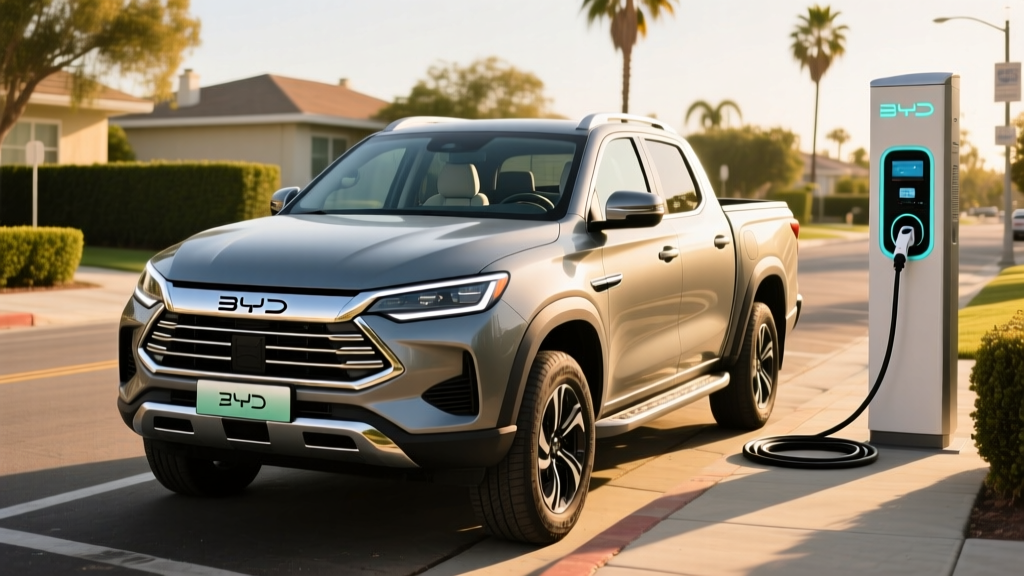
The BYD Shark 6 (marketed simply as "Shark" in some regions) is the Chinese automaker's first unibody plug-in hybrid pickup, pairing a 1.5-liter turbo engine with dual electric motors for 430+ combined horsepower. It launched in Mexico, Australia, Brazil, and several other markets starting late 2024, with expansion continuing through 2025-2026. For US-based shoppers searching for a BYD electric truck, the reality is straightforward: BYD does not currently sell any passenger or light-duty truck in the United States, and no official US launch date for the Shark or any BYD consumer EV has been announced as of early 2026.
This review covers the Shark 6's confirmed global specifications, real-world efficiency data from international testers, and what its architecture tells us about BYD's pickup ambitions — including the fully electric variants likely in development. If BYD ever enters the US light-truck market, this is the vehicle that would lead the charge.
BYD Shark 6: Core Specifications at a Glance
| Spec | BYD Shark 6 (PHEV) |
|---|---|
| Powertrain | 1.5L turbo + dual electric motors (PHEV) |
| Combined Output | ~430 hp (320 kW) |
| Drivetrain | AWD (e4-style dual-motor rear + front motor) |
| 0-100 km/h (0-62 mph) | 5.7 seconds |
| Battery Capacity | 29.58 kWh (LFP Blade Battery) |
| EV-Only Range (WLTP) | ~100 km (~62 miles) |
| EV-Only Range (EPA est.) | ~50-55 miles (estimated, not EPA-certified) |
| Total Range (WLTP) | ~840 km (~522 miles) |
| DC Fast Charge (peak) | ~55 kW (estimated) |
| DC 30-80% Time | ~20 minutes (manufacturer claim) |
| AC Level 2 Charge | 6.6 kW onboard charger |
| Towing Capacity | 2,500 kg (~5,510 lbs, braked) |
| Payload | ~825 kg (~1,819 lbs) |
| Bed Length | ~1,520 mm (~59.8 in) |
| Base MSRP (Australia) | AUD $59,990 (~USD $38,500) |
| US MSRP | Not available (no US launch announced) |
| US Federal Tax Credit (§30D) | Not eligible (not sold in US) |
| Battery Warranty | 8 years / 160,000 km (~100,000 mi, varies by market) |
Sources: BYD Australia official specs, fueleconomy.gov (note: Shark not listed — EPA estimates are projections based on WLTP conversion and comparable PHEVs).
The Shark 6's WLTP-rated EV-only range is ~100 km (62 miles). WLTP figures typically run 15-25% higher than EPA equivalents for comparable vehicles, putting the realistic EPA-equivalent estimate at roughly 50-55 miles of electric-only driving. In real-world conditions:
- City/commute driving: Expect 45-55 miles EV-only at moderate speeds with regen braking assistance.
- Highway (70+ mph): EV range drops to approximately 35-42 miles due to aerodynamic drag on the truck's boxy profile.
- Cold weather (below 32°F): LFP chemistry loses 20-35% usable capacity in freezing temps — expect 30-40 miles EV-only. The engine will kick in sooner.
- Combined hybrid mode: Total range of ~522 miles (WLTP) translates to roughly 420-460 real-world miles before refueling, depending on driving style and terrain.
Battery Chemistry and Platform: LFP Blade Architecture
The Shark 6 uses BYD's proprietary LFP (lithium iron phosphate) Blade Battery with a usable capacity of 29.58 kWh. LFP chemistry is a deliberate choice for a truck platform:
- Thermal stability: LFP cells are significantly more resistant to thermal runaway than NMC — a safety advantage for a vehicle that may see worksite use and heavy loads.
- Cycle life: LFP batteries typically sustain 3,000-5,000+ full charge cycles before reaching 80% State of Health (SoH), compared to ~1,500-2,500 for NMC. For a daily-charged PHEV, this means the battery should outlast the vehicle's mechanical life.
- Energy density trade-off: LFP is heavier and less energy-dense than NMC, which is why a 29.58 kWh pack yields only ~55 miles of EV range. A fully electric BYD truck would likely require either a much larger LFP pack (adding weight) or a shift to NMC for the BEV variant.
The Shark rides on BYD's DMO (Dual Mode Off-Road) platform — a unibody architecture with integrated body-on-frame characteristics. It's related to the platform underpinning the Fang Cheng Bao 5 SUV sold in China, adapted for a pickup bed and higher payload requirements.
Charging: DC Fast Charge and Home Level 2 Speeds
| Charging Method | Power | Speed / Time | Connector |
|---|---|---|---|
| Level 1 (120V household) | ~1.4 kW | ~4-5 miles EV range per hour | Standard plug (J1772 adapter in applicable markets) |
| Level 2 (240V home/work) | 6.6 kW | Full EV battery in ~4.5 hours; ~12 mi EV range/hr | Type 2 / J1772 (market-dependent) |
| DC Fast Charge | ~55 kW peak (est.) | 30-80% in ~20 minutes | CCS2 (AU/EU) / GB/T (China/LATAM) |
Charging-curve reality: BYD has not published a detailed charge curve for the Shark 6. Based on the pack size (29.58 kWh) and peak DC rate (~55 kW), the C-rate is approximately 1.86C at peak — aggressive for LFP. Expect the charge rate to taper significantly above 80% SoC, with the 80-100% top-off potentially adding another 15-20 minutes. This is normal LFP behavior but worth planning for on road trips.
Home charging practicality: The 6.6 kW onboard charger is the limiting factor for Level 2. Even on a 48-amp home charger capable of delivering 11.5 kW, the Shark 6 will only draw 6.6 kW. For the ~30 kWh pack, this means an overnight charge from empty takes roughly 4.5 hours — easily achievable with off-peak electricity rates.
Performance and Drivetrain
The Shark 6's plug-in hybrid powertrain combines a front-mounted 1.5-liter turbocharged four-cylinder engine with electric motors on both axles:
- Front motor: Integrated with the engine/transmission for assist and EV-only front-drive operation
- Rear motor: Independent electric motor driving the rear axle, enabling AWD and torque-vectoring
- Combined output: ~430 hp (320 kW) — competitive with the Ford F-150 PowerBoost hybrid (430 hp) and significantly more than the Toyota Tacoma i-FORCE MAX hybrid (326 hp)
- 0-62 mph: 5.7 seconds — quick for a midsize pickup, roughly matching a Chevrolet Colorado ZR2
The electric-first torque delivery gives the Shark an immediate off-the-line responsiveness that conventional turbo-hybrid trucks can't match. In EV mode, it operates as a series hybrid at low speeds (engine acts as a generator) and switches to parallel hybrid at highway speeds for efficiency.
Towing and payload: The 5,510-lb braked towing capacity falls short of the Ford F-150 Lightning (up to 10,000 lbs) and the F-150 PowerBoost (up to 12,700 lbs), but is competitive for a midsize truck. The ~1,819-lb payload is solid for the segment.
Interior, Tech, and Cargo Dimensions
The Shark 6's cabin borrows heavily from BYD's SUV lineup, centered on a 12.8-inch rotating touchscreen (portrait or landscape) running BYD's DiLink infotainment system. Additional tech features include:
- 10.25-inch digital instrument cluster
- Wireless Apple CarPlay and Android Auto
- Wireless phone charging pad
- 360-degree camera system with transparent chassis view
- V2L (Vehicle-to-Load) capability — power external devices up to ~3.3 kW from the truck's battery (worksites, camping, emergency backup)
- ADAS suite: adaptive cruise control, lane-keep assist, AEB, blind-spot monitoring (SAE Level 2 driver-assist — not self-driving; driver must remain engaged)
Cargo and passenger space:
- Bed dimensions: ~1,520 mm long × 1,480 mm wide (~59.8 × 58.3 in) — shorter than a Ford Ranger or Toyota Tacoma bed, limiting full-sheet-plywood transport
- Rear-seat legroom: competitive for midsize crew-cab trucks, though BYD has not published exact mm figures for all markets
- No front trunk (frunk) — the engine bay is fully occupied by the 1.5L turbo and front motor
Pricing, Tax Credit Eligibility, and US Availability
| Market / Trim | Price (Local) | Approx. USD | US §30D Credit Eligible? |
|---|---|---|---|
| Australia — Shark 6 (single trim) | AUD $59,990 | ~$38,500 | No |
| Mexico — Shark (single trim) | MXN ~$899,000 | ~$47,000 | No |
| Brazil — Shark (single trim) | BRL ~$299,990 | ~$52,000 | No |
| United States | Not sold | N/A | N/A — BYD has no US retail presence |
Why no US availability? BYD has not entered the US passenger/light-truck market due to a combination of factors: existing 100%+ US tariffs on Chinese-made EVs (raised to 100% in 2024 under Section 301), geopolitical friction, and the lack of a US dealer or service network. BYD does manufacture electric buses and commercial trucks (Class 6-8) in Lancaster, California, but these are fleet/commercial vehicles — not consumer pickups.
Tax credit implications if BYD ever launches in the US: Under current IRS §30D rules, the Shark 6 would face multiple hurdles even if sold stateside:
- MSRP cap: Trucks/vans/SUVs must have an MSRP ≤ $80,000 — the Shark would likely clear this.
- Buyer income cap: AGI ≤ $300,000 (joint) / $150,000 (single) — applies to the buyer, not the vehicle.
- Battery sourcing: Critical minerals and battery components must meet escalating US/free-trade-partner sourcing thresholds. A BYD Blade Battery manufactured in China with Chinese-sourced LFP cathode material would almost certainly fail the critical-minerals and battery-component requirements, disqualifying it from the full $7,500 credit — and potentially triggering the FEOC (Foreign Entity of Concern) exclusion entirely.
- Assembly: Final assembly must occur in North America. A China- or Thailand-built Shark would not qualify.
Bottom line: even in a hypothetical US launch, the Shark 6 would be extremely unlikely to qualify for any federal EV tax credit under current rules. Consult a tax professional and IRS guidance for personal eligibility.
How the BYD Shark Compares to Key Competitors
For US buyers interested in an electrified pickup, here's how the Shark 6's specs compare to trucks you can actually buy:
| Spec | BYD Shark 6 (PHEV) | Ford F-150 Lightning (BEV) | Ford F-150 PowerBoost (HEV) | Toyota Tacoma i-FORCE MAX (HEV) |
|---|---|---|---|---|
| Type | PHEV | BEV | HEV | HEV |
| EV-Only Range | ~50-55 mi (est. EPA) | 230-320 mi (EPA) | 0 | 0 |
| Horsepower | ~430 hp | 563-580 hp | 430 hp | 326 hp |
| 0-60 mph | ~5.5 sec (est.) | ~3.8-4.5 sec | ~5.8 sec | ~6.5 sec |
| Towing (max) | ~5,510 lbs | 7,700-10,000 lbs | up to 12,700 lbs | 6,000 lbs |
| US Base MSRP | N/A | ~$55,000 | ~$54,000 | ~$46,000 |
| US Tax Credit | N/A | Up to $7,500 (varies) | None (HEV) | None (HEV) |
Pros, Cons, and Who This Truck Suits Best
- Competitive pricing (~$38-52K USD equivalent) undercuts most US electrified trucks
- LFP Blade Battery offers excellent cycle life and thermal safety
- V2L capability for worksite and camping use
- Strong 430 hp output from a relatively small displacement PHEV system
- 50+ miles EV-only covers most daily commutes without burning fuel
- Rotating touchscreen and 360° camera are premium features at this price point
- Not available in the United States — no announced US launch
- Would not qualify for US §30D tax credit even if sold here (battery sourcing, assembly)
- Short bed (~60 in) limits utility vs. US midsize and full-size competitors
- Towing capacity (5,510 lbs) trails US full-size trucks significantly
- No frunk — engine bay fully occupied
- US service/parts network nonexistent for BYD consumer vehicles
- DC fast charge speed (~55 kW) is slow by 2026 BEV truck standards
Who this truck suits best (in markets where it's sold):
- Commuters with short drives: The 50-55 mile EV range covers most daily round-trips without engine engagement, cutting fuel costs dramatically.
- Tradespeople needing V2L: Powering tools, lights, or equipment from the truck's battery on a jobsite without a separate generator.
- Adventure/camping users: The combination of AWD, V2L, and hybrid range makes it a capable overlanding platform in Australian and South American terrain.
US buyers should instead consider: The Ford F-150 Lightning for full-electric range and towing, the Ford F-150 PowerBoost for hybrid towing without range anxiety, or the Toyota Tacoma i-FORCE MAX for midsize hybrid capability with a strong US dealer network.
Frequently Asked Questions
Is BYD selling an electric truck in the United States in 2026?
No. BYD does not sell any consumer passenger vehicle or light-duty truck in the US as of 2026. The Shark 6 PHEV pickup is available in Australia, Mexico, Brazil, and select other markets. BYD's US presence is limited to commercial electric buses and Class 6-8 trucks manufactured in Lancaster, CA.
What is the real-world electric-only range of the BYD Shark?
The Shark 6 achieves ~100 km (62 miles) EV-only under WLTP testing. Real-world EPA-equivalent range is estimated at 50-55 miles in mixed driving, dropping to 35-42 miles at sustained highway speeds and 30-40 miles in freezing temperatures due to LFP chemistry cold-weather losses.
How fast does the BYD Shark charge?
On DC fast charging, the Shark peaks at approximately 55 kW and can charge from 30-80% in about 20 minutes. On Level 2 home charging (240V), the 6.6 kW onboard charger fills the 29.58 kWh battery in roughly 4.5 hours. Level 1 (120V) trickle charging adds about 4-5 miles of EV range per hour.
Would the BYD Shark qualify for the US federal EV tax credit?
Almost certainly not, even if BYD began selling it in the US. The §30D credit requires North American final assembly and battery components/critical minerals from US or free-trade-partner sources. BYD's China-manufactured LFP Blade Battery would fail current sourcing requirements, and the FEOC exclusion would likely apply. Always check IRS §30D guidance for current rules.
Is the BYD Shark a fully electric truck or a hybrid?
The Shark 6 is a plug-in hybrid (PHEV), not a fully electric vehicle (BEV). It pairs a 1.5L turbo gasoline engine with dual electric motors and a 29.58 kWh LFP battery. It can drive ~50-55 miles on electricity alone before the engine engages. A fully electric BYD pickup has been hinted at but is not yet announced for any market.
What are the biggest competitors to the BYD Shark?
In international markets, the Shark competes with the Ford Ranger PHEV (launching 2025-2026) and conventional midsize diesels like the Toyota Hilux. In the US, the closest electrified truck alternatives are the Ford F-150 Lightning (BEV, 230-320 mi range, ~$55K), Ford F-150 PowerBoost (HEV, 430 hp, up to 12,700 lb towing), and Toyota Tacoma i-FORCE MAX (HEV, 326 hp, ~$46K).
Does the BYD Shark have a frunk?
No. The front compartment houses the 1.5L turbocharged engine and front electric motor, leaving no room for a front trunk. Cargo capacity is limited to the ~60-inch bed and the interior cabin.