Jeep's Electric Era: What Do the Deals Actually Cost You?
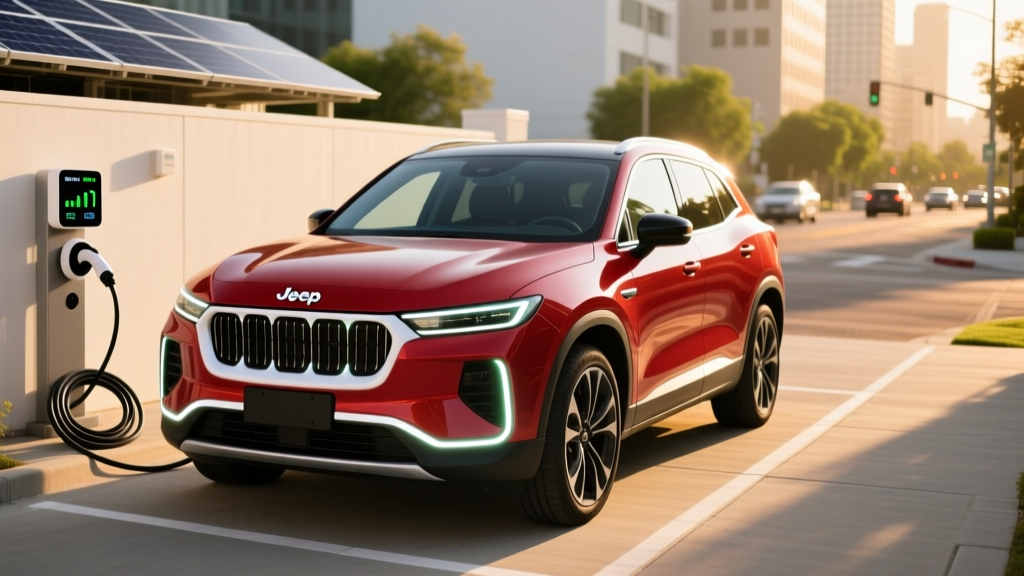
Jeep's transition to electric vehicles has brought two flagship models to market: the Wagoneer S and the Recon. Both ride on Stellantis' STLA Large platform and promise rugged capability with zero tailpipe emissions. But when you see "Jeep EV deals" advertised at dealerships or online, the sticker price is only the starting point. Real ownership cost involves federal tax credits, state incentives, home charging investment, insurance premiums, and depreciation — factors that can swing the five-year total by $10,000 or more depending on your situation.
This guide breaks down the exact numbers behind owning a Jeep EV in 2026, using the Wagoneer S (the brand's first global BEV) as our primary reference point, with Recon data where available. We'll cover the IRS §30D federal tax credit rules, fuel and maintenance savings, insurance realities, and resale value trends so you can evaluate any Jeep EV deal with clear eyes.
2026 Jeep EV Lineup: Quick Spec Reference
Before we calculate ownership costs, here's what's currently available from Jeep's electric lineup:
| Spec | Wagoneer S (Launch Edition) | Recon (Overland) |
|---|---|---|
| Base MSRP | $65,200 | $57,995 (est.) |
| EPA Range | ~300 miles (est.) | ~300+ miles (est.) |
| Battery (usable) | ~100 kWh, NMC | ~100 kWh, NMC |
| Peak DC Fast Charge | ~200 kW | ~200 kW |
| 10–80% DC Charge Time | ~23 min (est.) | ~23 min (est.) |
| Level 2 Charge Rate | 11.5 kW | 11.5 kW |
| Horsepower | 600 hp | ~400 hp (est.) |
| 0–60 mph | 3.4 seconds | ~5.0 seconds (est.) |
| Drivetrain | Dual-motor AWD | Dual-motor AWD w/ lockers |
| Battery Warranty | 8 yr / 100,000 mi | 8 yr / 100,000 mi |
| §30D Tax Credit Eligible | Partial — see rules below | Partial — see rules below |
Federal Tax Credit: Do You Qualify for §30D?
The federal clean vehicle credit under IRS §30D can reduce your tax burden by up to $7,500 — but eligibility is far from automatic. The rules tightened significantly after the Inflation Reduction Act, and for 2026, you must satisfy multiple requirements simultaneously.
§30D Tax Credit Eligibility Checklist
- Income Caps (Modified AGI): $150,000 single filer / $225,000 head of household / $300,000 married filing jointly
- MSRP Cap: Vans, SUVs, and trucks capped at $80,000; sedans at $55,000. The Wagoneer S Launch Edition at $65,200 clears the SUV cap; higher trims may not.
- Battery Component Sourcing: Battery components must be manufactured or assembled in North America (phased percentages increase yearly through 2029)
- Critical Minerals Sourcing: A percentage of critical minerals must be sourced from the U.S. or FTA-partner countries (phased increases through 2027)
- Point-of-Sale Transfer: As of 2024, you can transfer the credit to the dealer at purchase, reducing the sale price directly — but you must still meet all eligibility criteria at tax time
- Foreign Entity of Concern (FEOC): Vehicles with battery components from a FEOC are disqualified starting 2024; critical mineral FEOC restrictions began in 2025
Jeep EV specifics: The Wagoneer S and Recon are assembled in North America (Stellantis plants), which helps with the assembly requirement. However, the battery cell sourcing — particularly critical minerals like lithium and cobalt — determines how much of the $7,500 you actually receive. For 2026, the critical-minerals threshold is 80% and the battery-components threshold is 100%. Stellantis has not published a definitive public breakdown of cell-level sourcing for the STLA Large battery pack, so verify the exact credit amount on the IRS clean vehicle credit page or with your dealer before relying on the full $7,500.
If you take the point-of-sale transfer and later discover you didn't qualify (e.g., your income exceeded the cap), you'll owe the credit back when you file taxes. Consult a tax professional before structuring your purchase around the credit.
State, Local, and Utility Incentives
- California (CVRP): Up to $7,000 for income-qualified buyers on new EVs (funding-limited)
- Colorado: $5,000 state tax credit for new EVs (MSRP under $80,000)
- New York (Drive Clean Rebate): Up to $2,000 point-of-sale rebate
- Utility rebates (common): $250–$1,000 for Level 2 home charger purchase/installation; some utilities offer time-of-use rates saving $0.04–$0.08/kWh for overnight charging
- HVAC/panel upgrades: Some utilities offer $200–$500 rebates for electrical panel upgrades needed to support Level 2 charging
Total Cost of Ownership: 5-Year Breakdown
Here's what owning a 2026 Wagoneer S actually costs over five years, assuming 12,000 miles per year (60,000 miles total), home Level 2 charging, and the federal credit applied at point of sale.
| Cost Category | Wagoneer S (EV) | Grand Cherokee (Gas AWD) |
|---|---|---|
| Purchase Price (MSRP) | $65,200 | $52,000 |
| Federal Tax Credit (§30D) | −$3,750 (est. partial) | $0 |
| Net Purchase Price | $61,450 | $52,000 |
| Fuel / Electricity (60k mi) | $4,860 | $9,720 |
| Insurance (5 years) | $14,400 | $10,800 |
| Maintenance (5 years) | $1,800 | $4,200 |
| Depreciation (est.) | $24,580 | $18,200 |
| Total 5-Year Cost | $107,090 | $94,920 |
| Cost Per Mile | $1.78/mi | $1.58/mi |
Key assumptions: Electricity at $0.14/kWh (national average) with the Wagoneer S consuming ~2.0 kWh/mile (including charging losses). Gasoline at $3.60/gallon with the Grand Cherokee averaging 22 MPG combined. Insurance based on national EV average premiums (~$2,880/year for a $65k SUV vs. ~$2,160/year for a comparable gas SUV). Depreciation estimated at 40% for the EV and 35% for the gas vehicle over 5 years — EVs have historically depreciated faster due to rapid technology iteration and buyer uncertainty about used battery health.
Charging vs. Gas: The Per-Mile Math
Fuel savings are where EVs shine — but the exact number depends on how and where you charge.
| Scenario | Cost/kWh or Gal | Cost Per Mile | Annual Cost (12k mi) |
|---|---|---|---|
| Home Level 2 (national avg) | $0.14/kWh | $0.058 | $696 |
| Home Level 2 (off-peak TOU rate) | $0.08/kWh | $0.033 | $396 |
| Public DC Fast Charging | $0.40/kWh | $0.166 | $1,992 |
| Gas SUV (22 MPG, $3.60/gal) | $3.60/gal | $0.164 | $1,968 |
If you charge primarily at home on a standard rate, the Wagoneer S costs roughly $0.06/mile — about one-third the fuel cost of a gas Grand Cherokee. But if you rely heavily on public DC fast chargers at $0.35–$0.48/kWh (common on Electrify America and EVgo networks), your per-mile cost can actually exceed gasoline. This is why home charging access is the single biggest variable in EV ownership economics.
The Wagoneer S's ~100 kWh battery means a full home charge costs roughly $14 at national average rates, delivering ~240–270 real-world highway miles. A comparable gas fill-up at $3.60/gallon for 18 gallons costs ~$65 for a similar range.
Maintenance Savings: Where the EV Advantage Is Real
| Service Item | Wagoneer S (EV) | Grand Cherokee (Gas) |
|---|---|---|
| Oil Changes | $0 | $600 (8 changes) |
| Brake Pads/Rotors | $400 (regen extends life) | $1,200 (2 replacements) |
| Transmission Fluid | $0 | $300 |
| Air Filters | $150 (cabin only) | $400 (engine + cabin) |
| Coolant Service | $200 | $300 |
| Tires (heavier EV wear) | $1,800 (2 sets) | $1,400 (2 sets) |
| Miscellaneous | $250 | $500 |
| Total | $2,800 | $4,700 |
EVs eliminate oil changes, spark plugs, exhaust systems, and most belt-driven accessories. Regenerative braking significantly extends brake pad life — many EV owners report original pads lasting 80,000+ miles. However, the Wagoneer S's 5,500+ lb curb weight and instant torque mean tire wear is typically 15–25% faster than a comparable gas SUV. Budget for premium all-season or EV-rated tires at roughly $250–$350 per corner.
Insurance: The Cost Most Buyers Overlook
EV insurance premiums are typically 15–30% higher than comparable gas vehicles. For the Wagoneer S, expect annual premiums of $2,600–$3,200 depending on your state, driving record, and coverage level. Several factors drive this:
- Higher repair costs: EV-specific components (battery pack, power electronics, heat pump) are expensive to replace after collision damage
- Specialized labor: High-voltage system repairs require certified technicians, and fewer body shops have this certification
- Total-loss thresholds: Battery damage that would be a minor repair on a gas car can trigger a total-loss declaration on an EV due to battery replacement costs exceeding $15,000–$25,000
- Vehicle value: Higher MSRP means higher comprehensive and collision coverage costs
Shop quotes from EV-friendly insurers (Geico, Progressive, and State Farm have growing EV claims experience) and ask about EV-specific discounts — some carriers offer reduced rates for vehicles with advanced ADAS features.
Depreciation and Resale Value: The Honest Picture
EV depreciation has been steeper than gas vehicles over the past several years. Industry data from sources like iSeeCars and Kelley Blue Book shows average 5-year EV depreciation of 40–50%, compared to 35–40% for mainstream gas SUVs. Several factors contribute:
- Technology iteration: Newer EVs with longer range and faster charging make older models less desirable on the used market
- Battery health uncertainty: Used EV buyers discount for unknown battery degradation, even though most modern packs retain 85–92% capacity at 100,000 miles
- Tesla price cuts ripple: Aggressive new-EV pricing by market leaders compresses used values across all brands
- Leasing dominance: High lease volumes flood the used market with off-lease EVs at 36 months
For the Wagoneer S, we estimate ~38–42% depreciation over 5 years (roughly $24,000–$27,000 in value loss from the net purchase price). Jeep's brand loyalty and the vehicle's unique off-road EV positioning may help it hold value better than generic crossover EVs, but this remains speculative for a new nameplate.
Home Charging Setup: The Upfront Investment
To capture the lowest per-mile charging costs, you'll need a Level 2 home charger. Here's what that investment looks like:
| Item | Cost Range |
|---|---|
| Level 2 Charger (40–48A, hardwired) | $400–$700 |
| Electrician labor (240V/50A circuit run) | $800–$2,500 |
| Permit and inspection | $100–$300 |
| Electrical panel upgrade (if needed, 200A service) | $1,500–$3,500 |
| Total (no panel upgrade) | $1,300–$3,500 |
| Total (with panel upgrade) | $2,800–$7,000 |
The Wagoneer S's 11.5 kW onboard charger means you'll add roughly 30–35 miles of range per hour of Level 2 charging — enough to fully replenish overnight. A licensed electrician should perform a load calculation on your panel before installation; older homes with 100A service will likely need an upgrade to support both a Level 2 charger and existing loads safely.
Bottom Line: Who Should Buy a Jeep EV in 2026?
Decision Framework
Choose the Wagoneer S if: You have home Level 2 charging access, qualify for at least a partial §30D credit, value 600 hp and 3.4-second 0–60 performance, and accept that 5-year total cost will run $10,000–$15,000 higher than a gas Grand Cherokee — offset by dramatically lower fuel and maintenance costs and the driving experience.
Wait or choose gas if: You rely on apartment/condo living without charging access, your state has no additional incentives, your annual mileage is under 8,000 miles (reducing fuel savings), or your insurance quotes exceed $3,500/year.
The deals are strongest when: You stack the federal credit + state incentive + utility charger rebate + time-of-use electricity rates. In states like Colorado or California with robust incentive stacks, the net cost gap with gas narrows significantly.
Frequently Asked Questions
How much does it really cost to own a Jeep EV over 5 years?
Based on our analysis of the Wagoneer S, expect roughly $107,000 total over five years at 12,000 miles/year — about $12,000 more than a comparably equipped gas Grand Cherokee when factoring purchase price, partial tax credit, electricity, insurance, maintenance, and depreciation. The gap narrows with full tax credit eligibility, lower state electricity rates, and higher annual mileage.
Do I qualify for the full $7,500 federal tax credit on a Jeep EV?
Possibly, but not guaranteed. You must meet income caps ($150k single / $300k married), the vehicle MSRP must stay under $80,000, and the battery must meet 2026 critical-mineral and component-sourcing thresholds. Stellantis has not publicly confirmed full sourcing compliance for the STLA Large battery, so verify the exact credit amount with your dealer and the IRS clean vehicle credit page before purchasing.
How much do I save on fuel and maintenance vs. a gas Jeep?
With home Level 2 charging at $0.14/kWh, you'll save roughly $4,800 on fuel over 5 years/60,000 miles compared to a 22 MPG gas SUV at $3.60/gallon. Maintenance savings add another ~$1,900 over the same period, primarily from eliminated oil changes and extended brake life. Combined savings of ~$6,700 partially offset the higher purchase price and insurance premiums.
Are Jeep EVs more expensive to insure?
Yes, typically 15–30% more than comparable gas vehicles. Expect $2,600–$3,200/year for the Wagoneer S. Higher repair costs for EV-specific components, specialized labor requirements, and the vehicle's higher MSRP all contribute. Shop multiple carriers and ask about ADAS-related discounts.
How well do Jeep EVs hold their value?
Too early to say definitively, but industry-wide EV depreciation averages 40–50% over five years — steeper than gas SUVs at 35–40%. We estimate the Wagoneer S will lose roughly 38–42% of its net purchase value over 5 years. Jeep's off-road brand cachet may help, but rapid EV technology advancement and battery health uncertainty remain headwinds for all EV resale values.
Can the Wagoneer S or Recon actually off-road?
Jeep engineers designed both with off-road capability in mind — the Recon includes electronic locking differentials, Selec-Terrain modes, and underbody protection. However, the 5,500+ lb curb weight and low-profile tire options on higher trims limit rock-crawling capability versus a Wrangler. Think of it as competent trail and forest-road capability rather than hardcore Moab-ready performance. The instant torque of dual electric motors is a genuine off-road advantage in low-speed technical terrain.