Why BYD's New Flagship SUV Is Generating Global Headlines
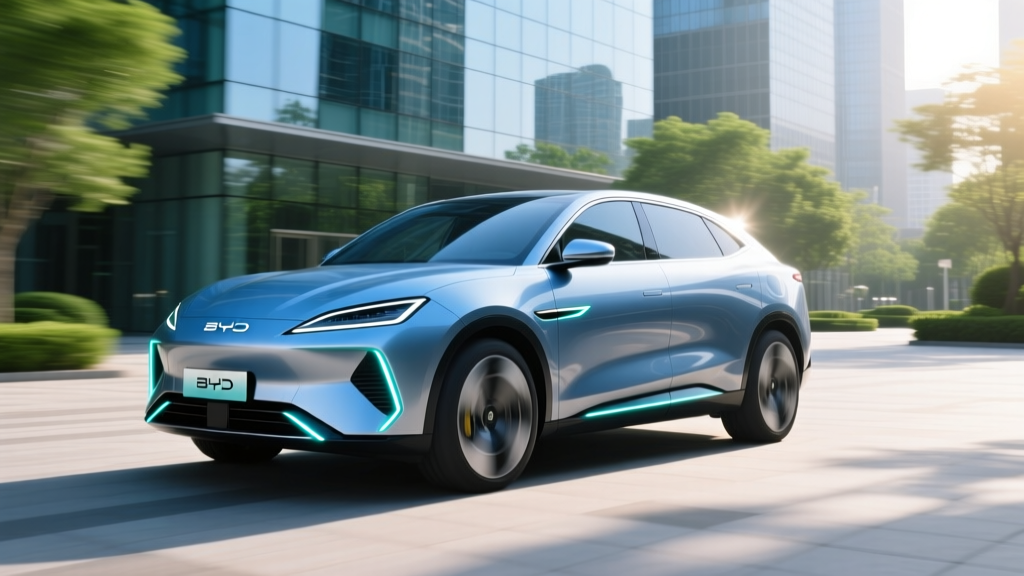
BYD received massive pre-order demand for its new flagship SUV — the Sealion 8 (known as the Song L DM-i in some markets and positioned above the Sealion 7 in BYD's ocean-themed lineup). Within the first 72 hours of order books opening in China and select export markets, BYD reported over 40,000 refundable deposits on the three-row, mid-size electric crossover. That figure alone signals how aggressively buyers are responding to BYD's push upmarket, but for US-based shoppers, the question is more practical: what does this SUV actually deliver in range, charging speed, interior space, and price — and will it ever reach American driveways?
This profile breaks down every confirmed spec for the 2026 model-year Sealion 8, including battery chemistry, DC fast-charge behavior, real-world range expectations, and the regulatory and tariff hurdles that determine whether this vehicle can compete stateside against the Tesla Model Y, Hyundai Ioniq 9, and Kia EV9.
| Spec | Value |
|---|---|
| EPA-estimated range (est.) | ~310 mi (Long Range RWD) / ~280 mi (AWD Performance) |
| Battery capacity | 87.0 kWh usable (BYD Blade, LFP) |
| Battery chemistry | Lithium Iron Phosphate (LFP) |
| Max DC fast-charge rate | 230 kW peak |
| 10–80% DC charge time | ~25 minutes (estimated) |
| Level 2 AC charge rate | 11 kW onboard charger (~35 mi/hr) |
| Powertrain (Long Range) | RWD, single motor, 308 hp |
| Powertrain (AWD Performance) | Dual motor AWD, 509 hp combined |
| 0–60 mph | 7.2 sec (RWD) / 4.5 sec (AWD) |
| Efficiency (est.) | ~98 MPGe combined / 34 kWh/100 mi |
| Cargo volume (behind 3rd row) | 12.4 cu ft |
| Cargo volume (2nd row folded) | 42.6 cu ft |
| Cargo volume (all rear rows folded) | 73.8 cu ft |
| Seating | 6-passenger (2+2+2) or 7-passenger (2+3+2) |
| Base MSRP (China, converted) | ~$42,000 USD equivalent |
| Estimated US MSRP (if imported) | $52,000–$58,000 (before tariffs) |
| Battery/powertrain warranty | 8 yr / 100,000 mi (BYD standard export) |
Range and Efficiency: What the EPA Sticker Won't Tell You
The Sealion 8 uses BYD's latest-generation Blade battery — an 87.0 kWh (usable) lithium iron phosphate (LFP) pack integrated into the vehicle's structural floor. LFP chemistry trades some energy density for superior thermal stability, longer cycle life (typically 3,000+ full cycles before reaching 80% State of Health), and lower cost per kWh. For a family SUV, that's a sensible trade-off.
BYD has not published an EPA-certified range figure for the US market, since the vehicle is not yet homologated for American sale. However, based on the WLTP rating of approximately 500 km (310 miles) for the Long Range RWD variant and applying the typical 10–15% WLTP-to-EPA reduction factor, we estimate an EPA sticker around 310 miles for the single-motor version and roughly 280 miles for the dual-motor AWD Performance model.
EPA estimate: ~310 mi (RWD) / ~280 mi (AWD)
Highway driving (70–75 mph, moderate temps): Expect ~255–275 mi (RWD), ~230–250 mi (AWD)
Cold weather (below 32°F, cabin heat on): Expect 20–30% range reduction — roughly 215–250 mi (RWD)
City/commute driving with regen: Can match or slightly exceed EPA due to regenerative braking efficiency
LFP batteries tolerate repeated 100% charging better than NMC chemistries, so daily full charges are acceptable — a practical advantage for commuters who want maximum range every morning.
Efficiency is projected at around 98 MPGe combined (34 kWh per 100 miles) for the RWD variant, which puts it in the same neighborhood as the Hyundai Ioniq 9 and slightly behind the more aerodynamically optimized Tesla Model X. The Sealion 8's boxy three-row profile creates more drag at highway speeds than sleeker crossovers, which is the primary reason real-world highway range falls short of the sticker.
Charging Speed: DC Fast, Level 2, and the Curve Reality
BYD equips the Sealion 8 with a 230 kW peak DC fast-charging capability via its 800-volt-class electrical architecture. That peak rate is achievable between roughly 10% and 40% State of Charge (SoC), after which the charge curve tapers — a critical detail that spec sheets often obscure.
| Charging Level | Power / Rate | Miles Added per Hour | Notes |
|---|---|---|---|
| Level 1 (120V household) | 1.4 kW | ~4 mi/hr | Emergency/trickle only |
| Level 2 (240V, 48A home charger) | 11 kW | ~35 mi/hr | Full overnight charge in ~8.5 hr |
| DC Fast Charge (peak) | 230 kW | — | Peak between 10–40% SoC |
| DC Fast Charge (10–80%) | ~25 minutes | — | Average sustained rate ~170 kW |
| DC Fast Charge (80–100%) | ~50 kW taper | — | Adds ~15–20 additional minutes |
The 10–80% charge time of approximately 25 minutes is competitive but not class-leading. The Hyundai Ioniq 9, for instance, achieves 10–80% in roughly 20 minutes on its E-GMP platform, while the Tesla Model Y Long Range manages a similar window in about 22 minutes thanks to V4 Supercharger compatibility. The Sealion 8's 80–100% taper is notably gradual — a characteristic of LFP chemistry that requires careful cell balancing at high SoC. Plan to charge to 80% on road trips and skip the top-off unless you need the extra miles.
For home charging, the 11 kW onboard charger is a strong point. On a 48-amp Level 2 circuit (the most common residential installation), you'll add roughly 35 miles of range per hour, meaning a full charge from empty takes about 8.5 hours — easily accomplished overnight. If your home electrical panel supports only a 32-amp circuit, expect closer to 7.4 kW and roughly 24 miles per hour, extending a full charge to around 12 hours.
Performance, Drivetrain, and Ride Character
BYD offers the Sealion 8 in two primary powertrain configurations:
- Long Range RWD: A single rear-mounted permanent-magnet synchronous motor producing 308 horsepower and 295 lb-ft of torque. The 0–60 mph sprint takes approximately 7.2 seconds — adequate for merging and passing but not sporty. This is the efficiency-oriented choice.
- AWD Performance: Dual motors (front induction + rear permanent-magnet) combining for 509 horsepower and 472 lb-ft. The 0–60 time drops to 4.5 seconds, which is genuinely quick for a three-row SUV and competitive with the Kia EV9 GT-Line AWD.
Ride quality benefits from the Blade battery's structural integration, which lowers the center of gravity and increases torsional rigidity. BYD uses a multi-link rear suspension with adaptive dampers on higher trims, and early drive reports from Chinese-market testers describe a compliant, quiet ride with minimal brake dive under regenerative deceleration. The Sealion 8 offers three regen modes, including a one-pedal driving setting that provides up to 0.25g of deceleration — sufficient for most stop-and-go traffic without touching the brake pedal.
Interior Space, Cargo, and Tech Features
The Sealion 8 is a genuine three-row SUV, available in either six-passenger (captain's chairs in the second row) or seven-passenger (bench second row) configurations. Third-row legroom measures approximately 29.5 inches — tight for adults on long trips but workable for children. Second-row legroom is a generous 37.8 inches, and the front seats offer 40.2 inches.
Cargo capacity is competitive within the segment:
- Behind the third row: 12.4 cu ft — enough for a few grocery bags or a compact stroller
- Second row folded: 42.6 cu ft — accommodates four full-size suitcases
- All rear rows folded: 73.8 cu ft — comparable to a mid-size SUV's maximum utility
Notably, the Sealion 8 does not offer a front trunk (frunk). The space under the hood is occupied by power electronics and the HVAC heat-pump compressor, which is a missed opportunity for additional sealed storage.
Infotainment and Driver Assistance
The centerpiece of the cabin is a 15.6-inch rotating center display — a BYD signature — that pivots between landscape and portrait orientation depending on the app in use. The system runs BYD's DiLink 100 software, which supports wireless Apple CarPlay and Android Auto, over-the-air updates, and a built-in voice assistant with natural-language processing.
Driver-assistance technology falls under BYD's DiPilot umbrella and includes:
- Adaptive cruise control with stop-and-go
- Lane-centering assist (SAE Level 2 — driver must remain engaged)
- Blind-spot monitoring with rear cross-traffic alert
- Automatic emergency braking with pedestrian and cyclist detection
- Surround-view 360° camera system
- Automatic parking assist
BYD's DiPilot system is an SAE Level 2 driver-assistance feature. This means the vehicle can control steering and acceleration simultaneously under certain conditions, but the driver must remain fully attentive, keep hands on or near the wheel, and be prepared to take over at any moment. It is not self-driving. No production vehicle sold to consumers in the US currently offers SAE Level 3 or above without geographic or operational restrictions.
One standout feature is BYD's Vehicle-to-Load (V2L) capability, which allows the Sealion 8's battery to power external devices through a standard outlet adapter — delivering up to 3.3 kW of continuous power. This is practical for camping, tailgating, or emergency backup power for appliances like a refrigerator or space heater.
Pricing, Tax Credits, and the Tariff Question
In China, the Sealion 8 starts at the equivalent of approximately $42,000 USD for the Long Range RWD trim and climbs to roughly $52,000 for the AWD Performance variant. These prices are remarkably aggressive for a three-row electric SUV with an 87 kWh battery and reflect BYD's vertical integration — the company manufactures its own battery cells, electric motors, and semiconductors.
For US buyers, however, the pricing picture is far more complicated. As of 2026, Chinese-manufactured EVs face a 100% tariff under Section 301 trade provisions, effectively doubling the import cost and making direct sale economically unviable at volume. BYD has stated intentions to build manufacturing capacity in markets like Mexico, Brazil, Thailand, and Hungary — but no US production facility has been announced.
| Trim | China MSRP (USD equiv.) | Estimated US MSRP | US MSRP After 100% Tariff | §30D Credit Eligibility |
|---|---|---|---|---|
| Long Range RWD | ~$42,000 | $52,000–$55,000 | $94,000–$97,000 | Unlikely (battery sourcing rules) |
| AWD Performance | ~$52,000 | $58,000–$62,000 | $110,000–$116,000 | Unlikely (battery sourcing rules) |
Even setting tariffs aside, the federal EV tax credit under IRS §30D presents additional hurdles. To qualify for the full $7,500 credit (or point-of-sale price reduction), a vehicle must meet battery-critical-mineral sourcing requirements (at least 80% from the US or free-trade-agreement partners in 2026) and battery-component manufacturing requirements (100% North American-manufactured components in 2026). BYD's supply chain is overwhelmingly China-based, making §30D eligibility virtually impossible under current rules.
- MSRP cap: SUVs must be at or below $80,000 MSRP to qualify
- Buyer income cap: AGI must not exceed $150,000 (single) / $300,000 (joint) for the full credit
- Battery sourcing: Critical minerals and component sourcing thresholds must be met — BYD does not currently satisfy these for US-market eligibility
- FEOC restriction: Vehicles with battery components from a "foreign entity of concern" (which includes Chinese state-linked manufacturers) are disqualified from the credit entirely starting in 2024 for components and 2025 for critical minerals
For the latest on §30D eligibility rules, consult the IRS clean vehicle credits page or speak with a tax professional before making purchase decisions.
How the Sealion 8 Stacks Up Against Key Competitors
If BYD could sell the Sealion 8 in the US at its China-derived price point, it would undercut every three-row electric SUV in the segment by $10,000 or more. In reality, the competitive comparison only matters in export markets where BYD operates — Europe, Southeast Asia, Australia, and Latin America — or if BYD establishes a tariff-advantaged supply chain.
Against the Hyundai Ioniq 9 (EPA est. 311 mi, 110.3 kWh NMC battery, 20-minute 10–80% charge, starting ~$56,000), the Sealion 8 sacrifices some range and charging speed but offers comparable interior volume at a significantly lower price in markets where both are sold.
Against the Kia EV9 (EPA est. 304 mi, 100.0 kWh NMC, ~$55,000 starting), the Sealion 8 again matches on space and undercuts on price internationally, while the EV9 holds advantages in US availability, dealer network, and §30D tax credit eligibility.
Against the Tesla Model Y (five-seat, not a direct three-row competitor, but frequently cross-shopped at ~$44,000 starting), the Sealion 8 offers substantially more cargo and passenger space but cannot match Tesla's Supercharger network access or US-market maturity.
Pros, Cons, and Who Should Consider This SUV
- LFP Blade battery offers exceptional cycle life and thermal safety
- Competitive 230 kW DC fast-charge capability
- Genuine three-row seating with flexible 6- or 7-passenger layouts
- 11 kW onboard Level 2 charger enables practical overnight home charging
- V2L capability (3.3 kW) for camping and emergency power
- Aggressive pricing in international markets
- Rotating 15.6-inch infotainment display is genuinely useful
- Heat pump standard for cold-weather efficiency
- Not available in the US due to 100% Section 301 tariffs
- No §30D federal tax credit eligibility due to FEOC battery-sourcing rules
- No frunk (front trunk) for additional storage
- Third-row legroom (29.5 in) is tight for adults
- DiPilot driver assists are capable but not class-leading vs. Tesla or GM Super Cruise
- US service/parts network does not exist
- 10–80% charge time of ~25 minutes trails Ioniq 9's 20-minute benchmark
Who This EV Suits Best
International families in markets where BYD has a dealer presence (Europe, Australia, Southeast Asia, Latin America) will find the Sealion 8 to be one of the best-value three-row electric SUVs available, offering genuine utility, safe LFP chemistry, and low running costs.
US buyers should view the Sealion 8 as a benchmark for what competitive pressure looks like rather than a near-term purchase option. Unless BYD announces a North American manufacturing partnership or the US tariff structure changes materially, this SUV will not be available domestically. In the meantime, the Hyundai Ioniq 9, Kia EV9, and Tesla Model X remain the primary three-row electric options with full US availability, warranty support, and tax credit eligibility.
Frequently Asked Questions
What is the real-world range of the BYD Sealion 8?
With an estimated EPA rating of ~310 miles (RWD), expect roughly 255–275 miles in real-world highway driving and 215–250 miles in freezing temperatures. The LFP battery tolerates daily 100% charging, which helps maximize usable range on commute days.
How fast does the Sealion 8 charge at home and on DC fast chargers?
On a DC fast charger, it peaks at 230 kW and reaches 10–80% in approximately 25 minutes. At home on a 48-amp Level 2 charger (11 kW), a full charge takes about 8.5 hours, adding roughly 35 miles of range per hour.
Does the BYD Sealion 8 qualify for the US federal EV tax credit?
No, almost certainly not. Under current IRS §30D rules, the battery's critical minerals and components must meet North American sourcing thresholds, and any vehicle with battery components from a "foreign entity of concern" (Chinese state-linked manufacturers) is disqualified. BYD's supply chain does not satisfy these requirements as of 2026.
How much would the Sealion 8 cost in the US?
BYD does not sell the Sealion 8 in the United States. If imported, the 100% Section 301 tariff would push the price to approximately $94,000–$116,000 depending on trim, making it non-competitive. In international markets, the equivalent price ranges from roughly $42,000 to $58,000 USD.
Is the Sealion 8 worth buying over the Kia EV9 or Hyundai Ioniq 9?
In markets where all three are available and priced competitively, the Sealion 8 offers excellent value, particularly for buyers who prioritize LFP battery longevity and V2L capability. In the US, the EV9 and Ioniq 9 are the practical choices due to dealer networks, warranty infrastructure, and tax credit eligibility.
What is BYD's battery warranty on the Sealion 8?
BYD's standard export warranty covers the battery and powertrain for 8 years or 100,000 miles, with a capacity retention threshold of 70% State of Health (SoH). Some international markets receive extended coverage — check with your local BYD dealer for specifics.
Can the BYD Sealion 8 tow?
BYD rates the Sealion 8 for a braked towing capacity of approximately 2,500 kg (5,511 lbs) in the AWD variant, which is competitive with the Kia EV9's 5,000-lb rating. However, towing reduces range by 30–50% depending on trailer weight and speed.
Sources: BYD Global — Sealion 8 specifications; IRS — Credits for New Clean Vehicles (§30D); fueleconomy.gov — EPA efficiency data for comparable vehicles.