Quick Verdict: The BYD Seal in 2026
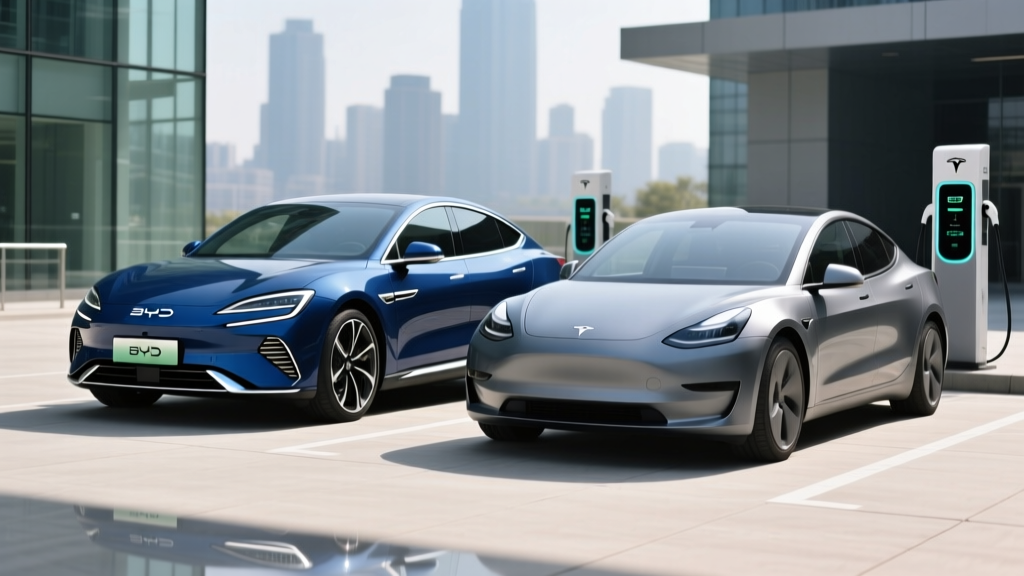
The BYD Seal has emerged as one of the most discussed vehicles among buyers searching for a credible China UK electric car Tesla competitor. First launched in right-hand-drive markets including the UK and Australia, the Seal has drawn comparisons to the Tesla Model 3 for its sleek sedan profile, competitive range, and aggressive pricing. But for US-based shoppers, the picture is more complicated: as of early 2026, BYD has not officially launched passenger vehicles in the United States, meaning the Seal remains available primarily in European, UK, Australian, and Asian markets.
This review examines the BYD Seal's specifications, real-world performance data from international testing, and how it stacks up against the Tesla Model 3 — the benchmark it's trying to beat. We'll also address whether US buyers should expect the Seal stateside anytime soon, and what alternatives exist if you want similar value today.
BYD Seal Specifications at a Glance
| Specification | BYD Seal Design (RWD) | BYD Seal Excellence (AWD) | Tesla Model 3 Long Range AWD (2026) |
|---|---|---|---|
| EPA-Equivalent Range | ~354 mi (WLTP) | ~323 mi (WLTP) | 363 mi (EPA) |
| Battery Capacity | 82.5 kWh (LFP Blade) | 82.5 kWh (LFP Blade) | 79 kWh (NMC) |
| Horsepower | 308 hp | 523 hp | 384 hp |
| 0-60 mph | 5.9 sec | 3.8 sec | 4.2 sec |
| Drivetrain | RWD (single motor) | AWD (dual motor) | AWD (dual motor) |
| Max DC Fast Charge | 150 kW | 150 kW | 250 kW |
| 10-80% DCFC Time | ~26 min | ~26 min | ~18 min |
| Level 2 AC Charge | 11 kW (~37 mi/hr) | 11 kW (~37 mi/hr) | 11.5 kW (~44 mi/hr) |
| Efficiency (WLTP) | ~3.5 mi/kWh | ~3.1 mi/kWh | ~4.6 mi/kWh (EPA) |
| Cargo (trunk + frunk) | 14.1 cu ft (trunk only) | 14.1 cu ft (trunk only) | 23.0 cu ft (trunk + frunk) |
| Base MSRP (UK) | £45,695 (~$57,800) | £48,695 (~$61,600) | $47,740 (US MSRP) |
| Battery Warranty | 8 yr / 125,000 mi | 8 yr / 125,000 mi | 8 yr / 120,000 mi |
Note: WLTP range figures are typically 10-15% higher than EPA estimates. The Seal's EPA-equivalent range would likely fall to approximately 300-318 mi (Design) and 275-290 mi (Excellence) if officially rated by the US EPA.
Real-World Range: What WLTP Numbers Don't Tell You
Independent European testing from outlets like What Car? and Electrek has shown the Seal Design achieving approximately 285-300 miles in mixed conditions at moderate temperatures. The AWD Excellence variant, with its higher power draw, typically returns 250-270 miles in similar conditions.
The Seal's LFP (lithium iron phosphate) Blade Battery is a standout feature. LFP chemistry offers several advantages:
- Longer cycle life: 3,000+ full charge cycles before significant degradation, compared to 1,000-2,000 for typical NMC cells
- Thermal stability: LFP cells are far less prone to thermal runaway, a critical safety advantage
- 100% SoC charging: BYD recommends regularly charging to 100%, unlike NMC batteries where 80% daily limits are preferred to preserve longevity
- No cobalt: LFP chemistry eliminates cobalt, reducing supply-chain ethics concerns
The trade-off: LFP has lower energy density than NMC, meaning the 82.5 kWh pack is physically larger and heavier than a comparable NMC pack. This contributes to the Seal's ~4,630 lb curb weight (Design) — roughly 500 lbs heavier than a Model 3 Long Range.
Charging Speed: The Seal's Biggest Weakness vs Tesla
| Charging Level | BYD Seal | Tesla Model 3 LR | Real-World Impact |
|---|---|---|---|
| Level 1 (120V) | ~1.4 kW / ~5 mi/hr | ~1.4 kW / ~5 mi/hr | Emergency/trickle only |
| Level 2 (240V home) | 11 kW / ~37 mi/hr | 11.5 kW / ~44 mi/hr | Full charge overnight (~8-9 hrs) |
| DC Fast Charge (peak) | 150 kW | 250 kW | Seal: ~26 min 10-80%; Model 3: ~18 min |
| DCFC sustained (10-80%) | ~95 kW avg | ~170 kW avg | Seal adds ~180 mi in 26 min; Model 3 adds ~250 mi in 18 min |
Charging speed is where the BYD Seal falls noticeably behind the Tesla Model 3 and competitors like the Hyundai Ioniq 6 (which peaks at 350 kW on 800V architecture). The Seal's 150 kW peak DC fast-charge rate is adequate but not competitive for a 2026 premium sedan.
On a 150 kW CCS charger (the standard connector in European and UK markets), the Seal's charge curve is relatively flat: it sustains close to peak rate from 10% to about 55% SoC, then tapers gradually. The 10-80% time of approximately 26 minutes is acceptable for road trips with planned stops, but it means you'll spend 8-10 extra minutes at each charger compared to a Model 3 on a Supercharger.
For UK and European owners, the Seal uses the CCS2 connector, compatible with virtually all public DC fast-charging networks including Ionity, Gridserve, BP Pulse, and Shell Recharge. There is no NACS (Tesla-style) variant, as NACS adoption is primarily a North American phenomenon.
Home charging at 11 kW (3-phase, common in UK/Europe) adds roughly 37 miles of range per hour — a full overnight charge from 10% to 100% takes about 8.5 hours. US homes with split-phase 240V power would likely see the Seal limited to 7.2-9.6 kW depending on the onboard charger configuration, extending that timeline.
Performance and Driving Dynamics
The BYD Seal Excellence (AWD, dual motor) delivers 523 hp and a 3.8-second 0-60 mph time — genuinely quick by any standard, and faster than the Tesla Model 3 Long Range AWD's 4.2 seconds. However, the Model 3 Performance variant (not directly priced against the Seal) still edges it at 3.1 seconds.
The rear-drive Design variant's 5.9-second 0-60 is perfectly adequate for daily driving and highway merging, if not thrilling. Where the Seal impresses is ride quality: its multi-link rear suspension and slightly softer tuning absorb road imperfections better than the Model 3's firmer setup. Road noise is well-controlled, and the low center of gravity from the underfloor Blade Battery pack keeps body roll minimal in corners.
Regenerative braking offers two modes (standard and high), but the Seal does not provide true one-pedal driving to a complete stop — you'll still need the friction brake at very low speeds. This is a minor annoyance for drivers accustomed to Tesla's or Nissan's one-pedal systems.
Interior, Technology, and Cargo
The Seal's interior is a genuine strong point. A 15.6-inch rotating center touchscreen (portrait or landscape) anchors the dash, running BYD's proprietary infotainment system. The system supports wireless Apple CarPlay and Android Auto, over-the-air updates, and a built-in 4G connection for navigation and streaming. Build quality uses soft-touch materials, quilted leather seats (on Excellence trim), and a panoramic glass roof.
ADAS features include adaptive cruise control, lane-keeping assist, automatic emergency braking, blind-spot monitoring, and a 360-degree camera. These constitute SAE Level 2 driver assistance — the driver must remain fully engaged with hands on the wheel. This is comparable to Tesla's base Autopilot, not Full Self-Driving. BYD does not currently offer a hands-off highway driving system comparable to GM's Super Cruise or Ford's BlueCruise.
Cargo space is the Seal's practicality drawback. The trunk offers 14.1 cubic feet — respectable for a sedan but significantly less than the Model 3's combined 23.0 cu ft (trunk + frunk). The Seal has no front trunk (frunk), as the space is occupied by power electronics. Rear legroom measures approximately 37.4 inches, competitive with the Model 3's 35.3 inches.
Pricing and Tax Credit Reality for US Buyers
| Factor | BYD Seal (UK Market) | Tesla Model 3 LR (US Market) |
|---|---|---|
| Base MSRP | £45,695 (~$57,800) | $47,740 |
| Federal EV Tax Credit (§30D) | Not eligible (not sold in US) | Up to $7,500 (subject to eligibility) |
| Effective price after credit | N/A | As low as ~$40,240 |
| US availability | Not available | Widely available |
Here's the critical issue for American buyers: the BYD Seal is not sold in the United States, and BYD has made no official announcement about a US passenger-vehicle launch. Even if it were available, the Seal would almost certainly not qualify for the IRS §30D federal EV tax credit due to several factors:
- MSRP cap: Sedans must be under $55,000 MSRP to qualify. The Seal's UK pricing (~$57,800 equivalent) suggests a US MSRP near or above this threshold.
- Battery sourcing: §30D requires critical minerals and battery components to meet escalating domestic-content thresholds. BYD's vertically integrated Chinese supply chain would almost certainly fail the foreign-entity-of-concern (FEOC) restrictions that took full effect in 2024-2025.
- Assembly: The credit requires final assembly in North America. BYD has no US manufacturing facility for passenger vehicles.
- Income caps: Buyer AGI must not exceed $150,000 (single) / $300,000 (joint) — this applies regardless of vehicle.
For UK buyers, the Seal qualifies for the UK's plug-in vehicle grant and benefits from zero Vehicle Excise Duty (VED) and favorable company-car tax (BiK) rates — making it particularly attractive for fleet and business buyers.
Who Should Consider the BYD Seal?
Look elsewhere if: You're a US-based buyer (not available), you frequently road-trip and need the fastest possible charging, or you need maximum cargo space for family hauling.
Pros and Cons
Pros
- LFP Blade Battery: exceptional cycle life and thermal safety
- Competitive real-world range (~290-310 mi mixed)
- Premium interior materials and rotating 15.6" display
- Strong ride comfort; quieter than Model 3
- 8-year / 125,000-mile battery warranty
- 5-star Euro NCAP safety rating
- AWD Excellence is genuinely quick (3.8s 0-60)
Cons
- Not available in the United States
- 150 kW peak DC charging lags competitors (Tesla 250 kW, Ioniq 6 350 kW)
- No frunk — cargo space limited to 14.1 cu ft trunk
- No NACS connector option
- No hands-off Level 2+ highway driving system
- Heavy curb weight (~4,630 lbs) affects efficiency
- US tax credit eligibility virtually impossible even if launched
Frequently Asked Questions
What is the real-world range of the BYD Seal?
The Design (RWD) variant achieves approximately 290-310 miles in mixed real-world driving, with the WLTP rating of 354 miles overstating US EPA-equivalent range by roughly 10-15%. Highway driving at 70+ mph reduces this to about 250-270 miles, and cold weather (below freezing) can drop it further to 220-240 miles. The AWD Excellence variant returns roughly 250-270 miles mixed.
How fast does the BYD Seal charge?
On DC fast charging, the Seal peaks at 150 kW and completes a 10-80% charge in approximately 26 minutes. At home on a Level 2 charger (11 kW, 3-phase), it adds about 37 miles of range per hour, requiring roughly 8.5 hours for a full charge. This is noticeably slower than the Tesla Model 3's 250 kW peak and ~18-minute 10-80% time.
Does the BYD Seal qualify for the US federal EV tax credit?
No. The Seal is not sold in the United States, and even if it were, it would almost certainly fail the §30D requirements for North American assembly, battery-component sourcing, and critical-mineral FEOC restrictions. The IRS maintains a list of eligible vehicles that changes periodically — the Seal is not on it.
Is the BYD Seal better than the Tesla Model 3?
It depends on priorities. The Seal wins on ride comfort, interior material quality, LFP battery longevity, and Euro NCAP safety. The Model 3 wins on charging speed (250 kW vs 150 kW), Supercharger network access, cargo space (23 vs 14.1 cu ft), software ecosystem, and US availability with potential tax-credit eligibility. For UK buyers, it's a genuinely competitive choice; for US buyers, it's not an option.
Will BYD sell cars in the US?
As of Q1 2026, BYD has not announced plans to sell passenger vehicles in the United States. The company sells electric buses and commercial vehicles in the US, but 100% tariffs on Chinese-manufactured EVs (raised in 2024) make passenger-vehicle imports economically unviable. BYD is building factories in Hungary, Brazil, Thailand, and Indonesia — but no US plant has been announced.
What is the BYD Blade Battery, and is it safe?
The Blade Battery is BYD's proprietary LFP (lithium iron phosphate) cell design, where long, thin cells are arranged in a structural pack. LFP chemistry is inherently more thermally stable than NMC — BYD has demonstrated the Blade Battery surviving nail-penetration tests without fire or thermal runaway. The pack carries an 8-year / 125,000-mile warranty with a capacity-retention threshold (typically 70% of original capacity). Independent data from Euro NCAP awarded the Seal a 5-star overall safety rating.