The BYD Seagull at a Glance: What US Buyers Need to Know
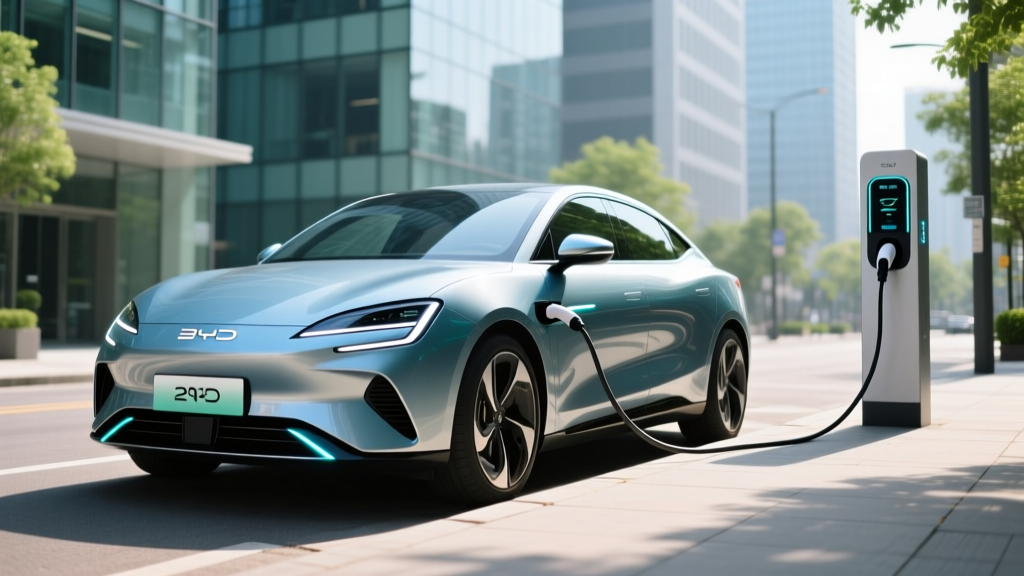
The BYD Seagull has become one of the most discussed electric vehicles on the planet — a subcompact hatchback that starts under $10,000 in China and delivers usable range, modern tech, and BYD's proven Blade battery architecture. For American EV shoppers searching for an affordable daily driver, the Seagull represents a tantalizing proposition: a new EV for the price of a used Honda Civic.
But here's the reality check that most coverage glosses over: as of early 2026, BYD has not officially launched the Seagull in the United States. The vehicle is on sale in China, parts of Southeast Asia, Latin America (where it's sometimes badged as the BYD Dolphin Mini), and select European markets. BYD executives have signaled interest in a US entry, but tariffs, regulatory homologation, and dealership network buildout remain unresolved.
This review covers the Seagull's confirmed global specifications, real-world performance data from international testers, and a frank assessment of what it would take for this EV to land on American showroom floors — and what it would cost if it did.
| Spec | Value |
|---|---|
| EPA-Equivalent Range (WLTP adjusted) | ~235–250 miles (estimated EPA) |
| Battery Capacity | 44.9 kWh (usable) — LFP Blade |
| Battery Chemistry | Lithium Iron Phosphate (LFP) |
| DC Fast Charge (peak) | 60 kW (some markets: 40 kW) |
| 10–80% DC Charge Time | ~30 minutes (estimated) |
| Level 2 AC Charge Rate | 7 kW (onboard charger) |
| Motor Output | 75 kW / 101 hp (single-speed, FWD) |
| 0–60 mph | ~11.0 seconds (estimated) |
| Drivetrain | Front-wheel drive, single motor |
| Length / Width / Height | 147.2" / 67.3" / 60.8" |
| Wheelbase | 98.4 inches |
| Cargo Volume (rear seats up) | ~8.5 cu ft |
| Cargo Volume (rear seats folded) | ~23.0 cu ft |
| China MSRP | ¥73,800–¥89,800 (~$10,200–$12,400 USD) |
| Estimated US MSRP (if launched) | $20,000–$25,000 (before tariffs) |
| Battery Warranty (global) | 8 years / 100,000 miles (typical export) |
Range and Efficiency: Real-World Expectations vs. the Sticker
The Seagull is offered globally with two battery options: a 30.1 kWh pack (the "Freedom" edition in China) and a 44.9 kWh pack (the "Flying" edition). The larger pack is the one most relevant to US buyers, as the smaller pack's range would be impractical for American commuting patterns.
BYD quotes a CLTC range of 405 km (~252 miles) for the 44.9 kWh variant. CLTC is China's optimistic test cycle — roughly 15–20% more generous than the US EPA cycle. Applying standard conversion factors, we estimate an EPA-equivalent range of approximately 235–250 miles for the long-range Seagull.
- Highway-heavy driving (70+ mph): ~195–215 miles. The Seagull's boxy shape and modest battery mean aerodynamic drag eats range at speed.
- Cold weather (below 32°F): ~160–185 miles. LFP chemistry loses more capacity in cold than NMC, and the Seagull's thermal management system is basic compared to heat-pump-equipped rivals like the Chevy Bolt.
- City commuting (below 45 mph, mild temps): 250+ miles is achievable thanks to regenerative braking recovery.
Efficiency lands around 115–125 MPGe combined (estimated), or roughly 27–30 kWh per 100 miles. That's competitive with the Chevrolet Bolt EV (120 MPGe) but trails the Hyundai Kona Electric (129 MPGe) and Nissan Leaf (123 MPGe). The Seagull's weight — approximately 3,400 lbs for the long-range version — is low by EV standards, which helps offset its less-sophisticated powertrain electronics.
Charging Speed: The Seagull's Biggest Limitation for US Buyers
Here's where the Seagull's budget positioning shows. BYD equips the 44.9 kWh model with a maximum DC fast-charge rate of 60 kW on export-spec models (some domestic Chinese trims are limited to 40 kW). That's roughly half the peak rate of competitors like the Chevy Bolt EV (55 kW, but with a smaller battery) and far behind the Hyundai Kona Electric (100+ kW) or VW ID.4 (170 kW).
| Charging Level | Power | Speed / Time |
|---|---|---|
| Level 1 (120V household) | ~1.4 kW | ~4–5 miles of range per hour |
| Level 2 (240V home/public) | 7 kW (max onboard) | ~22–25 miles per hour; 0–100% in ~7 hours |
| DC Fast Charge (peak) | 60 kW | 10–80% in ~30 minutes; adds ~90 miles in 20 min |
The 60 kW peak isn't sustained across the full charging window. Based on international testing, the Seagull's charge curve peaks around 55–60 kW between 10–40% state of charge, then tapers to roughly 35–40 kW through the 40–70% range, and drops further to under 20 kW above 80%. This means a realistic 10–80% session takes approximately 30 minutes at a capable DC charger — adequate for a lunch stop, but noticeably slower than the 18–22 minute sessions you'd get in a Bolt or Kona Electric.
For home charging, the 7 kW onboard charger is perfectly adequate. Plugging in overnight on a Level 2 home station (like a ChargePoint Home Flex or Wallbox Pulsar Plus) will replenish the full 44.9 kWh battery in roughly 7 hours — plenty for daily commuting needs.
Connector note: Export-market Seagulls use CCS2 (Europe) or GB/T (China). If BYD enters the US, the vehicle would need a CCS1/NACS port. Given the industry-wide shift to Tesla's NACS connector for 2025+ models, a US-spec Seagull would likely adopt NACS — but this is speculative until BYD confirms.
Performance and Driving Dynamics
The Seagull is not a performance vehicle, and it doesn't pretend to be. A single front-mounted permanent magnet synchronous motor produces 75 kW (101 horsepower) and approximately 135 lb-ft of torque. BYD doesn't publish an official 0–60 mph time, but international road tests consistently clock the long-range model at approximately 11.0 seconds to 60 mph.
That puts it in the same ballpark as a base Nissan Versa or Mitsubishi Mirage — slow by American highway-merging standards, but acceptable for urban and suburban driving. The instant torque delivery (peak torque from 0 rpm, as in all EVs) makes the Seagull feel peppier than the stopwatch suggests in stoplight-to-stoplight city driving, where 0–30 mph sprints are brisk.
Ride quality, based on European and Latin American press reviews, is firm but compliant. The short wheelbase (98.4 inches) means the Seagull gets slightly choppy over broken pavement, but the low center of gravity from the floor-mounted Blade battery keeps body roll minimal in corners. Steering is light and numb — tuned for parking ease, not engagement.
Regenerative braking offers two levels (standard and strong) rather than true one-pedal driving. The strong mode recovers meaningfully in city traffic but won't bring the car to a complete stop — you'll still use the friction brake pedal for the final few mph.
Interior, Tech, and Practicality
Inside, the Seagull punches above its price class — at least in the top-trim "Flying" edition. A 10.1-inch rotating touchscreen (a BYD signature) dominates the dashboard, running BYD's DiLink infotainment system with wireless Apple CarPlay and Android Auto on export models. A 5.0-inch digital instrument cluster sits behind the steering wheel.
Material quality is hard-plastic dominant, which is expected at this price point, but the design and fit-and-finish are a step above the Chevy Bolt's utilitarian interior. Synthetic leather upholstery, a wireless phone charging pad, and six-way manual seat adjustment are included on higher trims.
Space is the tradeoff. The Seagull is a true subcompact:
- Front legroom: ~41.0 inches (adequate for most adults)
- Rear legroom: ~33.5 inches (tight for adults over 5'10" on longer trips)
- Cargo behind rear seats: ~8.5 cu ft (fits two carry-on suitcases)
- Cargo with rear seats folded: ~23.0 cu ft (competitive with a Honda Fit)
There is no frunk (front trunk) — the compact motor bay packaging doesn't leave room.
Driver assistance on export models includes adaptive cruise control, lane-keeping assist, automatic emergency braking, and a 360-degree camera on top trims. This is a SAE Level 1 system — basic driver support, not hands-free. BYD does not offer anything comparable to GM's Super Cruise or Ford's BlueCruise on the Seagull platform.
Pricing, Tax Credits, and the Tariff Problem
In China, the BYD Seagull starts at an astonishing ¥73,800 (roughly $10,200 USD at early-2026 exchange rates) for the 30.1 kWh Freedom edition and tops out around ¥89,800 ($12,400) for the 44.9 kWh Flying edition. These prices have made the Seagull one of China's best-selling EVs.
But translating Chinese pricing to US showroom pricing requires adding:
- Shipping and logistics: ~$2,000–$3,500 per vehicle
- US homologation and compliance modifications: lighting, crash structures, software localization
- Dealer margin and distribution: BYD would need to build or partner for a US dealer network
- Tariffs: As of 2026, the US imposes a 100% tariff on Chinese-made EVs (raised from 25% in 2024 under updated Section 301 trade provisions). This effectively doubles the landed cost of any Chinese-built BYD.
Industry analysts estimate a US-spec Seagull would need to be priced between $20,000 and $25,000 before tariffs to be profitable for BYD. With the 100% tariff applied, the effective price balloons to $30,000–$35,000+ — eliminating the Seagull's core value proposition entirely.
BYD's only realistic path to competitive US pricing would be manufacturing the Seagull in North America (as BYD has done with its electric bus facility in Lancaster, California, and is exploring in Mexico). No such passenger-vehicle plant has been announced as of early 2026.
| Scenario | Est. MSRP | After §30D Credit | Notes |
|---|---|---|---|
| China-built (current tariff) | $30,000–$35,000 | $22,500–$27,500 | 100% tariff inflates price; §30D eligibility unlikely due to battery sourcing |
| Mexico/NA-built (hypothetical) | $20,000–$25,000 | $12,500–$17,500 | Would need compliant battery sourcing + MSRP under $55K cap |
Federal tax credit (§30D) eligibility is a major question mark. To qualify for the up-to-$7,500 credit under current IRS rules, the Seagull would need to meet:
- MSRP cap: Under $55,000 for sedans/hatchbacks — likely met
- Buyer income cap: $150K single / $300K joint — buyer-dependent
- Battery critical minerals and component sourcing requirements — unlikely met with BYD's current Chinese supply chain
- Final assembly in North America — not met for China-built units
Even in a best-case scenario where BYD builds a North American plant, the battery-sourcing requirements (which progressively exclude Chinese-sourced critical minerals and components through 2026+) make full $7,500 credit eligibility uncertain. Check the latest rules at IRS.gov before making purchase decisions.
BYD Seagull vs. US-Market Competitors
If BYD does manage a US launch, the Seagull would compete against a thin but growing field of affordable EVs:
| Spec | BYD Seagull (LR) | Chevy Bolt EV | Nissan Leaf S | Hyundai Kona Electric |
|---|---|---|---|---|
| Est. EPA Range | ~235–250 mi | 259 mi | 212 mi | 261 mi |
| Battery (kWh) | 44.9 (LFP) | 65 (NMC) | 60 (NMC) | 64.8 (NMC) |
| DC Fast Charge (peak kW) | 60 kW | 55 kW | 100 kW | 100+ kW |
| 0–60 mph | ~11.0 sec | ~6.5 sec | ~7.4 sec | ~7.0 sec |
| Horsepower | 101 hp | 200 hp | 214 hp | 201 hp |
| Base MSRP (2025/26) | ~$20K–$25K (est.) | ~$28,000 | ~$29,000 | ~$33,000 |
| Cargo (seats up) | ~8.5 cu ft | 17.0 cu ft | 23.6 cu ft | 25.5 cu ft |
The comparison reveals the Seagull's core challenge: it's slower, charges slower, and offers less cargo space than established rivals. Its only advantage would be price — and tariffs may erase even that. The Chevy Bolt EV, in particular, offers nearly double the horsepower, more cargo room, and an established dealer and service network for roughly $28,000 before incentives.
Battery Technology and Long-Term Durability
The Seagull uses BYD's proprietary Blade Battery, which is a cell-to-pack LFP (lithium iron phosphate) design. LFP chemistry offers distinct advantages and tradeoffs vs. the NMC (nickel manganese cobalt) packs used in most Western EVs:
| Factor | LFP (BYD Blade) | NMC (Typical) |
|---|---|---|
| Energy Density | Lower (~160 Wh/kg cell) | Higher (~250 Wh/kg cell) |
| Cycle Life | 3,000+ cycles to 80% SoH | 1,000–2,000 cycles to 80% SoH |
| Cold-Weather Performance | Weaker (more range loss below freezing) | Better (heat pump systems help) |
| Safety (thermal runaway) | Excellent (very resistant) | Good (requires more management) |
| Recommended Charging | Can charge to 100% daily | Best kept 20–80% for longevity |
| Cobalt/Nickel Content | None | Contains cobalt and nickel |
BYD's Blade Battery has demonstrated impressive safety in nail-penetration tests and offers excellent cycle life — meaning the pack should outlast the vehicle itself under normal use. BYD's global battery warranty typically covers 8 years / 100,000 miles with a capacity-retention threshold of 70% (consistent with industry norms). Some Chinese-market BYD models offer a first-owner lifetime battery warranty, but this is unlikely to transfer to a US launch.
Pros and Cons
Pros
- Extremely low base price in global markets
- BYD Blade LFP battery — excellent cycle life and safety
- Can charge to 100% daily without degradation concerns
- Rotating touchscreen and modern infotainment for the price
- Lightweight (~3,400 lbs) aids efficiency
- Compact size ideal for tight urban parking
Cons
- Not currently available in the United States
- 60 kW DC fast charging is slow for road trips
- 101 hp / 11-second 0–60 is underpowered for US highways
- Tiny cargo area (8.5 cu ft) limits utility
- No heat pump — significant cold-weather range loss
- 100% US tariff on Chinese-built EVs destroys price advantage
- No established US service or parts network
- Driver assists are basic (SAE Level 1 only)
Who Should Consider the BYD Seagull?
If you live outside the US (particularly in Southeast Asia, Latin America, or select European markets where the Seagull is on sale), it's a compelling urban commuter EV — ideal for single professionals or couples who need a second car for errands and short commutes, don't road-trip often, and have access to home charging.
If you're a US buyer, the Seagull is currently a "wait and see" proposition. Even if BYD navigates the tariff and regulatory landscape, the vehicle's modest performance, slow charging, and small cargo area would make it a niche pick compared to the Chevy Bolt EV, Hyundai Kona Electric, or upcoming affordable EVs from legacy automakers. Watch for announcements about a North American production facility — that's the prerequisite for the Seagull to become a realistic option.
Frequently Asked Questions
Can I buy the BYD Seagull in the United States right now?
No. As of early 2026, BYD has not launched the Seagull (or any BYD passenger vehicle) in the US market. The vehicle is available in China, parts of Europe, Southeast Asia, and Latin America. A US launch would require navigating 100% tariffs on Chinese-made EVs, establishing a dealer network, and meeting US safety and emissions homologation standards.
What is the real-world range of the BYD Seagull?
With the 44.9 kWh long-range battery, expect approximately 235–250 miles (EPA-equivalent estimate) in mixed driving at moderate temperatures. Highway driving at 70+ mph drops that to roughly 195–215 miles. In freezing weather, plan for 160–185 miles due to LFP chemistry's cold-weather sensitivity and the lack of a heat pump.
How fast does the BYD Seagull charge?
On DC fast charging, the Seagull peaks at 60 kW, achieving a 10–80% charge in approximately 30 minutes. On a Level 2 home charger (240V), the 7 kW onboard charger delivers a full charge in about 7 hours. Level 1 (120V household) adds roughly 4–5 miles per hour — too slow for daily use except as a trickle top-up.
Would the BYD Seagull qualify for the $7,500 federal EV tax credit?
Almost certainly not in its current form. The IRS §30D credit requires North American final assembly and battery components/critical minerals that don't come from "foreign entities of concern" (which includes Chinese companies). A China-built Seagull fails both requirements. Even a future North American-built version would need a restructured supply chain to qualify. Always verify current rules at IRS.gov and consult a tax professional.
Is the BYD Seagull worth buying vs. a Chevy Bolt or Nissan Leaf?
If it were available in the US at $20,000 with tariff issues resolved, the Seagull would undercut competitors on price. However, the Bolt EV offers significantly more power (200 hp vs. 101 hp), faster DC charging, more cargo space, and an established service network for around $28,000. For most US buyers, the Bolt or a used EV represents better value today.
What is BYD's Blade Battery and is it reliable?
The Blade Battery is BYD's proprietary LFP (lithium iron phosphate) cell-to-pack design. It's known for exceptional thermal stability (resistant to thermal runaway) and long cycle life (3,000+ full cycles before reaching 80% state of health). BYD is the world's second-largest EV battery manufacturer, and the Blade architecture has been deployed in millions of vehicles globally since 2020 with no widespread failure reports.