The Quickest Sedan Ever Built — But Can You Live With It Daily?
The Tesla Model S Plaid doesn't just chase supercars — it embarrasses them. With a factory-claimed 1.99-second 0-60 mph time and verified Tesla Plaid 1/4 mile times in the low 9-second range, this four-door sedan delivers hypercar performance while offering over 390 miles of EPA-rated range. But beyond the drag-strip theatrics, the Model S Plaid is also a luxury daily driver with real cargo space, a usable back seat, and access to the most reliable DC fast-charging network in North America.
This review breaks down everything a prospective buyer needs: real-world range expectations, charging speeds across Level 1, Level 2, and DC fast charging, current pricing after federal tax credits, and how the Plaid stacks up against rivals like the Lucid Air Sapphire and Porsche Taycan Turbo GT. If you're researching Tesla Plaid 1/4 mile times to decide whether this is your next car — or just your next obsession — you're in the right place.
Tesla Model S Plaid: Core Specifications at a Glance
| Specification | 2025/2026 Tesla Model S Plaid |
|---|---|
| Drivetrain | Tri-Motor AWD (1 front, 2 rear carbon-sleeved rotors) |
| Horsepower | 1,020 hp |
| Torque | 1,050 lb-ft |
| 0-60 mph | 1.99 sec (with rollout subtracted); ~2.1 sec real-world |
| 1/4 Mile ET | ~9.2 sec @ 152 mph (verified independent testing) |
| Top Speed | 200 mph (with hardware upgrade) |
| Battery Capacity | ~100 kWh usable (NMC chemistry, 4680-format cells) |
| EPA Range | 396 miles (19" wheels); 359 miles (21" Arachnid wheels) |
| Efficiency | 120 MPGe combined; 28 kWh/100 mi |
| Max DC Fast Charge | 250 kW peak (V3 Supercharger) |
| 10-80% DC Charge Time | ~30 minutes |
| Level 2 Charge Rate | 11.5 kW (~41 mi/hr) |
| Cargo Volume | 28.0 cu ft (rear trunk + frunk combined) |
| Base MSRP | $89,990 (before incentives) |
| Battery Warranty | 8 years / 150,000 miles (70% minimum retention) |
Tesla Plaid 1/4 Mile Times: What the Data Actually Shows
The headline number is what brings most shoppers here. Tesla claims a 9.23-second quarter mile at 152 mph for the Model S Plaid. Independent testing from outlets like MotorTrend and Car and Driver has validated figures between 9.2 and 9.4 seconds, depending on surface preparation, tire temperature, and ambient conditions.
For context, that puts the Model S Plaid in the territory of a Bugatti Chiron and well ahead of the Dodge Challenger SRT Demon 170 on prepped surfaces. The tri-motor powertrain's advantage is instantaneous torque vectoring — there's no turbo lag, no transmission shift delay, and no traction-management drama. You simply mat the pedal and hold on.
However, achieving these times consistently requires specific conditions: drag-mode activation (which lowers the suspension and preconditions the battery), a prepped surface, and warm tires. On a standard street surface without preconditioning, expect 9.6-10.0 second passes. The Plaid's drag-strip consistency is remarkable for a production sedan, but physics still applies — repeated back-to-back runs will heat-soak the battery and powertrain, and Tesla's thermal management will eventually pull timing to protect hardware.
The EPA rates the Model S Plaid at 396 miles on 19-inch wheels and 359 miles on the optional 21-inch Arachnid wheels. In real-world highway driving at 70-75 mph, expect approximately 320-340 miles on the 19-inch setup. In cold weather (below 30°F), range can drop 20-30%, yielding roughly 260-290 miles depending on cabin heating load and driving style. City driving with heavy regenerative braking can match or slightly exceed the EPA figure.
Charging Speed: DC Fast Charging and Home Setup
The Model S Plaid uses Tesla's proprietary NACS connector and charges natively on the Supercharger network — no adapters required. On a V3 Supercharger (250 kW peak), the Plaid can add up to 183 miles of range in 15 minutes under optimal conditions. However, like all EVs, the charge curve tapers significantly above 80% State of Charge (SoC) to protect the battery cells.
| Charging Level | Power / Rate | Miles Added Per Hour | Notes |
|---|---|---|---|
| Level 1 (120V) | ~1.4 kW | ~3-4 mi/hr | Emergency/trickle only |
| Level 2 (240V, 48A) | 11.5 kW | ~41 mi/hr | Full charge overnight (~10 hrs) |
| DC Fast (V3 Supercharger) | 250 kW peak | ~730 mi/hr (peak) | 10-80% in ~30 min; tapers above 50% |
| DC Fast (V4 Supercharger) | Up to 350 kW (future) | TBD | Current Plaid hardware caps at ~250 kW |
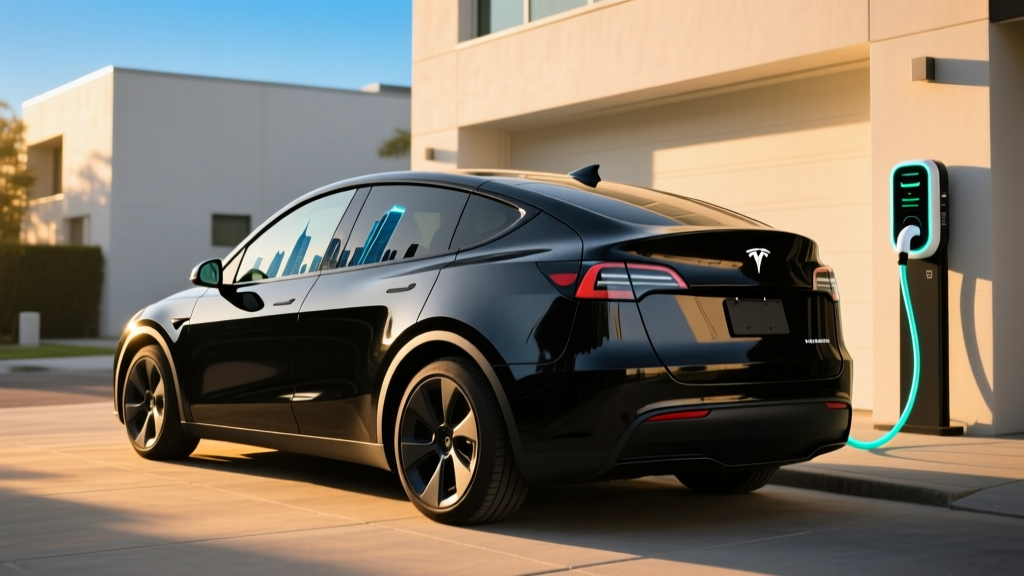
For home charging, a Tesla Wall Connector on a 60-amp circuit delivers the full 11.5 kW (48 amps continuous), replenishing roughly 41 miles of range per hour. A full 10-100% charge takes approximately 10 hours — plan on plugging in every night if your commute is long. Installation of a 240V/60A circuit typically costs $800-$2,000 depending on panel proximity and local permit fees. If your home has a 100-amp electrical panel, a panel upgrade to 200 amps may be required, adding $1,500-$3,000.
Charging-curve reality check: The 250 kW peak rate only holds between roughly 10-30% SoC. By 50%, you're closer to 150 kW, and by 80%, you're below 60 kW. This is why Tesla recommends charging to 80% at Superchargers for road trips — the last 20% takes nearly as long as the first 70%.
Pricing, Trims, and Federal Tax Credit Eligibility
The 2025/2026 Model S Plaid starts at $89,990 (including destination fee). Key options include:
- 21" Arachnid Wheels: +$4,500 (reduces range to 359 mi)
- Full Self-Driving (Supervised): +$8,000 one-time or $99/month subscription
- Premium paint colors: $1,500-$2,500 depending on selection
- Yoke steering wheel: No-cost option (replaces round wheel)
A typical as-tested configuration with FSD, premium paint, and 21" wheels lands around $104,000-$106,000.
| Cost Factor | Amount |
|---|---|
| Base MSRP (Model S Plaid) | $89,990 |
| Federal Tax Credit (§30D) | $0 — exceeds $55,000 sedan MSRP cap |
| Typical As-Tested Price | ~$104,000 |
| Estimated Annual Insurance | $3,200-$4,800 (varies by state/driver) |
| Estimated Annual Electricity Cost (12,000 mi) | ~$540 (at $0.16/kWh national avg) |
No. Under IRS §30D rules, new electric sedans must have an MSRP at or below $55,000 to qualify for the up-to-$7,500 federal tax credit. The Model S Plaid, at $89,990, far exceeds this cap. Additionally, buyer income limits apply ($150K single / $300K joint filers), and battery critical-mineral sourcing requirements must be met. The Model S Plaid is ineligible on MSRP alone. Always consult a tax professional and verify current-year rules at IRS.gov before making purchase decisions based on credit eligibility.
Interior, Technology, and Daily Livability
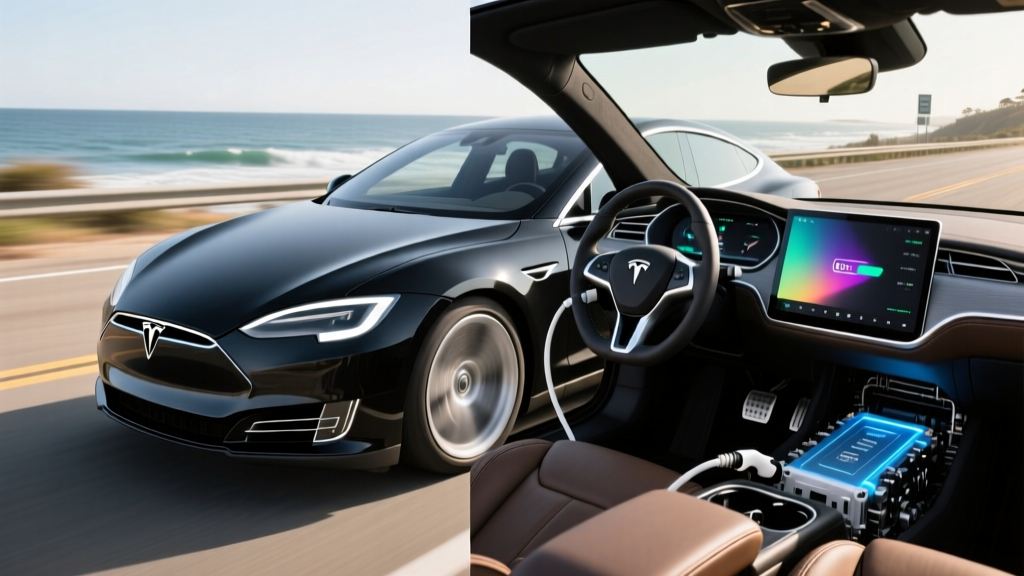
The Model S Plaid interior balances minimalism with genuine luxury. The 17-inch center touchscreen runs a responsive interface with native navigation, streaming media, and vehicle controls. A secondary 8-inch rear-seat screen handles climate and entertainment for passengers. The 22-speaker audio system delivers concert-hall-quality sound.
Practical dimensions make the Plaid a legitimate daily driver:
- Front legroom: 42.7 inches
- Rear legroom: 35.4 inches (comfortable for adults on shorter trips)
- Rear cargo (trunk): 26.3 cu ft
- Frunk (front trunk): ~3.1 cu ft
- Total cargo: ~28.0 cu ft (expandable with 60/40 rear seat fold)
Autopilot and FSD (Supervised): Every Model S comes standard with Tesla's Basic Autopilot, which provides lane-centering and adaptive cruise control. The optional Full Self-Driving (Supervised) package adds city-street navigation, traffic-light recognition, and automatic lane changes. Critically, FSD is an SAE Level 2 driver-assistance system — the driver must remain fully attentive, keep hands on the wheel (or apply torque with the yoke), and be prepared to take over instantly. This is not autonomous driving.
How the Plaid Compares: Lucid Air Sapphire vs. Porsche Taycan Turbo GT
| Spec | Tesla Model S Plaid | Lucid Air Sapphire | Porsche Taycan Turbo GT |
|---|---|---|---|
| Price | $89,990 | $249,000 | $230,000 |
| Horsepower | 1,020 hp | 1,234 hp | 1,019 hp (Launch Control) |
| 0-60 mph | 1.99 sec | 1.89 sec | 2.1 sec |
| 1/4 Mile | ~9.2 sec | ~8.95 sec | ~9.4 sec |
| EPA Range | 396 mi | 427 mi | 269 mi |
| Max DC Charge | 250 kW | 300+ kW | 320 kW |
| Charging Network | Supercharger (native) | CCS + adapter for NACS | CCS + adapter for NACS |
The Model S Plaid's value proposition is stark: it delivers 90%+ of the performance of cars costing two to three times as much, with superior range and the most mature charging infrastructure. The Lucid Air Sapphire is quicker and has more range, but at $249K, it's a different tax bracket entirely. The Porsche Taycan Turbo GT offers sharper handling dynamics and a more driver-focused cockpit, but its 269-mile range and CCS charging (requiring an adapter for Superchargers) are meaningful compromises for road-trippers.
Pros, Cons, and Who Should Buy the Model S Plaid
Pros
- Sub-9.3-second 1/4 mile from a four-door sedan at under $90K
- 396-mile EPA range — longest of any performance EV
- Native Supercharger access (17,000+ V3/V4 stations in North America)
- Practical cargo space (28 cu ft) and usable rear seat
- Over-the-air updates continuously improve the vehicle
- Industry-leading 8-year/150,000-mile battery warranty
Cons
- No federal tax credit eligibility (exceeds $55K MSRP cap)
- 250 kW peak charge rate trails newer 800V architectures (Hyundai, Porsche)
- Insurance costs 40-60% higher than comparable luxury sedans
- Yoke steering wheel polarizing; round wheel deletion feels cost-cutting
- Panel gaps and interior material quality still trail Mercedes/Porsche
- FSD (Supervised) remains Level 2 — not a hands-free autonomous system
Who this car suits best: The Model S Plaid is ideal for the performance-oriented buyer who also needs daily practicality. If you want supercar acceleration for weekend track days or drag-strip sessions, but need to carry four passengers and their luggage on a 350-mile road trip — and you want to charge reliably at Superchargers along the way — nothing else matches this combination. It's also a strong fit for tech-forward professionals who value OTA updates and Tesla's software ecosystem over traditional luxury brand cachet.
Who should look elsewhere: If interior material quality, ride refinement, and brand prestige are top priorities, the Porsche Taycan or Mercedes-AMG EQS may satisfy more. If you need hands-free highway driving, GM's Super Cruise on the Cadillac Celestiq or BlueCruise on the Ford Mustang Mach-E offer more polished Level 2+ experiences on mapped roads. And if budget matters, the base Model S (dual-motor, 405-mi range, ~$74,990) delivers 85% of the experience at a $15K discount.
Frequently Asked Questions
What is the real-world range of the Tesla Model S Plaid?
The EPA rates it at 396 miles (19" wheels). In real-world highway driving at 70-75 mph, expect 320-340 miles. In cold weather below 30°F, range drops to approximately 260-290 miles due to battery chemistry limitations and cabin heating demands. City driving with regenerative braking can match or slightly exceed the EPA figure.
How fast does the Model S Plaid charge at home and on the road?
On a Level 2 home charger (240V, 48A), the Plaid charges at 11.5 kW, adding about 41 miles per hour — a full charge takes roughly 10 hours. At a V3 Supercharger (250 kW DC), it can add 183 miles in 15 minutes, with a 10-80% session taking approximately 30 minutes. Charging tapers significantly above 80% SoC.
Does the Model S Plaid qualify for the federal EV tax credit?
No. Under current IRS §30D rules, the federal tax credit for new electric sedans is capped at vehicles with an MSRP of $55,000 or less. The Model S Plaid at $89,990 does not qualify. State-level incentives may still apply — check your local DMV or energy office for details.
Is the Tesla Model S Plaid worth buying vs. the Lucid Air Sapphire or Porsche Taycan Turbo GT?
If value is a priority, absolutely. The Plaid delivers 9.2-second quarter-mile times and 396 miles of range at $89,990 — the Lucid Air Sapphire costs $249,000 for marginally quicker times, and the Taycan Turbo GT at $230,000 offers only 269 miles of range. The Plaid also benefits from native Supercharger access. Choose the Porsche for handling refinement or the Lucid for maximum range and luxury, but the Plaid is the performance-per-dollar champion.
What are the Tesla Plaid 1/4 mile times in real-world conditions?
On a prepped drag strip with Drag Mode activated and battery preconditioned, verified runs fall between 9.2 and 9.4 seconds at 148-152 mph. On an unprepared street surface without preconditioning, expect 9.6-10.0 seconds. Repeated runs will trigger thermal management, gradually increasing elapsed times.
How long does the Model S Plaid battery last?
Tesla warranties the battery for 8 years or 150,000 miles, whichever comes first, guaranteeing a minimum of 70% capacity retention. Real-world data from high-mileage Tesla owners suggests NMC batteries in the Model S typically retain 85-90% capacity after 100,000 miles when charged primarily on Level 2 and kept between 20-80% SoC for daily use. A full battery replacement outside warranty currently costs approximately $15,000-$22,000 depending on labor.