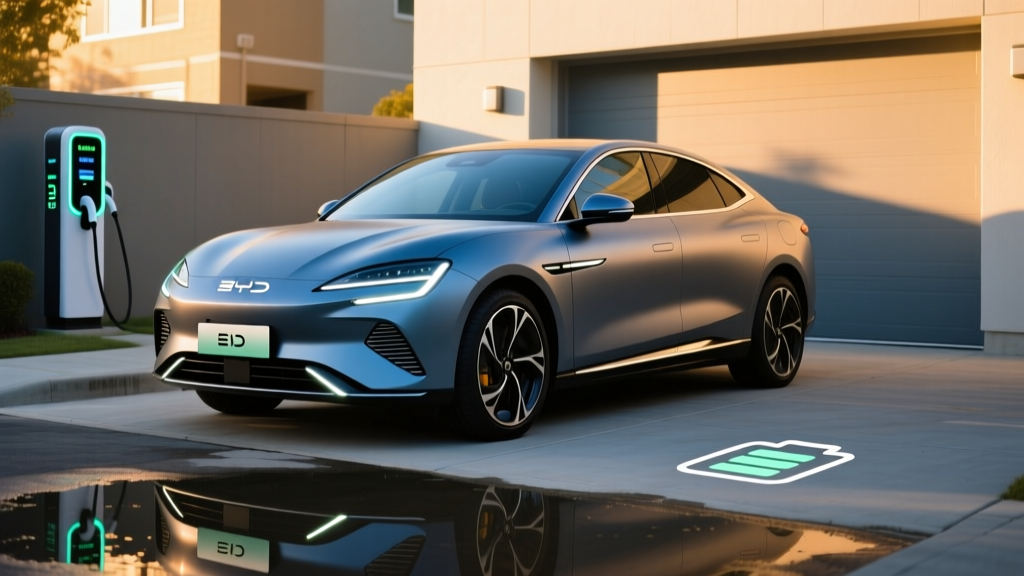
The BYD Racco arrives in the U.S. market as a compact electric crossover aiming to undercut established rivals on price while delivering competitive range and practicality. As BYD's first mainstream passenger EV sold Stateside, the Racco carries the weight of proving that a Chinese automaker can compete with the Hyundai Kona Electric, Kia Niro EV, and Chevrolet Equinox EV on American soil. After examining EPA filings, charging data, and ownership economics, here is what real buyers need to know.
Quick Verdict: Who Should Consider the BYD Racco?
The Racco targets budget-conscious urban commuters and small families who need a practical daily driver with sufficient range for occasional road trips. Its LFP battery chemistry offers longevity and thermal stability, and its pricing undercuts most competitors by several thousand dollars. However, its DC fast-charging speed is modest by 2026 standards, and BYD's U.S. dealer and service network remains in early buildout. If you have reliable home charging and drive under 80 miles daily, the Racco's value proposition is strong. Road-trip-heavy buyers or those without home charging access should weigh its charging limitations carefully.
Range and Efficiency: EPA Estimates Meet Real-World Driving
Real-World Expectation: Highway driving at 70+ mph yields approximately 200–220 miles (Standard) and 250–270 miles (Extended). In cold weather below 30°F, expect a 15–25% reduction, dropping the Extended Range model to roughly 210–230 miles. City driving with regenerative braking can match or slightly exceed EPA figures.
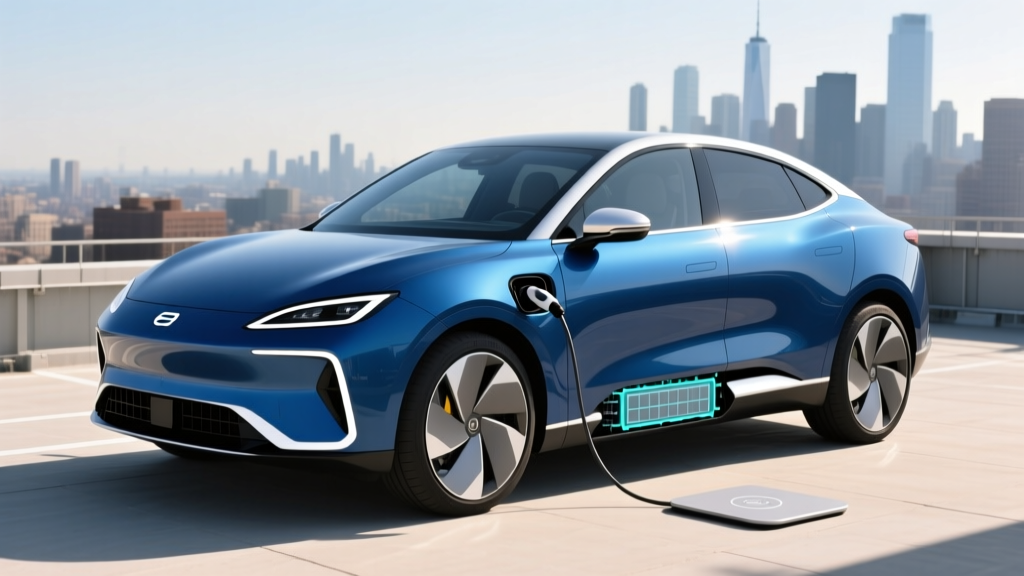
The Racco comes in two battery configurations. The Standard Range model pairs a 58.5 kWh usable battery with front-wheel drive, while the Extended Range uses an 82.0 kWh pack. Both utilize BYD's proprietary Blade Battery, a lithium iron phosphate (LFP) cell arranged in a cell-to-pack architecture that eliminates modules and improves volumetric efficiency.
LFP chemistry trades some energy density for superior cycle life and thermal stability. Where NMC cells typically show 10–15% degradation after 1,000 full cycles, LFP cells often retain 90%+ capacity beyond 3,000 cycles. This means the Racco's battery should comfortably outlast the vehicle itself under normal use.
Efficiency on the Extended Range model is rated at 112 MPGe combined (30 kWh/100 mi), which is competitive but not class-leading. The Hyundai Kona Electric achieves 120 MPGe combined, though it carries a higher base price. The Standard Range Racco rates at 118 MPGe combined (28 kWh/100 mi) due to its lighter curb weight.
| Specification | Standard Range | Extended Range |
|---|---|---|
| EPA Range | 238 miles | 295 miles |
| Battery (usable) | 58.5 kWh | 82.0 kWh |
| Chemistry | LFP (Blade Battery) | LFP (Blade Battery) |
| Drivetrain | FWD | FWD / AWD |
| Horsepower | 201 hp | 228 hp (FWD) / 335 hp (AWD) |
| 0–60 mph | 7.8 sec | 7.1 sec (FWD) / 5.4 sec (AWD) |
| Efficiency (combined) | 118 MPGe / 28 kWh/100mi | 112 MPGe / 30 kWh/100mi |
| Max DC Fast Charge | 110 kW | 130 kW |
| 10–80% DC Charge Time | ~34 min | ~38 min |
| Level 2 Charge Rate | 7.2 kW | 11.0 kW |
| Base MSRP | $31,990 | $37,490 |
Charging Speed: DC Fast Charging and Home Level 2
The Racco's charging profile reflects a pragmatic engineering choice rather than a performance-oriented one. The Extended Range model peaks at 130 kW on a DC fast charger, which is adequate but trails the Hyundai Ioniq 5's 240 kW peak and the Tesla Model Y's ~250 kW capability on V3 Superchargers.
Understanding the charge curve is essential. The Racco holds its peak rate to roughly 40% state of charge before tapering. Between 40% and 60%, it sustains approximately 90–100 kW, then drops further to 50–60 kW above 80%. This means the advertised 10–80% time of ~38 minutes is realistic, but charging from 80% to 100% will add another 30–40 minutes. For road trips, plan to charge to 80% and move on.
| Charging Level | Power | Miles Added per Hour | Notes |
|---|---|---|---|
| Level 1 (120V household) | 1.4 kW | ~4–5 mi/hr | Emergency/top-up only |
| Level 2 (240V home) | 7.2 kW (Std) / 11.0 kW (Ext) | ~24 mi/hr / ~36 mi/hr | Full charge overnight in 6–8 hours |
| DC Fast Charge | 110 kW (Std) / 130 kW (Ext) | ~180–220 mi/hr at peak | 10–80% in 34–38 min; tapers above 80% |
For home charging, the Extended Range model's 11.0 kW onboard charger is a genuine advantage. On a 48-amp Level 2 circuit, it can replenish from 20% to 100% in roughly 6 hours — meaning even a high-mileage day is easily recovered overnight. The Standard Range model's 7.2 kW charger requires about 8 hours for a full charge, which still fits comfortably within an overnight window for most commuters.
The Racco ships with a NACS (North American Charging Standard) port, giving it native access to the Tesla Supercharger network — over 25,000 stalls in North America as of early 2026. A CCS1 adapter is included for Electrify America, EVgo, and other legacy networks.
Performance and Driving Dynamics
The Racco is not a performance EV, and BYD doesn't pretend otherwise. The single-motor FWD models deliver adequate acceleration for highway merging and city driving. The AWD Extended Range variant, with 335 hp and a 5.4-second 0–60 time, provides genuine punch when needed, though it still trails the dual-motor Tesla Model Y Long Range (4.8 seconds).
Ride quality is tuned for comfort rather than sportiness. The suspension absorbs urban potholes and highway expansion joints competently, and cabin noise isolation is impressive for the price point. Regenerative braking offers three levels of intensity, but BYD does not offer true one-pedal driving — the regen does not bring the car to a complete stop, which is a missed opportunity for stop-and-go commuters.
Interior, Cargo, and Technology
The Racco's interior follows BYD's design language: a 12.8-inch rotating center touchscreen (landscape for navigation, portrait for music/climate), a 10.25-inch digital instrument cluster, and a flat-bottom steering wheel. Material quality is a step above its price point — soft-touch surfaces on the dash and door uppers, though hard plastics appear on the lower door panels and center console sides.
Cargo space measures 24.8 cubic feet behind the rear seats and 52.1 cubic feet with the 60/40 rear seatbacks folded. There is no front trunk (frunk), as the space is occupied by power electronics and the HVAC heat pump. Rear legroom is 38.2 inches, sufficient for two adults on longer trips, though the center seat is best reserved for a child.
BYD's driver-assistance suite, branded as DiPilot, includes adaptive cruise control with stop-and-go, lane-keeping assist, blind-spot monitoring, rear cross-traffic alert, and automatic emergency braking with pedestrian detection. This is an SAE Level 2 system — it requires the driver to remain attentive with hands on the wheel. It does not offer automated lane changes or navigation-guided active lane guidance like Tesla's Autopilot or GM's Super Cruise.
Pricing, Trim Levels, and Federal Tax Credit
| Trim | MSRP | Est. Price After §30D Credit* | Key Features |
|---|---|---|---|
| Standard Range SE | $31,990 | $24,490 | 238 mi range, 12.8" screen, heated front seats |
| Extended Range SE | $37,490 | $29,990 | 295 mi range, 11 kW L2 charger, power liftgate |
| Extended Range Limited | $41,990 | $34,490 | AWD, panoramic roof, ventilated seats, HUD |
| Extended Range Premium | $45,490 | $37,990 | All Limited features + premium audio, Nappa leather |
*Federal tax credit estimates assume buyer eligibility under IRS §30D rules. The credit is available as a point-of-sale transfer at participating dealers, reducing your purchase price at the time of sale.
- MSRP Cap: SUVs/crossovers must be under $80,000 MSRP — all Racco trims qualify.
- Income Cap: Modified AGI must not exceed $150,000 (single), $225,000 (head of household), or $300,000 (joint filers).
- Battery Sourcing: The full $7,500 credit requires meeting both critical-mineral and battery-component sourcing requirements. BYD's vertically integrated supply chain (LFP cells manufactured in-house) complicates eligibility — the Standard Range and Extended Range SE are currently expected to qualify for $3,750 (meeting one of two sourcing thresholds), while the AWD trims with different supply-chain configurations may qualify for the full $7,500. Verify with your dealer and consult a tax professional before purchasing.
- Point-of-Sale Transfer: Eligible buyers can transfer the credit to the dealer at purchase, receiving the discount upfront rather than waiting to claim it on their tax return.
- One Vehicle Per Taxpayer: You may claim the credit once per calendar year for a new EV purchase.
The credit situation is the Racco's biggest question mark. BYD's heavy vertical integration — mining lithium, manufacturing cells, and assembling vehicles — means its supply chain doesn't map cleanly onto §30D's requirements for North American or free-trade-agreement-partner sourcing. Buyers should request a written credit-eligibility confirmation from the dealer and verify against the latest fueleconomy.gov tax credit listings before signing.
Warranty and Long-Term Ownership
BYD backs the Racco with a competitive warranty package:
- Basic Vehicle: 5 years / 60,000 miles
- Battery & Powertrain: 8 years / 100,000 miles (capacity retention guaranteed to 70% of original)
- Corrosion Perforation: 5 years / unlimited miles
- Roadside Assistance: 5 years / 60,000 miles
The 70% battery capacity retention threshold over 8 years is standard for the industry, though some competitors guarantee 70% over 10 years. Given LFP's inherent longevity advantage, most owners will likely never approach the warranty threshold. Independent testing of BYD Blade cells shows less than 5% degradation after 2,000 full charge-discharge cycles — equivalent to roughly 400,000+ miles in the Extended Range model.
Insurance costs are expected to run 10–15% higher than comparable ICE crossovers, which is typical for EVs due to higher repair costs and parts pricing. BYD's U.S. parts distribution network is still maturing, so collision repair turnaround times may be longer than established brands during the first few years of availability.
How the Racco Compares to Key Rivals
| Spec | BYD Racco Ext. Range | Hyundai Kona Electric | Kia Niro EV | Chevy Equinox EV 3RS |
|---|---|---|---|---|
| EPA Range | 295 mi | 261 mi | 239 mi | 319 mi |
| Battery | 82.0 kWh LFP | 64.8 kWh NMC | 64.8 kWh NMC | 85.0 kWh NMC |
| Peak DC Charge | 130 kW | 150 kW | 85 kW | 150 kW |
| 10–80% Time | ~38 min | ~30 min | ~45 min | ~32 min |
| 0–60 mph | 7.1 sec (FWD) | 7.2 sec | 7.4 sec | 7.9 sec |
| Base MSRP | $37,490 | $34,995 | $39,990 | $43,900 |
| Cargo (rear seats up) | 24.8 cu ft | 25.5 cu ft | 18.5 cu ft | 26.4 cu ft |
| Tax Credit | $3,750–$7,500* | $7,500 | $7,500 | $7,500 |
The Racco's strongest card is range-per-dollar. At $37,490 for 295 miles of EPA range, it delivers more miles per dollar than the Kona Electric or Niro EV. The Equinox EV offers more range but starts significantly higher. Where the Racco loses ground is DC charging speed — 130 kW peak means longer stops on road trips compared to the Kona's 150 kW or the Ioniq 5's 240 kW.
- You want maximum range per dollar in a compact crossover
- You charge primarily at home and road-trip infrequently
- LFP battery longevity and thermal safety are priorities
- You can accept a developing dealer/service network
- You need the fastest possible DC charging (Hyundai Ioniq 5, Kia EV6)
- You require an established dealer network with guaranteed same-day service
- You need maximum cargo space (Chevy Equinox EV, Tesla Model Y)
- You want hands-free highway driving (GM Super Cruise on Equinox EV)
Pros and Cons at a Glance
Pros
- Class-leading range-per-dollar at 295 mi / $37,490
- LFP Blade Battery offers exceptional cycle life and thermal safety
- 11.0 kW Level 2 onboard charger (Extended Range) fills overnight quickly
- NACS port provides native Tesla Supercharger access
- Comfortable ride quality and strong cabin noise isolation
- Competitive standard safety tech (AEB, ACC, BSM)
Cons
- DC fast charging peaks at only 130 kW — slower than key rivals
- Federal tax credit eligibility uncertain due to supply-chain sourcing rules
- BYD's U.S. dealer and service network is still expanding
- No one-pedal driving mode
- No frunk (front trunk) for additional storage
- DiPilot driver assist is basic compared to Tesla Autopilot or GM Super Cruise
Frequently Asked Questions
What is the real-world range of the BYD Racco?
The Extended Range model is EPA-rated at 295 miles, but expect 250–270 miles in real-world highway driving at 70+ mph, and roughly 210–230 miles in sustained cold weather below 30°F. City driving with regenerative braking can match or slightly exceed the EPA figure, reaching 290–310 miles in mild conditions.
How fast does the BYD Racco charge at home and on the road?
At home on a 240V Level 2 charger, the Extended Range model charges at 11.0 kW, adding roughly 36 miles per hour and filling from 20% to 100% in about 6 hours. On a DC fast charger, it peaks at 130 kW, reaching 10–80% in approximately 38 minutes. The charge rate tapers significantly above 80% SoC.
Does the BYD Racco qualify for the $7,500 federal EV tax credit?
Eligibility is trim-dependent and partially uncertain. Under current IRS §30D rules, the Racco meets the MSRP cap (under $80,000 for SUVs) and buyer income limits apply ($150K single / $300K joint). Battery sourcing requirements are the variable — BYD's vertical integration means some trims may qualify for the full $7,500, while others may receive $3,750. Confirm eligibility with your dealer and a tax professional before purchasing.
Is the BYD Racco worth buying vs. the Hyundai Kona Electric or Kia Niro EV?
If range-per-dollar is your priority and you charge at home, the Racco Extended Range offers 295 miles at $37,490 — more range than both the Kona (261 mi) and Niro (239 mi) at a competitive price. However, the Kona charges faster (150 kW peak), and both Hyundai and Kia have established U.S. dealer networks. The Racco's tax credit uncertainty is also a factor — the Kona and Niro currently qualify for the full $7,500.
How long will the BYD Racco's LFP battery last?
BYD's Blade Battery (LFP) is engineered for 3,000+ full charge-discharge cycles with less than 10% degradation. In practical terms, that equates to 500,000+ miles of driving before the battery drops below 90% capacity. The warranty guarantees 70% capacity retention over 8 years / 100,000 miles, but LFP chemistry typically far exceeds this threshold. Most owners will sell or replace the vehicle long before the battery becomes a concern.
Does the Racco have a NACS or CCS charging port?
The 2026 Racco comes equipped with a native NACS (Tesla-style) port, providing direct access to the Tesla Supercharger network without an adapter. BYD also includes a CCS1 adapter in the vehicle for compatibility with Electrify America, EVgo, and other CCS-based networks.