Quick Verdict: The BYD K9 in the North American Market
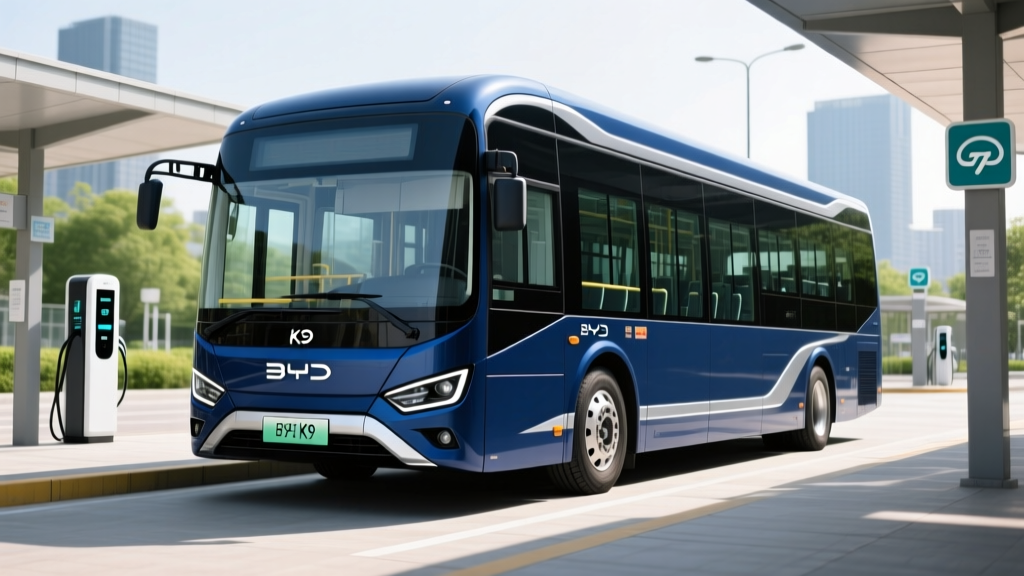
The BYD K9 is a 40-foot battery-electric transit bus that has been one of the most widely deployed zero-emission buses globally, with thousands of units operating across China, Europe, Latin America, and parts of Asia-Pacific. For North American fleet operators, however, the K9 occupies a complicated position. BYD's Lancaster, California manufacturing facility produced K9 buses for U.S. transit agencies for several years, but the company's footprint in the American heavy-duty transit market has shifted significantly due to federal procurement restrictions and intensifying competition from New Flyer's Xcelsior CHARGE NG, Proterra's ZX5 (now part of Volvo), and Gillig's battery-electric lineup.
This review covers the BYD K9's powertrain specifications, battery and charging architecture, real-world range expectations, and fleet procurement considerations as of the 2026 model year. If you're a fleet manager, transit planner, or electrification consultant evaluating the K9 against alternatives, here are the numbers you need.
BYD K9 Specifications at a Glance
| Specification | Value |
|---|---|
| Vehicle Class | Heavy-Duty Transit Bus (Class 8) |
| Length | 40 ft (12.2 m) |
| GVWR | ~40,000 lbs (18,100 kg) |
| Battery Chemistry | LFP (Lithium Iron Phosphate) |
| Battery Capacity | 337 kWh (usable, roof-mounted) |
| EPA Estimated Range | ~180 miles (transit cycle) |
| Real-World Range (mixed) | ~130–155 miles |
| Motor Type | Dual rear axle hub motors |
| Peak Power | 2 × 150 kW (402 hp combined) |
| Peak Torque | ~4,400 Nm combined at wheels |
| Top Speed | ~50 mph (governed) |
| DC Fast Charge (max) | ~150 kW (CCS1 or pantograph) |
| DC 10–80% Time | ~90–110 minutes |
| AC Level 2 Charge Rate | ~40 kW (depot charging) |
| Passenger Capacity | ~35 seated / 60–80 total (config dependent) |
| Warranty (Battery) | 8 years / 500,000 miles (fleet terms vary) |
| Base Price (estimated) | ~$850,000–$950,000 USD |
Battery, Chemistry, and Real-World Range
The BYD K9 uses a 337 kWh lithium iron phosphate (LFP) battery pack mounted on the roof. LFP chemistry is a deliberate choice for heavy-duty transit applications: it sacrifices some energy density compared to NMC (nickel manganese cobalt) but gains substantially in thermal stability, cycle life, and safety. BYD rates its LFP cells for 5,000+ charge cycles before reaching 80% state of health — a critical metric for buses that charge daily and operate 12–18 hours per shift.
The BYD K9's stated range under standardized transit testing cycles (such as the Altoona/CTA composite cycle) is approximately 180 miles. In real-world fleet operations, transit agencies consistently report effective ranges of 130–155 miles depending on route topography, passenger load, HVAC usage, and ambient temperature.
Cold-weather impact: In sub-32°F conditions, expect range to drop 20–35% due to battery thermal management demands and cabin heating. Agencies in cold climates (Minnesota, Chicago, New York) have documented effective winter ranges as low as 95–110 miles on a single charge. Route planning must account for this.
Hilly terrain: Routes with sustained grades above 5% can reduce range by 10–15%. Regenerative braking on downhill segments partially recovers energy, but net consumption on mountainous routes is measurably higher than flat urban grids.
Energy consumption for a 40-foot electric bus in typical urban stop-and-go service averages around 2.0–2.8 kWh per mile (equivalent to roughly 1.2–1.7 MPGe when expressed in diesel-gallon-equivalent terms). This figure varies dramatically with dwell time, door-open events, and accessory loads. Fleet telematics data from multiple agencies shows that HVAC alone can account for 15–25% of total energy draw on extreme-temperature days.
Charging Architecture: DC Fast Charge and Depot Charging
The K9 supports two primary charging modes: DC fast charging via CCS1 connector (or optional overhead pantograph for opportunity charging) and AC depot charging. Understanding both is essential for fleet infrastructure planning.
| Charging Mode | Power (kW) | Time to Full | Use Case |
|---|---|---|---|
| DC Fast Charge (CCS1) | Up to 150 kW peak | ~2.5–3 hours (0–100%) | Mid-day top-up, opportunity charging |
| DC Fast Charge (Pantograph) | Up to 300 kW (option) | ~15–25 min (partial) | On-route opportunity charging at terminals |
| AC Depot Charging | ~40 kW per bus | ~8–9 hours (0–100%) | Overnight depot charging (primary) |
| AC Level 2 (standard) | ~19.2 kW | ~17+ hours | Backup / supplemental |
DC fast charging reality check: The K9's peak DC charge rate of ~150 kW via CCS1 is modest compared to light-duty EVs, but for a 337 kWh battery, the math dictates longer charge sessions. From 10% to 80% state of charge, expect approximately 90–110 minutes. The charge curve tapers significantly above 80% SoC — the final 20% can take as long as the first 70% due to LFP cell balancing requirements. Fleet operators who only need 80% daily depth of discharge can optimize turnaround times by charging to 80% rather than 100%.
Pantograph opportunity charging is the K9's secret weapon for high-utilization routes. With optional roof-mounted pantograph receivers, the bus can accept up to 300 kW from overhead chargers installed at route terminals or layover points. A 15–20 minute layover can add 60–80 miles of range, effectively extending daily operational range without requiring a larger (heavier, more expensive) battery pack. Several European and Latin American transit systems use this architecture to run K9 buses on 200+ mile daily schedules.
Depot charging infrastructure: Most North American fleet operators deploy the K9 with overnight AC depot charging at ~40 kW per bus. A fleet of 20 buses requires approximately 800 kW of dedicated electrical capacity at the depot — often necessitating a medium-voltage service upgrade, transformer installation, and potentially a new utility feed. Budget $50,000–$150,000+ per depot for electrical infrastructure before chargers are installed. Consult your utility and a licensed electrical contractor early in the procurement process.
Performance and Drivetrain
The K9 uses a dual-motor rear-axle hub-drive configuration — two 150 kW electric motors integrated directly into the rear wheel hubs. This eliminates the need for a traditional transmission or driveshaft, reducing mechanical complexity and maintenance points. Combined output is approximately 402 horsepower and 4,400 Nm of torque at the wheels.
Performance metrics for a transit bus are inherently different from passenger vehicles:
- 0–30 mph: ~8–10 seconds (adequate for merging into traffic from stops)
- Top speed: Electronically governed to ~50 mph (standard for transit applications)
- Gradeability: Capable of sustained 20% grade at reduced speed — sufficient for most urban and suburban routes
- Regenerative braking: Aggressive regen calibration enables significant one-pedal-style deceleration, reducing friction brake wear by 40–60% over the bus's service life
The hub-motor design does add unsprung weight to the rear axle, which some transit engineers argue increases tire wear and affects ride quality on rough pavement. BYD counters that the elimination of mechanical drivetrain components offsets this with lower lifecycle maintenance costs. In practice, tire rotation schedules should be more aggressive on hub-motor buses than on central-motor designs.
Fleet Pricing, Procurement, and Federal Incentives
The BYD K9's base procurement price typically falls between $850,000 and $950,000 USD depending on interior configuration, battery options, charging equipment included, and order volume. For context, a comparable 40-foot diesel transit bus costs approximately $500,000–$600,000, while competitive battery-electric models from New Flyer and Gillig are priced in the $900,000–$1,200,000 range.
| Cost Component | Estimated Range (USD) |
|---|---|
| Base Bus (40 ft, standard config) | $850,000–$950,000 |
| Depot Charger (40 kW AC per unit) | $15,000–$30,000 |
| DC Fast Charger (150 kW CCS) | $80,000–$150,000 |
| Depot Electrical Upgrade | $50,000–$200,000+ |
| Spare Parts / Commissioning | $20,000–$50,000 |
| Total Per-Bus Deployed Cost | ~$1,015,000–$1,380,000 |
Federal funding — critical considerations: The FTA Low-No Program (Low or No Emission Vehicle Program) has been the primary federal funding mechanism for transit agency electrification, covering up to 85% of vehicle cost and 90% of infrastructure cost. However, Buy America requirements under 49 U.S.C. § 5323(j) mandate that transit buses procured with federal funds must have at least 70% domestic content (by cost), with final assembly in the United States.
BYD's Lancaster, California facility was established to meet these requirements, but the company has faced ongoing scrutiny and political headwinds regarding its eligibility for federal transit funding. The National Defense Authorization Act provisions in recent years have specifically restricted federal funding from going to buses manufactured by companies domiciled in or subject to influence by the Chinese government. Fleet procurement officers must verify current eligibility status with their FTA regional office and legal counsel before including the K9 in federally funded procurements.
IRS §30D tax credit: The federal clean vehicle tax credit under IRS §30D applies primarily to light-duty vehicles (under 14,000 lbs GVWR). The BYD K9, as a Class 8 heavy-duty bus, does not qualify for §30D. Instead, fleet operators should investigate:
- IRC §45W — Commercial Clean Vehicle Credit (up to $40,000 for vehicles over 14,000 lbs GVWR, subject to domestic content and sourcing requirements)
- FTA Low-No grants — as described above
- EPA Clean School Bus Program — if applicable to school bus variants
- State-level incentives — California's HVIP, New York's Truck Voucher Incentive Program, and others offer substantial point-of-sale rebates for zero-emission heavy-duty vehicles
Interior, Passenger Capacity, and Technology
The K9's interior is configured for high-capacity transit service. Standard seating accommodates approximately 35 passengers in forward- and rear-facing configurations, with total capacity (seated + standing) of 60–80 passengers depending on local regulations and wheelchair-accessible area configuration. The low-floor design (with a front-door ramp or kneeling function) meets ADA accessibility requirements.
Driver technology:
- 10.1-inch digital instrument cluster with battery state of charge, range estimation, and energy flow display
- Tire pressure monitoring system (TPMS)
- Electronic stability control (ESC)
- Optional ADAS package: forward collision warning, lane departure warning, 360° camera system
- Fleet telematics integration (BYD's cloud-based fleet management platform or third-party compatibility)
Notable limitations:
- Infotainment and passenger-facing information systems are basic compared to some North American competitors — agencies often retrofit third-party stop-announcement and digital signage systems
- Parts availability and service network in North America is more limited than New Flyer or Gillig, which have extensive dealer and field-service networks across the U.S. and Canada
- Software and diagnostic tools may require proprietary BYD equipment, potentially complicating third-party maintenance contracts
BYD K9 vs. Key Competitors
| Specification | BYD K9 | New Flyer Xcelsior CHARGE NG | Gillig Battery Electric |
|---|---|---|---|
| Battery Capacity | 337 kWh (LFP) | Up to 595 kWh (NMC) | Up to 444 kWh (NMC) |
| Stated Range | ~180 mi | ~220–260 mi | ~180–220 mi |
| DC Fast Charge | 150 kW (CCS) | Up to 350 kW (CCS) | Up to 250 kW (CCS) |
| Base Price (est.) | $850K–$950K | $1.0M–$1.2M | $900K–$1.1M |
| Buy America Compliant | Complicated* | Yes | Yes |
| U.S. Service Network | Limited | Extensive | Extensive |
*BYD's Buy America compliance status has been subject to political and regulatory challenges. Verify current eligibility with FTA.
Choose the BYD K9 if: Your agency operates in a jurisdiction where federal Buy America restrictions do not apply (or you're using non-federal funding), you prioritize LFP battery longevity and safety, and you need a cost-competitive entry point for fleet electrification with a proven global track record.
Choose New Flyer or Gillig if: Your procurement relies on FTA Low-No funding or other federal sources requiring Buy America compliance, you need longer single-charge range for extended routes, you want access to an established North American parts and service network, or you're standardizing across a mixed fleet of North American-manufactured buses.
Warranty and Lifecycle Costs
BYD typically offers an 8-year / 500,000-mile battery warranty on the K9, guaranteeing that the battery will retain at least 70–80% of original capacity (terms vary by contract). The LFP chemistry's inherent longevity — 5,000+ cycles at 80% depth of discharge — means that most K9 batteries should outlast the typical 12-year transit bus service life without requiring replacement.
This is a significant total-cost-of-ownership advantage over diesel buses, which require engine overhauls ($30,000–$50,000), transmission rebuilds ($15,000–$25,000), and ongoing emissions-system maintenance. Electric buses eliminate all of these costs. The trade-off is higher upfront capital cost and the infrastructure investment required for depot charging.
Estimated 12-year lifecycle cost comparisons from multiple transit agency studies show battery-electric buses achieving cost parity with diesel at approximately year 7–9, depending on electricity rates, route intensity, and maintenance labor costs in the local market.
Frequently Asked Questions
What is the real-world range of the BYD K9 electric bus?
The BYD K9 has a stated range of approximately 180 miles under standardized transit testing. Real-world fleet operations typically see 130–155 miles in moderate conditions. Cold weather (below 32°F) can reduce this to 95–110 miles. Hilly routes and heavy passenger loads further reduce range by 10–15%.
How fast does the BYD K9 charge?
Via CCS1 DC fast charging, the K9 accepts up to 150 kW peak, achieving a 10–80% charge in approximately 90–110 minutes. Overnight depot charging at ~40 kW AC takes 8–9 hours for a full charge. Optional pantograph opportunity charging at up to 300 kW can add 60–80 miles in a 15–20 minute layover.
Does the BYD K9 qualify for the federal EV tax credit?
No. The IRS §30D Clean Vehicle Credit applies to light-duty vehicles under 14,000 lbs GVWR. The K9 is a Class 8 bus. Fleet operators should instead investigate the IRC §45W Commercial Clean Vehicle Credit (up to $40,000), FTA Low-No grants, and state-level incentive programs. Tax and incentive eligibility varies — consult a tax professional and your FTA regional office.
Is the BYD K9 worth buying vs. New Flyer or Gillig?
The K9 offers competitive pricing and proven LFP battery durability, but North American procurement is complicated by Buy America restrictions on federally funded purchases, a more limited U.S. service network, and political headwinds. For agencies using non-federal funds in markets where BYD maintains service support, the K9 can be a cost-effective option. For most U.S. agencies relying on federal transit funding, New Flyer and Gillig offer more straightforward procurement paths and stronger domestic support infrastructure.
What are the biggest pros and cons of the BYD K9?
- LFP battery: 5,000+ cycle life, superior thermal safety
- Competitive base price vs. NMC competitors
- Global deployment track record (10,000+ units worldwide)
- Hub-motor drivetrain: fewer mechanical failure points
- Pantograph opportunity charging option
- Federal Buy America compliance uncertain for FTA-funded procurements
- Limited North American parts and service network
- Lower peak DC charge rate (150 kW) vs. competitors (250–350 kW)
- Smaller battery (337 kWh) limits single-charge range vs. New Flyer
- Political/regulatory risk for U.S. transit agencies
Who is the BYD K9 best suited for?
The K9 is best suited for transit agencies or private fleet operators outside the U.S. federal procurement system — including international operators, private shuttle services, university campus transit, and agencies in jurisdictions where BYD maintains strong local service support. Its LFP battery makes it particularly attractive for hot-climate operations where NMC thermal management is a concern, and for high-cycle applications (multiple partial charges per day) where LFP's cycle-life advantage is maximized.