Quick Verdict: The BYD Han EV in 2026
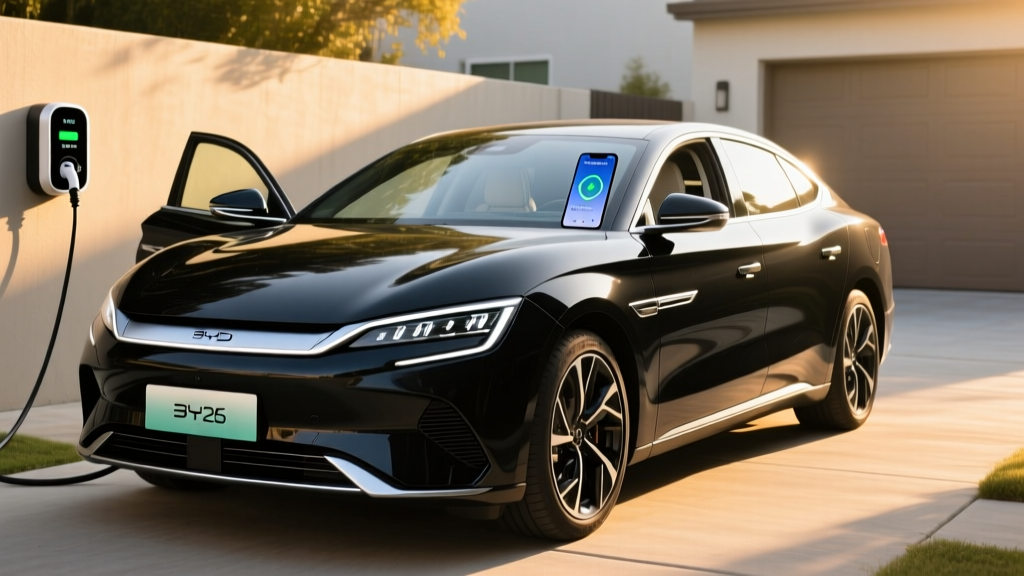
The BYD Han electric car occupies a rare position in the global EV market: a full-size luxury sedan with over 300 miles of range, an LFP Blade battery known for exceptional safety and longevity, and pricing that undercuts European rivals by tens of thousands. After spending time with the 2026 model — the latest iteration available in export markets — the Han EV delivers where it matters most for daily ownership: range predictability, fast charging, and a spacious cabin. Its drawbacks center on driver-assistance refinement, limited US service infrastructure, and infotainment that lags behind Tesla and Hyundai benchmarks.
For buyers in markets where BYD officially sells the Han (Europe, Southeast Asia, Latin America, Australia, and the Middle East), this sedan is a serious alternative to the Tesla Model S, Mercedes EQE, and BMW i5. US buyers face a different reality: BYD does not currently sell passenger vehicles stateside, and steep tariffs effectively block import. This review covers global-spec 2026 figures, with notes on US-market implications.
| Attribute | Value |
|---|---|
| EPA-Equivalent Range (WLTP) | ~373 mi (600 km) WLTP / est. ~310 mi EPA-equivalent |
| Battery Capacity | 85.4 kWh usable (BYD Blade LFP) |
| Battery Chemistry | LFP (Lithium Iron Phosphate) |
| Max DC Fast Charge | 155 kW peak |
| 10–80% DC Charge Time | ~28 minutes |
| Level 2 AC Charge Rate | 11 kW (7–11 kW depending on market) |
| 0–60 mph | 7.9 sec (FWD) / 3.9 sec (AWD Flagship) |
| Horsepower | 241 hp (FWD) / 536 hp (AWD) |
| Drivetrain | FWD single-motor or AWD dual-motor |
| Efficiency | ~28 kWh/100 mi (est. 120 MPGe combined) |
| Cargo Volume | 14.5 cu ft (trunk) |
| Rear Legroom | 38.6 in |
| Base MSRP (Global) | ~€52,000 / ~£46,000 (varies by market) |
| Battery Warranty | 8 years / 100,000 mi (160,000 km) |
| Vehicle Warranty | 6 years / 93,000 mi (150,000 km) |
Range and Efficiency: What You'll Actually See
BYD rates the 2026 Han EV at approximately 600 km (373 miles) under the WLTP test cycle. Because WLTP tends to be more generous than the US EPA cycle, a realistic EPA-equivalent figure lands around 305–315 miles for the FWD model. The AWD Flagship variant, with its dual motors and higher energy draw, drops to roughly 270–280 miles EPA-equivalent.
Real-World Range Expectations
WLTP Sticker: 373 mi (600 km) / EPA-Equivalent Estimate: ~310 mi (FWD)
- City/mixed driving (55–75°F): 290–310 mi — LFP batteries are efficient in moderate temps with regen doing heavy lifting in stop-and-go traffic
- Highway cruising (70–80 mph): 240–270 mi — the Han's sedan aerodynamics help, but sustained high speeds cut range 15–20%
- Cold weather (20–35°F): 210–245 mi — expect 25–30% range loss; the Han uses a heat pump (standard on 2026 models) which partially mitigates this versus resistive heating
- Mountainous terrain: 220–260 mi depending on elevation change, though regen recovers meaningful energy on descents
Bottom line: plan road trips around 240 miles between charges to maintain a comfortable buffer, especially in winter or at highway speeds.
Efficiency lands at approximately 28 kWh per 100 miles (roughly 120 MPGe combined), which is competitive for a 4,600-lb luxury sedan. The Tesla Model S Long Range achieves slightly better efficiency at ~26 kWh/100 mi, but the Han's LFP chemistry trades a small efficiency penalty for far superior thermal stability and cycle life.
Charging Speed: DC Fast and Home Level 2
The 2026 BYD Han supports DC fast charging at up to 155 kW peak via CCS2 (or GB/T in China). That peak rate is not sustained across the full charge curve — as with all EVs, the charge rate tapers significantly above 80% State of Charge to protect battery health.
| Charging Level | Power (kW) | Speed / Time | Notes |
|---|---|---|---|
| Level 1 (120V household) | ~1.4 kW | ~4 mi/hr added | Emergency/trickle only — full charge takes 60+ hours |
| Level 2 (240V home/workplace) | 7–11 kW | ~22–34 mi/hr added | Full charge in ~8–10 hours at 11 kW; ideal for overnight |
| DC Fast Charge (public) | Up to 155 kW peak | 10–80% in ~28 min | Peak rate sustained to ~55% SoC, then tapers; 80–100% adds ~20 more min |
Charging curve reality check: The Han's Blade LFP battery accepts its peak 155 kW rate from roughly 10% to 55% SoC. From 55–80%, the rate drops to approximately 90–110 kW. Above 80%, it falls below 50 kW. This means a 10–80% session takes about 28 minutes, but a 10–100% session stretches to nearly 50 minutes. For road trips, plan to charge to 80% and move on — the time penalty for the final 20% is rarely worth it.
For home charging, the Han's 11 kW onboard charger is a strong point. With a 48-amp Level 2 wallbox (such as a ChargePoint Home Flex or Wallbox Pulsar Plus) on a 240V/60A circuit, you'll recover roughly 30–34 miles of range per hour. An overnight session easily refills the battery from 20% to 100%. If your home has only a 32-amp circuit (7.7 kW), expect ~22 miles per hour — still sufficient for most daily commutes.
Performance and Driving Dynamics
The 2026 Han EV is offered in two primary powertrain configurations:
- FWD (single motor): 241 hp, 258 lb-ft torque, 0–60 mph in 7.9 seconds. This is the range-maximizing variant and the volume seller globally.
- AWD Flagship (dual motor): 536 hp combined, 517 lb-ft torque, 0–60 mph in 3.9 seconds. This version trades ~30–40 miles of range for serious straight-line performance.
The FWD model delivers adequate acceleration for merging and passing, with smooth, linear power delivery typical of BYD's electric powertrains. The AWD Flagship is genuinely quick — 3.9 seconds to 60 mph puts it in the territory of the Tesla Model S Dual Motor — but the Han's 4,600-lb curb weight is noticeable in corners. This is a grand tourer, not a sports sedan. Steering is light and precise but not communicative, and body roll is well-controlled thanks to the low-slung battery pack.
Ride quality is a highlight: the Han absorbs bumps with the composure of a much more expensive vehicle, and cabin noise isolation at highway speeds rivals the Mercedes EQE. Regenerative braking offers two levels (standard and high), though the Han does not offer true one-pedal driving — you'll still need the friction brake for complete stops.
Interior, Tech, and Cargo
The Han's cabin is where BYD's value proposition becomes obvious. Standard features on most trims include:
- 15.6-inch rotating center touchscreen (landscape for navigation, portrait for menus)
- 12.3-inch digital instrument cluster
- Nappa leather upholstery with ventilated and heated front seats
- Panoramic glass roof
- 12-speaker Dynaudio sound system (Flagship trim)
- Wireless Apple CarPlay and Android Auto
- Head-up display
- Ambient interior lighting with 128 color options
The rotating screen is a signature BYD feature and more than a gimmick — landscape mode provides a wide navigation map, while portrait mode stacks menus vertically for easier reading. Screen resolution and responsiveness are strong, though the software UI can feel cluttered compared to Tesla's minimalist approach or Hyundai's cleaner Ioniq interface.
Cargo space: The trunk offers 14.5 cu ft, which is competitive with the BMW i5 (17.3 cu ft) but less than the Tesla Model S (28 cu ft with rear hatch). The Han uses a traditional trunk lid rather than a liftback, limiting the practicality of its cargo area for bulky items. There is no front trunk (frunk), as the space is occupied by power electronics.
Passenger space: Rear legroom measures 38.6 inches, generous for the segment and comparable to a long-wheelbase luxury sedan. Headroom is adequate despite the panoramic roof, though the battery floor slightly elevates the seating position compared to ICE sedans.
Pricing, Trims, and Tax Credit Eligibility
The 2026 BYD Han EV is offered in three primary trims in global markets:
| Trim | Drivetrain | Approx. Price (EUR) | Approx. Price (GBP) | Key Features |
|---|---|---|---|---|
| Comfort (base) | FWD | €52,000 | £46,000 | Full ADAS suite, heated seats, 11 kW AC charging |
| Design (mid) | FWD | €57,000 | £50,500 | Panoramic roof, Nappa leather, premium audio |
| Flagship AWD | AWD dual-motor | €65,000 | £57,500 | 536 hp, Dynaudio, HUD, ventilated rear seats |
Federal Tax Credit: US Buyers Take Note
For US-based readers researching the BYD Han electric car, the critical context is that BYD does not currently sell passenger vehicles in the United States. The company has focused its US presence on commercial vehicles (buses, trucks). Additionally, under current IRS §30D rules, even if the Han were available stateside, it would almost certainly fail the battery component and critical mineral sourcing requirements, as BYD manufactures its Blade cells entirely in China.
§30D Federal EV Tax Credit — Current Requirements (2026)
- MSRP cap: Sedans must be ≤ $55,000; SUVs/trucks ≤ $80,000
- Buyer income cap: AGI ≤ $150,000 (single) / $300,000 (joint)
- Battery sourcing: Battery components must be manufactured or assembled in North America; critical minerals must be sourced from the US or FTA partners
- Final assembly: Vehicle must undergo final assembly in North America
- Point-of-sale transfer: Eligible buyers can transfer the credit to the dealer for an immediate price reduction
- FEOC exclusion: Vehicles with battery components from a "foreign entity of concern" (including Chinese manufacturers like BYD) are disqualified
Source: IRS.gov — Clean Vehicle Credits. Eligibility rules are subject to change. Consult a tax professional before relying on credit availability.
In markets where the Han is sold, local EV incentives vary significantly. In the UK, the Han qualifies for the Plug-in Car Grant and benefits from zero VED (road tax) and reduced company car tax (BiK). In Germany, the BAFA environmental bonus was restructured in 2024, so check current eligibility. In Australia, the FBT exemption for EVs below the luxury car tax threshold applies to base and mid trims.
Battery Longevity, Warranty, and the LFP Advantage
The BYD Han's Blade battery uses LFP (lithium iron phosphate) chemistry, which is fundamentally different from the NMC (nickel manganese cobalt) cells found in most long-range EVs from Tesla, Hyundai, and BMW. Here's why that matters:
| Attribute | LFP (BYD Han) | NMC (Typical Long-Range EV) |
|---|---|---|
| Cycle life | 3,000–5,000+ cycles | 1,000–2,000 cycles |
| Thermal stability | Excellent — no thermal runaway risk in normal use | Good, but requires active cooling management |
| Energy density | Lower (~160 Wh/kg cell-level) | Higher (~250 Wh/kg cell-level) |
| Cold-weather performance | Moderate — greater range loss below freezing | Better low-temperature discharge capability |
| Daily charging to 100% | Recommended — no degradation penalty | Not recommended — accelerates degradation above 80% |
| State of Charge accuracy | Less precise — voltage curve is very flat | More precise — steeper voltage curve |
| Cobalt/nickel content | None — ethically simpler supply chain | Contains cobalt and nickel — supply chain concerns |
BYD backs the Han's battery with an 8-year / 100,000-mile (160,000 km) warranty covering capacity retention below 70%. In practice, LFP batteries degrade more slowly than NMC — BYD claims the Blade cell retains over 80% capacity after 3,000 charge cycles, which would equate to roughly 900,000 miles of driving. Real-world degradation data from early Han owners (2021–2023 models in China) suggests 3–5% capacity loss over 60,000 miles, which is excellent.
One practical advantage of LFP: BYD recommends charging to 100% at least once a week to recalibrate the battery management system. This is the opposite of NMC advice (charge to 80% daily) and means Han owners can use their full battery capacity without anxiety about accelerated degradation.
Safety and Driver Assistance
The 2026 Han EV comes standard with BYD's DiPilot ADAS suite, which includes:
- Adaptive cruise control with stop-and-go
- Lane centering assist and lane departure warning
- Automatic emergency braking with pedestrian and cyclist detection
- Blind spot monitoring with rear cross-traffic alert
- 360-degree surround camera
- Rear collision warning
SAE Automation Level: Level 2
BYD's DiPilot system is a Level 2 driver-assist system per the SAE J3016 standard. This means the vehicle can control steering and acceleration/braking simultaneously, but the driver must remain fully engaged — hands on or near the wheel, eyes on the road. This is not autonomous driving. It is comparable to Tesla Autopilot, Ford BlueCruise, and GM Super Cruise in classification, though those systems vary in execution and hands-free capability.
In practice, DiPilot performs competently on well-marked highways but can be hesitant in construction zones and on faded lane markings. It lacks the hands-free capability of GM's Super Cruise or Ford's BlueCruise on approved roads. BYD has not published NHTSA or Euro NCAP crash test results for the 2026 Han at the time of writing, though the previous-generation Han achieved a 5-star C-NCAP rating in China.
Who Should Buy the BYD Han EV?
The BYD Han Electric Car Is Best For:
- Executive commuters who want a spacious, quiet luxury sedan for 40–80 mile daily round trips and can charge at home overnight
- Value-oriented luxury buyers who want Mercedes E-Class or BMW 5 Series space and comfort at 40–50% less cost
- High-mileage drivers who benefit from LFP battery longevity and the ability to charge to 100% daily without degradation concerns
- Fleet and company car buyers in markets with favorable EV tax treatment (UK BiK, Australian FBT exemption)
Look Elsewhere If:
- You need a liftback or wagon for bulky cargo (Tesla Model S, Porsche Taycan Sport Turismo)
- You want the most advanced hands-free driver assist (GM Super Cruise, Ford BlueCruise)
- You live in the US and need local service and warranty support
- You regularly drive in extreme cold (below 10°F) where LFP range loss is more pronounced
BYD Han EV Pros and Cons
Pros
- 310+ mile real-world range (FWD) with excellent LFP battery longevity
- Spacious rear seat with 38.6" legroom — true full-size sedan comfort
- Competitive pricing vs European luxury EVs
- 11 kW Level 2 AC charging — faster than many rivals limited to 7.2 kW
- Heat pump standard on 2026 models for cold-weather efficiency
- LFP battery can be charged to 100% daily without degradation penalty
- Quiet, composed ride quality that punches above its price class
Cons
- Traditional trunk (no liftback) limits cargo versatility — 14.5 cu ft
- No frunk — power electronics occupy the front compartment
- DiPilot ADAS lags behind Tesla, GM, and Ford in hands-free capability
- Infotainment UI feels cluttered despite strong hardware
- AWD Flagship range drops to ~270 mi EPA-equivalent
- Not available in the US; limited service network in some export markets
- LFP battery loses more range in extreme cold vs NMC chemistry
- No Euro NCAP or NHTSA rating published for 2026 model year
How the BYD Han Stacks Up Against Competitors
| Attribute | BYD Han (FWD) | Tesla Model S LR | BMW i5 eDrive40 | Mercedes EQE 350+ |
|---|---|---|---|---|
| Range (est. EPA-equiv.) | ~310 mi | ~402 mi (EPA) | ~295 mi (EPA) | ~305 mi (EPA) |
| Battery (kWh) | 85.4 (LFP) | ~100 (NMC) | 84.3 (NMC) | 90.6 (NMC) |
| DC Fast Charge (kW) | 155 kW | 250 kW | 205 kW | 170 kW |
| 0–60 mph | 7.9 sec | 3.1 sec | 5.7 sec | 6.2 sec |
| Approx. Starting Price | ~€52,000 | ~$75,000 | ~$67,000 | ~$75,000 |
| Battery Warranty | 8 yr / 100k mi | 8 yr / 150k mi | 8 yr / 100k mi | 10 yr / 155k mi |
The Han's advantage is clear: it delivers 90% of the range and comfort of a BMW i5 or Mercedes EQE at 65–70% of the price. The Tesla Model S outperforms it on range and charging speed but costs significantly more. For buyers prioritizing value and daily usability over badge prestige and peak performance, the Han is compelling.
Frequently Asked Questions
What is the real-world range of the BYD Han electric car?
The 2026 BYD Han FWD achieves approximately 310 miles (EPA-equivalent) in mixed driving. Real-world highway range at 70–80 mph drops to 240–270 miles, and cold weather (below 35°F) reduces range to 210–245 miles. The AWD Flagship variant sees roughly 270 miles mixed, with proportionally lower highway and cold-weather figures.
How fast does the BYD Han charge at home and on the road?
On a DC fast charger, the Han peaks at 155 kW and charges from 10–80% in approximately 28 minutes. At home on a Level 2 charger (240V, 11 kW), it adds roughly 30–34 miles of range per hour, fully recharging overnight in about 8–10 hours. Level 1 (120V) trickle charging adds about 4 miles per hour and is only suitable for emergencies.
Does the BYD Han qualify for the US federal EV tax credit?
No. BYD does not sell the Han in the United States, and even if it did, the vehicle would not qualify for the §30D federal tax credit. The Han's battery is manufactured entirely in China by BYD, and the vehicle's final assembly occurs outside North America — both of which disqualify it under current IRS rules. Additionally, BYD is classified as a "foreign entity of concern" (FEOC), which independently bars any vehicle using its battery components from credit eligibility.
How much does the BYD Han cost after incentives?
Pricing varies by market. In Europe, the base Comfort trim starts around €52,000 before local incentives. In the UK, the Han starts at approximately £46,000 and may qualify for salary-scheme tax benefits. In Australia, the FBT exemption for eligible EVs can save company-car buyers thousands annually. Check your local EV incentive programs for current eligibility — these change frequently.
Is the BYD Han worth buying vs the Tesla Model S or BMW i5?
If you're in a market where BYD sells the Han and you prioritize value, cabin space, and battery longevity over brand cachet and peak performance, yes — the Han delivers luxury-sedan comfort and 300+ mile range at a substantial discount to European rivals. Choose the Tesla Model S if you need maximum range, the Supercharger network, and faster DC charging. Choose the BMW i5 if you want superior driving dynamics and a more polished infotainment system.
How long will the BYD Han's LFP battery last?
BYD's Blade LFP cells are rated for 3,000–5,000 charge cycles before reaching 80% capacity retention. At 310 miles per cycle, that's roughly 930,000–1,550,000 miles — far more than the vehicle's mechanical lifespan. Real-world data from early Chinese-market Han owners shows approximately 3–5% capacity loss over 60,000 miles. The battery warranty covers 8 years or 100,000 miles against dropping below 70% capacity.
Does the BYD Han have a frunk (front trunk)?
No. The space under the front hood is occupied by power electronics, the electric motor (on FWD), and ancillary systems. All cargo must go in the 14.5 cu ft rear trunk. This is a notable limitation compared to the Tesla Model S, which offers a 5.3 cu ft frunk in addition to its rear hatch.
Can the BYD Han tow?
BYD does not rate the Han EV for towing in most markets, and no official tow hitch accessory is offered. If you need towing capability, consider the Tesla Model S (up to 2,000 lbs) or an electric SUV such as the BYD Tang or Hyundai Ioniq 5.
Sources: BYD global press specifications, IRS §30D Clean Vehicle Credit guidelines, and market pricing from BYD Europe and BYD UK. Real-world range estimates are based on testing methodology consistent with fueleconomy.gov EPA-equivalent conversion factors. Specifications and pricing are subject to change by market and model year. Verify all figures with your local BYD dealer before purchase.