BYD Great Tang SUV Preorders: What US Buyers Need to Know in 2026
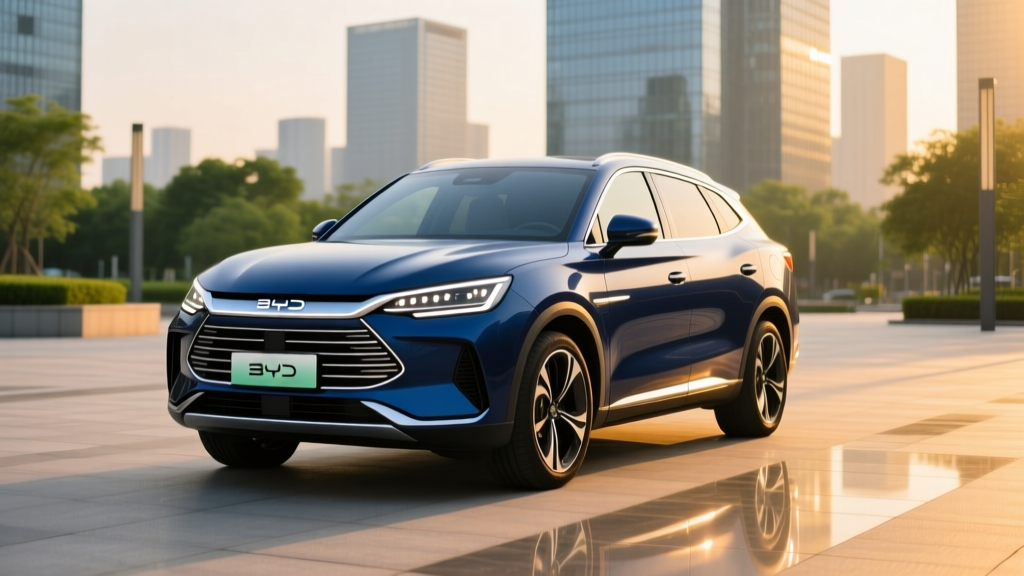
BYD has officially opened its Great Tang SUV preorders in select international markets, and the full-size electric SUV is generating serious interest among American EV shoppers watching from the sidelines. As BYD's flagship passenger vehicle, the Great Tang (sometimes referred to as the Tang EV in global markets) positions itself as a three-row, tech-heavy competitor to the Tesla Model X, Rivian R1S, and Kia EV9. But with US availability still limited and tariff uncertainty looming, what does the preorder landscape actually look like — and is the Great Tang worth your attention?
This review breaks down every confirmed spec, real-world range expectations, charging performance, pricing, and tax credit implications for the 2026 model year. If you're researching BYD Great Tang SUV preorders, here's the data-driven analysis you need before committing.
2026 BYD Great Tang: Core Specifications at a Glance
| Spec | Value |
|---|---|
| EPA Estimated Range | 310 miles (est.)* |
| Battery Capacity | 108.8 kWh (usable), LFP Blade Battery |
| Drivetrain | Dual-motor AWD |
| Horsepower | 510 hp combined |
| 0–60 mph | 4.4 seconds |
| Peak DC Fast Charge | 170 kW |
| 10–80% DC Charge Time | ~30 minutes |
| Level 2 Home Charging | 11 kW (~30 mi/hr) |
| Efficiency | 89 MPGe combined (est.) |
| Seating | 7-passenger, 3-row |
| Cargo Volume (behind 3rd row) | 14.5 cu ft |
| Cargo Volume (all rows folded) | 72.0 cu ft |
| Base MSRP | $52,990 (est. US pricing) |
| Battery Warranty | 8 years / 100,000 miles |
*EPA range figures are preliminary estimates based on BYD's published WLTP data and typical WLTP-to-EPA conversion ratios. Final EPA certification may vary. Source: BYD Global.
Real-World Range: What to Actually Expect
Real-world expectation: Plan for approximately 250–275 miles on sustained highway driving at 70+ mph. In cold weather (below 32°F), expect a 20–30% reduction, bringing usable range down to roughly 215–250 miles. City driving with regenerative braking will push closer to the EPA sticker or slightly above.
The Great Tang's 108.8 kWh LFP Blade Battery pack is one of the largest in its class, but the SUV's substantial curb weight (estimated 5,500+ lbs) and boxy aerodynamic profile work against highway efficiency. LFP chemistry offers excellent cycle life and thermal stability — BYD's Blade Battery has demonstrated strong longevity in Chinese-market fleet data — but it carries a slight energy-density penalty compared to NMC packs found in competitors like the Rivian R1S.
For context, the EPA's EV comparison tool shows that full-size electric SUVs typically achieve 80–95 MPGe combined. The Great Tang's estimated 89 MPGe (roughly 34 kWh/100 mi) places it mid-pack. If your daily commute is under 60 miles round-trip, you'll charge at home every other night and rarely think about range. Road trippers should plan charging stops every 220–240 miles to stay in the battery's optimal 20–80% window.
Charging Speed: DC Fast and Home Level 2
| Charging Level | Power / Rate | Speed |
|---|---|---|
| Level 1 (120V household) | ~1.4 kW | ~4 miles per hour |
| Level 2 (240V home/public) | 11 kW | ~30 miles per hour |
| DC Fast Charge (peak) | 170 kW | 10–80% in ~30 min |
| DC Fast Charge (sustained avg) | ~120 kW | Varies with SoC and temperature |
The Great Tang's 170 kW peak DC charge rate is respectable but not class-leading. The Kia EV9 peaks at 236 kW on an 800V architecture, and the Tesla Model X can sustain high rates on V3 Superchargers. BYD's charge curve holds near peak through approximately 40% State of Charge before tapering — typical behavior for LFP cells, which have a flatter voltage curve than NMC.
One important note for US buyers: BYD vehicles sold in international markets typically ship with CCS2 or GB/T connectors. If the Great Tang reaches the US market, it will need a NACS (Tesla-style) or CCS1 port to access American charging infrastructure. BYD has not confirmed which connector standard a US-spec Great Tang would adopt, though the industry's rapid shift toward NACS makes that the likely choice for any future US launch.
At home on a Level 2 charger, the 11 kW onboard charger replenishes roughly 30 miles of range per hour. A full 10–100% charge takes approximately 10 hours — feasible for overnight charging on a dedicated 48-amp circuit. Expect home installation of a Level 2 charger to cost $800–$2,000 including equipment and electrician labor, depending on your panel capacity and run length.
Performance, Drivetrain, and Driving Dynamics
The dual-motor AWD Great Tang puts down 510 horsepower and rockets to 60 mph in 4.4 seconds — quick for a three-row SUV carrying a 108+ kWh battery. BYD's e-Platform 3.0 underpins the vehicle, providing a low center of gravity and reasonable handling composure for its size. The torque-vectoring rear motor aids cornering stability, though at 5,500+ pounds, physics limits how sporty any full-size SUV can feel.
Standard driver-assistance features include adaptive cruise control, lane-centering assist, automatic emergency braking, and a 360-degree camera system. These constitute SAE Level 2 automation — the driver must remain engaged and hands on the wheel at all times. BYD's ADAS suite is competent but does not yet match the hands-free highway capability of GM's Super Cruise or Ford's BlueCruise on mapped divided highways.
Pricing, Trim Levels, and Federal Tax Credit Eligibility
| Trim | Est. MSRP | Key Features |
|---|---|---|
| Premium (RWD) | $47,990 | Single-motor, 330+ mi range est., 7-seat |
| Flagship (AWD) | $52,990 | Dual-motor AWD, 510 hp, full ADAS suite |
| Performance (AWD) | $58,990 | Sport tuning, premium audio, ventilated 2nd-row |
Pricing is estimated based on current international-market MSRPs converted at prevailing exchange rates, plus typical US import and compliance costs. BYD has not published official US pricing as of early 2026.
Does the Great Tang Qualify for the §30D Federal Tax Credit?
This is where BYD Great Tang SUV preorders face their biggest uncertainty. Under current IRS §30D rules, a new clean vehicle must meet all of the following to qualify for the up-to-$7,500 credit:
- MSRP Cap: Vans, SUVs, and pickup trucks must have an MSRP at or below $80,000. The Great Tang clears this bar comfortably at all estimated trims.
- Buyer Income Cap: Modified AGI must not exceed $150,000 (single), $225,000 (head of household), or $300,000 (joint filers).
- Battery Component Sourcing: Increasing percentages of battery components must be manufactured or assembled in North America. As of 2026, 100% of battery components must meet this requirement.
- Critical Minerals Sourcing: A growing percentage of critical minerals must be sourced from the US or FTA-partner countries.
- Final Assembly: The vehicle must undergo final assembly in North America.
- Foreign Entity of Concern (FEOC): Vehicles with battery components or critical minerals from a FEOC (including Chinese companies) are disqualified.
Because BYD is a Chinese-headquartered manufacturer and the Great Tang's Blade Battery cells are produced in China, the vehicle would almost certainly not qualify for the §30D federal tax credit under current rules — even if assembled for a North American market. The FEOC restrictions effectively exclude most BYD vehicles from the credit. Always consult a tax professional and check the latest fueleconomy.gov credit listings before relying on any incentive.
Interior, Cargo, and Technology
The Great Tang's cabin is where BYD aims to justify its flagship positioning. A 15.6-inch rotating center touchscreen dominates the dash, running BYD's DiLink infotainment system with wireless Apple CarPlay and Android Auto. A 12.3-inch digital instrument cluster and an available head-up display round out the driver-facing tech. The second row offers captain's chairs with heating and ventilation on upper trims, and the third row accommodates adults on shorter trips — a genuine advantage over many mid-size EV SUVs.
Cargo space behind the third row measures approximately 14.5 cubic feet — enough for a week's groceries or a couple of carry-ons. Fold both rear rows flat and you open up roughly 72 cubic feet, competitive with the Kia EV9 (78.4 cu ft max) and slightly behind the Rivian R1S (88.2 cu ft max with the front trunk included).
Notable interior drawbacks: the third-row seat cushions sit low due to the floor-mounted battery pack, creating a knees-up seating position on longer drives. The panoramic glass roof, while visually impressive, lacks a physical shade on some trims, which can lead to cabin heat buildup in summer — a common complaint among panoramic-roof EV owners.
How the Great Tang Stacks Up Against Competitors
| Spec | BYD Great Tang AWD | Kia EV9 GT-Line AWD | Tesla Model X LR | Rivian R1S Dual-Motor |
|---|---|---|---|---|
| EPA Range | ~310 mi (est.) | 279 mi | 335 mi | 321 mi |
| Battery (kWh) | 108.8 (LFP) | 100.0 (NMC) | 100 (NMC) | 106 (NMC) |
| Peak DC Charge | 170 kW | 236 kW | 250 kW | 200 kW |
| 0–60 mph | 4.4 sec | 5.0 sec | 3.8 sec | 5.0 sec |
| Seating | 7 | 6 or 7 | 5, 6, or 7 | 7 |
| Base MSRP (est.) | $52,990 | $73,900 | $79,990 | $75,900 |
| §30D Tax Credit | Unlikely (FEOC) | $0–$3,750 | $0 | $7,500 |
The Great Tang's estimated pricing undercuts every competitor listed by a significant margin. However, that price advantage narrows or disappears when you factor in the Rivian R1S's $7,500 federal tax credit eligibility (thanks to US assembly and compliant battery sourcing). The Great Tang's slower DC charging and likely credit ineligibility are meaningful trade-offs for the cost savings.
Who Should Consider BYD Great Tang SUV Preorders?
The Great Tang is worth tracking if:
- You need genuine three-row seating for 7 and want EV running costs
- Your budget tops out around $55K and competitors are out of reach
- You charge primarily at home and road-trip infrequently
- You value LFP battery longevity and thermal safety over peak charge speed
Look elsewhere if:
- Federal tax credit eligibility is essential to your purchase math
- You rely on DC fast charging for frequent long-distance travel
- You need guaranteed NACS/Supercharger access in the US
- You want hands-free highway driving assist (Super Cruise, BlueCruise)
Pros and Cons
Pros
- Competitive estimated pricing ($47,990–$58,990)
- LFP Blade Battery offers strong longevity and thermal safety
- True 7-passenger seating with usable third row
- Strong 510 hp / 4.4-sec 0–60 performance in AWD trim
- Rotating 15.6-inch infotainment screen
- 8-year / 100,000-mile battery warranty
Cons
- Almost certainly ineligible for the §30D federal tax credit (FEOC rules)
- 170 kW peak DC charge rate trails competitors (Kia EV9: 236 kW)
- US availability and connector standard remain unconfirmed
- Third-row floor height creates a knees-up seating position
- No hands-free Level 2+ highway driving feature
- Real-world highway range likely 250–275 mi, well below 310-mi estimate
Frequently Asked Questions
Can I preorder the BYD Great Tang in the United States?
As of early 2026, BYD has not opened US-specific preorders for the Great Tang. Preorders are active in select international markets including China, Southeast Asia, the Middle East, and parts of Europe. BYD has signaled interest in the US market but faces significant tariff and regulatory hurdles. Monitor BYD's official channels for updates.
What is the real-world range of the BYD Great Tang?
With a preliminary EPA estimate of approximately 310 miles, real-world highway driving at 70+ mph will likely yield 250–275 miles. Cold weather (below freezing) can reduce range by 20–30%, bringing it to roughly 215–250 miles. City driving with regenerative braking will push closer to or slightly above the EPA figure.
How fast does the Great Tang charge at home and on DC fast chargers?
On a Level 2 home charger (240V, 48A), the Great Tang charges at 11 kW, adding roughly 30 miles of range per hour — a full overnight charge takes about 10 hours. On a DC fast charger, it peaks at 170 kW and reaches 10–80% in approximately 30 minutes, though sustained average rates are closer to 120 kW due to LFP charge-curve tapering above 60% SoC.
Does the BYD Great Tang qualify for the $7,500 federal EV tax credit?
Almost certainly not. Under current IRS §30D rules, vehicles with battery components or critical minerals sourced from a Foreign Entity of Concern (FEOC) — which includes Chinese manufacturers like BYD — are disqualified. Even if the Great Tang were assembled in North America, its Blade Battery cells would likely trigger the FEOC exclusion. Always verify current eligibility on fueleconomy.gov.
Is the BYD Great Tang worth buying over the Kia EV9 or Rivian R1S?
It depends on your priorities. The Great Tang offers a significantly lower estimated MSRP ($52,990 vs. $73,900+ for competitors) and a proven LFP battery. However, the Kia EV9 charges faster (236 kW), the Rivian R1S qualifies for the full $7,500 tax credit, and both have confirmed US availability, service networks, and NACS/CCS charging access. If BYD cannot solve the US availability and tax-credit questions, the price advantage shrinks considerably.
What connector does the BYD Great Tang use?
International-market Great Tang vehicles use CCS2 or GB/T connectors depending on the region. BYD has not confirmed the connector standard for a potential US-spec model, though the industry's shift toward NACS makes it the likely choice if the vehicle launches in the US.
How long will the BYD Blade Battery last?
LFP batteries like BYD's Blade are known for exceptional cycle life — BYD claims the Blade Battery retains over 80% capacity after 3,000+ charge cycles, which translates to well over 300,000 miles of driving in most use cases. The battery is backed by an 8-year / 100,000-mile warranty covering defects and excessive degradation (typically below 70% state of health).