Quick Verdict: The Heavyweight Zero-Emission Transit Solution
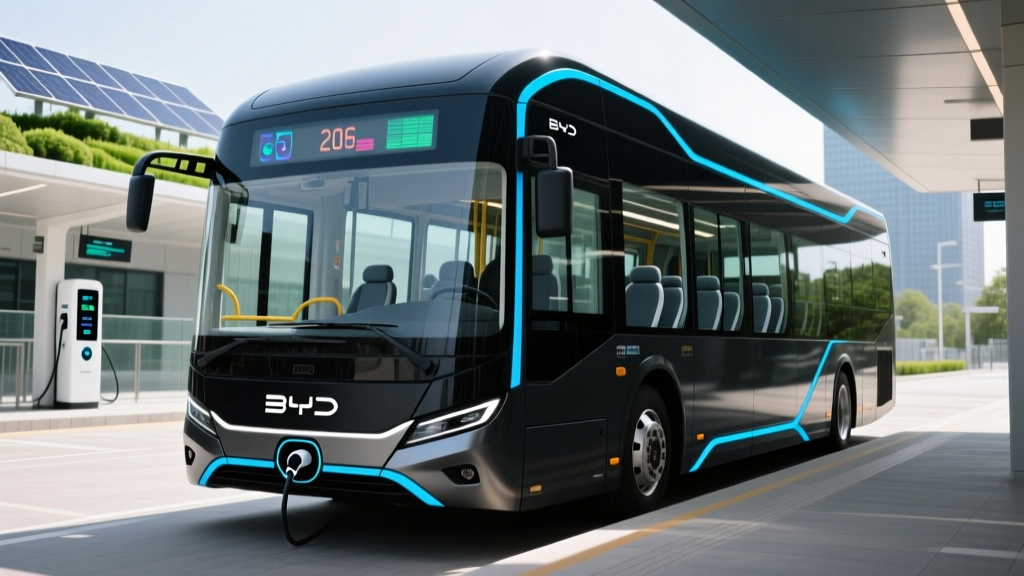
The BYD eBus is not a consumer vehicle — it's a 40-foot battery-electric transit bus engineered for municipal fleets, university shuttles, and private transit operators evaluating the economics of electrification. While North American buyers browsing for personal EVs won't find this in a showroom, fleet procurement managers increasingly encounter it in RFP shortlists alongside competitors from New Flyer, Proterra (now Phoenix Motorcars), and Gillig. The eBus pairs BYD's vertically integrated LFP (lithium iron phosphate) battery technology with a robust electric drivetrain, offering a compelling total-cost-of-ownership story for agencies that can navigate the procurement, grant-funding, and depot-charging infrastructure required for heavy-duty fleet electrification.
Important note: The BYD eBus is a commercial fleet vehicle sold through direct B2B and government procurement channels. Pricing, configurations, and delivery timelines are negotiated per contract. This review synthesizes publicly available specifications, fleet operator data, and BYD's published technical documentation for the current-generation 40-foot model sold in international and select North American markets.
Range, Battery, and Real-World Efficiency
The current-generation BYD eBus (40-foot configuration) is equipped with a 435 kWh LFP (lithium iron phosphate) battery pack — one of the largest in the transit bus segment. BYD's in-house Blade Battery architecture uses a cell-to-pack design that improves volumetric energy density while leveraging LFP's inherent thermal stability and long cycle life (typically 4,000+ cycles to 80% state of health).
Stated typical range: ~220 miles (350 km) under standard transit duty cycle (mixed stop-and-go urban operation at moderate speeds).
Real-world expectations: Actual range varies dramatically with route topography, passenger load, HVAC usage, and climate:
- Mild-weather urban stop-and-go: 200–230 miles — regen braking recovers significant energy in frequent-stop routes
- Highway/suburban express routes: 150–180 miles — sustained higher speeds reduce efficiency
- Cold-weather operation (below 32°F): 130–170 miles — cabin heating and battery chemistry limitations reduce usable capacity by 20–35%
- Hot-weather with full A/C: 170–200 miles — HVAC compressor load is significant at full passenger capacity
Efficiency: Approximately 2.0–2.5 kWh/mile in typical urban transit service, translating to roughly the diesel-equivalent of 1.8–2.2 MPGe in transit duty cycle.
| Specification | Value |
|---|---|
| Battery Capacity | 435 kWh (usable), LFP Blade Battery |
| Stated Range (transit cycle) | ~220 miles / 350 km |
| Real-World Range (urban, mild) | 200–230 miles |
| Real-World Range (cold weather) | 130–170 miles |
| Electric Motors | 2 × 150 kW wheel-hub motors (rear axle) |
| Peak Power Output | 300 kW (~402 hp) |
| Max Torque | ~6,500 Nm combined at wheels |
| 0–50 km/h (0–31 mph) | ~12 seconds (laden) |
| Top Speed (governor-limited) | ~65 km/h (40 mph) – configurable to 80 km/h (50 mph) |
| Drivetrain | Rear-wheel drive, dual wheel-hub motors |
| Vehicle Length | 12.0 m (39.4 ft) |
| GVW (Gross Vehicle Weight) | 18,000 kg (~39,680 lbs) |
| Seated Capacity | 35–45 seats (config-dependent) |
| Total Passenger Capacity | Up to ~80 (seated + standing) |
| Efficiency (urban transit) | ~2.0–2.5 kWh/mile |
Charging Infrastructure: Depot-Based DC Fast Charging
Unlike consumer EVs that rely on public charging networks, the BYD eBus is designed for depot-based overnight charging supplemented by opportunity charging during layovers. This is a critical planning consideration for fleet operators: charging infrastructure is a capital project, not a plug-and-play experience.
| Charging Level | Connector / Standard | Power (kW) | Time (10–80% SoC) | Notes |
|---|---|---|---|---|
| DC Fast Charge (depot) | CCS1 (North America) / CCS2 (Europe) | Up to 150 kW (single bus); 300 kW with dual-gun | ~3–3.5 hours (150 kW single); ~2 hours (dual-gun) | Overnight depot charging; requires dedicated 480V infrastructure per stall |
| DC Opportunity Charge | SAE J3105 (overhead pantograph, inverted) or CCS | Up to 300–450 kW | ~30–45 min for partial top-up | Route-end layover charging; extends daily range on high-utilization routes |
| AC Level 2 | Not typical for Class 8 transit | N/A | N/A | AC charging is impractical for a 435 kWh pack; depot DC is standard |
Charging curve reality: At 150 kW depot charging, the eBus sustains near-peak rate through approximately 40–50% SoC, then tapers progressively. The full 10–80% charge takes roughly 3 to 3.5 hours on a single CCS1 plug. Fleet operators typically schedule overnight charging windows of 5–7 hours, which provides ample margin for a full charge plus battery conditioning.
Depot infrastructure cost: Installing DC fast-charging for a fleet of 10 eBuses typically requires 1–2 MW of utility service capacity, switchgear, dedicated transformers, and 150–300 kW dispensers at each parking stall. All-in installed costs per charger stall range from $80,000 to $150,000+ depending on utility upgrade requirements, trenching distance, and local permitting. The EPA Clean School Bus Program and FTA Low-No grant programs can offset significant portions of both vehicle and infrastructure costs.
Performance and Drivetrain: Built for the Route, Not the Track
The BYD eBus uses two 150 kW wheel-hub motors integrated into the rear axle, eliminating the need for a traditional transmission, driveshaft, or differential. This direct-drive approach reduces mechanical losses, lowers maintenance costs (no transmission fluid, no gear wear), and frees up underfloor space for the massive battery array.
Acceleration is modest by consumer EV standards — 0–50 km/h (0–31 mph) takes approximately 12 seconds when fully laden — but this is appropriate and intentional for transit service. The instant torque delivery from standstill actually makes the eBus feel responsive in stop-and-go traffic compared to a diesel bus with turbo lag and gear-hunt. Top speed is electronically governed to approximately 65 km/h (40 mph) for standard urban configurations, configurable higher for suburban express routes.
The regenerative braking system is tuned for frequent-stop transit duty, recovering substantial energy during deceleration and reducing wear on the friction brake system. Many fleet operators report 50–70% reductions in brake pad replacement frequency compared to diesel equivalents.
Interior, Passenger Experience, and Technology
The eBus interior is configured for high-capacity transit with low-floor entry, wide doorways, and ADA-compliant wheelchair securement areas. Seating configurations vary by operator spec, typically accommodating 35–45 seated passengers plus standing room for up to 80 total.
Technology features for operators:
- BYD Fleet Management System: Telematics dashboard providing real-time SoC, energy consumption per route, driver behavior scoring, and predictive maintenance alerts
- Thermal management: Liquid-cooled/heated battery pack with integrated heat pump for cabin HVAC, reducing the range penalty of climate control compared to resistive heating
- Digital driver display: 10-inch instrument cluster showing power flow, regen level, range estimate, and route-specific energy budget
- ADAS suite: Forward collision warning, automatic emergency braking, lane departure warning, and 360° camera system — note this is SAE Level 1 driver-assist, not autonomous operation; the driver must remain fully engaged
- Passenger information: LED destination signs, interior stop-announcement displays, and audio announcement system integration
The BYD eBus driver-assistance features are SAE Level 1 — they provide warnings and emergency interventions but do not automate steering or speed control. The driver is fully responsible for vehicle operation at all times. These are safety aids, not autonomous driving systems.
Pricing, Procurement, and Total Cost of Ownership
The BYD eBus is not sold at a sticker price through dealerships. Fleet procurement typically occurs through competitive RFP processes, cooperative purchasing agreements (e.g., Sourcewell), or direct negotiation with BYD's commercial vehicle division. Published contract pricing and industry reports place the base vehicle price in the range of $750,000–$900,000 USD for a 40-foot configuration, depending on seating spec, battery size option, and included telematics/maintenance packages.
For comparison, a new 40-foot diesel transit bus from a major OEM typically costs $500,000–$600,000, making the upfront eBus premium approximately $200,000–$350,000 per vehicle.
| Cost Category | BYD eBus (Electric) | Diesel Transit Bus |
|---|---|---|
| Vehicle Purchase Price | $750,000–$900,000 | $500,000–$600,000 |
| Charging Infrastructure (amortized/bus) | $30,000–$60,000 | N/A |
| Fuel / Energy (12 years, ~50k mi/yr) | $80,000–$120,000 (electricity) | $250,000–$350,000 (diesel) |
| Maintenance (12 years) | $60,000–$90,000 | $150,000–$220,000 |
| Battery Replacement (if needed at yr 10–12) | $100,000–$180,000 | Engine overhaul: $30,000–$50,000 |
| Estimated 12-Year Total | $1,020,000–$1,350,000 | $930,000–$1,220,000 |
| TCO with FTA/EPA Grants Applied | $700,000–$950,000 | $930,000–$1,220,000 (limited grants) |
Federal funding context: The FTA Low-No Emission Vehicle Program and EPA Clean School Bus Program provide substantial grants (often covering 50–85% of vehicle cost and a portion of infrastructure) for transit agencies and school districts transitioning to zero-emission fleets. The IRA's §45W Commercial Clean Vehicle Credit offers up to $40,000 for qualifying commercial electric vehicles above 14,000 lbs GVWR, subject to domestic-content and sourcing requirements — fleet tax counsel should confirm current-year eligibility.
The TCO takeaway: On a pure purchase-price basis, the eBus is significantly more expensive. But when fuel savings ($150,000–$250,000 over 12 years), maintenance savings ($60,000–$130,000), and available federal/state grants are factored in, the eBus frequently achieves cost parity or a modest advantage over the vehicle's 12-year transit lifecycle. Agencies with high annual mileage, expensive diesel, and access to grant funding see the strongest economics.
Warranty, Battery Longevity, and Lifecycle
BYD offers a 12-year / 500,000-mile battery warranty on the eBus, guaranteeing a minimum of 60–70% state-of-health (capacity retention) over the warranty period. This is competitive within the heavy-duty transit segment, where New Flyer and Gillig offer similar 12-year battery coverage.
LFP chemistry advantages for fleet use:
- Cycle life: LFP cells typically achieve 3,500–5,000+ full charge-discharge cycles before reaching 80% SoH — sufficient for 10–15 years of daily transit service
- Thermal stability: LFP's higher thermal runaway threshold (~270°C vs. ~210°C for NMC) reduces fire risk in depot parking and simplifies thermal management requirements
- No cobalt or nickel: LFP chemistry avoids supply-chain and ESG concerns associated with cobalt mining, which can simplify procurement for government agencies with responsible-sourcing mandates
- Trade-off: LFP has lower energy density than NMC, which is why the eBus requires a physically large and heavy 435 kWh pack — but for a 40-foot bus with substantial underfloor space and an 18,000 kg GVW rating, the weight penalty is manageable
Pros, Cons, and Who This EV Suits
- Massive 435 kWh LFP battery provides 200+ miles of real urban transit range
- Lower fuel cost per mile: electricity at $0.10–$0.15/kWh vs. diesel at $3.50–$4.50/gal
- Significantly reduced maintenance: no engine oil, transmission fluid, DEF, DPF, or turbo
- Quiet, zero tailpipe emissions — improves rider experience and urban air quality
- Strong grant eligibility (FTA Low-No, EPA CSB, state programs) reduces effective cost
- BYD's vertical integration (battery + bus) simplifies warranty and parts sourcing
- 12-year / 500,000-mile battery warranty provides long-term cost certainty
- High upfront purchase price: $200,000–$350,000 premium over diesel equivalent
- Depot charging infrastructure requires significant capital and utility coordination
- Cold-weather range loss of 20–35% may require opportunity charging on some routes
- Limited North American service network compared to New Flyer or Gillig
- 435 kWh battery adds substantial weight, affecting tire wear and bridge-load compliance
- Geopolitical and Buy-America considerations may affect eligibility for some FTA-funded procurements
- Not available for individual purchase — fleet/government procurement only
Who the BYD eBus suits best:
- Municipal transit agencies with routes under 180 miles/day, access to FTA/EPA grant funding, and depot space suitable for overnight DC charging
- University campus shuttles operating predictable, short-distance loops with centralized parking and charging
- Airport ground transportation and private shuttle operators with fixed base operations and high daily mileage that maximizes fuel savings
- School districts (via BYD's related Type D electric school bus platform) seeking EPA Clean School Bus Program funding
Who should look elsewhere: Agencies with routes exceeding 200 miles without layover charging opportunity, operators in extreme-cold climates (–20°F or below) without heated depot storage, and any entity requiring Buy-America-compliant vehicles for FTA-funded purchases where BYD does not meet domestic-content thresholds.
BYD eBus vs. Key Competitors
| Attribute | BYD eBus | New Flyer Xcelsior CHARGE NG | Gillig Battery Electric |
|---|---|---|---|
| Battery Capacity | 435 kWh (LFP) | Up to 525 kWh (NMC) | Up to 466 kWh (NMC) |
| Stated Range | ~220 mi | Up to ~260 mi | Up to ~235 mi |
| Max DC Charge Rate | 150 kW (single) / 300 kW (dual) | Up to 350 kW | Up to 250 kW |
| North American Service Network | Moderate | Extensive | Extensive |
| Buy America Compliant (FTA) | Varies / limited | Yes | Yes |
| Estimated Base Price | $750K–$900K | $900K–$1.1M | $850K–$1.0M |
| Battery Warranty | 12 yr / 500K mi | 12 yr / 500K mi | 12 yr / 500K mi |
The BYD eBus typically undercuts North American incumbents on base vehicle price, but the total procurement equation must account for service network proximity, Buy-America compliance for federally funded purchases, and long-term parts availability. Agencies prioritizing lowest upfront cost and with flexible funding sources may find the eBus compelling; those requiring FTA Buy-America compliance will likely default to New Flyer or Gillig.
Frequently Asked Questions
What is the real-world range of the BYD eBus?
In mild-weather urban transit service with frequent stops, operators report 200–230 miles of practical range. Highway or express routes reduce this to 150–180 miles. Cold weather (below freezing) can reduce range to 130–170 miles due to cabin heating demand and LFP chemistry limitations at low temperatures. Route-specific energy modeling during procurement is essential.
How fast does the BYD eBus charge?
At a depot with a 150 kW CCS1 DC fast charger, the 435 kWh battery charges from 10% to 80% in approximately 3 to 3.5 hours. Dual-gun charging at 300 kW reduces this to roughly 2 hours. Opportunity charging via overhead pantograph at 300–450 kW can add 30–40 miles of range in a 10–15 minute layover. The eBus does not use AC Level 2 charging — the battery is too large for practical AC charging.
How much does the BYD eBus cost after grants and incentives?
Base vehicle pricing is typically $750,000–$900,000. With FTA Low-No grants or EPA Clean School Bus funding covering 50–85% of vehicle cost, the effective per-bus cost to a transit agency can drop to $150,000–$400,000 — potentially below the cost of a new diesel bus. The IRA's §45W Commercial Clean Vehicle Credit provides up to $40,000 for qualifying entities, subject to sourcing and domestic-content requirements that vary by tax year. Consult your fleet's grant administrator and tax counsel for current-year eligibility.
Does the BYD eBus qualify for federal EV tax credits?
The eBus may qualify for the IRA §45W Commercial Clean Vehicle Credit of up to $40,000 for vehicles above 14,000 lbs GVWR, but eligibility depends on battery component sourcing, critical mineral requirements, and the purchasing entity's tax status (tax-exempt government agencies may access the credit as a direct payment under the IRA's elective-pay provision). MSRP caps do not apply to vehicles above 14,000 lbs. Confirm current-year rules with the IRS and qualified tax counsel.
Is the BYD eBus worth buying vs. New Flyer or Gillig?
It depends on your procurement constraints. If your agency's purchase is funded by FTA grants requiring Buy-America compliance, New Flyer or Gillig will likely be your only compliant options. If you're a private operator, university, or agency with flexible funding sources, the BYD eBus offers competitive range and a lower base price, but you should evaluate local service support, parts lead times, and long-term warranty service availability in your region before committing.
How long will the BYD eBus battery last?
BYD's LFP Blade Battery is rated for 3,500–5,000+ charge cycles to 80% capacity retention. At one full cycle per day (typical for transit), this equates to 10–14 years before significant capacity loss. The 12-year / 500,000-mile battery warranty provides contractual protection. Some early BYD eBus operators in Asia and Europe report batteries retaining 75–85% capacity after 8–10 years of daily service, though results vary with climate and charging practices.
What charging infrastructure does a fleet depot need?
Each charging stall requires a dedicated 150–300 kW DC fast charger, 480V three-phase power supply, and associated switchgear. A 10-bus depot typically needs 1.5–3 MW of total electrical capacity — often requiring a utility service upgrade, new transformer, and potentially a dedicated feeder line. Total infrastructure costs for a 10-bus depot range from $800,000 to $2,000,000+ including utility upgrades, civil work, chargers, and permitting. Plan for 12–24 months from project initiation to energization.