Quick Verdict: A Global Workhorse With U.S. Availability Questions
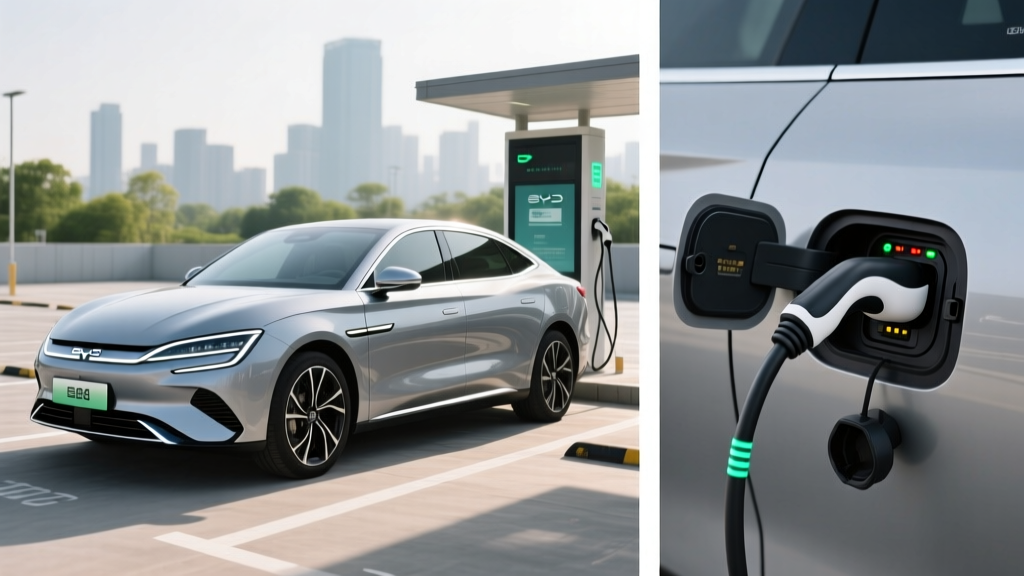
The BYD e6 is one of the best-selling electric crossovers you probably can't buy in America — at least not as a private retail customer in 2026. BYD, the world's largest plug-in vehicle manufacturer by volume, has positioned the e6 primarily as a fleet and taxi vehicle in markets across Asia, Latin America, Europe, and parts of the Middle East. It's a practical, no-nonsense five-passenger crossover built around BYD's signature Blade Battery (LFP chemistry), with a focus on durability and low operating costs rather than performance theatrics.
If you're researching the BYD e6 from the U.S., you're likely encountering it through international EV forums, fleet procurement discussions, or curiosity about BYD's expanding global footprint. This review covers the latest-generation e6 specs as sold in international markets, addresses the tariff and availability barriers for American buyers, and benchmarks it against EVs you can actually purchase stateside.
BYD e6 Specifications at a Glance
| Spec | BYD e6 (Latest Gen, International) |
|---|---|
| Battery Capacity | 71.7 kWh usable (BYD Blade, LFP) |
| WLTP Range | ~260 mi (420 km) |
| EPA-Equivalent Range (est.) | ~220–235 mi |
| Motor Output | 94 hp (70 kW) / 180 Nm torque |
| Drivetrain | FWD, single motor |
| 0–100 km/h (0–62 mph) | ~14.0 seconds |
| Top Speed | 81 mph (130 km/h) |
| DC Fast Charge (peak) | 60 kW (CCS2/GB-T market dependent) |
| 10–80% DC Charge | ~55 minutes |
| AC Level 2 Charge | 7 kW (~22 mi/hr) |
| Efficiency | ~30 kWh/100 mi (~112 MPGe est.) |
| Cargo Volume | ~18.0 cu ft (rear seats up) |
| Seating | 5 passengers |
| Base Price (intl. markets) | Varies; ~$28,000–$35,000 USD equiv. |
| Battery Warranty | 8 yr / 500,000 km (fleet, market dependent) |
Range and Efficiency: Real-World Expectations
Real-World Highway: ~185–200 miles at 70 mph sustained
Real-World City/Mixed: ~210–230 miles with regen-heavy driving
Cold-Weather (below 32°F): ~155–175 miles (LFP chemistry is more cold-sensitive than NMC)
The BYD e6 is not designed for range bragging rights. Its 71.7 kWh Blade Battery pack delivers a WLTP-rated 420 km (~260 miles), but WLTP tends to overstate range relative to the EPA's more demanding test cycle. Based on comparable LFP-pack vehicles in this weight class (~1,900 kg / ~4,190 lbs), an EPA-equivalent figure of roughly 220–235 miles is a fair estimate.
In practice, the e6's efficiency is hampered by its boxy crossover shape and modest weight. Expect around 30 kWh per 100 miles in mixed driving — which translates to roughly 112 MPGe. That's adequate but not class-leading; for comparison, the Hyundai Ioniq 5 achieves about 26 kWh/100 mi (130 MPGe combined) with a more aerodynamic profile.
Cold weather hits LFP batteries harder than NMC chemistries in terms of range loss. Without a heat pump (standard on some trims, not all, depending on market), expect a 25–35% range reduction in sustained sub-freezing temperatures. This matters if you're operating an e6 fleet in a northern climate.
Charging Speed: The e6's Biggest Limitation
| Charging Level | Power | Rate / Time | Notes |
|---|---|---|---|
| Level 1 (120V) | ~1.4 kW | ~4 mi/hr | Emergency only; 55+ hr full charge |
| Level 2 (240V AC) | 7 kW | ~22 mi/hr; ~10 hr full | Standard home/depot overnight charging |
| DC Fast Charge | 60 kW peak | 10–80% in ~55 min | Low peak; tapers early above 70% SoC |
The 60 kW peak DC fast-charge rate is the e6's most significant weakness for any use case beyond predictable depot-based fleet operations. Most modern EVs in this price bracket — the Chevrolet Equinox EV, Hyundai Ioniq 5, Volkswagen ID.4 — accept 150–240 kW at peak, completing a 10–80% charge in 18–30 minutes. The e6 takes nearly an hour for the same increment.
This isn't a flaw so much as an intentional design choice. The e6's LFP Blade Battery prioritizes cycle life and thermal stability over charge C-rate. For a taxi fleet that charges overnight at a depot on Level 2 and tops up once mid-shift, 60 kW is workable. For a family taking a 400-mile road trip, it's a serious constraint — you'd need two full stops of ~55 minutes each.
The charge curve is relatively flat up to about 70% State of Charge, then tapers sharply. You won't see sustained 60 kW for the full session; expect an average of roughly 45–50 kW across the 10–80% window.
Performance and Driving Dynamics
With 94 horsepower and a 0–62 mph time of approximately 14 seconds, the e6 is definitively not a performance vehicle. It's tuned for low-speed urban maneuverability and passenger comfort — the exact profile you'd want in a taxi or ride-hail vehicle. The single-speed reduction gear and front-wheel-drive layout keep things simple and maintenance-light.
The top speed of 81 mph (130 km/h) reflects its design brief: this is a city and suburban vehicle, not an Autobahn cruiser. Regenerative braking offers two levels (standard and high), though it doesn't quite achieve true one-pedal driving — you'll still use the friction brakes for final stops.
Ride quality is competent but firm, typical of vehicles engineered to handle high-mileage fleet duty with heavy passenger and cargo loads. NVH (noise, vibration, harshness) levels are acceptable for the price point, with noticeable wind noise above 55 mph.
Interior, Cargo, and Technology
The e6's interior is utilitarian in a way that matches its fleet orientation. Vinyl or cloth upholstery (market-dependent), a 10.1-inch rotating touchscreen infotainment display (a BYD signature), and a digital instrument cluster round out the cabin. Rear legroom is generous at approximately 39 inches — a selling point for taxi and ride-hail passengers.
Cargo space behind the rear seats is about 18 cubic feet, expanding to roughly 50 cubic feet with the 60/40 rear seats folded. That's competitive with compact crossovers like the Nissan Ariya but less than the Hyundai Ioniq 5's 27 cu ft behind the rear row.
Driver-assistance features include adaptive cruise control, lane-keeping assist, and automatic emergency braking on higher trims — all SAE Level 2 systems requiring full driver engagement. These are competent but not class-leading; the e6 doesn't offer anything akin to Tesla's Autopilot or GM's Super Cruise in terms of highway automation sophistication.
The BYD Blade Battery itself deserves a mention as a technology feature. The cell-to-pack LFP architecture uses long, thin blade-shaped cells that serve as structural members, improving pack-level energy density for LFP while maintaining the chemistry's inherent thermal stability. BYD's nail penetration test demonstrates that the Blade Battery resists thermal runaway even when punctured — a significant safety advantage for fleet operators concerned about battery fire risk.
Pricing, Tax Credits, and U.S. Availability
| Item | Detail |
|---|---|
| International MSRP (equiv.) | ~$28,000–$35,000 USD (varies by market, taxes, trim) |
| U.S. Retail Availability | Not available — BYD does not sell passenger cars in the U.S. |
| U.S. Tariff on Chinese EVs | 100% (as of 2024, in effect through 2026) |
| Federal §30D Tax Credit | Not eligible — vehicle not sold in U.S.; Chinese battery sourcing excluded |
| Theoretical U.S. Price (if imported) | ~$56,000–$70,000+ after 100% tariff (hypothetical) |
There is no path to buying a BYD e6 in the United States in 2026 as a private consumer. BYD has focused its U.S. presence on commercial electric buses and heavy trucks, deliberately avoiding the passenger car market where the 100% tariff (imposed under Section 301 of the Trade Act) would make pricing nonsensical.
Even if the tariff didn't exist, the e6 would not qualify for the IRS §30D federal EV tax credit. The credit requires final assembly in North America, compliance with critical-mineral and battery-component sourcing rules that exclude Chinese-sourced materials, and adherence to MSRP caps ($55,000 for SUVs) and buyer income limits. The e6 fails every one of these requirements.
- ❌ Final assembly in North America: No (built in China)
- ❌ Battery component sourcing: Chinese-manufactured (excluded entity)
- ❌ Critical minerals: Chinese-sourced (excluded entity)
- ❌ MSRP cap compliance: Moot — not sold in U.S.
- ❌ Buyer income caps: Moot — not sold in U.S.
How It Compares: U.S.-Available Alternatives
Since the e6 isn't buyable in America, here's how its international-market specs stack up against EVs in the $30,000–$40,000 range that U.S. buyers can actually purchase:
| Spec | BYD e6 (Intl.) | Hyundai Ioniq 5 (Std Range) | Chevrolet Equinox EV 2LT | VW ID.4 (Std) |
|---|---|---|---|---|
| EPA Range | ~225 mi (est.) | 220 mi | 319 mi | 206 mi |
| Battery (kWh) | 71.7 (LFP) | 58 (NMC) | 85 (NMC) | 62 (NMC) |
| Peak DC Charge | 60 kW | 150 kW | 150 kW | 170 kW |
| 10–80% Time | ~55 min | ~28 min | ~30 min | ~30 min |
| 0–60 mph | ~14.0 sec | 7.4 sec | 7.9 sec | 8.5 sec |
| Horsepower | 94 hp | 168 hp | 213 hp | 201 hp |
| U.S. Base MSRP | N/A | $42,600 | $33,600 | $39,735 |
| §30D Credit Eligible | No | Partial* | Yes ($7,500)* | Yes ($7,500)* |
*Tax credit eligibility depends on buyer income, MSRP caps, and battery sourcing. Verify current rules at irs.gov.
The comparison is stark: every U.S.-available competitor charges 2.5x to 4x faster on DC, delivers significantly more power, and offers either longer range or a lower price. The e6's advantage — LFP battery durability and low cost — matters primarily in high-cycle fleet use, not private ownership.
Pros and Cons
✅ Pros
- LFP Blade Battery: exceptional thermal stability and 3,000+ cycle life
- Low operating cost: minimal maintenance, cheap electricity per mile
- Spacious rear cabin: ~39" legroom suits taxi/ride-hail use
- Competitive international pricing (~$28K–$35K USD equiv.)
- Generous battery warranty in fleet markets (up to 500,000 km)
- BYD's rotating 10.1" touchscreen is a nice tech touch
❌ Cons
- 60 kW DC fast charge is painfully slow by 2026 standards
- 94 hp / 14-second 0–60: underpowered even for a family EV
- 81 mph top speed limits highway usefulness
- Not available in the U.S. (100% tariff, no retail network)
- Not eligible for any U.S. federal or state EV incentives
- LFP cold-weather range loss without heat pump on all trims
- Driver-assist tech lags behind U.S./Korean/European competitors
Who Is the BYD e6 For?
- You operate a fleet, taxi, or ride-hail service in a market where it's sold
- You prioritize battery longevity (3,000+ cycles) over performance
- Your routes are predictable and depot-charging overnight is your primary model
- You need a spacious rear cabin for passengers at a low acquisition cost
- You're a U.S.-based private buyer (it's simply not available)
- You take regular road trips requiring fast DC charging
- You want modern driver-assist technology and highway refinement
- You need cold-weather range reliability without a heat pump
For U.S. buyers drawn to the e6's LFP battery philosophy — durability, safety, lower cost — the closest domestic equivalent is the Tesla Model 3 RWD (which uses CATL-sourced LFP cells and starts around $38,990 before credits) or the base Chevrolet Equinox EV. Neither matches the e6's ultra-low international pricing, but both charge faster, drive better, and come with full U.S. dealer support and warranty infrastructure.
Frequently Asked Questions
Can I buy a BYD e6 in the United States in 2026?
No. BYD does not sell passenger vehicles in the U.S. market. A 100% tariff on Chinese-built EVs makes import economically unviable, and BYD has not announced any plans for U.S. passenger car sales. The e6 is available in markets across Southeast Asia, Latin America, Europe, the Middle East, and Africa.
What is the real-world range of the BYD e6?
The e6's WLTP range is approximately 260 miles (420 km). In real-world mixed driving, expect roughly 210–230 miles. Highway-only driving at 70 mph drops this to around 185–200 miles. In cold weather (below 32°F), LFP chemistry combined with potential lack of a heat pump can reduce range to 155–175 miles.
How fast does the BYD e6 charge?
On DC fast charging, the e6 peaks at 60 kW — slow by 2026 standards. A 10–80% charge takes approximately 55 minutes. On Level 2 AC (7 kW), a full charge takes about 10 hours, making it suitable for overnight depot or home charging. Level 1 (120V) is impractical for regular use at roughly 4 miles of range per hour.
Does the BYD e6 qualify for the U.S. federal EV tax credit?
No. The IRS §30D Clean Vehicle Credit requires North American final assembly, compliant battery sourcing (excluding Chinese-manufactured components and critical minerals), MSRP caps, and buyer income limits. The e6 fails all applicable criteria and is not sold in the U.S.
What is BYD's Blade Battery, and why does it matter?
The Blade Battery is BYD's proprietary LFP (lithium iron phosphate) cell-to-pack design. It uses long, thin blade-shaped cells that double as structural elements, improving pack-level energy density while maintaining LFP's inherent advantages: thermal stability (resists thermal runaway even when punctured), long cycle life (3,000+ full cycles to 80% capacity), and lower cost per kWh compared to NMC chemistry. The trade-off is lower energy density by weight and greater cold-weather sensitivity.
How does the e6 compare to the Tesla Model 3 LFP?
The Tesla Model 3 RWD (LFP) starts at ~$38,990 in the U.S., offers an EPA-estimated 272 miles of range, charges at up to 170 kW DC (10–80% in ~25 minutes), and delivers 271 hp with a 5.8-second 0–60. It's more expensive than the e6's international pricing but dramatically superior in performance, charging speed, technology, and U.S. support infrastructure. The e6's advantage is purely cost in markets where it's available at ~$28K.
Is the BYD e6 safe?
The latest-generation e6 has not been crash-tested by NHTSA or IIHS (as it's not sold in the U.S.). In other markets, it has received varying ratings. The Blade Battery's thermal stability is a strong safety plus. Standard driver-assist features include AEB and lane-keeping on higher trims.