BYD Dolphin Electric Car: The 2026 Verdict
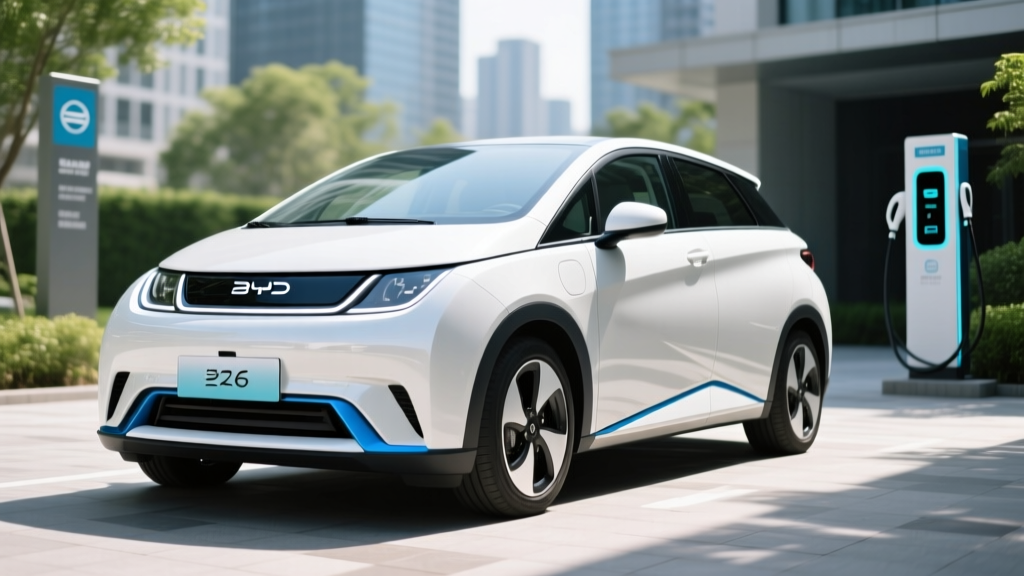
The BYD Dolphin electric car has become one of the most talked-about compact EVs globally, dominating sales charts in China, Europe, Australia, and Southeast Asia. But for U.S. buyers in 2026, the conversation is more complicated: the Dolphin remains unavailable in the United States, and BYD has not announced a firm timeline for American passenger-vehicle sales. This review covers the Dolphin's global specifications, real-world range data, charging performance, and ownership economics so you know exactly what this EV offers — and what the barriers are for U.S. drivers.
Battery, Chemistry, and Efficiency
The Dolphin is built on BYD's e-Platform 3.0 and uses the company's proprietary Blade Battery — a lithium iron phosphate (LFP) cell arranged in a structural pack. Two battery sizes are offered globally:
| Spec | Standard Range | Extended Range (Design/Comfort) |
|---|---|---|
| Battery Capacity (usable) | 44.9 kWh | 60.4 kWh |
| Chemistry | LFP (Blade Battery) | LFP (Blade Battery) |
| WLTP Range | ~211 mi (340 km) | ~265 mi (427 km) |
| Est. EPA-Equivalent Range | ~185 mi | ~230–245 mi |
| Efficiency (WLTP) | ~29 kWh/100 mi | ~28 kWh/100 mi |
| Est. MPGe (Combined) | ~110 MPGe | ~115 MPGe |
LFP chemistry is a defining trait of the Dolphin. Compared to nickel-manganese-cobalt (NMC) packs, LFP offers superior cycle life (3,000+ full cycles before significant degradation), no thermal runaway risk under normal conditions, and no cobalt in the supply chain. The trade-off is lower energy density — meaning a heavier, physically larger pack for a given range — and slightly reduced cold-weather performance compared to NMC. For a daily commuter who charges at home and rarely road-trips in winter, LFP is an excellent match. BYD recommends periodic charging to 100% for LFP cells, unlike NMC where 80% daily limits are preferred.
Charging Speed: DC Fast and Home Level 2
Charging is where U.S. buyers would face practical questions, since BYD's global models ship with CCS2 (Europe) or GB/T (China) connectors. For the U.S. market, a Dolphin would need CCS1 or NACS compatibility — neither confirmed by BYD as of early 2026.
| Charging Level | Power | Speed / Time |
|---|---|---|
| Level 1 (120V household) | ~1.4 kW | ~4 mi/hr added |
| Level 2 (240V home/public) | 7 kW (single-phase) / 11 kW (three-phase, EU) | ~23 mi/hr at 7 kW; 0–100% in ~9.5 hrs |
| DC Fast Charging (peak) | 88 kW (max) | 10–80% in ~29 min; tapers sharply above 80% |
The 88 kW DC fast-charge peak is modest by 2026 standards. Competitors like the Hyundai Ioniq 5 (peak 240 kW on 800V architecture) and Chevrolet Equinox EV (peak ~150 kW) refill far quicker on road trips. The Dolphin's charge curve holds near peak only between 10–50% state of charge, then tapers progressively — a common LFP characteristic. For daily use, home Level 2 charging at 7 kW is more than adequate: plug in overnight and wake up to a full battery every morning.
Performance and Drivetrain
The Dolphin is tuned for efficiency and urban comfort, not performance. Here's what the global lineup delivers:
| Trim (Global) | Motor | Horsepower | Torque | 0–60 mph (est.) | Drivetrain |
|---|---|---|---|---|---|
| Standard Range | Single front motor | 94 hp (70 kW) | 133 lb-ft | ~11.5 sec | FWD |
| Extended Range | Single front motor | 201 hp (150 kW) | 229 lb-ft | ~7.0 sec | FWD |
The 201 hp extended-range variant is the one most international reviewers recommend. It delivers confident highway merging and adequate passing power. The 94 hp base model is strictly a city runabout. No all-wheel-drive variant is offered. Top speed is electronically limited to approximately 99 mph (160 km/h).
Interior, Cargo, and Technology
Despite its subcompact footprint (169.3 inches long, 69.7 inches wide), the Dolphin's wheelbase of 104.3 inches — enabled by the flat e-Platform 3.0 skateboard — creates surprising interior volume.
- Front legroom: 41.3 inches
- Rear legroom: 36.6 inches
- Cargo volume (rear seats up): 12.0 cu ft (345 liters)
- Cargo volume (rear seats folded): 37.8 cu ft (1,070 liters)
- Front trunk (frunk): None
The cabin centers on a 12.8-inch rotating touchscreen (a BYD signature) running the DiLink infotainment system with wireless Apple CarPlay and Android Auto. A 5.0-inch digital instrument cluster sits behind the wheel. Standard features on higher trims include a panoramic glass roof, heat pump (critical for cold-weather efficiency), wireless phone charging, and a 360-degree surround camera.
Driver assistance is branded DiPilot and includes adaptive cruise control with stop-and-go, lane-keeping assist, automatic emergency braking, blind-spot monitoring, and rear cross-traffic alert. This is an SAE Level 2 system — the driver must remain fully engaged with hands on the wheel and eyes on the road at all times.
Pricing, Tax Credits, and U.S. Availability
This is the section where U.S. buyers face hard realities. As of early 2026:
- BYD does not sell passenger vehicles in the United States.
- The Dolphin is available in China, Europe, Australia, Thailand, Brazil, Mexico, Japan, and other markets.
- BYD has publicly stated it is "studying" the U.S. market but has made no formal announcement regarding passenger-car entry, dealership partnerships, or U.S.-spec vehicle certification.
- U.S.-bound Chinese-built EVs currently face 100% tariffs under Section 301 trade actions, effectively doubling the import price and eliminating any cost advantage.
For reference, global pricing (converted to USD, before local taxes/incentives):
| Market | Base Model | Top Trim |
|---|---|---|
| China | ~$14,000 | ~$18,500 |
| Europe (Germany) | ~$30,000 | ~$37,500 |
| Australia | ~$25,000 | ~$31,000 |
| Hypothetical U.S. (if sold, pre-tariff) | ~$27,000–$30,000 | ~$33,000–$36,000 |
Federal Tax Credit Eligibility (If Sold in U.S.)
Even if BYD entered the U.S. market, the Dolphin would face significant hurdles under IRS §30D clean vehicle credit rules:
- MSRP cap: Must be ≤$55,000 for sedans/hatchbacks (Dolphin would pass)
- Buyer income cap: AGI ≤$150,000 single / $300,000 joint filers
- Battery sourcing: Critical minerals and battery components must meet escalating domestic/free-trade-agreement thresholds — extremely difficult for a Chinese-manufactured LFP pack
- Foreign Entity of Concern (FEOC): Vehicles with battery components from a FEOC (which includes most Chinese battery manufacturers, including BYD itself) are disqualified entirely from the credit
In practice, a China-built BYD Dolphin would almost certainly receive $0 federal tax credit under current FEOC rules, regardless of price or buyer income.
Warranty and Long-Term Ownership
In international markets, BYD provides:
- Vehicle warranty: 6 years / 150,000 km (~93,000 miles)
- Blade Battery warranty: 8 years / 160,000 km (~100,000 miles), guaranteed to retain ≥70% capacity
The LFP Blade Battery's degradation profile is a strong point. Independent testing and owner data from Chinese fleet operators suggest the Blade cell retains ~90%+ capacity after 1,000 full charge cycles, far outpacing NMC equivalents. For a daily commuter charging once per day, that translates to well over 15 years of usable battery life before hitting the 70% warranty threshold. Replacement cost for the 60.4 kWh pack is estimated at $5,000–$7,000 based on Chinese market pricing — significantly less than comparable NMC packs from other manufacturers.
How It Compares: Dolphin vs. U.S.-Available Alternatives
| Spec | BYD Dolphin (Extended) | Chevrolet Equinox EV | Hyundai Ioniq 5 (Std Range) |
|---|---|---|---|
| EPA Range | ~235 mi (est.) | 319 mi | 240 mi |
| Battery (kWh) | 60.4 (LFP) | 85 (NMC) | 58 (NMC) |
| Peak DC Charge | 88 kW | ~150 kW | ~175 kW |
| 10–80% DCFC | ~29 min | ~30 min | ~18 min |
| 0–60 mph | ~7.0 sec | ~8.0 sec | ~8.5 sec |
| Base MSRP (U.S.) | N/A (not sold) | ~$33,600 | ~$42,600 |
| Federal Tax Credit | N/A | Up to $7,500 | Up to $7,500 |
The Dolphin's appeal has always been price. In markets where it sells for $25,000–$30,000, it undercuts competitors by a wide margin. But in the U.S., even if imported at a hypothetical $30,000 MSRP, the lack of a federal tax credit (due to FEOC rules) would make it more expensive out-of-pocket than a credit-eligible Equinox EV or Hyundai Ioniq 5. Combined with no U.S. dealer network, unproven U.S. crash-test ratings from NHTSA or IIHS, and uncertain parts availability, the ownership proposition is weak for American buyers today.
Who the BYD Dolphin Suits Best
Choose the BYD Dolphin if you:
- Live outside the U.S. in a market where it's sold and priced competitively
- Need an affordable city commuter with low running costs
- Prioritize battery longevity (LFP cycle life) over fast-charge speed
- Charge primarily at home and rarely take road trips over 150 miles
Look elsewhere (U.S. buyers) if you:
- Need a vehicle you can purchase and service in the United States today
- Want access to the $7,500 federal tax credit
- Regularly drive highway trips exceeding 200 miles
- Need fast DC charging for road-trip convenience (88 kW is slow by 2026 standards)
- Want verified U.S. safety ratings and a domestic dealer network
Pros and Cons
Pros
- Extremely competitive pricing in global markets
- LFP Blade Battery offers exceptional cycle life and safety
- Spacious cabin for a subcompact footprint
- Standard heat pump improves cold-weather efficiency
- Rotating 12.8" screen is a unique, practical feature
- Low estimated degradation — 90%+ after 1,000 cycles
Cons
- Not available in the United States (no confirmed U.S. launch date)
- 88 kW DC fast-charging is slow for road trips
- 94 hp base model is underpowered for highway use
- No frunk reduces total cargo flexibility
- Would not qualify for U.S. federal tax credit due to FEOC rules
- No U.S. safety ratings from NHTSA or IIHS
- 100% import tariffs make U.S. pricing uncompetitive
Frequently Asked Questions
What is the real-world range of the BYD Dolphin?
The 60.4 kWh extended-range Dolphin delivers roughly 195–215 miles on real-world highway driving and up to 240 miles in mixed city/highway use in mild weather. In freezing temperatures, expect 165–185 miles. The smaller 44.9 kWh model yields approximately 150–170 miles in real-world conditions.
How fast does the BYD Dolphin charge?
On DC fast charging, the Dolphin peaks at 88 kW and charges from 10–80% in approximately 29 minutes. On a Level 2 home charger at 7 kW (240V), a full 0–100% charge takes about 9.5 hours. Level 1 (120V) trickle charging adds roughly 4 miles of range per hour.
Can I buy the BYD Dolphin in the United States?
No. As of 2026, BYD does not sell passenger vehicles in the U.S. The company sells electric buses and commercial vehicles in America but has not announced a U.S. passenger-car launch. Even if launched, 100% tariffs on Chinese-built EVs and FEOC disqualification from tax credits would severely limit its competitiveness.
Does the BYD Dolphin qualify for the federal EV tax credit?
If it were sold in the U.S., the Dolphin would almost certainly not qualify for the IRS §30D clean vehicle credit. The battery is manufactured by BYD in China, which is classified as a Foreign Entity of Concern (FEOC) under current rules. FEOC-sourced battery components disqualify a vehicle from the credit entirely, regardless of price or buyer income.
Is the BYD Dolphin worth buying vs. competitors?
In markets where it's sold at $25,000–$30,000 with local incentives, the Dolphin is one of the best-value compact EVs available. Its LFP battery longevity, spacious cabin, and low running costs are genuine strengths. However, its 88 kW charging speed is a weakness for road-trip drivers. In the U.S., buyers should look at the Chevrolet Equinox EV, Hyundai Ioniq 5, or Nissan LEAF — all of which offer U.S. dealer support, verified safety ratings, and potential tax-credit eligibility.
How long will the BYD Dolphin battery last?
The LFP Blade Battery is rated for 3,000+ full charge cycles before significant degradation. At one full cycle per day, that's over 8 years of daily use while retaining approximately 80%+ capacity. BYD's warranty guarantees ≥70% capacity retention for 8 years / 100,000 miles. Real-world fleet data from China suggests actual degradation is well below that threshold under normal use.