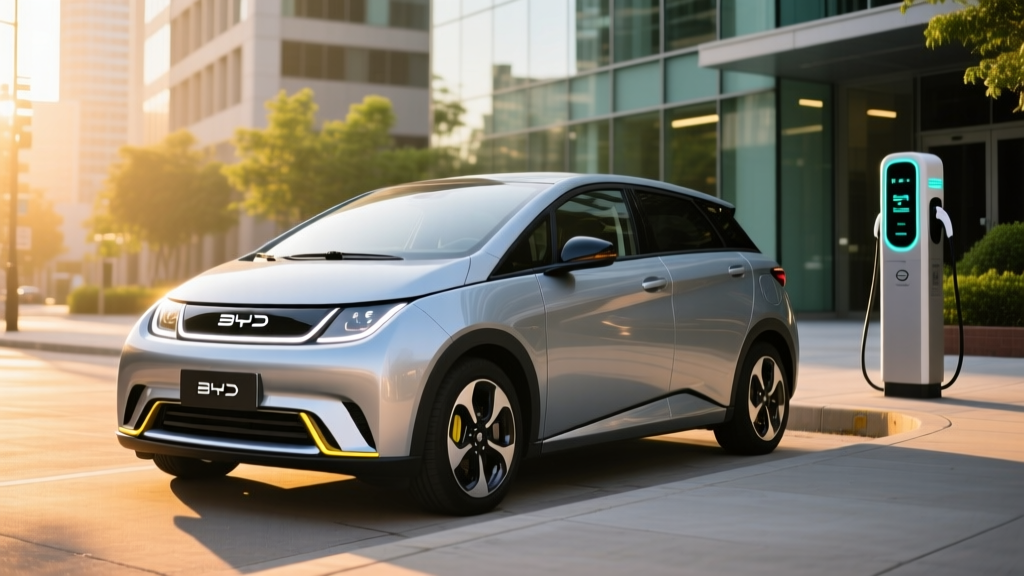
Search interest in BYD Dolphin Mini precios has surged as buyers hunt for a sub-$20,000 electric vehicle that actually delivers on daily commuting. The Dolphin Mini — sold as the BYD Seagull in China and parts of Latin America — is BYD's most affordable EV, and its pricing story is the primary reason it dominates budget-EV conversations. But precio (price) is only one piece of the puzzle. This review dissects the Dolphin Mini's real-world range, charging behavior, battery chemistry, tax-credit outlook, and whether it can survive the jump to US-market sales.
Note: As of early 2026, the BYD Dolphin Mini is not officially sold in the United States. Pricing and specs referenced here reflect confirmed international markets (Mexico, Brazil, and select Southeast Asian countries) and projected US figures should BYD enter the American market. We flag every estimate clearly.
Quick Verdict: The Budget EV That Makes Math Sense
The Dolphin Mini is a compact, four-seat hatchback built on BYD's e-Platform 3.0 with a Blade LFP (lithium iron phosphate) battery. In markets where it's sold, it undercuts nearly every EV competitor on price while offering a usable 250+ mile range (on the larger battery pack). For urban commuters with home charging access, it's one of the most cost-effective electrified vehicles available globally. The catch for US buyers: availability remains uncertain, tariff exposure is significant, and federal tax credit eligibility hinges on battery-sourcing rules that currently favor non-Chinese supply chains.
| EPA-Equivalent Range | ~252 mi (WLTP 405 km, larger pack) |
| Battery Capacity | 44.9 kWh usable (LFP Blade) |
| Max DC Fast Charge | ~40 kW peak |
| 10–80% DC Charge | ~30 minutes (estimated) |
| Level 2 Home Charge | ~6.6 kW / ~22 mi per hour |
| Motor Output | 75 hp (55 kW) / 135 Nm torque |
| 0–60 mph | ~11.5 seconds (estimated) |
| Drivetrain | Front-wheel drive (single motor) |
| Efficiency | ~119 MPGe / 28 kWh/100 mi |
| Cargo Volume | ~10.6 cu ft (rear seats up) |
| Base MSRP (International) | ~$18,000–$21,000 USD equivalent |
| Projected US MSRP | $22,000–$28,000 (pre-tariff estimate) |
| Battery Warranty | 8 years / 100,000 mi (projected US) |
Range and Efficiency: What the EPA Number Doesn't Tell You
The Dolphin Mini comes in two battery configurations internationally: a 30.1 kWh pack rated at roughly 301 km (WLTP) and a 44.9 kWh pack rated at 405 km (WLTP). WLTP tends to overstate range compared to the US EPA cycle by roughly 10–15%. That puts the larger pack at an EPA-equivalent estimate of approximately 252 miles, while the smaller pack lands near 188 miles.
EPA-equivalent estimate: ~252 miles (44.9 kWh pack)
Real-world highway (70 mph): Expect ~200–220 miles. The Dolphin Mini's boxy hatchback shape and modest thermal management mean highway efficiency drops noticeably.
Cold-weather (below 32°F): LFP batteries lose 20–30% range in freezing temps without an active heat pump. Expect ~170–190 miles in winter city driving, potentially less on sustained highway runs.
City commuting: The 252-mile estimate is most achievable here, where regenerative braking recovers energy and speeds stay low.
Efficiency sits around 119 MPGe combined, or roughly 28 kWh per 100 miles — competitive with the Chevrolet Bolt EV and slightly behind the Hyundai Kona Electric. The LFP chemistry trades energy density for longevity, meaning the pack is heavier per kWh than an NMC equivalent, but it tolerates daily 100% charges without accelerated degradation. For commuters who charge at home nightly, that's a meaningful ownership advantage.
Charging Speed: The Dolphin Mini's Biggest Compromise
This is where budget EVs reveal their cost-cutting, and the Dolphin Mini is no exception. The peak DC fast-charge rate tops out at roughly 40 kW — far below the 150–250 kW rates offered by mainstream competitors like the Hyundai Ioniq 5 or Tesla Model 3.
| Level | Power | Speed | Use Case |
|---|---|---|---|
| Level 1 (120V) | ~1.4 kW | ~4 mi/hr | Emergency / overnight trickle |
| Level 2 (240V) | ~6.6 kW | ~22 mi/hr | Home / workplace daily |
| DC Fast Charge | ~40 kW peak | 10–80% in ~30 min | Road trips (with patience) |
At 40 kW peak, a 10–80% charge takes approximately 30 minutes under ideal conditions. In practice, the charge curve tapers above 60% state of charge, and thermal management on a budget platform means sustained rates may dip to 25–30 kW during extended sessions. For a commuter who charges at home on Level 2 overnight, this is perfectly livable — a full charge takes about 6.5 hours from near-empty. But road-trippers should plan for longer stops than they'd need in a Tesla or Hyundai.
One critical note: kW (kilowatts) measures charging power — the rate of energy delivery. kWh (kilowatt-hours) measures battery capacity — the total energy stored. The Dolphin Mini's 44.9 kWh battery charged at 40 kW won't fill in one hour because the rate tapers as the battery approaches full.
BYD Dolphin Mini Precios: What It Actually Costs
The phrase "BYD Dolphin Mini precios" trends for good reason: this is one of the cheapest new EVs on any market. Here's how pricing breaks down across regions and what US buyers might expect:
| Market | Trim | Local Price | USD Equivalent |
|---|---|---|---|
| China (as Seagull) | Base (30.1 kWh) | ¥69,800 | ~$9,600 |
| China (as Seagull) | Top (44.9 kWh) | ¥85,800 | ~$11,800 |
| Mexico | Dolphin Mini | ~MXN $359,000 | ~$19,500 |
| Brazil | Dolphin Mini | ~R$115,800 | ~$21,000 |
| US (projected) | Est. base | — | $22,000–$28,000* |
*Projected US pricing accounts for shipping, homologation, dealer margins, and current Section 301 tariffs on Chinese-origin EVs (100% tariff as of 2024, still in effect through 2026). Actual US pricing would depend heavily on whether BYD manufactures locally or imports.
Federal Tax Credit Eligibility (§30D)
Under current IRS §30D rules, the federal clean vehicle credit offers up to $7,500 — but eligibility requires:
- MSRP cap: Vehicle must be under $55,000 (sedans/hatchbacks) — the Dolphin Mini clears this easily.
- Buyer income cap: AGI must not exceed $150,000 (single) / $300,000 (joint).
- Battery sourcing: Critical minerals and battery components must meet phased-in percentages sourced from the US or FTA partners. Chinese-manufactured battery components trigger disqualification under the Foreign Entity of Concern (FEOC) rules effective 2024+.
- Final assembly: Must occur in North America.
The hard truth: A China-built Dolphin Mini would almost certainly fail both the FEOC battery-component rule and the North American final-assembly requirement. Without a US or Mexico assembly plant, the $7,500 credit is off the table. This is the single biggest barrier to the Dolphin Mini's US competitiveness — a $25,000 EV without the credit competes against a $30,000 Chevy Bolt or Nissan Leaf that qualifies for $3,750–$7,500.
Performance and Drivetrain: Adequate, Not Exciting
The Dolphin Mini runs a single front-mounted permanent-magnet synchronous motor producing 75 horsepower (55 kW) and 135 Nm of torque. That translates to a 0–60 mph time of roughly 11.5 seconds — leisurely by EV standards, but perfectly adequate for city merging and suburban driving where instant electric torque makes the car feel peppier than the numbers suggest.
Top speed is electronically limited to approximately 81 mph (130 km/h), which is worth noting for US highway driving where 75–80 mph speed limits leave minimal passing reserve. The front-wheel-drive layout and relatively narrow tires prioritize efficiency over grip.
Ride quality benefits from the e-Platform 3.0's low center of gravity (battery pack under the floor), but the torsion-beam rear suspension — a cost-saving measure — transmits more road imperfections than the multi-link setups found in pricier EVs.
Interior, Tech, and Practicality
The Dolphin Mini seats four (not five) in a compact hatchback footprint. Interior highlights and compromises:
- Infotainment: 10.1-inch rotating touchscreen (a BYD signature) with wireless Apple CarPlay and Android Auto on most trims.
- Digital cluster: 5-inch instrument display behind the steering wheel — basic but legible.
- Driver assists: Adaptive cruise control, lane-keeping assist, and automatic emergency braking on higher trims. These are SAE Level 0–1 features — not self-driving. The driver must remain fully engaged.
- Cargo: ~10.6 cu ft behind rear seats, expanding with 60/40 fold. Adequate for groceries and carry-on luggage; tight for family road trips.
- Rear legroom: Approximately 33 inches — workable for adults on short trips, cramped for tall passengers on longer drives.
- Notable omission: No front trunk (frunk). The motor and electronics fill the space under the hood.
- Lowest entry price in the global EV market
- LFP Blade battery — excellent cycle life, safe chemistry
- 252-mile range sufficient for most commuters
- Compact size ideal for urban parking
- Rotating touchscreen is genuinely useful
- Can charge to 100% daily without LFP degradation worry
- 40 kW DC charging is slow for road trips
- 75 hp feels strained at highway speeds
- Not available in the US (as of 2026)
- Tax credit unlikely due to FEOC/assembly rules
- Four-seat limit; tight rear legroom
- Torsion-beam rear ride is firm over bumps
- No heat pump on base trims (cold-weather range loss)
Who Should Buy the BYD Dolphin Mini?
Ideal buyer: An urban or suburban commuter in a market where the Dolphin Mini is sold, with reliable home Level 2 charging, a sub-40-mile daily round trip, and a strict budget. This is a second-car EV or a first-car choice for someone who prioritizes economics over performance.
Not ideal for: Road-trippers who need fast DC charging, families needing five seats, drivers in extreme cold climates without a heat pump, or US buyers who need a vehicle available now with federal tax credit eligibility.
If you're a US shopper eyeing this segment, the closest available alternatives are the Chevrolet Bolt EV (~$26,500 MSRP, 259 mi EPA, eligible for partial credit), the Nissan Leaf (discontinued after 2025 but available used), and the upcoming next-generation budget EVs from Hyundai and Kia.
Warranty and Battery Longevity
BYD's Blade LFP battery is one of the most durable chemistries in production. LFP cells typically sustain 3,000+ full charge cycles before dropping to 80% capacity — that's roughly 750,000 miles at the Dolphin Mini's range per cycle, far exceeding the vehicle's mechanical lifespan.
Projected US warranty coverage (based on BYD's international patterns):
- Battery: 8 years / 100,000 miles (minimum 70% capacity retention)
- Powertrain: 8 years / 100,000 miles
- Bumper-to-bumper: 4 years / 50,000 miles
For context, this matches the federal minimum for EV battery warranties. The LFP chemistry's real-world degradation data suggests most owners will see 90%+ state of health at 100,000 miles, well above the warranty threshold.
Frequently Asked Questions
What is the real-world range of the BYD Dolphin Mini?
With the 44.9 kWh pack, expect roughly 252 miles EPA-equivalent, but plan for 200–220 miles on highway trips and 170–190 miles in freezing weather. City commuters will see numbers closest to the sticker estimate.
How fast does the Dolphin Mini charge?
DC fast charging peaks at ~40 kW, reaching 10–80% in about 30 minutes. Home Level 2 at 6.6 kW adds roughly 22 miles per hour, fully recharging overnight in ~6.5 hours.
Does the BYD Dolphin Mini qualify for the US federal EV tax credit?
Almost certainly not under current §30D rules. The FEOC battery-component restrictions and North American final-assembly requirement effectively exclude Chinese-built BYD vehicles. Always verify current rules at irs.gov and consult a tax professional.
Is the Dolphin Mini worth buying over a Chevy Bolt or Hyundai Kona Electric?
On pure price, yes — if you can buy one. The Bolt offers similar range (259 mi EPA), faster DC charging (up to 55 kW), proven US dealer support, and partial tax credit eligibility. The Kona Electric provides 261 miles EPA and 100+ kW DC charging at a higher price. The Dolphin Mini wins on cost but loses on charging speed, US availability, and after-sales infrastructure.
When will BYD sell the Dolphin Mini in the United States?
As of early 2026, BYD has not announced a US launch timeline for any passenger vehicle. The 100% Section 301 tariff on Chinese EVs and FEOC sourcing restrictions make a near-term US entry challenging without local manufacturing. BYD has hinted at exploring a Mexico-based production facility, which could change the calculus — but nothing is confirmed.
What are BYD Dolphin Mini precios in Latin America?
In Mexico, the Dolphin Mini starts around MXN $359,000 (~$19,500 USD). In Brazil, pricing starts near R$115,800 (~$21,000 USD). These are among the most affordable new EVs in their respective markets.