Quick Verdict: Mexico's Budget EV Benchmark Gets Sharper
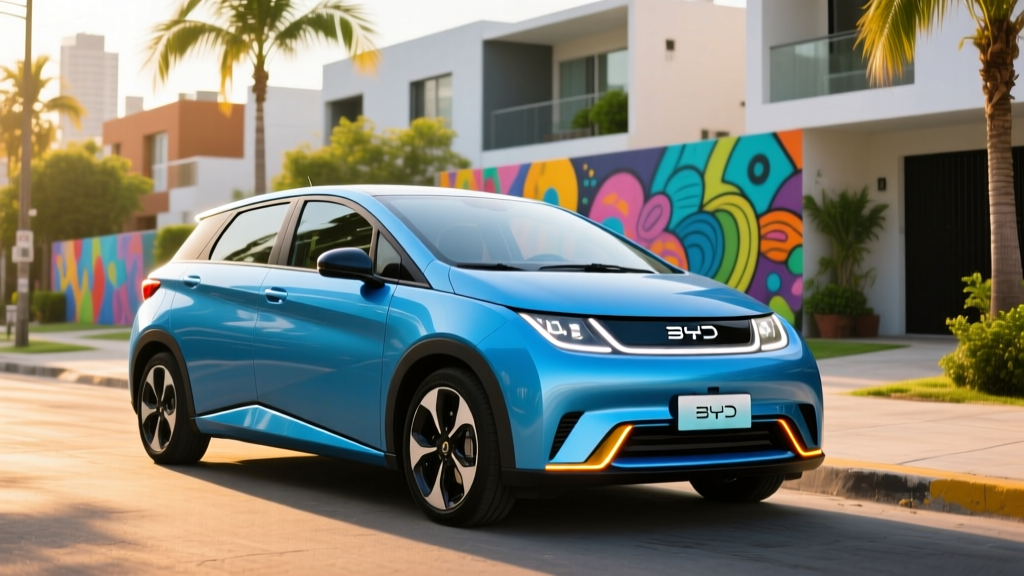
The BYD Dolphin Mini — sold as the Seagull in China and some export markets — has rapidly become the best-selling electric car in Mexico since its 2023 launch. For the 2026 model year, BYD has kept the formula intact: a subcompact hatchback with a 44.9 kWh lithium iron phosphate (LFP) Blade Battery, a usable EPA-equivalent range hovering around 250 miles (WLTP-rated at 405 km / ~252 miles), and a starting price that undercuts nearly every four-wheeled EV on the Mexican market. If you're searching for BYD Dolphin Mini Mexico specs, ownership costs, and real-world usability, this review covers everything from charging curves to cargo space.
The catch? This is a market-specific vehicle. The Dolphin Mini is not sold in the United States, which means U.S. buyers cannot purchase it, and it does not qualify for the IRS §30D federal EV tax credit. For Mexican buyers, however, it remains the most accessible path into new-EV ownership — and a surprisingly competent one at that.
Range, Battery & Real-World Efficiency
The 2026 Dolphin Mini is powered by BYD's proprietary Blade Battery, a cell-to-pack LFP (lithium iron phosphate) design. LFP chemistry trades some energy density for superior thermal stability, longer cycle life, and zero cobalt — making it ideal for a daily commuter that will see thousands of charge cycles over its lifetime.
| Spec | Value |
|---|---|
| Battery Chemistry | LFP (Lithium Iron Phosphate) — BYD Blade |
| Gross Battery Capacity | 44.9 kWh |
| Usable Battery Capacity | ~43.2 kWh (estimated) |
| WLTP Range (Combined) | 405 km (~252 miles) |
| EPA-Equivalent Estimate | ~220–235 miles (unofficial; not EPA-tested) |
| Energy Consumption | ~11.1 kWh/100 km (WLTP) / ~17.9 kWh/100 mi |
| Drivetrain | Front-wheel drive (FWD), single motor |
WLTP sticker: 405 km / 252 miles.
City driving (Mexico City, Guadalajara): Expect 230–250 miles thanks to heavy regenerative braking in stop-and-go traffic.
Highway at 110 km/h (68 mph): Plan for 180–200 miles — aerodynamic drag hits small hatchbacks hard at speed.
Cold/high-altitude mornings (Toluca, mountain passes): LFP batteries lose less range to cold than NMC, but expect a 5–10% reduction in brisk conditions. Mexico's mostly temperate climate is actually ideal for LFP chemistry.
The Dolphin Mini is not EPA-tested because it is not sold in the U.S. market. The WLTP cycle tends to overstate range by roughly 10–15% compared to EPA methodology, which is why we estimate an EPA-equivalent figure of 220–235 miles. For most Mexican commuters averaging 40–60 km (25–37 miles) per day, that translates to charging once every 4–5 days on a home Level 2 setup.
Charging Speed: DC Fast, Level 2 & Home Setup
Charging infrastructure in Mexico is expanding — Electromaps lists a growing network of public chargers in major metros — but home charging remains the backbone of EV ownership here, just as it does everywhere.
| Charging Level | Power (kW) | Time / Rate | Connector |
|---|---|---|---|
| Level 1 (120V household) | ~1.4 kW | ~30+ hours (0–100%) | Type 1 / J1772 adapter |
| Level 2 (240V home/public) | 7 kW (onboard charger) | ~6.5 hours (0–100%) / ~22 mi/hr | Type 2 / J1772 |
| DC Fast Charge | 60 kW peak | ~35 minutes (10–80%) | CCS2 (Mexico market) |
The 60 kW DC fast-charging peak is modest by 2026 standards — rivals like the Chevrolet Bolt EUV pushed 55 kW, while newer platforms hit 150+ kW. The Dolphin Mini's LFP battery, however, accepts its peak rate more consistently across the state-of-charge curve than many NMC packs. You won't see a dramatic taper until roughly 85% SoC, which means a 10–80% session takes about 35 minutes at a functional 60 kW charger. That's adequate for a quick top-up on the Mexico City–Puebla corridor but means longer road trips require planning.
For home charging, a 7 kW Level 2 wallbox on a 240V/32A circuit will replenish the pack overnight. Most Mexican homes have 120V/240V split-phase service similar to the U.S., though you'll want a licensed electrician to verify your panel can handle a dedicated 40A circuit. Installation costs in Mexico typically run $8,000–$18,000 MXN (~$450–$1,000 USD) depending on panel proximity and conduit runs.
Performance & Driving Dynamics
The Dolphin Mini is not a performance vehicle — and it doesn't pretend to be. The single front-mounted permanent-magnet synchronous motor produces 77 horsepower (57 kW) and 135 Nm (100 lb-ft) of torque. That's enough for confident city merging and adequate highway passing, but you won't win any stoplight drag races.
| Metric | Value |
|---|---|
| Motor Output | 77 hp (57 kW) / 135 Nm (100 lb-ft) |
| 0–100 km/h (0–62 mph) | ~11.0 seconds |
| Top Speed | 130 km/h (81 mph) — electronically limited |
| Drivetrain | FWD, single-speed reduction gear |
| Regenerative Braking | Two levels (standard + high/one-pedal-like) |
| Curb Weight | ~1,140 kg (2,513 lbs) |
At roughly 1,140 kg, the Dolphin Mini is light by EV standards. That low mass pays dividends in city efficiency and tire wear. The suspension is tuned soft — it soaks up Mexico City's speed bumps (topes) and potholes competently but exhibits noticeable body roll in spirited cornering. Steering is light and numb, ideal for parking, less so for highway confidence.
One-pedal driving isn't fully realized — the "high" regen mode slows the car significantly but doesn't bring it to a complete stop, so you'll still use the brake pedal regularly. This is a deliberate choice by BYD to ease the transition for first-time EV drivers.
Interior, Tech & Cargo Space
Step inside and the Dolphin Mini punches above its price class. The centerpiece is a 10.1-inch rotating touchscreen (portrait for navigation, landscape for media) running BYD's DiLink infotainment system. Wireless Apple CarPlay and Android Auto are standard on the mid and top trims. A 5-inch digital instrument cluster sits behind the steering wheel.
Interior materials are hard plastics throughout, but the fit and finish are solid. The front seats are reasonably supportive for the segment, though the rear bench is best suited for children or shorter adults on longer trips.
| Dimension | Value |
|---|---|
| Length | 3,780 mm (148.8 in) |
| Wheelbase | 2,500 mm (98.4 in) |
| Front Legroom | ~1,040 mm (40.9 in) |
| Rear Legroom | ~830 mm (32.7 in) |
| Cargo Volume (seats up) | 230 liters (8.1 cu ft) |
| Cargo Volume (seats folded) | ~930 liters (32.8 cu ft) |
The 230-liter trunk is tight for a week's groceries for a family of four but expands usefully with the 60/40 split rear seats folded. There is no frunk (front trunk) — the motor and power electronics fill the nose.
Driver-assistance tech is basic: you get rear parking sensors, a backup camera, and on higher trims, a 360-degree camera system. There is no adaptive cruise control, lane-keeping assist, or any Level 2 ADAS features. This is an SAE Level 0 vehicle for automation — the driver handles everything.
The Dolphin Mini does not offer adaptive cruise control, automatic emergency braking, lane-keeping assist, or any SAE Level 2 driver-assistance system. If active safety tech is a priority, look at the MG4 or higher-priced competitors.
Pricing, Trims & Tax Credit Reality
The Dolphin Mini is sold in Mexico in two primary trims for 2026. Pricing is in Mexican pesos (MXN) and reflects BYD Mexico's official MSRP as of early 2026.
| Trim | MSRP (MXN) | Approx. USD | Key Additions |
|---|---|---|---|
| GL (Base) | $369,000 | ~$21,700 | 10.1" screen, 2 airbags, steel wheels, manual AC |
| GS (Top) | $419,000 | ~$24,600 | 4 airbags, alloy wheels, 360° camera, wireless CarPlay, LED headlights, heat pump |
At roughly $21,700–$24,600 USD, the Dolphin Mini is the cheapest new four-seat EV available in Mexico. For comparison, the Chevrolet Equinox EV starts well above $35,000 USD, and the MG4 begins around $30,000 USD in the Mexican market.
Does It Qualify for the U.S. Federal EV Tax Credit?
No. The BYD Dolphin Mini is not sold in the United States and is therefore ineligible for the IRS §30D Clean Vehicle Credit. Even if it were imported privately, it would fail multiple §30D requirements: BYD is a Chinese-headquartered manufacturer, the battery cells and critical minerals do not meet U.S.-sourcing thresholds, and the vehicle has not undergone EPA certification.
For Mexican buyers, there is no direct federal purchase subsidy comparable to the U.S. §30D credit. However, Mexico's Ley de Ingresos exempts electric vehicles from the ISAN (new-car tax) and offers reduced tenencia (annual vehicle ownership tax) in most states. Some states, including Mexico City, also waive emissions verification (verificación vehicular) for EVs — a meaningful perk given the biannual testing hassle. Check your state's specific rules via the SEMARNAT portal.
Warranty & Long-Term Battery Outlook
BYD Mexico provides the following warranty coverage for the 2026 Dolphin Mini:
- Vehicle (bumper-to-bumper): 6 years / 150,000 km (~93,000 miles)
- Battery pack: 8 years / 160,000 km (~100,000 miles), guaranteed to retain ≥70% capacity
- Electric motor & power electronics: 8 years / 150,000 km
The LFP Blade Battery is the Dolphin Mini's strongest long-term asset. LFP cells typically endure 3,000–5,000 full charge cycles before reaching 80% capacity — roughly double the cycle life of typical NMC cells. For a 250-mile-range vehicle, 3,000 cycles translates to approximately 750,000 miles of theoretical battery life before meaningful degradation. In real-world terms, most owners will sell the car long before the battery becomes a concern.
One LFP-specific tip: BYD recommends charging to 100% at least once per week to allow the battery management system to balance cells properly. This is the opposite of NMC advice (which recommends 80% daily limits) and is one of the chemistry's practical advantages — you get full usable range every day without longevity guilt.
Pros, Cons & Who Should Buy
Pros
- Lowest MSRP of any new 4-seat EV in Mexico
- LFP Blade Battery offers exceptional cycle life and thermal safety
- Low running costs — ~$0.10–$0.15 USD per km on Mexican residential electricity
- Compact dimensions ideal for tight urban parking
- Rotating 10.1" screen and wireless CarPlay/Android Auto on GS trim
- Exempt from ISAN tax and verificación in most Mexican states
Cons
- 60 kW DC fast-charging peak is slow for road trips
- No advanced driver-assistance systems (no AEB, no ACC)
- Rear seat and cargo space are tight for families
- Only 2 airbags on the base GL trim
- Top speed limited to 130 km/h — marginal for some Mexican highways
- Not available in the U.S.; no §30D tax credit path
Who This EV Suits Best
Ideal for: Urban commuters in Mexico City, Guadalajara, Monterrey, or Puebla who drive 30–70 km daily, have access to home charging, and want to eliminate gasoline costs. The Dolphin Mini is a superb first EV for cost-conscious buyers who don't need highway road-trip capability.
Not ideal for: Families needing rear-seat space for teenagers, frequent inter-city travelers (the 60 kW charge rate and ~200-mile highway range add friction), or buyers who prioritize active safety technology.
Frequently Asked Questions
What is the real-world range of the BYD Dolphin Mini in Mexico?
The WLTP rating is 405 km (252 miles). In real-world Mexican city driving, expect 230–250 miles. On the highway at 110 km/h, plan for 180–200 miles. Mexico's warm climate is favorable for LFP battery efficiency, so cold-weather range loss is minimal except at high altitudes in winter.
How fast does the Dolphin Mini charge at home and on DC fast chargers?
On a 7 kW Level 2 home charger, a full 0–100% charge takes about 6.5 hours, adding roughly 22 miles of range per hour. On a 60 kW DC fast charger, 10–80% takes approximately 35 minutes. Level 1 (120V) trickle charging is technically possible but impractical at 30+ hours for a full charge.
Does the BYD Dolphin Mini qualify for the U.S. federal EV tax credit?
No. The Dolphin Mini is not sold in the United States and is not eligible for the IRS §30D Clean Vehicle Credit. It also would not meet the credit's battery-sourcing, critical-mineral, or MSRP-cap requirements. Mexican buyers benefit from ISAN tax exemption and state-level EV perks instead.
Is the BYD Dolphin Mini worth buying vs. competitors in Mexico?
If budget is the primary driver, the Dolphin Mini has no serious rival — it's the cheapest new 4-seat EV in Mexico by a significant margin. If you need more range, faster charging, ADAS features, or more interior space, the MG4 (starting ~$550,000 MXN) or the Chevrolet Equinox EV are worth the premium. For pure urban commuting value, the Dolphin Mini wins on total cost of ownership.
What is the biggest drawback of the Dolphin Mini?
The 60 kW DC fast-charging speed is the most limiting factor for owners who want road-trip flexibility. Combined with the ~200-mile highway range, it means 35–40 minute stops every 2.5–3 hours on longer drives. For daily commuting, this is irrelevant.
How long will the LFP Blade Battery last?
LFP cells are rated for 3,000–5,000 full charge cycles. At 250 miles per cycle, that's 750,000–1,250,000 miles before the battery reaches 80% of its original capacity. BYD warranties the pack for 8 years / 160,000 km with a 70% capacity retention guarantee. Realistically, the battery will outlast the rest of the car.