The BYD Dolphin at a Glance: What US Buyers Need to Know
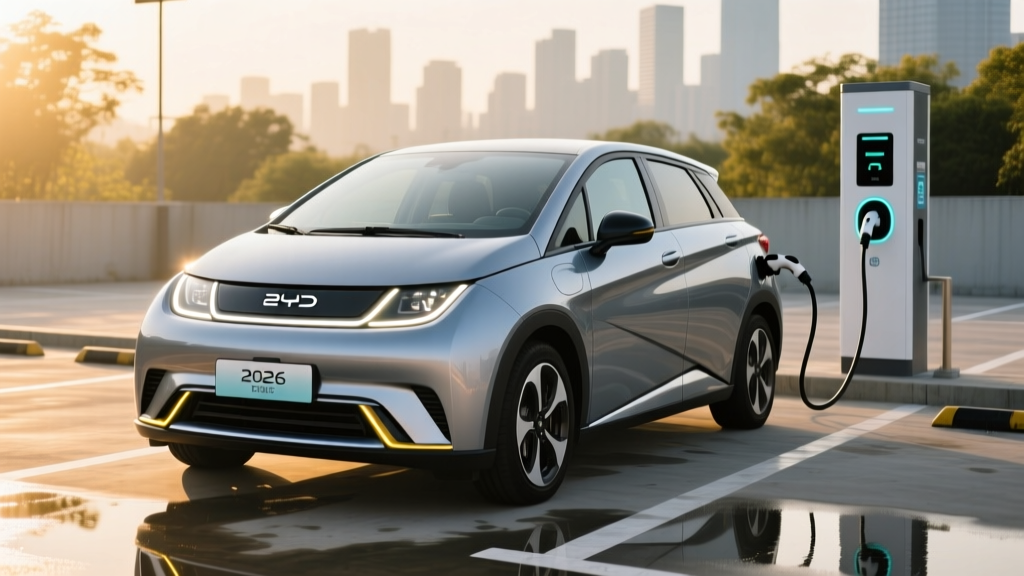
The BYD Dolphin has become one of the most talked-about compact electric hatchbacks on the global stage — dominating sales charts in China, Europe, Australia, and Southeast Asia. But for US-based EV shoppers searching for a BYD Dolphin car, the picture is more complicated. As of early 2026, BYD has not officially launched the Dolphin in the United States, and the brand's passenger-vehicle footprint in North America remains limited to commercial electric buses and trucks. That said, the Dolphin's global success, aggressive pricing abroad, and BYD's vertically integrated battery supply chain make it a vehicle worth understanding — especially for buyers watching whether the world's largest EV maker eventually crosses the Pacific.
This review breaks down the Dolphin's real-world specs, charging performance, LFP battery technology, and international pricing, while providing a clear-eyed assessment of what a US launch would need to look like to compete against the Chevrolet Bolt EV/EUV, Nissan Leaf, and Hyundai Kona Electric.
Range, Efficiency, and the Real-World Reality
The BYD Dolphin is offered globally with two primary battery pack sizes. The Standard Range variant uses a 44.9 kWh (gross) Blade battery, while the Extended Range (sometimes called the Design or Comfort trim depending on market) steps up to a 60.48 kWh pack. Both use BYD's proprietary lithium iron phosphate (LFP) Blade cell architecture, which we'll unpack in the next section.
- Standard Range (44.9 kWh): WLTP rated at ~310 km (193 mi). Estimated EPA equivalent: ~170-185 miles. Real-world highway: ~145-160 mi; cold weather: ~125-140 mi.
- Extended Range (60.48 kWh): WLTP rated at ~427 km (265 mi). Estimated EPA equivalent: ~230-250 miles. Real-world highway: ~195-215 mi; cold weather: ~170-190 mi.
Note: WLTP testing tends to overstate range by 10-15% compared to the EPA cycle used in the US. The figures above are AutoEdgeView estimates based on comparable LFP hatchbacks tested under EPA protocols. Actual US-spec EPA numbers would be confirmed only upon official launch. Always expect 15-25% range reduction in sustained highway driving above 70 mph and 20-30% loss in sub-freezing temperatures without preconditioning.
Efficiency for the Extended Range model lands in the neighborhood of 115-125 MPGe combined (roughly 27-29 kWh/100 mi) based on European real-world testing — competitive with the Hyundai Kona Electric but trailing the Chevrolet Bolt EV's excellent ~120 MPGe combined rating. The Dolphin's relatively tall, hatchback body shape and modest weight (~1,650 kg / 3,638 lbs for the larger pack) contribute to respectable but not class-leading efficiency.
Battery Technology: BYD's Blade LFP Advantage
BYD is unique among global automakers in that it manufactures its own battery cells — and the Dolphin exclusively uses the company's Blade Battery, an LFP (lithium iron phosphate) cell packaged in a long, thin, blade-like form factor that doubles as a structural component within the pack.
| Specification | Standard Range | Extended Range |
|---|---|---|
| Battery Chemistry | LFP (Lithium Iron Phosphate) | LFP (Lithium Iron Phosphate) |
| Gross Capacity | 44.9 kWh | 60.48 kWh |
| Cell-to-Pack Architecture | Blade Battery (CTP) | Blade Battery (CTP) |
| Thermal Management | Liquid cooled/heated | Liquid cooled/heated |
| Estimated Cycle Life | 3,000+ cycles (LFP typical) | 3,000+ cycles (LFP typical) |
Why LFP matters: LFP chemistry trades some energy density for significantly longer cycle life, superior thermal stability (lower fire risk), and no reliance on cobalt or nickel. For a daily-driver hatchback, this is arguably the right trade-off. LFP packs can be charged to 100% regularly without the degradation concerns that apply to NMC (nickel manganese cobalt) chemistries — a practical advantage for commuters who want to wake up to a full battery every morning. The trade-off is that LFP batteries lose more capacity in extreme cold than NMC equivalents, making preconditioning essential for winter fast-charging sessions.
BYD's Blade Battery has passed rigorous nail-penetration tests without thermal runaway — a safety benchmark that few NMC cells can match. For buyers prioritizing long-term battery longevity and safety over maximum range, the Dolphin's powertrain philosophy is compelling.
Charging Speed: DC Fast and Home Level 2
Charging infrastructure is where global-market EVs often reveal their limitations for US buyers. Here's what the Dolphin delivers:
| Charging Level | Standard Range | Extended Range |
|---|---|---|
| Max DC Fast Charge (Peak kW) | 60 kW | 88 kW |
| 10-80% DC Fast Charge Time | ~34 minutes | ~29 minutes |
| Level 2 AC Onboard Charger | 7 kW (single-phase) | 7 kW (single-phase) / 11 kW (three-phase, select markets) |
| Level 2 Full Charge Time (0-100%) | ~6.5 hours (at 7 kW) | ~8.5 hours (at 7 kW) / ~6 hours (at 11 kW) |
| Connector (Global Markets) | CCS2 (Europe/ANZ) / GB/T (China) | CCS2 (Europe/ANZ) / GB/T (China) |
The honest take on charging: The Dolphin's DC fast-charging speed is its most significant competitive weakness. At a peak of 88 kW for the Extended Range, it trails the Hyundai Kona Electric (which supports up to ~100+ kW on newer generations) and significantly lags behind platforms like the Hyundai Ioniq 5's 800V architecture (240 kW peak). A 29-minute 10-80% charge is acceptable for urban commuters who rarely DC fast-charge, but it becomes a liability on road trips where competitors add 200 miles in 18 minutes.
The charge curve is relatively flat — BYD's LFP cells accept a steady but moderate rate rather than spiking to a high peak and tapering sharply. This means the advertised 10-80% time is reasonably accurate in practice, but the absolute speed simply isn't competitive with next-gen architectures. For home charging at 7 kW (a standard Level 2 wallbox on a 240V/32A circuit), the Extended Range pack adds roughly 25-30 miles of range per hour — adequate for overnight replenishment.
If a US-spec Dolphin were launched, it would need a CCS1 (or NACS, given Tesla's opening of the Supercharger network) connector. BYD would also likely need to upgrade the onboard charger and DC charge capability to compete in the US market, where Electrify America and Tesla Supercharger stalls routinely deliver 150-350 kW.
Performance and Driving Dynamics
| Specification | Standard Range | Extended Range |
|---|---|---|
| Drivetrain | FWD (single front motor) | FWD (single front motor) |
| Horsepower | 95 hp (70 kW) | 201 hp (150 kW) |
| Torque | 180 Nm (133 lb-ft) | 310 Nm (229 lb-ft) |
| 0-60 mph (est.) | ~11.5 seconds | ~7.0 seconds |
| Top Speed | ~99 mph (160 km/h) | ~99 mph (160 km/h) |
The Extended Range Dolphin's 7.0-second 0-60 mph time is quick enough for confident highway merging and urban passing. The Standard Range variant, at 11.5 seconds, feels more like a compliance city car — adequate for stoplights but not enthusiastic. Neither variant offers an AWD or dual-motor option, which limits the Dolphin's appeal in snow-belt states.
Driving dynamics are tuned for comfort over sportiness. The suspension absorbs urban potholes well, but the steering is numb and body roll is noticeable on twisty roads. Regenerative braking offers two levels but falls short of true one-pedal driving — you'll still need the friction brakes for complete stops. This is a practical commuter, not a canyon carver.
Interior Space, Cargo, and Technology
The Dolphin sits on BYD's e-Platform 3.0, a dedicated EV architecture that gives it a flat floor and a wheelbase of 2,700 mm (106.3 inches) — longer than you'd expect for its exterior footprint. The result is surprisingly generous rear legroom and a usable cargo area.
| Dimension | Measurement |
|---|---|
| Length | 163.4 in (4,150 mm) |
| Wheelbase | 106.3 in (2,700 mm) |
| Rear Legroom (est.) | ~35.4 in (900 mm) |
| Cargo Volume (rear seats up) | ~12.2 cu ft (345 L) |
| Cargo Volume (rear seats folded) | ~46.4 cu ft (1,310 L) |
| Frunk | None |
Cargo space is competitive with the Chevrolet Bolt EV (~16.6 cu ft behind rear seats, so the Bolt wins here) but adequate for groceries, luggage for two, or a week's worth of commuting gear. The lack of a frunk is a missed opportunity on a dedicated EV platform.
Infotainment: The Dolphin features a 12.8-inch rotating touchscreen (it pivots between landscape and portrait orientation — a BYD signature) running BYD's DiLink system. Wireless Apple CarPlay and Android Auto are supported in most markets. A 5-inch digital instrument cluster sits behind the steering wheel. The system is responsive but the UI design and translation quality lag behind what Hyundai, Kia, and Tesla offer.
Driver Assistance (ADAS): Higher trims include BYD's DiPilot suite with adaptive cruise control, lane-keeping assist, automatic emergency braking, blind-spot monitoring, and rear cross-traffic alert. This is SAE Level 2 driver assistance — meaning the driver must remain fully engaged with hands on the wheel and eyes on the road at all times. It is not autonomous driving. The system performs adequately on well-marked highways but can be hesitant at complex intersections, consistent with competitors in this price segment.
Pricing, Tax Credits, and the US Availability Question
Here's where the BYD Dolphin story gets complex for American buyers.
| Market | Standard Range Price | Extended Range Price |
|---|---|---|
| China (domestic) | ~¥99,800 (~$13,700 USD) | ~¥129,800 (~$17,800 USD) |
| United Kingdom | ~£26,000 (~$33,000 USD) | ~£31,000 (~$39,300 USD) |
| Australia | ~AUD $38,890 (~$25,500 USD) | ~AUD $44,890 (~$29,400 USD) |
| Germany | ~€35,490 (~$38,500 USD) | ~€39,490 (~$42,800 USD) |
US pricing estimate: If BYD were to launch the Dolphin in the United States, a realistic MSRP would likely fall between $28,000 and $38,000 depending on trim, after accounting for US safety compliance modifications, dealer network costs, and tariff structures. The current 100% tariff on Chinese-manufactured EVs (as of 2025) effectively blocks direct import, meaning BYD would need to manufacture in a tariff-exempt facility (e.g., a plant in Mexico, Thailand, or Brazil with US trade agreements, or a future US-based factory) to compete on price.
Federal Tax Credit (§30D) Eligibility: Even if the Dolphin were sold in the US, federal tax credit eligibility would be uncertain. Under current IRS §30D rules, a qualifying vehicle must:
- Have an MSRP at or below $55,000 (for sedans/hatchbacks — the Dolphin would qualify on price)
- Be assembled in North America (BYD does not currently assemble passenger cars in the US, Canada, or Mexico)
- Meet critical-mineral and battery-component sourcing thresholds that exclude vehicles with battery components from a "foreign entity of concern" (which includes Chinese manufacturers like BYD)
- The buyer must meet income caps: $300,000 AGI for joint filers, $225,000 for heads of household, $150,000 for single filers
Given BYD's fully Chinese supply chain and the foreign-entity-of-concern restrictions, the Dolphin would almost certainly not qualify for the $7,500 federal tax credit under current rules. This is a significant competitive disadvantage against vehicles like the Chevrolet Bolt (which qualifies) and domestically assembled models.
How the Dolphin Compares to US-Market Rivals
| Spec | BYD Dolphin (Ext. Range) | Chevrolet Bolt EV | Hyundai Kona Electric |
|---|---|---|---|
| Est. EPA Range | ~230-250 mi | 259 mi (EPA) | 261 mi (EPA) |
| Battery Chemistry | LFP (Blade) | NMC | NMC |
| Battery Capacity | 60.48 kWh | 65 kWh | 65.4 kWh |
| Peak DC Charge Rate | 88 kW | ~55 kW (2023); ~115 kW (next-gen) | ~100+ kW |
| 0-60 mph | ~7.0 sec | ~6.5 sec | ~7.4 sec |
| Horsepower | 201 hp | 200 hp | 201 hp |
| Est. US MSRP | ~$30,000-$38,000 | ~$26,500-$30,000 | ~$32,975-$38,000 |
| §30D Tax Credit | Unlikely (China sourcing) | Eligible (up to $7,500) | Partial (check sourcing) |
| US Availability | Not available | Available | Available |
The Dolphin's LFP battery is a genuine differentiator for longevity and safety. But on range, charging speed, and especially tax-credit eligibility, the Chevrolet Bolt EV and Hyundai Kona Electric hold clear advantages for US buyers. The Bolt's lower starting price, confirmed EPA range, and full tax-credit eligibility make it the default budget EV hatchback in America.
Pros, Cons, and the Final Verdict
- LFP Blade Battery — excellent cycle life, thermal safety, and 100% SoC daily charging
- Competitive pricing in global markets; would be one of the cheapest EVs in the US if launched
- Spacious interior for its footprint thanks to dedicated EV platform
- Strong 0-60 performance in Extended Range trim (~7.0 sec)
- Rotating 12.8-inch touchscreen is a unique, practical feature
- BYD's vertical integration controls costs and supply chain
- Not available in the United States as of 2026
- DC fast-charging speed (88 kW peak) is below competitive benchmarks
- No AWD option — limits appeal in snow-belt climates
- Would almost certainly not qualify for the §30D federal tax credit due to China sourcing
- Cargo space trails the Chevrolet Bolt EV
- No frunk despite dedicated EV architecture
- ADAS refinement and UI translation lag behind Korean and American competitors
- 100% US tariff on Chinese EVs blocks direct import
Who is the BYD Dolphin for? In its current global markets, the Dolphin is an excellent choice for urban commuters and budget-conscious buyers who want a practical, safe, and affordable electric hatchback with low running costs and a battery built to outlast the car itself. It's ideal for drivers who charge at home overnight and rarely rely on DC fast charging.
For US buyers: Unless BYD announces a North American manufacturing strategy or secures a tariff-exempt supply chain, the Dolphin remains a fascinating "what-if" rather than a purchase option. American shoppers seeking a similar value proposition should test-drive the Chevrolet Bolt EV/EUV, Hyundai Kona Electric, or the upcoming next-generation affordable EVs from Tesla and other manufacturers expected in the 2026-2028 timeframe.
Frequently Asked Questions
What is the real-world range of the BYD Dolphin car?
The Extended Range Dolphin delivers approximately 230-250 miles under EPA-equivalent testing conditions. In real-world highway driving at 70+ mph, expect roughly 195-215 miles. In sub-freezing winter conditions without consistent preconditioning, range can drop to 170-190 miles. The Standard Range model delivers roughly 170-185 miles EPA-equivalent, with real-world highway figures around 145-160 miles.
How fast does the BYD Dolphin charge?
The Extended Range model peaks at 88 kW on a DC fast charger, achieving a 10-80% charge in approximately 29 minutes. The Standard Range peaks at 60 kW with a 10-80% time of ~34 minutes. On a home Level 2 charger at 7 kW (240V/32A), the Extended Range pack takes roughly 8.5 hours from empty to full, adding about 25-30 miles of range per hour.
Does the BYD Dolphin qualify for the US federal EV tax credit?
Almost certainly not. Under current IRS §30D regulations, the vehicle must be assembled in North America and meet battery-sourcing requirements that exclude components from foreign entities of concern (which includes Chinese manufacturers). BYD's fully Chinese supply chain would disqualify the Dolphin from the $7,500 credit, even if it were sold in the US.
Is the BYD Dolphin available in the United States?
No. As of 2026, BYD does not sell the Dolphin or any other passenger vehicle in the US market. The 100% tariff on Chinese-manufactured EVs and the absence of a North American assembly plant make a near-term US launch unlikely. BYD has focused its passenger-vehicle expansion on Europe, Southeast Asia, Australia, and Latin America.
Is the BYD Dolphin worth buying vs. competitors?
In markets where it's available (Europe, Australia, Southeast Asia), the Dolphin is a strong value pick — especially for buyers who prioritize battery longevity (LFP) and low purchase price. In the US, you can't buy one, and even if you could, the Chevrolet Bolt EV offers more range, tax-credit eligibility, and dealer support at a comparable or lower price. Wait for BYD's potential Mexico- or Brazil-built models if you're tracking the brand's North American ambitions.
What is the BYD Dolphin's battery warranty?
In most global markets, BYD offers an 8-year/160,000 km (~100,000 mile) warranty on the high-voltage battery pack, covering defects and capacity retention below a specified threshold (typically 70% state of health). US-specific warranty terms would depend on any future launch configuration. BYD's LFP Blade cells are engineered for 3,000+ charge cycles, which translates to roughly 500,000+ miles of driving before significant degradation — well beyond the warranty period.
Does the BYD Dolphin have a heat pump?
Yes, the Dolphin includes a standard heat pump for cabin heating in most markets. This is a significant advantage in cold climates, as heat pumps are 2-3x more efficient than resistive (PTC) heaters, reducing winter range loss from cabin heating by roughly 30-40%. Combined with the battery's liquid thermal management system, this helps the Dolphin manage cold-weather efficiency better than budget EVs without heat pumps.