The BYD-Daniel Craig Partnership Explained
When BYD announced its global brand ambassador partnership with Daniel Craig in late 2024, the move signaled something larger than a celebrity endorsement. The former James Bond actor became the face of BYD's push into premium markets — Europe, the Middle East, and eventually North America. But for US-based EV shoppers searching for the BYD Daniel Craig partnership details, the practical question remains: can you actually buy a BYD in the United States in 2026, and should you care?
The short answer: BYD passenger vehicles remain unavailable in the US market as of 2026, primarily due to the 100% tariff on Chinese-manufactured EVs enacted in 2024. However, BYD's global lineup — particularly the Seal sedan and Atto 3 (Yuan Plus) crossover — represents the benchmark against which US-market EVs are increasingly measured. Understanding BYD's specs, pricing, and technology helps you evaluate whether domestic alternatives deliver comparable value.
BYD Seal: The Flagship Sedan Behind the Campaign
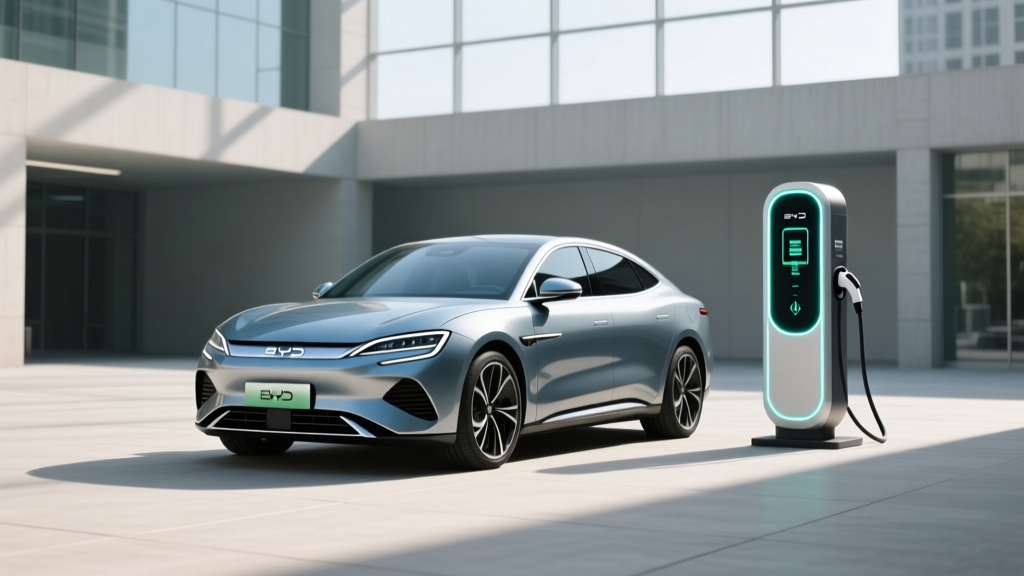
The vehicle most prominently featured in BYD's Daniel Craig marketing materials is the BYD Seal, a mid-size electric sedan positioned against the Tesla Model 3 and BMW i4. Here's what the global-spec model delivers:
| Attribute | Standard Range | Extended Range / AWD |
|---|---|---|
| Battery Capacity | 61.4 kWh (LFP Blade) | 82.5 kWh (LFP Blade) |
| EPA-Equivalent Range | ~260 mi (WLTP: 340 mi) | ~325 mi (WLTP: 435 mi) |
| Powertrain | RWD, 201 hp | AWD Dual-Motor, 523 hp |
| 0-62 mph (0-100 km/h) | 7.5 sec | 3.8 sec |
| Max DC Fast Charge | 110 kW | 150 kW |
| 10-80% DC Charge Time | ~35 min | ~26 min |
| Level 2 AC Charge Rate | 7 kW (~25 mi/hr) | 11 kW (~40 mi/hr) |
| Efficiency (estimated) | ~24 kWh/100mi | ~26 kWh/100mi |
BYD's Blade Battery Technology: LFP Done Right
BYD's competitive advantage centers on its proprietary Blade Battery — a lithium iron phosphate (LFP) cell design that arranges prismatic cells in long, thin modules resembling blades. The architecture delivers several measurable benefits:
- Safety: Blade cells pass nail penetration tests without thermal runaway — a feat most NMC chemistries cannot match
- Longevity: LFP chemistry typically delivers 3,000+ charge cycles before 80% capacity retention, compared to 1,000-2,000 cycles for many NMC cells
- Cost: LFP eliminates cobalt and nickel, reducing raw material expense by 20-30%
The trade-off: LFP batteries are heavier per kWh than NMC, which limits range in smaller vehicle platforms. BYD compensates with efficient packaging and structural battery integration.
US Market Availability: The Tariff Barrier
Despite the global marketing blitz, BYD passenger vehicles cannot be sold in the United States under current trade policy. The 2024 tariff increase imposed a 100% duty on Chinese-manufactured EVs, effectively doubling the import price and eliminating any cost advantage.
BYD has explored potential workarounds, including:
- Manufacturing in Mexico (blocked by USMCA rules of origin requirements)
- European production facilities (under construction in Hungary, but not serving North America)
- Commercial vehicle sales (BYD electric buses operate in several US cities)
For 2026, US buyers cannot purchase a BYD Seal, Atto 3, or Dolphin through any legitimate channel. The Daniel Craig partnership targets markets where BYD competes directly: Europe, Australia, Southeast Asia, and South America.
US-Market Alternatives: How Do They Compare?
If BYD's value proposition appeals to you, here's how US-available EVs stack up against the Seal's global specifications:
| Model | EPA Range | Battery (kWh) | 0-60 mph | Max DC kW | 10-80% Time | Base MSRP |
|---|---|---|---|---|---|---|
| BYD Seal Extended (Global) | ~325 mi (est.) | 82.5 LFP | 3.8s (AWD) | 150 kW | ~26 min | ~$42,000 (global) |
| Tesla Model 3 Long Range AWD | 363 mi | 79 NMC | 4.2s | 250 kW | ~18 min | $47,740 |
| Hyundai Ioniq 6 SEL AWD | 316 mi | 77.4 NMC | 5.1s | 240 kW | ~18 min | $46,850 |
| BMW i4 xDrive40 | 282 mi | 81.5 NMC | 4.7s | 200 kW | ~31 min | $57,900 |
What BYD's Strategy Means for US EV Pricing
Even without direct market access, BYD's global pricing pressure influences US EV costs. When BYD offers the Seal in Europe at approximately €45,000 ($48,000) — undercutting comparable Tesla and BMW models by 15-20% — American consumers notice the gap. This pressure contributed to Tesla's aggressive 2024-2025 price cuts and pushed legacy automakers to accelerate cost-reduction programs.
The practical effect: US buyers benefit from more competitive pricing even without BYD's physical presence. The Daniel Craig partnership amplifies BYD's brand recognition, making it a household name and forcing domestic competitors to justify their price premiums with tangible advantages — faster charging, superior ADAS, broader service networks, or tax credit eligibility.
The Verdict: Should US Buyers Care?
Why BYD Matters to You
- Sets global value benchmarks that pressure US pricing
- Blade Battery LFP technology influences industry standards
- Future US entry (post-tariff) could disrupt the market
- Demonstrates premium EVs don't require $60K+ pricing
Why You Can't Buy One Yet
- 100% tariff makes import economically unviable
- No US dealer network or service infrastructure
- No EPA certification or NHTSA crash testing
- Federal tax credit unavailable regardless
For US buyers in 2026, the BYD-Daniel Craig partnership is relevant as market intelligence, not a purchase decision. The Seal's specifications demonstrate what $42,000-$48,000 should deliver: 300+ miles of range, sub-4-second AWD performance, and 150 kW charging. Use these benchmarks when evaluating Tesla, Hyundai, Ford, and Volkswagen offerings — and demand comparable value with the advantage of US service networks, EPA certification, and tax credit eligibility.
Frequently Asked Questions
Can I import a BYD Seal from Europe or China?
No. US import regulations require EPA emissions certification and DOT/NHTSA safety compliance. BYD vehicles lack both certifications, making individual import illegal for road use. Additionally, the 100% tariff would apply regardless of import origin.
Will BYD ever sell cars in the United States?
BYD executives have stated North American expansion is a long-term goal, but current tariff policy and geopolitical tensions make near-term entry unlikely. BYD is building manufacturing capacity in Hungary, Brazil, and Thailand — none of which serve the US market under current trade agreements.
Is BYD's Blade Battery safer than Tesla's 4680 cells?
BYD's LFP Blade cells demonstrate superior thermal stability in nail penetration and crush tests compared to NMC chemistries, including Tesla's 4680 cells. However, Tesla's battery pack engineering includes advanced thermal management and containment systems. Both approaches achieve strong safety records in real-world operation.
What US EV offers the best BYD-like value?
The Tesla Model 3 RWD at $38,990 (after $7,500 tax credit) delivers 272 miles EPA range, 250 kW charging, and extensive Supercharger access — matching or exceeding BYD Seal specifications at comparable effective pricing. The Hyundai Ioniq 6 SE Standard Range offers similar value at $37,500 post-credit with 240-mile range.
Does the Daniel Craig partnership affect BYD vehicle quality?
Celebrity endorsements don't alter engineering. However, BYD's investment in global brand ambassadors signals commitment to premium market positioning, which typically correlates with increased quality control investment and customer service infrastructure in those markets.