The BYD Question Every US Buyer Is Asking
BYD has overtaken Tesla as the world's top-selling EV manufacturer by unit volume, and the Chinese automaker's expansion into Europe, Southeast Asia, Australia, and Latin America has been relentless. But if you're a US-based EV shopper searching for BYD costs, the answer requires context that goes beyond a simple price tag. As of early 2026, BYD does not sell passenger vehicles in the United States — a situation shaped by a 100% US tariff on Chinese-built EVs, geopolitical trade policy, and BYD's own strategic prioritization of markets where it can compete without prohibitive duties.
That doesn't mean BYD's pricing is irrelevant to American buyers. Understanding what BYD vehicles cost globally, what they offer in range and technology, and how those figures compare to vehicles you can buy in the US gives you a sharper lens for evaluating your options. This article breaks down BYD's key global models — the Atto 3, Seal, Dolphin, and Seagull — with hard specs, real-world range expectations, charging performance, and a direct cost comparison against the EVs American buyers actually drive home.
BYD's Core Lineup: Specs, Range, and Battery Chemistry
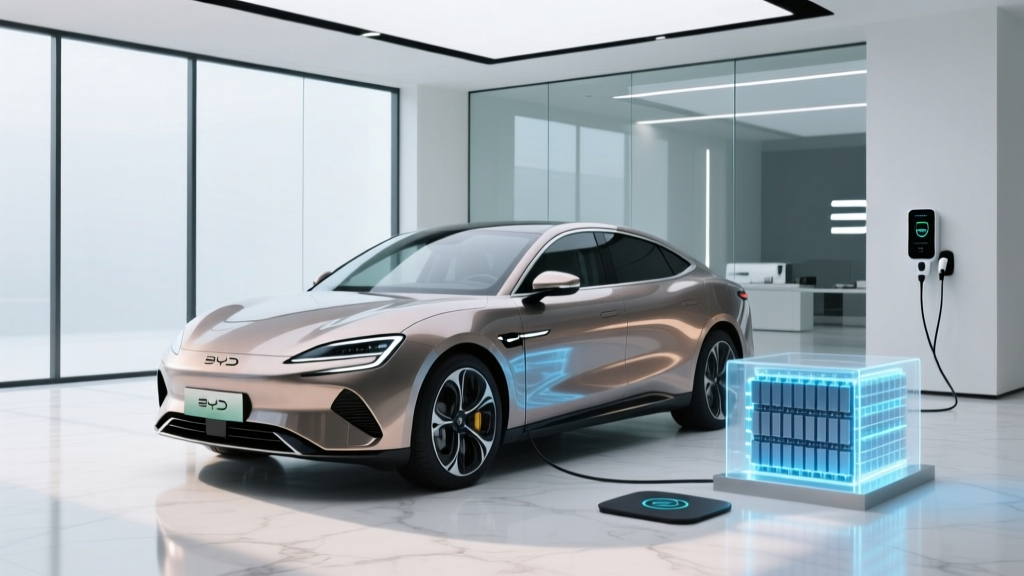
BYD's passenger EV lineup is built around its proprietary Blade Battery, a lithium iron phosphate (LFP) cell design that uses a cell-to-pack architecture for improved energy density and thermal stability. LFP chemistry trades some energy density for longer cycle life, lower degradation rates, and the elimination of cobalt — a meaningful cost and supply-chain advantage. Here's how the key models stack up on paper.
| Model | Battery (kWh) | Chemistry | WLTP Range | EPA Est. Range* | 0-60 mph | HP | Drivetrain |
|---|---|---|---|---|---|---|---|
| Seagull (Dolphin Mini) | 38.9 / 44.9 | LFP Blade | 305-405 km (190-252 mi) | ~160-210 mi | ~11.0s | 75-101 | FWD |
| Dolphin | 44.9 / 60.5 | LFP Blade | 310-427 km (193-265 mi) | ~165-225 mi | ~7.0s (Design) | 95-204 | FWD |
| Atto 3 (Yuan Plus) | 49.9 / 60.5 | LFP Blade | 345-420 km (214-261 mi) | ~180-220 mi | 7.3s | 201 | FWD |
| Seal (RWD) | 82.5 | LFP Blade | 570 km (354 mi) | ~290-310 mi | 7.5s | 313 | RWD |
| Seal (AWD Performance) | 82.5 | LFP Blade | 520 km (323 mi) | ~265-280 mi | 3.8s | 530 | AWD |
*EPA estimates are author projections based on the typical 15-25% reduction from WLTP to EPA testing cycles. BYD does not publish EPA figures as the vehicles are not US-certified. For verified EPA data on US-market EVs, see fueleconomy.gov.
BYD's WLTP range figures are optimistic by US standards. In real-world mixed driving, expect the Atto 3 to deliver approximately 185-200 miles on a full charge in moderate temperatures. Highway-only driving at 70+ mph will reduce that to roughly 160-175 miles. In cold weather (below 32°F / 0°C), LFP batteries experience a 15-30% range reduction due to increased internal resistance and cabin heating demands. The Seal AWD, despite its 82.5 kWh pack, may return 220-240 real-world miles in winter highway conditions. BYD's Blade Battery does include a standard heat pump on most markets, which mitigates some cold-weather loss compared to resistive heating.
Charging Speed: Where BYD Falls Short of US Leaders
Charging performance is where BYD's global competitiveness becomes more nuanced. While the Blade Battery excels in safety and longevity, BYD's DC fast-charging architecture has lagged behind the 250-350 kW peak rates offered by Hyundai/Kia's E-GMP platform and Tesla's latest V4 Superchargers.
| Vehicle | Max DC kW | 10-80% Time | Level 2 Rate (kW) | Connector |
|---|---|---|---|---|
| BYD Atto 3 | 80 kW | ~40 min | 7 kW (1-phase) / 11 kW (3-phase) | CCS2 (global) / GB/T (China) |
| BYD Seal (RWD/AWD) | 150 kW | ~26 min | 11 kW | CCS2 |
| BYD Dolphin | 60-80 kW | ~39 min | 7 kW | CCS2 |
| Hyundai Ioniq 5 (US) | 238 kW | ~18 min | 10.9 kW | NACS / CCS1 |
| Tesla Model 3 (US) | 250 kW | ~15 min | 11.5 kW | NACS |
| Ford Mustang Mach-E (US) | 150 kW | ~33 min | 10.5 kW | NACS |
The Atto 3's 80 kW peak is a significant bottleneck for road-trip charging. Even the Seal, at 150 kW, takes roughly 26 minutes from 10-80% — competitive with the Mach-E but well behind the Ioniq 5's 18-minute sprint. BYD's charging curve also tapers aggressively above 80% State of Charge (SoC), meaning topping off from 80-100% can add another 25-35 minutes. For buyers who road-trip frequently, this is a material disadvantage.
On Level 2 home charging, BYD's 7-11 kW onboard chargers are standard for the segment. A full charge of the Seal's 82.5 kWh pack at 11 kW takes approximately 7.5 hours — easily achievable overnight on a home Level 2 wallbox.
Global Pricing: What BYD Costs Outside the US
BYD's pricing advantage is clearest in its home market and in countries with favorable trade terms. Here's a breakdown of approximate starting prices in key markets as of early 2026:
| Model | China (CNY → USD) | Europe (EUR → USD) | Australia (AUD → USD) | US Equivalent Competitor (MSRP) |
|---|---|---|---|---|
| Seagull | ¥69,800 (~$9,600) | Not sold | Not sold | Chevy Bolt EV: ~$28,000 |
| Dolphin | ¥99,800 (~$13,700) | €35,900 (~$39,000) | A$39,900 (~$25,500) | Nissan Leaf: ~$29,000 |
| Atto 3 | ¥119,800 (~$16,500) | €38,990 (~$42,500) | A$47,900 (~$30,600) | Hyundai Kona Electric: ~$33,000 |
| Seal (RWD) | ¥189,800 (~$26,100) | €45,990 (~$50,000) | A$54,900 (~$35,100) | Tesla Model 3 RWD: ~$39,000 |
| Seal (AWD) | ¥249,800 (~$34,400) | €51,990 (~$56,500) | A$66,900 (~$42,700) | Tesla Model 3 LR AWD: ~$46,000 |
Several patterns emerge from this data:
- China pricing is dramatically lower due to domestic subsidies, localized supply chains, and intense competition. The Seagull at ~$9,600 is a price point no automaker matches in the US.
- European pricing erodes BYD's advantage. After shipping, tariffs (currently 17-35% EU countervailing duties on Chinese EVs as of 2025), and VAT, the Atto 3 in Europe costs roughly $42,500 — more expensive than a US-market Kona Electric at ~$33,000.
- Australia sees the best value due to zero import tariffs on Chinese EVs and a competitive market. The Atto 3 at ~$30,600 undercuts most rivals.
- US import barriers make direct comparison academic. A 100% tariff on Chinese-built EVs would double the China MSRP before shipping and compliance costs, rendering BYD uncompetitive even before dealer markup.
US Availability and the Tariff Wall
As of 2026, BYD has not announced plans to sell passenger vehicles in the United States. The company has stated publicly that it is monitoring the US market but has prioritized regions where it can operate without prohibitive trade barriers. The Biden-era 100% tariff on Chinese EVs, maintained under subsequent trade policy, effectively prices BYD out of the American market.
BYD does operate a commercial vehicle division in the US — specifically, electric buses assembled at a Lancaster, California facility — but this operation has faced its own political and procurement challenges. For passenger EVs, the combination of the 100% tariff, the IRS §30D federal tax credit's battery-sourcing requirements (which explicitly exclude vehicles with battery components from "foreign entities of concern," a category that includes Chinese manufacturers), and the need to establish a dealer and service network means BYD's US entry remains unlikely in the near term.
- Final assembly must occur in North America — BYD has no US passenger vehicle plant
- Battery components cannot be manufactured by a "foreign entity of concern" (FEOC) — Chinese companies are explicitly included
- Critical minerals must be sourced from the US or FTA partners — BYD's supply chain is predominantly Chinese
- MSRP caps: $55,000 for sedans, $80,000 for SUVs/trucks — several BYD models would exceed these in a US pricing scenario
- Buyer income caps: $150K single / $300K joint AGI
How BYD Stacks Up Against US-Market Alternatives
If you're drawn to what BYD offers — LFP battery longevity, value pricing, practical crossovers — here's what the US market provides as alternatives:
| Spec | BYD Atto 3 (Global) | Hyundai Kona Electric (US) | Chevrolet Equinox EV (US) | Kia Niro EV (US) |
|---|---|---|---|---|
| EPA Range | ~180-220 mi (est.) | 261 mi | 319 mi | 239 mi |
| Battery (kWh) | 60.5 (LFP) | 65.4 (NMC) | 85 (NMC) | 64.8 (NMC) |
| DC Fast Charge (kW) | 80 | 100 | 150+ | 85 |
| 0-60 mph | 7.3s | 7.4s | ~8.0s | 7.4s |
| HP | 201 | 201 | 213 | 201 |
| Base MSRP | ~$16,500 (China) | ~$33,000 | ~$33,000 | ~$39,600 |
| After §30D Credit | N/A | ~$25,500* | ~$25,500* | ~$32,100* |
| Battery Warranty | 8 yr / 160,000 km | 10 yr / 100,000 mi | 8 yr / 100,000 mi | 10 yr / 100,000 mi |
*Tax credit amounts assume full $7,500 eligibility under IRS §30D. Actual credit varies by vehicle sourcing compliance, buyer income, and point-of-sale transfer. Verify current eligibility at fueleconomy.gov and consult a tax professional.
The comparison reveals a critical insight: once US-market EVs are adjusted for the $7,500 federal tax credit, the price gap between a hypothetical BYD import and its American alternatives narrows substantially. A Kona Electric or Equinox EV at ~$25,500 after credit delivers more range, faster charging, a full dealer network, and US safety certification — advantages that BYD's China pricing alone cannot overcome.
Interior, Tech, and Build Quality
BYD's interiors have improved markedly in recent years, particularly with the involvement of former Audi designer Wolfgang Egger. The Atto 3 features a distinctive gym-themed interior (muscle-fiber door trim, dumbbell-shaped air vents, guitar-string door pockets) that divides opinion but is undeniably memorable. The Seal adopts a more conventional premium approach with a 15.6-inch rotating center display, a 10.25-inch instrument cluster, and a panoramic glass roof.
Standout tech features:
- Rotating 15.6-inch infotainment screen (landscape for navigation, portrait for menus)
- NFC key card and smartphone-as-key functionality
- Vehicle-to-Load (V2L) adapter on Atto 3 and Seal — powers external devices up to 3.3 kW
- BYD DiPilot ADAS suite: adaptive cruise, lane-keeping, automatic emergency braking, blind-spot monitoring
- Over-the-air (OTA) update capability
Notable drawbacks:
- ADAS calibration tuned for Chinese/European road conditions — US-market tuning would require significant revalidation
- Infotainment software can be sluggish compared to Tesla, Hyundai, or Google-based systems (GM, Volvo)
- Limited third-party app ecosystem outside China
- No Apple CarPlay on some early markets (added later via OTA in most regions)
- Build-quality consistency varies — panel gaps and trim fit have been reported in early Australian and European deliveries
Warranty and Long-Term Ownership
BYD's battery warranty in global markets typically covers 8 years / 160,000 km (~100,000 miles) with a capacity retention threshold of 70%. This is competitive but not class-leading — Hyundai and Kia offer 10-year/100,000-mile battery warranties in the US, and Tesla provides 8 years/120,000 miles with the same 70% threshold.
The LFP Blade Battery's inherent longevity is an ownership advantage. LFP cells typically sustain 3,000+ charge cycles before reaching 80% State of Health (SoH), compared to roughly 1,500-2,000 cycles for NMC. In practical terms, that's 450,000+ miles of driving before significant degradation — effectively outlasting the rest of the vehicle. BYD has also demonstrated the Blade Battery's thermal stability through nail-penetration tests that show no thermal runaway, a meaningful safety differentiator.
However, long-term ownership outside BYD's established markets carries service-network risk. Without a US dealer footprint, parts availability, certified technicians, and collision repair would be significant concerns — a factor that no spec sheet can overcome.
- Blade LFP battery: exceptional cycle life and thermal safety
- Competitive pricing in non-US markets (especially China and Australia)
- V2L capability standard on Atto 3 and Seal
- Distinctive design language (Egger influence)
- Heat pump standard on most trims
- Strong real-world efficiency (kWh/100km) in city driving
- Not available in the US — no announced plans for entry
- DC fast-charging speeds lag US competitors (80-150 kW vs. 200-350 kW)
- Would not qualify for $7,500 US federal tax credit
- ADAS and infotainment behind US-market leaders
- No US service/parts infrastructure
- WLTP range figures overstate real-world US expectations
- Cold-weather range loss typical of LFP chemistry
Who Should Pay Attention to BYD (and Who Should Buy Elsewhere)
If you live outside the US — particularly in Australia, Southeast Asia, or parts of Latin America — BYD's value proposition is compelling. The Atto 3 and Dolphin offer practical range, solid build quality, and LFP battery longevity at prices that undercut European and Korean rivals.
If you're a US-based EV buyer, BYD is best understood as a benchmark rather than a purchase option. The company's aggressive pricing pressures every automaker to compete on cost, which benefits you indirectly. But your actual purchase should come from vehicles with EPA certification, US dealer support, §30D tax credit eligibility, and proven charging infrastructure compatibility (NACS access to Tesla Superchargers is now a significant US-market advantage that BYD cannot match).
Best US alternatives based on what draws you to BYD:
- Value seekers: Chevrolet Equinox EV (~$33K, 319 mi EPA, $7,500 credit eligible) or Hyundai Kona Electric (~$33K, 261 mi)
- LFP battery preference: Tesla Model 3 RWD (uses CATL LFP cells, ~$39K, 272 mi EPA)
- Fast charging priority: Hyundai Ioniq 5 (238 kW peak, 18-min 10-80%, ~$42K)
- Performance sedan: Tesla Model 3 Long Range AWD (~$46K, 341 mi EPA, 4.2s 0-60)
Frequently Asked Questions
Can I buy a BYD in the United States in 2026?
No. BYD does not sell passenger vehicles in the US. A 100% tariff on Chinese-built EVs, combined with §30D tax credit ineligibility and the lack of a dealer network, makes US entry unlikely in the near term.
How much would a BYD cost if it were sold in the US?
With the 100% tariff applied to China MSRP, plus shipping, homologation, and dealer costs, an Atto 3 that costs ~$16,500 in China would likely price above $40,000 in the US — eliminating its core value advantage. European pricing (~$42,500 for the Atto 3) offers a rough proxy.
Does BYD use LFP or NMC batteries?
BYD uses its proprietary LFP (lithium iron phosphate) Blade Battery across its entire passenger EV lineup. LFP offers longer cycle life, better thermal stability, and lower cost, at the expense of some energy density compared to NMC.
How fast does the BYD Seal charge?
The BYD Seal peaks at 150 kW on DC fast charging, reaching 10-80% in approximately 26 minutes. This is competitive with the Ford Mustang Mach-E but slower than the Hyundai Ioniq 5 (238 kW, ~18 min) or Tesla Model 3 (250 kW, ~15 min).
Is BYD's Blade Battery safer than other EV batteries?
BYD's Blade Battery has demonstrated superior thermal stability in nail-penetration tests, showing no thermal runaway — a significant safety advantage. LFP chemistry is inherently more stable than NMC. However, real-world crash safety also depends on vehicle structural engineering, and BYD vehicles have not been tested by NHTSA or IIHS for US-market validation. Euro NCAP awarded the Atto 3 a 5-star rating in 2022.
What US EV offers the best value compared to BYD's pricing?
After the $7,500 federal tax credit, the Chevrolet Equinox EV (~$25,500 effective price, 319 mi EPA range) and Hyundai Kona Electric (~$25,500, 261 mi) deliver comparable or better specs than the Atto 3, with full US dealer support, EPA certification, and Supercharger access (via NACS adapters or native ports).
Will BYD ever enter the US market?
BYD executives have indicated they are "studying" the US market but have made no commitments. Entry would require either building a North American assembly plant (to avoid the 100% tariff and potentially meet §30D assembly requirements) or a significant shift in US trade policy. Neither scenario appears imminent as of 2026.