Why the BYD Car Cost Conversation Matters in 2026
BYD (Build Your Dreams) has become the world's top-selling plug-in vehicle manufacturer, overtaking Tesla in total electrified deliveries by late 2023 and maintaining that lead through 2025. Yet for US-based buyers searching for BYD car cost information, the answer remains frustratingly complex: BYD does not currently sell passenger vehicles in the United States. The brand operates in over 70 countries across Europe, Southeast Asia, Australia, Latin America, and the Middle East — but a combination of US tariffs (currently 100% on Chinese-built EVs under Section 301), regulatory hurdles, and geopolitical friction have kept BYD's passenger lineup off American roads.
That doesn't make the BYD car cost question irrelevant. US buyers planning overseas relocation, military deployments, or international purchases frequently research BYD pricing. So do EV enthusiasts benchmarking global pricing against domestic options like the Tesla Model Y, Hyundai IONIQ 5, and Chevrolet Equinox EV. This guide breaks down what BYD vehicles actually cost across major markets, the real specs behind the price tags, and what US buyers should know about the brand's future — and present — alternatives.
BYD's Core Lineup: Global Pricing at a Glance
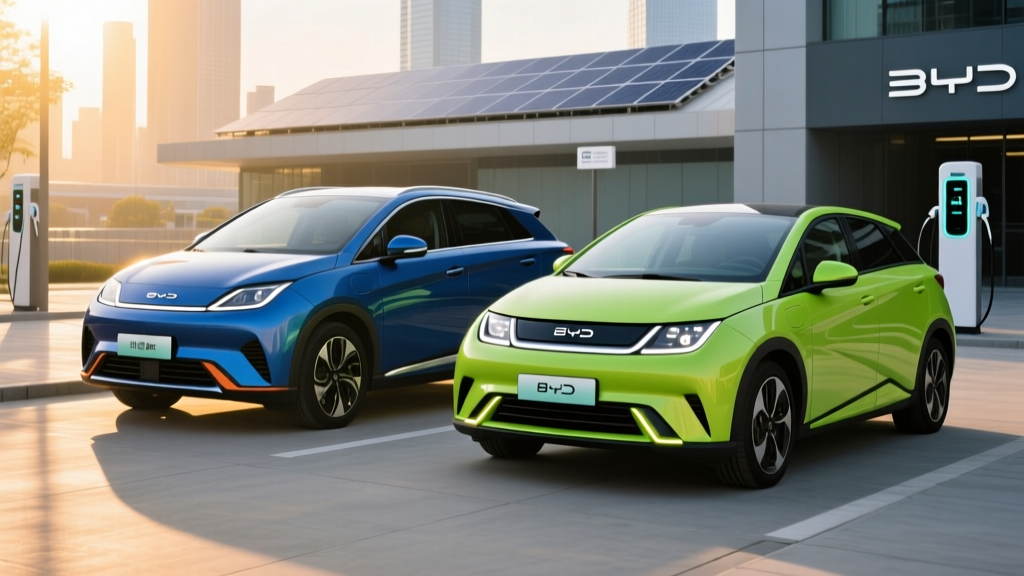
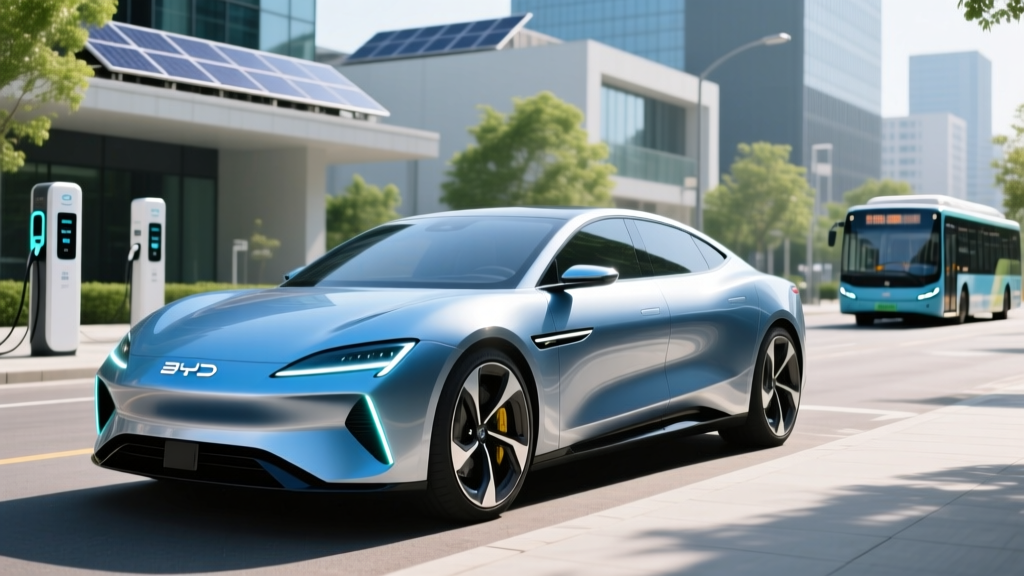
BYD's passenger lineup spans affordable compacts to premium sedans and SUVs, all built on the company's proprietary e-Platform 3.0 architecture and powered by its signature Blade Battery — a lithium iron phosphate (LFP) cell design known for thermal stability and longevity. Below is a snapshot of key models and their approximate pricing in major markets as of early 2026.
| Model | Body Style | Battery (kWh) | WLTP Range | Australia (AUD) | UK (£) | Europe (€) |
|---|---|---|---|---|---|---|
| Dolphin | Hatchback | 60.4 | 265 mi / 427 km | ~$39,000 | ~£29,500 | ~€33,000 |
| Atto 3 (Yuan Plus) | Compact SUV | 60.4 | 260 mi / 420 km | ~$48,000 | ~£37,500 | ~€38,000 |
| Seal | Sedan | 82.5 | 354 mi / 570 km | ~$55,000 | ~£46,000 | ~€47,500 |
| Seal U (Song Plus) | Mid-size SUV | 87.0 | 311 mi / 500 km | ~$56,000 | ~£42,000 | ~€44,000 |
| Han EV | Full-size sedan | 85.4 | 323 mi / 521 km | ~$72,000 | — | ~€72,000 |
Note: WLTP range figures are typically 10–15% higher than US EPA estimates. A WLTP-rated 354-mile BYD Seal would likely achieve an EPA-estimated ~300–310 miles if sold in the US. Pricing varies by market, trim, and local incentives.
Deep Dive: BYD Atto 3 — The Global Bestseller
The BYD Atto 3 (known as the Yuan Plus in China) is the brand's most exported model and the one most frequently compared to vehicles US buyers actually can purchase. Here's a detailed spec breakdown based on the Extended Range variant.
| Spec | Value |
|---|---|
| Battery Capacity | 60.4 kWh usable (LFP Blade Battery) |
| WLTP Range | 260 mi / 420 km (~225–235 mi EPA-estimated equivalent) |
| Motor Output | 201 hp / 150 kW, 229 lb-ft torque |
| Drivetrain | Front-wheel drive (single motor) |
| 0–100 km/h (0–62 mph) | 7.3 seconds |
| DC Fast Charge (peak) | 88 kW (CCS2 in Europe/Australia) |
| 10–80% DC Charge Time | ~29 minutes |
| AC Level 2 Charge Rate | 7 kW (single-phase) / 11 kW (three-phase, Europe) |
| Length / Width / Height | 174.8" / 72.2" / 65.4" |
| Cargo Volume | 15.6 cu ft (rear seats up) / 46.7 cu ft (rear seats folded) |
| Wheelbase | 107.1" |
| Curb Weight | ~3,748 lbs / 1,700 kg |
Charging Speeds: Where BYD Falls Short of Rivals
Charging speed is where BYD's global models reveal their most significant competitive gap. The Atto 3's peak DC fast-charge rate of 88 kW is modest by 2026 standards. Compare this to rivals US buyers can actually purchase:
| Vehicle | Peak DC kW | 10–80% Time | Market |
|---|---|---|---|
| BYD Atto 3 | 88 kW | ~29 min | Global (not US) |
| Hyundai IONIQ 5 (2026) | 240 kW | ~18 min | US |
| Tesla Model Y (2026) | 250 kW | ~20 min | US |
| Chevrolet Equinox EV (2026) | 150 kW | ~24 min | US |
| Volkswagen ID.4 (2026) | 175 kW | ~25 min | US |
The Atto 3's 88 kW peak means road trips require longer stops — roughly 10–12 extra minutes per session compared to an IONIQ 5 or Model Y. For daily Level 2 home charging, the 7–11 kW AC rate is adequate (adding roughly 25–38 miles of range per hour), but the DC fast-charge limitation is a meaningful trade-off for the price savings BYD offers in export markets.
The BYD Seal sedan performs better, with a peak DC rate of 150 kW on its 82.5 kWh pack, achieving a 10–80% charge in approximately 26 minutes. Still, it trails the Hyundai IONIQ 6 (up to 350 kW via 800V architecture) and Porsche Taycan in raw charging throughput.
Battery Chemistry: The LFP Advantage and Trade-Offs
Every BYD passenger vehicle uses the company's proprietary Blade Battery, which employs lithium iron phosphate (LFP) chemistry arranged in a cell-to-pack (CTP) design. This is a defining technical choice with real ownership implications.
| Attribute | LFP (BYD Blade Battery) | NMC (Most US-market EVs) |
|---|---|---|
| Energy Density | Lower (~150–170 Wh/kg cell-level) | Higher (~220–260 Wh/kg cell-level) |
| Cycle Life | 3,000–5,000+ cycles to 80% SoH | 1,000–2,000 cycles to 80% SoH |
| Thermal Stability | Excellent — passes nail penetration test | Good but requires more active thermal management |
| 100% Charging | Recommended periodically for BMS calibration | Generally limited to 80–90% for daily use |
| Cold-Weather Performance | More range loss in freezing temps (~30–40%) | Moderate range loss (~20–30%) |
| Cobalt / Nickel | None — lower supply-chain ethics risk | Contains cobalt and/or nickel |
| Cost | Lower raw material cost | Higher raw material cost |
The practical takeaway: BYD's LFP Blade Battery is arguably the most durable and safest mass-market EV battery in production. The trade-off is lower energy density (meaning a heavier, physically larger pack for the same range) and more significant range loss in cold climates. For buyers in warm or temperate regions — which covers most of BYD's export markets — this is a favorable trade. For cold-climate buyers, it's a legitimate concern.
US Availability and the Tariff Barrier
As of 2026, BYD has no announced plans to sell passenger vehicles in the United States. The company's US presence is limited to:
- Commercial electric buses and trucks — BYD manufactures electric transit buses at a facility in Lancaster, California, though this operation has faced political and regulatory challenges.
- Battery supply chain — BYD is a major global supplier of LFP cells, and some US-market products (including certain energy storage systems) use BYD-manufactured battery components.
The 100% tariff on Chinese-built EVs, enacted under Section 301 and maintained through 2026, effectively doubles the import cost of any BYD passenger vehicle. Even if BYD established a US assembly plant — as it has done in Thailand, Brazil, Hungary, and Indonesia — the political climate and IRS §30D battery-sourcing requirements (which explicitly exclude vehicles with battery components from "foreign entities of concern," a designation that includes Chinese manufacturers) would make federal tax credit eligibility virtually impossible.
This means that even in a hypothetical scenario where a BYD Atto 3 were sold in the US at, say, $32,000 MSRP, it would almost certainly not qualify for the $7,500 federal EV tax credit due to battery-sourcing rules. The effective price gap between BYD and US-market competitors narrows considerably once incentives are factored in.
What US Buyers Should Consider Instead
If BYD's value proposition — affordable pricing, LFP durability, practical range — appeals to you, several US-market vehicles deliver a similar ownership profile with full warranty support, tax credit eligibility, and domestic charging infrastructure compatibility.
✅ BYD Atto 3 Equivalent: Chevrolet Equinox EV
- Base MSRP: ~$33,600 (2026)
- EPA Range: up to 319 miles (LT2 FWD)
- Battery: ~85 kWh (NMC, Ultium platform)
- DC Fast Charge: 150 kW peak, 10–80% in ~24 min
- Federal tax credit: Eligible (verify income/MSRP caps on IRS.gov)
- NACS port (native Tesla Supercharger access)
✅ BYD Seal Equivalent: Hyundai IONIQ 6
- Base MSRP: ~$39,250 (2026)
- EPA Range: up to 361 miles (SE Long Range RWD)
- Battery: 77.4 kWh (NMC)
- DC Fast Charge: 350 kW peak (800V), 10–80% in ~18 min
- Federal tax credit: Eligibility varies by battery sourcing — confirm at purchase
- Superior highway efficiency and charging speed
BYD Strengths (Global Markets)
- Best-in-class LFP battery longevity and safety
- Competitive pricing vs. European/Japanese rivals abroad
- Strong build quality and infotainment (12.8" rotating screen)
- Generous standard equipment (heat pump, V2L, ADAS suite)
- 6-year/150,000 km vehicle warranty + 8-year/160,000 km battery warranty (varies by market)
BYD Weaknesses (For US Buyers)
- Not available for US purchase — no dealer network, no service centers
- DC fast-charging speeds lag behind 2026 competitors (88–150 kW vs. 240–350 kW)
- CCS2 connector in export markets — incompatible with US NACS/CCS1 infrastructure
- No federal tax credit eligibility under §30D battery-sourcing rules
- Cold-weather range loss more pronounced with LFP chemistry
- ADAS features (BYD Pilot) not validated to US NHTSA/IIHS standards
The Bottom Line on BYD Car Cost for US Buyers
BYD makes compelling, well-priced electric vehicles for global markets. The Atto 3 at roughly €38,000 in Europe or AUD $48,000 in Australia undercuts many rivals while offering excellent battery longevity. The Seal sedan competes credibly with the Tesla Model 3 and BMW i4 on range and interior quality.
But for US-based shoppers, the BYD car cost is effectively a theoretical exercise. Tariffs, battery-sourcing exclusions, and the absence of a dealer network mean these vehicles are not purchasable — and even if they were, the total ownership picture (no tax credit, CCS2 connector incompatibility, limited service options) would erode the sticker-price advantage. US buyers are better served by vehicles like the Equinox EV, IONIQ 5/6, or Tesla Model Y, which offer competitive pricing after incentives, faster charging, NACS compatibility, and full domestic support.
If BYD's global expansion eventually includes a US manufacturing footprint — as the company has hinted for Latin America and Europe — that calculus could change. Until then, monitor BYD's international moves as industry benchmarking, not as a near-term purchase option.
Frequently Asked Questions
Can I import a BYD vehicle to the United States?
Practically, no. Importing a non-US-certified vehicle requires EPA and NHTSA compliance modifications that are prohibitively expensive for individual buyers. Additionally, the 100% Section 301 tariff applies to Chinese-manufactured EVs at the port of entry, effectively doubling the vehicle's cost before any modifications.
Does BYD qualify for the $7,500 federal EV tax credit?
Even hypothetically, no. Under IRS §30D rules, vehicles containing battery components manufactured by a "foreign entity of concern" (FEOC) — a designation that includes Chinese companies — are disqualified from the credit beginning in 2024 (components) and 2025 (critical minerals). BYD's vertically integrated supply chain, which sources and manufactures battery cells and minerals in China, would not meet these requirements.
How does BYD's Blade Battery compare to Tesla's LFP packs?
Tesla sources LFP cells primarily from CATL for Standard Range Model 3/Y vehicles. Both CATL and BYD produce high-quality LFP cells with excellent cycle life. BYD's Blade Battery uses a unique cell-to-pack structural design that improves pack-level energy density and passes rigorous nail-penetration safety testing. In practice, both chemistries offer similar longevity (3,000+ cycles) and recommend periodic 100% charging for BMS calibration. The main difference is that Tesla's US-market LFP vehicles benefit from the Supercharger network and available tax credits.
What is BYD's warranty coverage?
Warranty terms vary by market. In Europe and Australia, BYD typically offers a 6-year/150,000 km (93,000 mi) vehicle warranty and an 8-year/160,000 km (100,000 mi) battery warranty with a capacity retention threshold of 70%. This is competitive with global norms but slightly below the US-standard 8-year/100,000-mile battery warranty mandated for EPA-certified EVs.
Will BYD ever sell cars in the US?
BYD executives have stated publicly that US passenger vehicle sales are not a near-term priority, citing the tariff environment and geopolitical complexity. The company is instead investing heavily in manufacturing plants in Thailand, Brazil, Indonesia, Hungary, and Turkey to serve regional markets. A US entry before 2028–2030 appears unlikely barring significant changes in trade policy.
How does BYD's range compare on the EPA cycle vs. WLTP?
WLTP range figures (used in Europe, Australia, and most export markets) are generally 10–15% more optimistic than US EPA estimates. The BYD Seal's 570 km (354 mi) WLTP rating would likely translate to approximately 300–310 miles EPA-estimated. The Atto 3's 420 km (260 mi) WLTP figure would land around 225–235 miles EPA. Real-world highway driving at sustained speeds of 70+ mph typically reduces these figures by another 10–15%.