BYD's Canadian Expansion: What's Actually on Sale in 2026
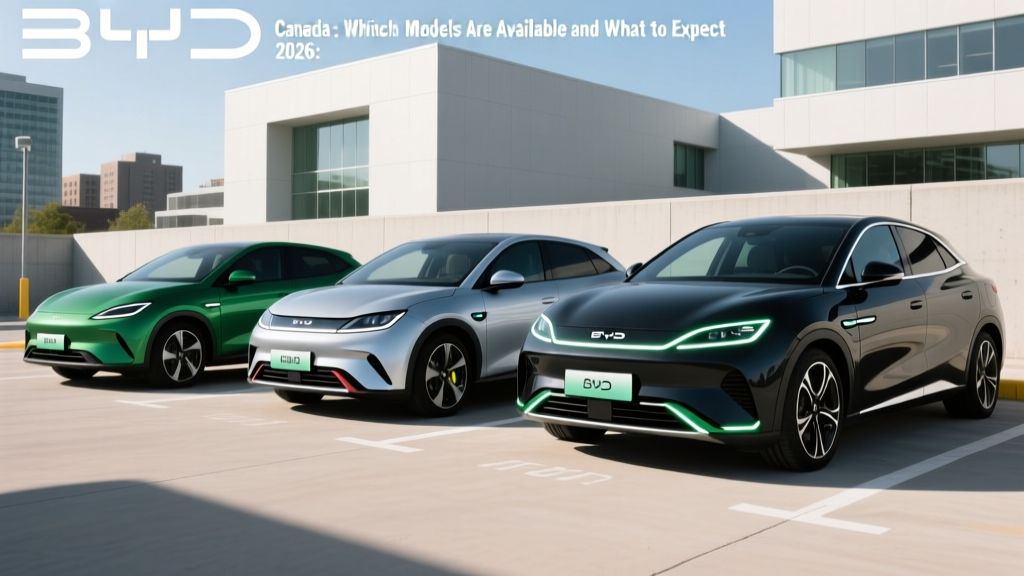
BYD finally crossed into the Canadian market in late 2024 after years of speculation, and by the 2026 model year, the Chinese automaker has established a modest but competitive showroom presence. If you've been searching for information on Canada BYD availability, this guide breaks down every model currently sold north of the border, with exact range figures, charging data, and pricing — plus honest assessments of where BYD succeeds and where it falls short against established rivals like Tesla, Hyundai, and Volkswagen.
Unlike BYD's aggressive European rollout, the Canadian launch has been measured. Three models anchor the lineup: the BYD Seal sedan, the BYD Atto 3 compact SUV, and the BYD Dolphin hatchback. All three ride on BYD's e-Platform 3.0 architecture and use the company's proprietary Blade Battery (LFP chemistry). Let's examine each one with the data-driven detail EV buyers need.
2026 BYD Seal: The Tesla Model 3 Challenger
The BYD Seal is a midsize electric sedan positioned squarely against the Tesla Model 3 and Hyundai Ioniq 6. It's BYD's flagship passenger car in Canada and the model most likely to appear in Canadian EV discussions.
| Attribute | Design (RWD) | Excellence (AWD) |
|---|---|---|
| Base MSRP | $48,900 CAD | $58,500 CAD |
| Battery (usable) | 82.5 kWh (LFP Blade) | 82.5 kWh (LFP Blade) |
| EPA Range | 340 mi (547 km) | 305 mi (491 km) |
| Efficiency | 118 MPGe / 28 kWh/100mi | 109 MPGe / 31 kWh/100mi |
| 0–60 mph | 5.9 sec | 3.8 sec |
| Horsepower | 308 hp | 523 hp |
| Drivetrain | RWD single motor | AWD dual motor |
| Max DC Charge Rate | 150 kW | 150 kW |
| 10–80% DCFC Time | ~26 min | ~26 min |
| Level 2 Home Charge | 11 kW (~35 mi/hr) | 11 kW (~35 mi/hr) |
| Cargo Volume | 14.1 cu ft (trunk) + 1.8 cu ft (frunk) | 14.1 cu ft + 1.8 cu ft |
| Rear Legroom | 37.0 in | 37.0 in |
| Battery Warranty | 8 yr / 160,000 km | 8 yr / 160,000 km |
Seal Charging Deep-Dive
The Seal's 150 kW peak DC fast-charge rate is adequate but not class-leading. Competitors like the Hyundai Ioniq 6 (up to 240 kW on 800V architecture) and Tesla Model 3 Highland (up to 250 kW) charge noticeably faster. The Seal's charge curve is relatively flat between 20–60% SoC, then tapers sharply above 80% — a characteristic of LFP chemistry, which requires careful top-end balancing. For daily driving, Level 2 home charging at 11 kW fully replenishes the 82.5 kWh pack in about 8.5 hours, which suits overnight top-ups well.
Seal Tech and Driver Assistance
The Seal features a 15.6-inch rotating center display (portrait or landscape), a 10.25-inch digital instrument cluster, and BYD's DiLink infotainment system. Wireless Apple CarPlay and Android Auto are standard. The driver-assistance suite includes adaptive cruise control, lane-centering assist, blind-spot monitoring, and a 360-degree camera. This is an SAE Level 2 system — the driver must remain fully engaged at all times. It is not self-driving.
2026 BYD Atto 3: The Compact Electric SUV
The Atto 3 (known as the Yuan Plus in China) is BYD's volume play in Canada — a compact crossover competing with the Hyundai Kona Electric, Kia Niro EV, and Volvo EX30.
| Attribute | Standard Range | Extended Range |
|---|---|---|
| Base MSRP | $42,900 CAD | $47,900 CAD |
| Battery (usable) | 49.9 kWh (LFP Blade) | 60.5 kWh (LFP Blade) |
| EPA Range | 215 mi (346 km) | 262 mi (422 km) |
| Efficiency | 120 MPGe / 28 kWh/100mi | 115 MPGe / 29 kWh/100mi |
| 0–60 mph | 7.3 sec | 7.3 sec |
| Horsepower | 201 hp | 201 hp |
| Drivetrain | FWD single motor | FWD single motor |
| Max DC Charge Rate | 80 kW | 88 kW |
| 10–80% DCFC Time | ~34 min | ~29 min |
| Level 2 Home Charge | 7 kW (~22 mi/hr) | 7 kW (~22 mi/hr) |
| Cargo Volume | 15.6 cu ft (rear up) / 47.3 cu ft (rear folded) | 15.6 / 47.3 cu ft |
| Rear Legroom | 36.2 in | 36.2 in |
| Battery Warranty | 8 yr / 160,000 km | 8 yr / 160,000 km |
Atto 3: Charging Reality
The Atto 3's sub-90 kW DC fast-charge ceiling is its weakest competitive metric. On a road trip from Toronto to Montreal, you'll spend 30–35 minutes per stop while an Ioniq 5 or Tesla Model Y driver might stop for 18–20 minutes. For owners who charge primarily at home and commute under 80 km daily, this limitation is largely irrelevant. But if you plan regular intercity trips, factor in the slower charging pace.
Atto 3 Interior and Tech
The Atto 3's cabin is where BYD tries to differentiate. The "gym-inspired" interior features dumbbell-shaped air vents, guitar-string door panel accents, and a 12.8-inch rotating touchscreen. It's quirky — some buyers love it, others find it gimmicky. The driver-assist package mirrors the Seal's Level 2 system. Cargo space at 15.6 cu ft trails the Kona Electric (17.4 cu ft) but beats the Niro EV (14.9 cu ft).
2026 BYD Dolphin: The Budget EV Hatchback
The Dolphin is BYD's entry point into the Canadian market — a subcompact hatchback aimed at urban commuters and second-car buyers who want the lowest possible EV purchase price.
| Attribute | Essential | Comfort |
|---|---|---|
| Base MSRP | $34,900 CAD | $38,900 CAD |
| Battery (usable) | 44.9 kWh (LFP Blade) | 60.5 kWh (LFP Blade) |
| EPA Range | 186 mi (299 km) | 253 mi (407 km) |
| Efficiency | 121 MPGe / 27 kWh/100mi | 113 MPGe / 30 kWh/100mi |
| 0–60 mph | 8.2 sec | 7.0 sec |
| Horsepower | 94 hp | 201 hp |
| Drivetrain | FWD single motor | FWD single motor |
| Max DC Charge Rate | 65 kW | 88 kW |
| 10–80% DCFC Time | ~38 min | ~29 min |
| Level 2 Home Charge | 7 kW (~22 mi/hr) | 7 kW (~22 mi/hr) |
| Cargo Volume | 12.2 cu ft (rear up) / 36.5 cu ft (rear folded) | 12.2 / 36.5 cu ft |
| Rear Legroom | 34.6 in | 34.6 in |
| Battery Warranty | 8 yr / 160,000 km | 8 yr / 160,000 km |
Federal Tax Credit Eligibility: Does BYD Qualify in Canada?
This is the section where many Canada BYD searches hit a wall. Here's the straightforward answer: BYD vehicles sold in Canada do not qualify for the U.S. federal §30D tax credit, because that credit applies only to U.S. taxpayers purchasing vehicles for use in the United States, subject to MSRP caps, income limits, and battery-sourcing requirements detailed on IRS.gov.
For Canadian buyers, the relevant incentives are:
- Federal iZEV Program: Canada's Transport Canada incentive offers up to $5,000 CAD for eligible battery-electric vehicles with a base MSRP under $55,000 CAD (sedans/hatchbacks) or $60,000 CAD (SUVs/pickups). As of early 2026, the BYD Dolphin (both trims) and Atto 3 Standard Range qualify. The Atto 3 Extended Range and Seal may exceed the MSRP cap depending on final Transport Canada classification — verify at Transport Canada's iZEV eligibility list.
- Provincial Rebates: Quebec offers up to $7,000 CAD through its Roulez vert program; British Columbia's CleanBC Go Electric rebate provides up to $4,000 CAD (income-tested). Other provinces vary. These stack with the federal iZEV rebate.
- U.S. Cross-Border Buyers: If you're a U.S. resident near the Canadian border researching BYD, note that BYD does not currently sell vehicles in the United States. Importing a Canadian-market BYD to the U.S. would not qualify for the §30D credit and would face homologation and tariff complications.
| Model | Base MSRP | Federal iZEV | Quebec Rebate (max) | Approx. Net Price (QC) |
|---|---|---|---|---|
| Dolphin Essential | $34,900 | –$5,000 | –$7,000 | ~$22,900 CAD |
| Dolphin Comfort | $38,900 | –$5,000 | –$7,000 | ~$26,900 CAD |
| Atto 3 Standard | $42,900 | –$5,000 | –$7,000 | ~$30,900 CAD |
| Atto 3 Extended | $47,900 | Pending* | Pending* | TBD |
| Seal Design | $48,900 | Pending* | Pending* | TBD |
*MSRP cap eligibility pending final Transport Canada vehicle-class classification. Verify before purchase.
BYD vs. the Competition: Who Wins Where?
Seal vs. Tesla Model 3
Seal wins: Lower starting price, more rear-seat legroom, standard 360° camera, LFP battery included at base trim.
Model 3 wins: Superior Supercharger network access, faster DC charging (250 kW), longer EPA range (363 mi), higher resale value, more established Canadian service network.
Atto 3 vs. Hyundai Kona Electric
Atto 3 wins: Lower base price, more distinctive interior design.
Kona Electric wins: Faster DC charging (100+ kW), longer EPA range (261 mi for similar battery), more Canadian dealerships, proven long-term reliability track record.
BYD's Blade Battery: LFP Chemistry Explained
Every BYD sold in Canada uses the company's Blade Battery, a lithium iron phosphate (LFP) cell arranged in a cell-to-pack structural design. Here's what that means for Canadian owners:
| Factor | LFP (BYD Blade) | NMC (most competitors) |
|---|---|---|
| Energy Density | Lower — heavier pack for same kWh | Higher — lighter, more range per kg |
| Cycle Life | 3,000+ full cycles to 80% SoH | 1,500–2,000 cycles to 80% SoH |
| Cold Performance | Weaker below –10°C; slower charge acceptance | Better cold-weather charge/discharge |
| Thermal Stability | Superior — very low thermal runaway risk | Good but requires more active management |
| Recommended SoC | Can charge to 100% daily | Best kept 20–80% for longevity |
| Cost | Lower per kWh — enables cheaper vehicles | Higher per kWh |
For Canadian buyers, the LFP cold-weather trade-off is the most consequential. In temperatures below –10°C, LFP cells exhibit higher internal resistance, which reduces regenerative braking effectiveness and slows DC fast-charging speeds. BYD's battery thermal management system mitigates this with preconditioning — always activate battery preconditioning 15–20 minutes before arriving at a DC fast charger in winter. This warms the pack and restores charge acceptance closer to rated kW levels.
Who Should Buy a BYD in Canada?
Choose BYD if:
- You live in Quebec or BC where stacked provincial + federal rebates bring the Dolphin under $25,000 CAD
- Your daily commute is under 80 km and you charge at home every night
- You value LFP battery longevity and plan to keep the car 8+ years
- You want a distinctive interior design that stands apart from the Tesla/Hyundai mainstream
Look elsewhere if:
- You take frequent long road trips and need the fastest possible DC charging
- You live in a region with harsh winters (–20°C or below) and need maximum cold-weather range
- You want an extensive dealer/service network within 50 km of your home
- Resale value certainty matters — BYD's Canadian residual values are unproven
Frequently Asked Questions
What is the real-world range of BYD vehicles in Canadian winters?
Expect a 25–35% range reduction in sustained sub-zero temperatures. The Seal Design drops from 340 EPA miles to roughly 230–260 miles. The Atto 3 Extended Range falls from 262 to about 175–200 miles. Always precondition the battery and use seat/steering wheel heaters instead of cabin heat when possible to minimize losses.
How fast do BYD vehicles charge at home and on the road?
At home on a Level 2 (240V) charger, the Seal adds about 35 miles of range per hour at 11 kW, while the Atto 3 and Dolphin add about 22 miles per hour at 7 kW. On DC fast chargers, the Seal peaks at 150 kW (10–80% in ~26 min), the Atto 3 at 80–88 kW (29–34 min), and the Dolphin at 65–88 kW (29–38 min). These are competitive for LFP packs but slower than 800V NMC competitors.
Does BYD qualify for any Canadian EV rebates?
Yes — the federal iZEV program offers up to $5,000 CAD, and Quebec's Roulez vert adds up to $7,000 CAD, for a combined potential savings of $12,000 CAD on eligible trims. Verify each trim's eligibility on Transport Canada's official list before purchasing, as MSRP classification can change.
Is BYD reliable? What about the warranty?
BYD offers an 8-year / 160,000 km battery and powertrain warranty in Canada, matching the industry standard. The LFP Blade Battery is expected to degrade less than NMC packs over the same period — BYD claims less than 10% capacity loss over 1,000,000 km in lab testing. However, real-world Canadian longevity data is still limited since sales began in late 2024. BYD's Canadian service network is growing but remains sparse outside major metro areas.
Can I charge a BYD at Tesla Superchargers in Canada?
As of 2026, BYD vehicles in Canada use the CCS2 connector standard. Tesla's Canadian Supercharger network has opened to non-Tesla vehicles at select locations via the built-in Magic Dock adapter or the Tesla app. However, coverage is limited. For reliable public charging, plan routes around Electrify Canada, Petro-Canada Charge, and Flo networks.
Is it worth buying a BYD vs. a Tesla or Hyundai in Canada?
The BYD Dolphin at under $23,000 CAD (after QC incentives) is one of the most affordable new EVs available in Canada — that's a genuine value proposition. The Seal and Atto 3 are competitive but don't dramatically undercut rivals once you factor in slower charging, limited service centers, and unproven resale values. If price is your top priority and your driving is mostly local, BYD's Canadian lineup deserves serious consideration. If you need road-trip flexibility and a mature service network, Tesla and Hyundai still hold the edge.