BYD's global expansion has been one of the most significant automotive stories of the decade. While the Chinese automaker sells millions of vehicles domestically, its international footprint has grown dramatically. For US-based EV shoppers and global auto analysts alike, understanding BYD's biggest market outside China reveals where the company's vehicles are resonating most — and whether those models might eventually reach American driveways.
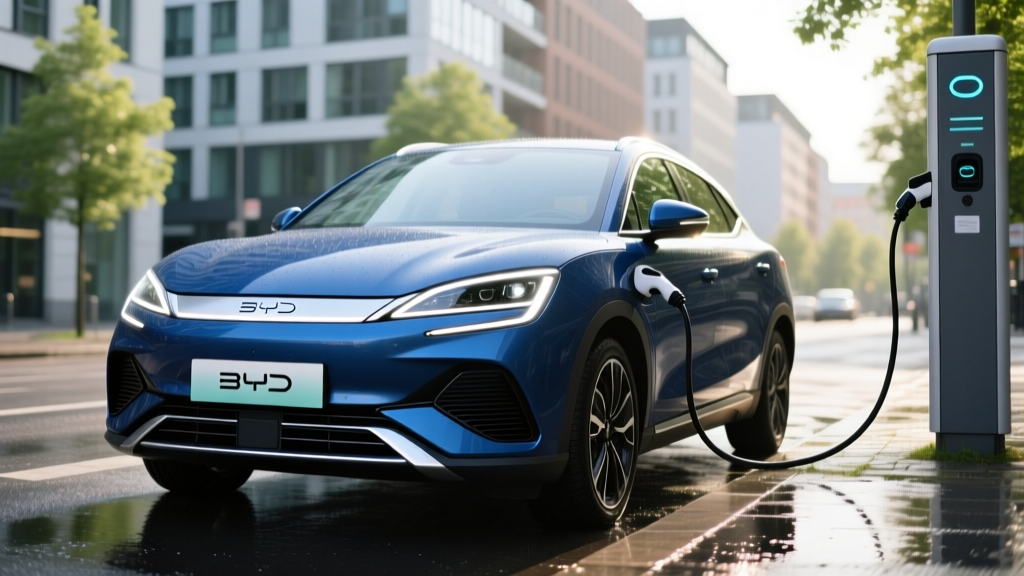
As of early 2026, Brazil has emerged as BYD's largest single-country market outside of China, followed closely by Thailand, Australia, and several European nations. The BYD Atto 3 (sold as the Yuan Plus in China) has been the spearhead of this expansion — a compact electric crossover that undercuts Western rivals on price while delivering competitive range and tech. This review profiles the Atto 3's global specs and examines what its dominance in markets like Brazil tells us about BYD's strategy.
BYD Atto 3: Global Spec Overview
The Atto 3 is built on BYD's e-Platform 3.0 and uses the company's proprietary Blade Battery — a lithium iron phosphate (LFP) cell architecture known for thermal stability and long cycle life. Here are the key specifications based on the most widely exported variant:
| Specification | BYD Atto 3 (Extended Range) |
|---|---|
| Battery Capacity | 60.48 kWh (usable), LFP Blade |
| WLTP Range | 261 miles (420 km) |
| EPA-Est. Range (projected) | ~225–235 miles* |
| Motor Output | 201 hp (150 kW), 229 lb-ft torque |
| Drivetrain | FWD, single motor |
| 0–60 mph | 7.3 seconds |
| Max DC Fast Charge | 88 kW (peak) |
| 10–80% DC Charge Time | ~29 minutes |
| Level 2 AC Charge Rate | 7 kW (~25 miles/hr) |
| Efficiency (WLTP) | ~3.7 mi/kWh (~16 kWh/100 km) |
| Cargo Volume | 15.6 cu ft (rear seats up), 47.6 cu ft (folded) |
| Rear Legroom | 36.2 inches |
| Base MSRP (Global Avg) | ~$30,000–$35,000 USD equivalent |
| Battery Warranty | 8 years / 100,000 miles (market dependent) |
*The Atto 3 is not currently sold in the United States and therefore has no official EPA range rating. The projected figure above is estimated based on the typical 10–15% reduction from WLTP to EPA testing cycles.
Where BYD Sells the Most Cars Outside China
Understanding BYD's biggest market outside China requires looking at both volume and strategic importance. Here's how the major export markets stacked up through 2025 and into 2026:
- Brazil: BYD's top single-country export market. The company sold over 55,000 vehicles in Brazil in 2024 and has since opened a local manufacturing plant in Camaçari (formerly a Ford facility) to produce the Dolphin, Atto 3, and King pickup locally — bypassing Brazil's 35% import tariff on EVs.
- Thailand: BYD's Southeast Asian hub. The Atto 3 was the best-selling EV in Thailand in 2023–2024, and BYD opened its first factory outside China in Rayong province in mid-2024.
- Australia: The Atto 3 was the top-selling EV in Australia in 2023 and remained a top-three EV through 2025, competing with the Tesla Model Y and MG4.
- Europe (UK, Germany, Sweden, Norway): BYD has established dealer networks and is selling the Atto 3, Dolphin, Seal, and Han across multiple EU and UK markets.
- Israel, UAE, Singapore: Strong per-capita adoption; the Atto 3 has been a segment leader in Israel.
Brazil's combination of high volume, local manufacturing investment, and a growing charging infrastructure network makes it BYD's most strategically significant market outside China heading into 2026.
Charging Speed and Infrastructure Compatibility
The Atto 3's 88 kW peak DC fast-charge rate is modest by 2026 standards, where competitors like the Hyundai Ioniq 5 (240 kW peak) and Tesla Model Y (250 kW peak) charge substantially faster. However, 88 kW is adequate for the markets where the Atto 3 primarily sells — many of which have 50–150 kW public chargers rather than 350 kW stations.
| Charging Method | Rate | Miles Added per Hour | Notes |
|---|---|---|---|
| Level 1 (120V household) | ~1.4 kW | ~4–5 mi/hr | Emergency/trickle only |
| Level 2 (240V home/public) | 7 kW | ~25 mi/hr | Full charge in ~9 hours |
| DC Fast Charge (peak) | 88 kW | ~180 mi/hr (peak) | 10–80% in ~29 min; tapers significantly above 80% |
The LFP Blade Battery's charge curve is relatively flat from 10% to about 60% SoC, then tapers gradually. Unlike NMC packs that may sustain peak kW to 50% and then drop sharply, the Atto 3's LFP chemistry provides a more predictable — if unspectacular — charging experience. For daily home charging on Level 2, the 7 kW rate means a full overnight replenishment is easily achievable.
Connector note: Export-market Atto 3 vehicles use CCS2 (Europe, Australia, Brazil) or GB/T (China). The vehicle is not available with a NACS connector, which is relevant for any future US introduction.
Performance and Driving Dynamics
The Atto 3's 201 hp single front motor delivers adequate acceleration for urban and suburban use. The 7.3-second 0–60 mph time places it behind the Tesla Model Y RWD (~5.8 sec) and Hyundai Kona Electric (~6.5 sec), but ahead of several budget-oriented competitors. The FWD layout means no torque-vectoring or all-weather traction advantage — a consideration for buyers in snowy climates.
Ride quality is tuned for comfort over sportiness. The multi-link rear suspension absorbs bumps well, and the low center of gravity from the floor-mounted Blade Battery provides confident cornering. Road noise is noticeable at highway speeds — an area where the Atto 3 trails more refined competitors like the Volkswagen ID.4 and Tesla Model Y.
Regenerative braking offers two levels (Normal and High) but does not enable true one-pedal driving. The High setting provides moderate deceleration but still requires the brake pedal for complete stops — a frustration for drivers accustomed to Nissan Leaf or Chevrolet Bolt-style one-pedal operation.
Interior, Tech, and Standout Features
The Atto 3's cabin is where BYD makes its most distinctive design statement. The "gym-inspired" interior features dumbbell-shaped air vents, muscle-fiber-textured door panels, and guitar-string-style storage nets. It's polarizing — some buyers find it playful and fresh, others see it as gimmicky.
Key tech features:
- 12.8-inch rotating center touchscreen (portrait or landscape mode)
- 5.0-inch digital instrument cluster
- Wireless Apple CarPlay and Android Auto
- 360-degree surround-view camera
- Wireless phone charging pad
- Panoramic glass roof (no shade — a heat concern in warm climates)
- Vehicle-to-Load (V2L) capability — power external devices up to 2.2 kW via adapter
Driver assistance (Level 2 SAE): The Atto 3 includes adaptive cruise control, lane-keeping assist, automatic emergency braking, blind-spot monitoring, and rear cross-traffic alert. These systems function competently but lack the sophistication of Tesla Autopilot, Ford BlueCruise, or GM Super Cruise. Lane-keeping can be overly aggressive, and adaptive cruise has a noticeable delay in stop-and-go traffic.
Pricing, Tax Credits, and Global Availability
The Atto 3 is not currently sold in the United States. BYD has not announced plans for a US passenger-vehicle launch, citing geopolitical tensions, tariff barriers (the US imposes a 100% tariff on Chinese-made EVs as of 2024), and the complexity of establishing a dealer network. Therefore, the federal §30D EV tax credit is not applicable.
For reference, here's how the Atto 3 is priced in key export markets (converted to USD, early 2026):
| Market | Trim | Local Price | USD Equivalent | Local Incentive |
|---|---|---|---|---|
| Brazil | Extended Range | R$ 185,800 | ~$31,500 | IPVA exemption (state dependent) |
| Australia | Extended Range | AUD $48,011 | ~$30,800 | Fringe benefits tax exemption |
| United Kingdom | Design | £ 37,695 | ~$47,500 | £0 VED (road tax) |
| Germany | Comfort | € 38,990 | ~$42,000 | None (subsidy ended 2023) |
| Thailand | Extended Range | THB 899,900 | ~$25,500 | THB 100,000 subsidy |
The wide price variation reflects tariffs, local incentives, and market positioning. In Thailand (where BYD manufactures locally), the Atto 3 is remarkably affordable. In Europe, it's priced closer to competitors like the MG4 and Volkswagen ID.3.
BYD Atto 3 vs. Key Competitors
In the markets where it competes, the Atto 3 faces several strong rivals. Here's how it stacks up against two key benchmarks:
| Spec | BYD Atto 3 (ER) | Hyundai Kona Electric | MG4 EV (Long Range) |
|---|---|---|---|
| Battery | 60.48 kWh LFP | 65.4 kWh NMC | 64 kWh LFP |
| WLTP Range | 261 mi | 300 mi | 281 mi |
| DC Fast Charge (peak) | 88 kW | 100 kW | 140 kW |
| 0–60 mph | 7.3 sec | 7.3 sec | 6.5 sec |
| Horsepower | 201 hp | 201 hp | 204 hp |
| V2L Capability | Yes | Yes | No |
| Approx. Price (AUD) | $48,011 | $59,500 | $44,990 |
The Atto 3 undercuts the Kona Electric significantly on price while offering comparable performance. The MG4 offers faster charging and sportier driving dynamics at a similar price point. The Atto 3's advantages are its V2L capability, distinctive interior, and BYD's vertically integrated supply chain (which helps ensure long-term parts availability).
Pros and Cons
Pros
- Competitive pricing in most export markets
- LFP Blade Battery offers excellent thermal safety and longevity
- Spacious rear seat (36.2" legroom) for the segment
- V2L capability for camping, power outages, or job-site use
- Standard 8-year/100,000-mile battery warranty
- Rotating 12.8" screen is a unique party trick
Cons
- 88 kW peak DC charging is slow by 2026 standards
- FWD only — no AWD option for snow/rain traction
- No heat pump in some markets (winter range penalty)
- Quirky interior design won't appeal to all buyers
- Not available in the United States
- Lane-keeping assist is overly aggressive
- Panoramic glass roof lacks a shade (heat soak in summer)
Who Is the BYD Atto 3 Best For?
The Atto 3 is best suited for urban and suburban commuters in markets where it's available — particularly buyers who prioritize value, interior space, and battery longevity over outright performance or rapid road-trip charging. Its LFP battery chemistry is ideal for owners who plan to keep the vehicle 8+ years, as LFP cells degrade more slowly than NMC under typical use patterns.
It is less ideal for frequent long-distance drivers (the 88 kW charge rate adds time to road trips), those in cold climates without a heat pump, or anyone who needs AWD for winter traction.
Frequently Asked Questions
What is BYD's biggest market outside China?
As of 2025–2026, Brazil is BYD's largest single-country export market by volume, followed by Thailand and Australia. BYD has invested heavily in local manufacturing in both Brazil and Thailand to reduce costs and bypass import tariffs.
Will BYD sell the Atto 3 in the United States?
There are no announced plans for a US launch. The 100% US tariff on Chinese-made EVs (effective 2024) makes it economically unviable for BYD to export vehicles to the US market in the near term. BYD would need to build a US or Mexico-based factory — a significant political and financial undertaking.
Does the BYD Atto 3 qualify for the US federal EV tax credit?
No. Since the Atto 3 is not sold in the US, it is not eligible for the IRS §30D clean vehicle credit. Even if it were sold in the US, the 100% tariff on Chinese-made EVs and the §30D battery-sourcing and critical-minerals requirements would likely disqualify it.
How does the LFP Blade Battery compare to NMC?
LFP (lithium iron phosphate) batteries offer superior thermal stability (much lower fire risk), longer cycle life (3,000+ full cycles vs. ~1,500–2,000 for NMC), and lower cost. The trade-off is lower energy density (heavier for the same kWh) and greater cold-weather range loss. BYD's Blade form factor further enhances safety by using long, thin cells that dissipate heat efficiently.
What is the real-world range of the BYD Atto 3?
Expect roughly 190–210 miles in real-world highway driving in moderate temperatures. In cold weather (below freezing), range may drop to 160–180 miles. City driving with regenerative braking can yield closer to the WLTP-rated 261 miles.
Is the BYD Atto 3 worth buying over the MG4 or Hyundai Kona?
If you prioritize value, interior space, and long-term battery durability, the Atto 3 is a strong choice. If fast charging and driving engagement matter more, the MG4 (140 kW DC) or Kona Electric (longer range) may be better fits. Test-drive all three if available in your market.