Quick Verdict: The Budget-Friendly Compact EV With a Catch
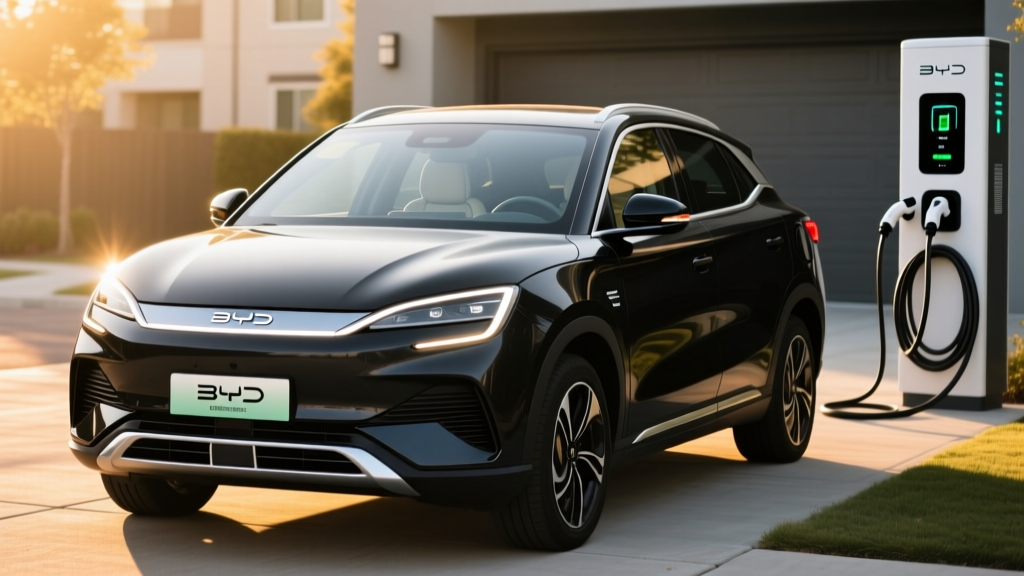
The BYD Atto 3 SUV (sold as the Yuan Plus in China and select other markets) is one of the world's best-selling electric crossovers — and for good reason. It packages a 60.5 kWh lithium iron phosphate (LFP) Blade battery, 201 horsepower, and a spacious cabin into a price point that undercuts most rivals. But for US-based buyers eyeing this model, there's a critical reality check: as of 2026, BYD does not sell the Atto 3 in the United States, and no confirmed US launch timeline exists.
This review covers the Atto 3 SUV as sold in international markets (Europe, Australia, Southeast Asia, Latin America), using WLTP and available real-world testing data. If you're considering an import, evaluating it for a future US debut, or simply benchmarking it against domestic alternatives like the Hyundai Kona Electric, Chevrolet Equinox EV, or Volvo EX30, this is your technical deep-dive.
| Attribute | Value |
|---|---|
| Battery Capacity (Usable) | 60.5 kWh (LFP Blade) |
| WLTP Range | 261 miles (420 km) |
| Estimated EPA-Equivalent Range | ~220–235 miles |
| Efficiency | ~30 kWh/100 mi (~112 MPGe est.) |
| Motor Output | 201 hp / 310 Nm (229 lb-ft) |
| Drivetrain | FWD, single motor |
| 0–62 mph (0–100 km/h) | 7.3 seconds |
| Max DC Fast Charge | 88 kW (CCS2 international) |
| 10–80% DC Charge Time | ~29 minutes |
| Level 2 AC Charge Rate | 7 kW (single-phase) / 11 kW (three-phase) |
| Cargo Volume | 15.6 cu ft (rear seats up) / 47.0 cu ft (folded) |
| Battery Warranty | 8 years / 100,000 miles (varies by market) |
| Starting Price (Europe, approx.) | €38,000 (~$41,000 USD) |
Range & Efficiency: WLTP vs. Real-World Reality
The 60.5 kWh LFP Blade battery is the Atto 3's defining technical feature. BYD's Blade architecture arranges long, thin LFP cells directly into the pack structure, improving volumetric energy density and eliminating the module layer. The result is a structurally robust pack that's resistant to thermal runaway — LFP chemistry is inherently more stable than NMC, though it trades some energy density for that safety advantage.
Efficiency sits around 15.6–16.5 kWh/100 km in mixed WLTP testing, translating to roughly 25–27 kWh/100 miles in real-world mixed driving. That's competitive with the Hyundai Kona Electric (26 kWh/100 mi) but slightly behind the Tesla Model Y RWD (~27 kWh/100 mi with more power and space). Highway efficiency worsens noticeably above 65 mph due to the Atto 3's boxy crossover profile and lack of an active aero package.
The Atto 3 does not offer a heat pump as standard in all markets — check your regional spec. Without a heat pump, cold-weather cabin heating draws directly from the traction battery, compounding range loss. In European-spec models equipped with the optional heat pump, winter range degradation is closer to 18–22% rather than 30%.
Charging Speed: 88 kW Peak, and Why That Matters
The Atto 3's DC fast-charging capability is its most debated specification. Peak charge rate is 88 kW — modest by 2026 standards, where rivals like the Hyundai Ioniq 5 (240 kW peak) and Tesla Model Y (250 kW peak) charge nearly three times faster.
| Charging Level | Power | Speed (Approx.) | Notes |
|---|---|---|---|
| Level 1 (120V household) | ~1.4 kW | ~4–5 mi/hr | Emergency/trickle only |
| Level 2 (240V home) | 7 kW (1-phase) / 11 kW (3-phase) | ~23–36 mi/hr | Full charge in 9–10 hrs (7 kW) |
| DC Fast Charge | 88 kW peak | 10–80% in ~29 min | CCS2 (international); tapers above 80% |
The 10–80% charge time of approximately 29 minutes is adequate for planned road-trip stops but noticeably slower than the 18-minute benchmarks set by 800V-architecture vehicles. The charge curve holds near peak through roughly 55% state of charge, then tapers progressively. Charging from 80–100% adds another 25–30 minutes — standard for LFP chemistry, which requires more careful cell balancing at high SoC.
For home charging, the 7 kW single-phase onboard charger is the bottleneck. A full 0–100% charge takes approximately 9–10 hours. If your market supports three-phase AC (common in Europe, rare in US residences), the 11 kW option cuts that to roughly 6 hours. Either way, overnight charging easily replenishes a day's driving.
Key takeaway: The Atto 3 is optimized for home and destination charging, not corridor fast-charging. If your use case involves frequent 200+ mile road trips, the 88 kW peak will test your patience at rest stops.
Performance & Driving Dynamics
The single front-mounted motor produces 201 horsepower and 229 lb-ft of torque, routing all power to the front wheels. The 0–62 mph time of 7.3 seconds (roughly 7.0 seconds to 60 mph) is brisk for daily driving but not performance-oriented. There is no dual-motor AWD variant of the Atto 3 as of 2026.
Driving dynamics are tuned for comfort over engagement. The suspension absorbs urban bumps well, and the steering is light and predictable. However, the FWD layout and instant electric torque can produce torque steer under hard acceleration from a stop — something you won't encounter in RWD or AWD EV competitors. Regenerative braking offers two levels selectable via the shifter, but the Atto 3 does not support true one-pedal driving (it won't come to a complete stop without brake pedal input).
NVH (noise, vibration, harshness) is a strength. Cabin isolation at highway speeds is competitive with vehicles costing 30% more, with minimal wind noise around the A-pillars and well-suppressed tire roar.
Interior, Tech & Cargo Space
The Atto 3's cabin is where BYD's value proposition becomes tangible. The interior materials, while not premium, are a clear step above the hard-plastic budgets of the Chevrolet Bolt EUV or base Nissan Leaf. A 12.8-inch rotating center touchscreen (it physically rotates between portrait and landscape) runs BYD's DiLink infotainment system with wireless Apple CarPlay and Android Auto.
Cargo and passenger dimensions:
- Cargo volume (rear seats up): 15.6 cu ft
- Cargo volume (rear seats folded): 47.0 cu ft
- Rear legroom: 37.2 inches — generous for the segment
- Front headroom: 39.8 inches
- No front trunk (frunk) — the space is occupied by power electronics
The rear seat is a standout: flat floor (no transmission tunnel), wide cushion, and excellent outward visibility. For a family of four, the Atto 3 offers more usable rear space than the Volvo EX30 and rivals the Hyundai Kona Electric.
Driver assistance (ADAS): The Atto 3 includes a Level 2 driver-assistance suite branded as BYD Pilot — adaptive cruise control with stop-and-go, lane-keeping assist, blind-spot monitoring, and a 360-degree camera. This is a SAE Level 2 system, meaning the driver must remain fully engaged with hands on the wheel and eyes on the road at all times. It is not autonomous driving.
Notable tech drawbacks:
- DiLink software can feel laggy compared to Tesla, Hyundai, or Google-based systems
- No over-the-air (OTA) update capability in all markets
- No native navigation in base trims (relies on phone projection)
- Instrument cluster is a small 5-inch display — oddly undersized for 2026
Pricing & Tax Credit Eligibility
Because BYD does not sell vehicles in the United States as of 2026, there is no US MSRP, and the Atto 3 does not qualify for the IRS §30D federal EV tax credit. The vehicle is not on the IRS list of eligible clean vehicles, and BYD's battery sourcing (manufactured in China) would likely disqualify it under the critical-mineral and battery-component requirements even if it were sold stateside.
International pricing for reference:
- Europe: €38,000–€42,000 depending on market and trim (~$41,000–$45,000 USD)
- Australia: AUD $44,000–$48,000 (~$28,000–$31,000 USD)
- Southeast Asia: Pricing varies; roughly $28,000–$35,000 USD equivalent
For US buyers, the practical alternatives at similar effective price points (after the $7,500 federal credit) include:
- Hyundai Kona Electric — EPA 261 mi, 100 kW DC charging, ~$33,000 after credit
- Chevrolet Equinox EV — EPA 319 mi, 150 kW DC charging, ~$33,000 after credit
- Tesla Model Y RWD — EPA 260 mi, 250 kW DC charging, ~$37,500 after credit
- Volvo EX30 — EPA 261 mi, 153 kW DC charging, ~$36,500 after credit
- Vehicle must be on the IRS eligible list (fueleconomy.gov)
- MSRP cap: $55,000 for sedans, $80,000 for SUVs/pickups/vans
- Buyer income cap: $150,000 single / $300,000 joint (modified AGI)
- Battery critical minerals and component sourcing requirements (phasing in through 2026)
- Credit can be transferred to dealer at point of sale for an instant price reduction
- BYD Atto 3: Not eligible — not sold in US, not on IRS list
Warranty & Long-Term Battery Outlook
BYD offers an 8-year / 100,000-mile (160,000 km) warranty on the Blade battery pack in most international markets, with some regions (notably Australia and parts of Europe) extending this to 8 years with no mileage cap. The warranty covers capacity retention below 70% of original — consistent with industry norms.
The LFP chemistry is a long-term ownership advantage. LFP cells typically exhibit slower degradation than NMC, with published cycle-life data suggesting 3,000–5,000+ full cycles before reaching 80% capacity retention. At the Atto 3's 235-mile real-world range, 3,000 cycles equates to roughly 700,000 miles of theoretical battery life — far exceeding the vehicle's likely service life.
LFP does have one trade-off: lower energy density means a heavier pack for the same capacity, and cold-weather performance is slightly worse than NMC without active thermal preconditioning. The Atto 3's battery thermal management system is liquid-cooled, which helps in both hot and cold climates.
Vehicle warranty (bumper-to-bumper) varies by market: 6 years / 93,000 miles (150,000 km) is typical in Europe. Always confirm your local dealer's specific terms.
Pros & Cons
- Competitive pricing undercuts most rivals in international markets
- LFP Blade battery — excellent cycle life and thermal safety
- Spacious rear seat and flat floor for the segment
- Low cabin noise at highway speeds
- Standard ADAS suite (Level 2) across all trims
- Rotating 12.8-inch touchscreen is a conversation starter
- 88 kW DC fast charging is slow for 2026 — road trips suffer
- No AWD option available
- Not sold in the United States; no US service/parts network
- DiLink infotainment lags behind competitors in responsiveness
- No one-pedal driving mode
- Small 5-inch instrument cluster feels outdated
- WLTP range overstates real-world capability vs. EPA-rated rivals
Who Should Consider the BYD Atto 3?
- You live in a market where BYD is sold and serviced (Europe, Australia, Southeast Asia, Latin America)
- Your driving is primarily urban/suburban with reliable home charging
- You prioritize value, rear-seat space, and battery longevity over fast-charging speed
- You want LFP chemistry for long-term degradation peace of mind
- You're a US-based buyer — BYD has no US presence as of 2026
- You take frequent road trips and need 150+ kW DC fast charging
- You want AWD for snow or mountain driving
- You prioritize cutting-edge infotainment and OTA updates
For US buyers, the Atto 3 is a benchmark to measure against, not a purchase option. The Hyundai Kona Electric, Chevrolet Equinox EV, and Tesla Model Y all offer faster charging, EPA-certified range figures, full US warranty support, and federal tax credit eligibility. If BYD enters the US market in the future — potentially through a Mexico-based manufacturing partnership — the Atto 3's value equation could disrupt the compact EV SUV segment. Until then, it remains a compelling "what if" for American EV shoppers.
Frequently Asked Questions
What is the real-world range of the BYD Atto 3?
The WLTP-rated range is 261 miles, but the EPA-equivalent estimate is approximately 220–235 miles. In real-world highway driving at 70 mph, expect 185–210 miles. Cold weather (below freezing) can reduce range to 155–175 miles. The LFP battery's usable capacity of 60.5 kWh and the vehicle's ~27 kWh/100 mi real-world efficiency determine these figures.
How fast does the BYD Atto 3 charge?
DC fast charging peaks at 88 kW, achieving a 10–80% charge in approximately 29 minutes. Level 2 home charging runs at 7 kW (single-phase) for a full charge in about 9–10 hours, or 11 kW (three-phase, where available) for roughly 6 hours. The 88 kW peak is modest by 2026 standards — the Hyundai Kona Electric charges at 100 kW, and the Tesla Model Y at 250 kW.
Does the BYD Atto 3 qualify for the US federal EV tax credit?
No. BYD does not sell the Atto 3 in the United States as of 2026, and the vehicle is not on the IRS §30D eligible vehicle list. Even if sold in the US, its China-sourced battery components and critical minerals would likely fail the §30D sourcing requirements. US buyers should look at credit-eligible alternatives like the Equinox EV, Model Y, or Kona Electric.
Is the BYD Atto 3 worth buying vs. the competition?
In markets where it's sold, yes — it offers exceptional value, a durable LFP battery, and strong rear-seat practicality. However, its 88 kW charging speed and lack of AWD limit its versatility compared to rivals. US buyers cannot purchase it and should cross-shop the Hyundai Kona Electric, Chevrolet Equinox EV, and Tesla Model Y, all of which offer faster charging, EPA-certified range, and federal tax credit eligibility.
How long will the BYD Atto 3's Blade battery last?
BYD warranties the Blade battery for 8 years / 100,000 miles (varies by market) against capacity loss below 70%. LFP chemistry typically supports 3,000–5,000+ charge cycles before significant degradation, which at the Atto 3's range equates to a theoretical 700,000+ miles. Real-world degradation data for the Atto 3 specifically is still accumulating, but LFP packs in BYD's taxi fleets have shown strong longevity.
Does the BYD Atto 3 have a frunk (front trunk)?
No. The space under the hood is occupied by the electric motor, power electronics, and thermal management hardware. All cargo space is in the rear: 15.6 cu ft with seats up, 47.0 cu ft with the 60/40 split rear bench folded.