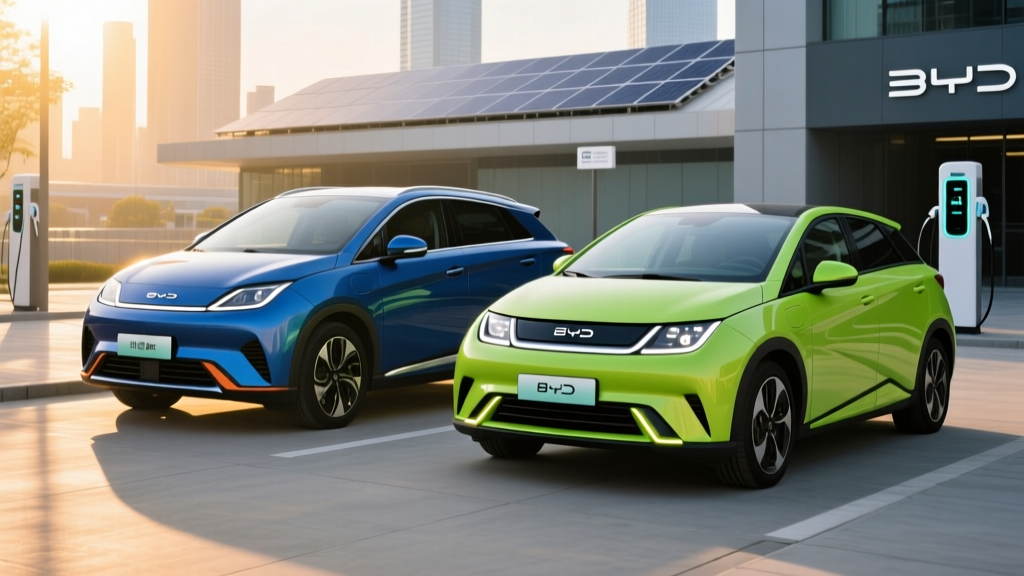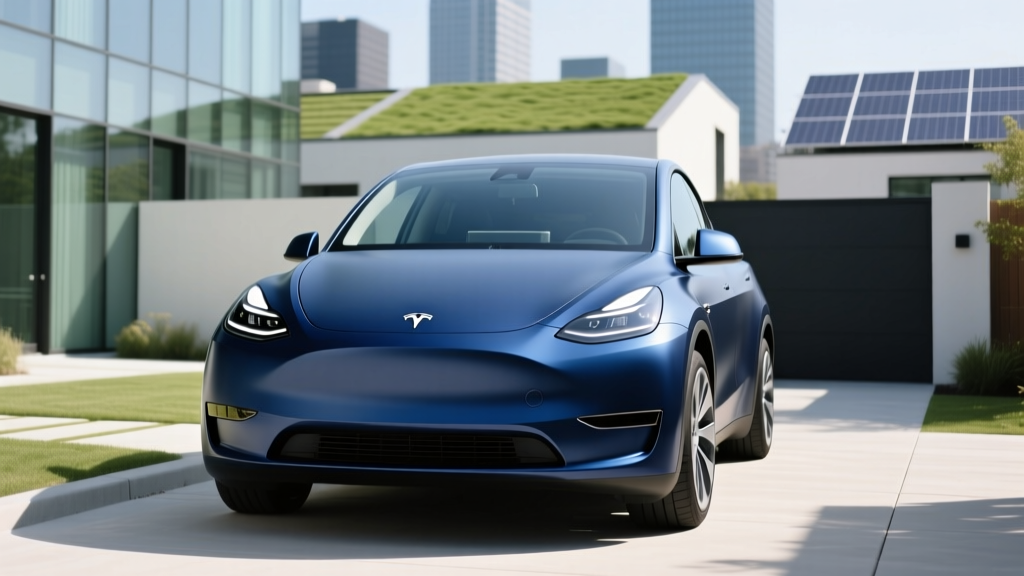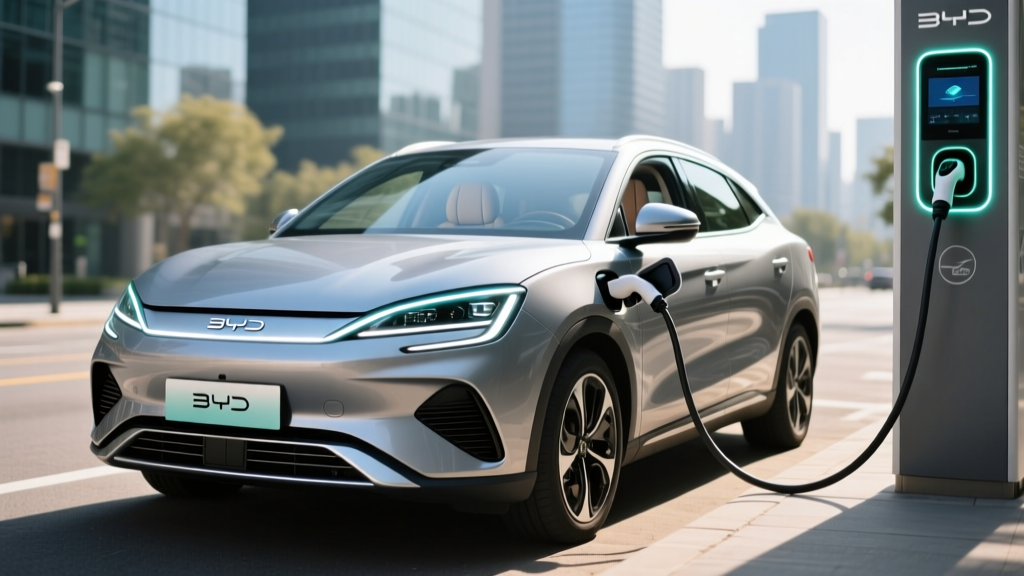
The BYD Atto 3 electric car has become one of the most talked-about compact SUVs in global markets, and for good reason: it pairs an affordable price point with BYD's signature Blade lithium iron phosphate (LFP) battery. But for US-based shoppers eyeing this crossover, the questions are practical — what's the real range on American roads, how fast does it actually charge, and does it qualify for federal incentives? Below, we break down every spec that matters to a real buyer, from cold-weather range loss to home-charging logistics.
Range, Efficiency, and Real-World Expectations
The Atto 3 is offered globally with two battery options: a 49.92 kWh (Standard Range) pack and a 60.48 kWh (Extended Range) pack. Both use BYD's proprietary Blade cell architecture — an LFP chemistry known for exceptional cycle life and thermal stability, though with slightly lower energy density than NMC competitors.
Real-World Expectation: Plan for 210–230 miles on sustained highway driving at 70+ mph. In cold weather (below 32°F), expect a 20–30% reduction, dropping effective range to approximately 170–190 miles. City driving with regenerative braking maximizes efficiency and can push real-world results closer to the EPA sticker.
Efficiency lands around 115 MPGe combined (roughly 29 kWh/100 mi), which is competitive for the compact electric SUV segment but trails the Hyundai Kona Electric and Tesla Model Y in highway efficiency. The LFP chemistry means you can safely charge to 100% daily without the degradation concerns that NMC owners face — a genuine ownership advantage for commuters who need the full pack every morning.
| Spec | Value |
|---|---|
| Battery Capacity (usable) | 60.48 kWh (LFP Blade) |
| EPA Range | ~260 miles |
| Efficiency | 115 MPGe / 29 kWh/100 mi |
| Motor Output | 201 hp / 229 lb-ft torque |
| Drivetrain | Front-wheel drive (single motor) |
| 0–60 mph | 7.3 seconds |
| Max DC Fast Charge | 88 kW (peak) |
| 10–80% DC Charge Time | ~29 minutes |
| Level 2 Home Charge Rate | 7 kW (~22 mi/hr) |
| Cargo Volume (rear seats up) | 15.8 cu ft |
| Cargo Volume (rear seats folded) | 46.6 cu ft |
| Rear Legroom | 37.2 inches |
| Battery Warranty | 8 years / 100,000 miles |
| Vehicle Warranty | 6 years / 93,000 miles |
Charging Speed: DC Fast, Level 2, and the Curve Reality
Charging speed is where the Atto 3 reveals its most significant competitive limitation. The peak DC fast-charge rate of 88 kW trails rivals like the Hyundai Ioniq 5 (240 kW on 800V architecture) and even the Chevrolet Equinox EV (~150 kW). On a 150 kW or 350 kW public charger, the Atto 3 will only pull what its battery management system allows — that 88 kW peak, tapering significantly past 60% state of charge.
| Charge Level | Power / Voltage | Miles Added per Hour | Notes |
|---|---|---|---|
| Level 1 (120V household) | ~1.4 kW | ~4 mi/hr | Emergency/trickle only |
| Level 2 (240V home) | 7 kW | ~22 mi/hr | Full charge in ~9 hours |
| DC Fast Charge | 88 kW peak (CCS/GB/T) | ~170 mi/hr (peak) | 10–80% in ~29 min; tapers above 60% |
For home charging, the 7 kW onboard AC charger is the practical daily solution. A full overnight charge from 10% takes roughly 9 hours — adequate for most routines. The LFP pack's tolerance for 100% daily charging means you can top off every night without battery-health guilt, which partially offsets the slower DC rate for road-trip scenarios.
Charging-curve reality check: The published 29-minute 10–80% time assumes ideal conditions — a preconditioned battery at optimal temperature on a charger that can sustain 88 kW. In cold weather without adequate preconditioning, expect 35–40 minutes. The curve also tapers sharply above 80%, so plan to unplug at 80% on road trips rather than waiting for a full top-off.
Performance and Driving Dynamics
The Atto 3's single front-mounted motor delivers 201 horsepower and 229 lb-ft of torque, good for a 7.3-second 0–60 mph time. That's adequate for highway merging and city driving but noticeably behind the Tesla Model Y's 5.0-second sprint and the Hyundai Kona Electric's quicker delivery. There is no all-wheel-drive variant — this is strictly a front-wheel-drive crossover.
Ride quality is tuned for comfort over sportiness. The suspension absorbs urban bumps well, and the cabin remains quiet at speed. Regenerative braking offers two levels but does not provide true one-pedal driving in the way Tesla or Nissan Leaf owners expect — you'll still use the brake pedal regularly. The steering is light and low-effort, ideal for parking but lacking feedback on winding roads.
Pricing, Tax Credits, and Total Cost
The BYD Atto 3 electric car is priced aggressively in international markets (roughly €38,000–€42,000 in Europe). US availability remains limited as of 2026, with BYD focusing on commercial and fleet channels rather than consumer retail. Where available or importable, projected US pricing falls in the $35,000–$40,000 range depending on trim and battery option.
| Trim | Est. MSRP | Federal §30D Credit | Est. After Credit |
|---|---|---|---|
| Standard Range (49.92 kWh) | ~$35,000 | Up to $7,500* | ~$27,500 |
| Extended Range (60.48 kWh) | ~$40,000 | Up to $7,500* | ~$32,500 |
*Critical tax credit caveat: Federal §30D eligibility depends on multiple factors that change frequently. The vehicle must meet MSRP caps ($55,000 for SUVs), buyer income limits ($150,000 single / $300,000 joint), and stringent battery-sourcing and critical-minerals requirements. Because BYD's Blade battery cells and raw materials are predominantly sourced from China, the Atto 3 is unlikely to qualify for the full — or any — federal tax credit under current IRS rules. Always verify eligibility on IRS.gov before purchase and consult a tax professional. Some states may offer separate incentives that do not carry the same sourcing restrictions.
Interior, Tech, and Standout Features
The Atto 3's cabin is where BYD's design ambition shows. The interior uses a "gym-inspired" theme — muscle-fiber textured dash panels, dumbbell-shaped air vents, and guitar-string door pocket trim. It's polarizing but distinctive, and material quality punches above its price class with soft-touch surfaces and solid assembly.
Infotainment: A 12.8-inch rotating center touchscreen (landscape or portrait) runs BYD's proprietary OS. It supports Apple CarPlay and Android Auto (wired), voice control, and OTA updates. The instrument cluster is a compact 5-inch display — functional but small by 2026 standards. A wireless phone charger, 6-speaker audio, and ambient lighting are standard on most trims.
Driver Assistance: The Atto 3 includes a comprehensive ADAS suite — adaptive cruise control, lane-keeping assist, automatic emergency braking, blind-spot monitoring, and rear cross-traffic alert. This is an SAE Level 2 system, meaning the driver must remain fully engaged with hands on the wheel. It is not autonomous or "self-driving." The system performs competently on highways but can be overly aggressive with lane-centering corrections on poorly marked roads.
Notable drawbacks: The infotainment system has a learning curve and occasional lag. There is no front trunk (frunk). Rear visibility is compromised by thick C-pillars. And the absence of an AWD option limits appeal in snow-belt states.
- LFP Blade battery — exceptional longevity, safe to charge to 100% daily
- Competitive pricing in the compact EV SUV segment
- Spacious rear seat (37.2" legroom) and practical cargo area
- Comprehensive standard ADAS suite
- Strong 8-year/100,000-mile battery warranty
- 88 kW peak DC charging is slow vs. 150–240 kW rivals
- Front-wheel drive only — no AWD option
- Unlikely to qualify for federal §30D tax credit due to battery sourcing
- Limited US retail availability and service network
- Infotainment system is quirky with occasional lag
Who the BYD Atto 3 Electric Car Suits Best
The Atto 3 is strongest as a daily commuter and urban family hauler. If your routine involves 30–60 miles of mixed driving per day with overnight Level 2 home charging, the LFP battery's daily-100% tolerance and 260-mile EPA range provide ample buffer. The spacious rear seat handles child seats and teen passengers comfortably.
It is less suited for: frequent road-trippers who need rapid DC charging to minimize stops (the 88 kW peak adds ~30 minutes per stop vs. ~18 minutes in an Ioniq 5); buyers in northern climates who need AWD traction; and anyone relying on the federal tax credit to make the math work, given the sourcing disqualification risk. For those use cases, the Hyundai Kona Electric, Tesla Model Y, or a plug-in hybrid like the Toyota RAV4 Prime may serve better.
How It Compares to Key Competitors
Against the Hyundai Kona Electric (261 mi EPA, ~150 kW DC peak, likely §30D eligible), the Atto 3 trades charging speed and tax-credit access for a lower base price and LFP longevity. Against the Tesla Model Y (310+ mi, 250 kW Supercharging, extensive network), the Atto 3 can't match performance or infrastructure but undercuts on price. The Chevrolet Equinox EV (~315 mi, ~150 kW, likely §30D eligible) offers more range and faster charging at a similar price point, making it the tougher competitive comparison for BYD.
Frequently Asked Questions
What is the real-world range of the BYD Atto 3 electric car?
The Extended Range model carries an EPA estimate of approximately 260 miles. In real-world highway driving at 70+ mph, expect 210–230 miles. Cold weather (below freezing) can reduce that to 170–190 miles. City driving with regenerative braking recovers more energy and can approach or match the EPA figure.
How fast does the Atto 3 charge at home and on the road?
At home on a 240V Level 2 charger, it adds roughly 22 miles per hour (7 kW), reaching a full charge overnight in about 9 hours. On a DC fast charger, it peaks at 88 kW, achieving 10–80% in approximately 29 minutes under ideal conditions — slower than most 2026 competitors.
Does the BYD Atto 3 qualify for the federal EV tax credit?
Under current IRS §30D rules, eligibility requires meeting battery-sourcing and critical-minerals requirements, MSRP caps, and buyer income limits. Because BYD's Blade battery is manufactured in China with predominantly Chinese-sourced minerals, the Atto 3 is unlikely to qualify for the $7,500 federal credit. Always confirm with a tax professional before purchase. State-level incentives may still apply.
Is the BYD Atto 3 worth buying over a Tesla Model Y or Hyundai Kona Electric?
It depends on priorities. If you value lowest purchase price, LFP battery longevity, and don't road-trip frequently, the Atto 3 makes a compelling case. If you need fast DC charging, AWD, tax-credit eligibility, or a robust service network, the Kona Electric or Model Y are stronger choices. Check fueleconomy.gov for side-by-side EPA comparisons.
What is the battery warranty on the Atto 3?
BYD provides an 8-year / 100,000-mile battery warranty and a 6-year / 93,000-mile vehicle warranty. The LFP Blade chemistry is engineered for 3,000+ charge cycles with minimal degradation, meaning the battery should outlast the warranty period with significant capacity remaining.
Can I buy the BYD Atto 3 in the United States?
As of 2026, BYD does not sell the Atto 3 through standard US consumer retail channels. Availability is limited to select fleet, commercial, and international markets. US shoppers interested in similar specs should monitor BYD's official announcements or consider segment alternatives with established dealer networks.