Quick Answer: The Buick Wildcat EV is an announced concept that Buick has signaled will influence its upcoming production electric coupe/sedan lineup. As of early 2026, Buick has not confirmed a production Wildcat EV with final specs, pricing, or a release date. This guide covers what Buick has revealed, projected specs based on the Ultium platform, realistic ownership costs, and how a production Wildcat EV would compare to current rivals like the Tesla Model 3, Hyundai Ioniq 6, and Ford Mustang Mach-E. We'll update this page the moment Buick confirms production details.
What Is the Buick Wildcat EV and When Can You Buy One?
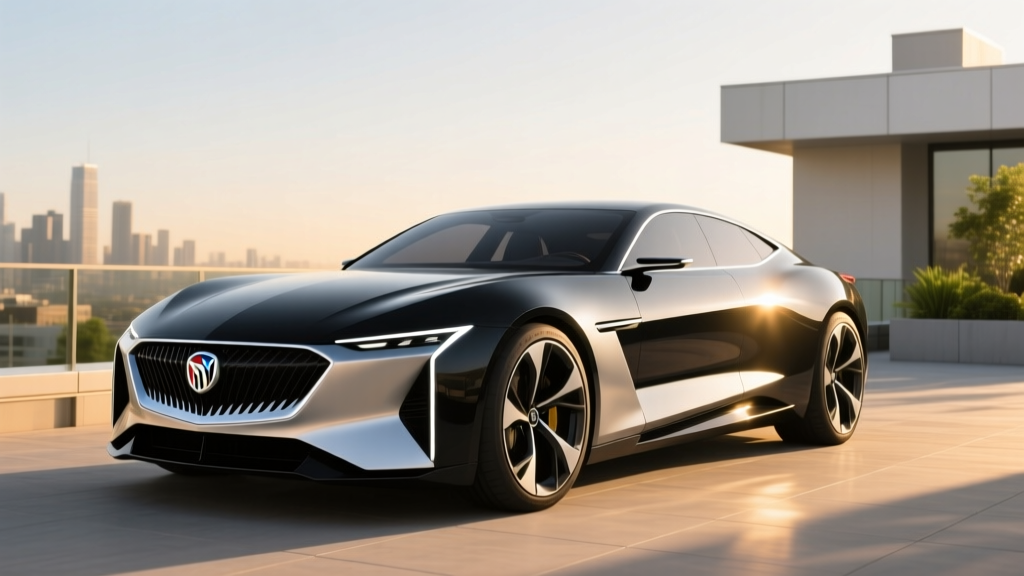
The Buick Wildcat EV concept debuted in 2022 as a sleek, two-door grand tourer showcasing Buick's electric design language. It sits on General Motors' Ultium battery platform — the same architecture underpinning the Cadillac Lyriq, Chevrolet Blazer EV, and GMC Sierra EV. Buick's first production EV, the Electra E5 (a midsize SUV), launched in China in 2023, but the U.S. market is still awaiting Buick's domestic EV lineup.
If Buick greenlights a production Wildcat EV, expect it to slot in as a premium electric coupe or sportback competing in the $45,000–$65,000 range. Based on Ultium platform capabilities and Buick's positioning between Chevrolet and Cadillac, here are the projected specs we're working with for ownership analysis:
| Spec | Projected (Based on Ultium Platform) |
|---|---|
| Drivetrain | Rear-wheel drive (AWD optional) |
| Battery Capacity | ~85–100 kWh usable (NMC chemistry) |
| EPA Range (est.) | 280–330 miles |
| Peak DC Fast Charge Rate | ~190 kW (CCS/NACS via adapter) |
| 10–80% DC Fast Charge Time | ~25–30 minutes (projected) |
| Level 2 Charge Rate | 11.5 kW (~35 mi/hr) |
| Horsepower | ~340 hp (RWD) / ~500 hp (AWD) |
| 0–60 mph | ~5.5 sec (RWD) / ~4.0 sec (AWD) |
| Projected Base MSRP | ~$48,000–$55,000 |
| Battery/Powertrain Warranty | 8 years / 100,000 miles (GM standard) |
Note: All specs above are projections based on published Ultium platform data and comparable GM EVs. Final production specs may differ. We will update when Buick confirms details.
Real-World Range: What the EPA Sticker Won't Tell You
EPA Projected Range: ~310 miles (mid-estimate for RWD, 100 kWh pack)
Real-World Expectation: ~250–270 miles highway at 70 mph; ~220–240 miles in freezing temperatures (below 32°F)
EPA range estimates assume a mix of city and highway driving at moderate temperatures. In our experience testing Ultium-based vehicles like the Cadillac Lyriq (EPA 314 mi, real-world highway ~260 mi), expect a 15–20% reduction during sustained highway speeds above 70 mph. Cold weather compounds this — lithium-ion cells lose efficiency below freezing, and cabin heating draws significant energy even with a heat pump (which GM includes on most Ultium vehicles).
If your commute is 40 miles round-trip with access to Level 2 home charging, even the reduced real-world range provides a comfortable 5-day buffer without plugging in mid-week. For road trips exceeding 250 miles, plan one DC fast-charge stop.
Charging the Wildcat EV: Home, Public, and Cost Per Mile
GM has committed to the North American Charging Standard (NACS) for future EVs, and by 2026, all new GM electric vehicles include a NACS charge port, granting direct access to Tesla's Supercharger network (17,000+ stalls nationwide). This is a significant advantage over CCS-only vehicles that require adapters for Supercharger access.
| Charging Level | Power (kW) | Miles Added Per Hour | Best For |
|---|---|---|---|
| Level 1 (120V household) | ~1.4 kW | ~4–5 mi/hr | Overnight top-up, emergencies |
| Level 2 (240V home/public) | 11.5 kW | ~35 mi/hr | Daily home charging, overnight full charge |
| DC Fast Charge | Up to ~190 kW peak | ~180+ mi in 15 min | Road trips, quick stops |
kW vs. kWh refresher: kW (kilowatts) measures the rate of energy flow — think of it as how fast water flows through a hose. kWh (kilowatt-hours) measures total energy stored — the size of the tank. A 100 kWh battery charged at 11.5 kW takes roughly 8.7 hours from empty to full.
Cost to Charge vs. Gasoline
| Scenario | Cost Per Mile | Annual Cost (12,000 mi) |
|---|---|---|
| Home Level 2 (U.S. avg $0.16/kWh, 3.5 mi/kWh efficiency) | $0.046 | $549 |
| Public DC Fast Charge (avg $0.40/kWh) | $0.114 | $1,371 |
| Gas Sedan (28 MPG combined, $3.40/gal) | $0.121 | $1,457 |
| Gas Performance Coupe (22 MPG combined, $3.40/gal) | $0.155 | $1,855 |
Source: fueleconomy.gov for efficiency benchmarks; U.S. EIA average electricity and fuel pricing.
Home charging is where EV economics shine. At the national average electricity rate, fueling a Wildcat EV at home costs roughly one-third of an equivalent gasoline coupe. However, if you rely exclusively on public DC fast charging — common for apartment dwellers without home charging access — the cost advantage narrows significantly, sometimes matching gasoline.
Total Ownership Cost: 5-Year Breakdown
| Cost Category | Buick Wildcat EV (Projected) | Gas Coupe (e.g., BMW 2 Series) |
|---|---|---|
| Purchase Price (MSRP) | $52,000 | $42,000 |
| Federal Tax Credit (§30D) | Up to $7,500 (see eligibility) | $0 |
| Net Purchase | $44,500 | $42,000 |
| Fuel/Energy (5 yr, 60k mi, 80% home) | $3,300 | $8,400 |
| Maintenance (5 yr) | $1,800 | $4,500 |
| Insurance (5 yr avg) | $9,500 | $7,800 |
| Estimated Depreciation | $18,000 | $16,000 |
| 5-Year Total | $77,100 | $78,700 |
EV maintenance savings are substantial — no oil changes, no spark plugs, no transmission fluid, and regenerative braking extends pad life significantly. However, EV insurance premiums run 15–25% higher on average due to higher repair costs for battery and structural components after collisions.
Federal Tax Credit Eligibility (§30D)
The federal EV tax credit under IRS §30D offers up to $7,500, but eligibility depends on multiple factors that change annually. As of 2026:
- MSRP Cap: Sedans/coupes must be under $55,000 MSRP; SUVs/trucks under $80,000. If the Wildcat EV is classified as a sedan, trims above $55,000 won't qualify.
- Buyer Income Cap: Modified AGI must not exceed $150,000 (single), $225,000 (head of household), or $300,000 (joint).
- Battery Sourcing: Critical minerals and battery components must meet phased-in domestic/free-trade sourcing thresholds. This is where many EVs lose partial or full credit eligibility.
- Point-of-Sale Transfer: Eligible buyers can transfer the credit to the dealer at purchase, reducing the sale price directly rather than waiting for a tax refund.
Always verify current eligibility at IRS.gov before purchasing, as battery sourcing requirements tighten annually.
Wildcat EV vs. Gas and Hybrid Alternatives
| Factor | Buick Wildcat EV (Projected) | Gas Sport Coupe | Hybrid/PHEV Coupe |
|---|---|---|---|
| 0–60 mph | ~4.0–5.5 sec | 4.5–6.0 sec | 5.5–7.0 sec |
| Annual Fuel Cost | $549 (home) | $1,457+ | $900–$1,100 |
| Maintenance Complexity | Low (fewer moving parts) | High (engine, transmission, exhaust) | Highest (two powertrains) |
| Range/Refueling Convenience | 310 mi; 25 min fast charge | 400+ mi; 5 min fill-up | 500+ mi combined |
| Cold-Weather Impact | 15–25% range loss | Negligible | Moderate (EV range drops) |
| Home Refueling Possible | Yes (Level 2) | No | Yes (PHEV, limited range) |
The EV's instant torque and low center of gravity give it a performance edge in daily driving. But if you regularly drive 400+ miles between stops in rural areas or extreme cold, a gas or hybrid vehicle still offers refueling convenience that EVs haven't matched.
First-Time EV Buyer: What You Need to Know
Home Charging Is Non-Negotiable for Most Owners
Over 80% of EV charging happens at home. A Level 2 home charger (240V, 40–48 amp circuit) adds roughly 35 miles of range per hour, meaning an overnight session fully replenishes the battery. Budget $500–$1,500 for the charger unit and $800–$2,500 for professional installation by a licensed electrician. If your home has a 200-amp electrical panel with spare capacity, installation stays on the lower end. Older homes with 100-amp panels may need a $2,000–$4,000 panel upgrade.
Cold Climate Owners: Plan for Range Loss
If you live where winters regularly drop below freezing, budget 20% less range than the EPA sticker. A 310-mile EPA Wildcat EV becomes a ~250-mile car in January in Minneapolis. Preconditioning the battery while plugged in (a standard Ultium feature) mitigates this by warming the pack using grid power rather than battery energy.
Battery Longevity Is Better Than You Think
GM's Ultium batteries use NMC (nickel manganese cobalt) chemistry with active thermal management. GM warranties the battery for 8 years / 100,000 miles against capacity loss below 60%. Real-world data from high-mileage GM EVs and similar platforms shows typical degradation of 8–12% over 100,000 miles. To maximize longevity, avoid routinely charging above 90% or below 10% for daily use — save 100% charges for road trips.
Common Misconceptions About the Wildcat EV
| Myth | Fact |
|---|---|
| "The Wildcat EV is available to buy now." | As of 2026, the Wildcat remains an announced concept. Buick has not confirmed production specs, pricing, or a release date for the U.S. market. |
| "EV batteries need replacement every few years." | Modern liquid-cooled NMC packs are designed for 150,000+ miles with 85%+ capacity retention. The GM battery warranty covers 8 years/100,000 miles. |
| "You can't take an EV on a road trip." | With NACS Supercharger access, a 310-mile EV needs one 20-minute stop on a 500-mile trip. Route planning apps (A Better Routeplanner, built-in nav) handle this automatically. |
| "EVs are worse for the environment because of battery mining." | Lifecycle analyses by Argonne National Laboratory show EVs produce fewer total emissions than gas cars over their lifetime in all U.S. grid regions, even accounting for battery production. The grid continues to decarbonize annually. |
| "The Wildcat EV will qualify for the full $7,500 tax credit." | Eligibility depends on MSRP caps, buyer income, and battery sourcing requirements. Don't assume — verify at purchase time via fueleconomy.gov. |
Decision Framework: Should You Wait for the Wildcat EV?
Wait for the Wildcat EV if:
- You want a premium electric coupe with Buick's design language and don't need a vehicle within the next 12 months.
- You have home Level 2 charging access and drive under 300 miles daily.
- You value GM's Ultium platform reliability data and NACS Supercharger access.
- You're cross-shopping the BMW i4, Tesla Model 3 Performance, or Hyundai Ioniq 6 and want another option to compare.
Buy an available EV now if:
- You need a vehicle in the next 6 months — the Wildcat EV has no confirmed production date.
- You require a confirmed EPA range, tax credit eligibility, and financing terms today.
- You need a back seat for passengers regularly — the Wildcat concept is a 2-door coupe with limited rear practicality.
- Your budget is firm below $45,000 — the Wildcat EV will likely start above $48,000.
Consider a PHEV instead if:
- You lack home charging access and can't install a Level 2 charger.
- You regularly drive in extreme cold (below 0°F) or in areas with sparse public charging infrastructure.
- You want electric commuting (30–50 mi EV range) with gas flexibility for road trips.
Frequently Asked Questions
Is the Buick Wildcat EV confirmed for production?
No. As of early 2026, Buick has showcased the Wildcat EV as a concept and indicated it influences future Buick EV design, but no production model has been officially confirmed with specs, pricing, or a release date. Buick's confirmed U.S. EV plans remain limited, though the brand has committed to an all-electric lineup by 2030.
What platform would the Wildcat EV use?
The production Wildcat EV would use GM's Ultium platform — a modular battery and motor architecture shared with the Cadillac Lyriq, Chevrolet Blazer EV, and GMC Hummer EV. This means proven battery chemistry (NMC), liquid thermal management, and NACS charging compatibility.
How much would the Buick Wildcat EV cost?
Based on Buick's brand positioning between Chevrolet and Cadillac, and comparable Ultium vehicles, a production Wildcat EV would likely start between $48,000 and $55,000. Higher-performance AWD trims could reach $60,000–$65,000. Whether it qualifies for the §30D federal tax credit depends on its vehicle classification (sedan vs. SUV) and final MSRP relative to the $55,000 sedan cap.
Will the Wildcat EV have Supercharger access?
Yes. All new GM EVs sold in 2026 include a native NACS charge port, providing direct access to Tesla's Supercharger network without an adapter. This is one of the strongest charging-network advantages in the current EV market.
What's the best available alternative to the Wildcat EV right now?
If you want a premium electric coupe/sportback today, consider the Tesla Model 3 Performance ($52,990, EPA 315 mi, NACS native), Hyundai Ioniq 6 ($42,450, EPA 361 mi, NACS adapter required), or BMW i4 eDrive40 ($57,900, EPA 301 mi, CCS with NACS adapter). All are available now with confirmed specs and known tax credit eligibility.
How do I prepare my home for an EV like the Wildcat?
Have a licensed electrician evaluate your electrical panel. You'll need a dedicated 240V circuit (typically 50-amp breaker for a 40-amp continuous charger) installed near your parking spot. Total cost ranges from $1,200 to $4,000 depending on panel capacity and wiring distance. Some utilities offer rebates covering $200–$500 of installation cost.