Quick Answer: Does Buick Make an Electric Car?
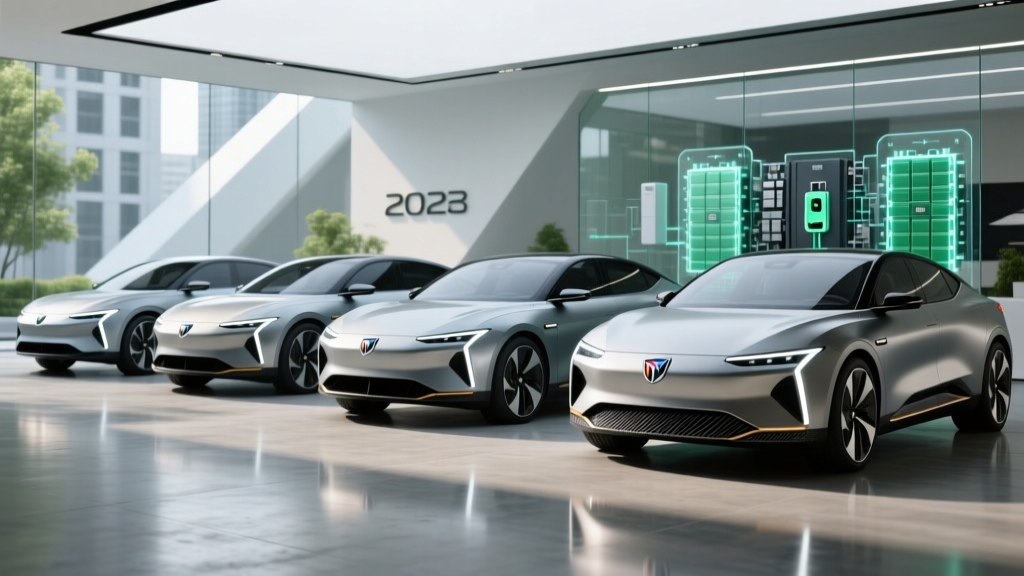
Yes. As of 2026, Buick sells the Electra E5, a midsize electric SUV built on GM's Ultium platform. It offers an EPA-estimated range of up to 300 miles, DC fast charging up to 150 kW, and a starting MSRP around $44,900. A smaller, more affordable model — the Electra E4 — is also available, starting near $35,200 with up to 290 miles of EPA range. Both are fully electric (BEV), not hybrids. Buick has committed to an all-electric lineup by the end of the decade, with additional models expected.
The Buick Electra E5: What You're Actually Getting
Buick's entry into the EV market isn't a token compliance car. The Electra E5 rides on the same GM Ultium architecture that underpins the Cadillac Lyriq and Chevrolet Blazer EV, which means proven battery chemistry, established supply chains, and access to GM's growing Super Cruise ADAS ecosystem. Here's what the numbers look like for the 2026 model year:
| Spec | Electra E5 Preferred | Electra E5 Sport Touring |
|---|---|---|
| Base MSRP | $44,900 | $49,500 |
| EPA Range | 300 mi | 285 mi (AWD) |
| Battery (usable) | 85 kWh, NMC | 85 kWh, NMC |
| Motor / HP | 201 hp (FWD) | 283 hp (AWD) |
| 0-60 mph | 7.5 sec | 6.0 sec |
| Peak DC Fast Charge | 150 kW | 150 kW |
| 10-80% DC Charge | ~30 min | ~30 min |
| Level 2 (240V) Rate | 11.5 kW | 11.5 kW |
| EPA Efficiency | 95 MPGe (35 kWh/100mi) | 89 MPGe (38 kWh/100mi) |
| Cargo Volume | 56.9 cu ft (rear seats folded) | 56.9 cu ft |
| Battery Warranty | 8 yr / 100,000 mi | 8 yr / 100,000 mi |
Real-World Range Reality Check
The EPA sticker says 300 miles for the FWD Preferred trim. In practice, expect 260-280 miles on mixed highway driving at 70-75 mph. In cold weather (below 30°F), NMC batteries lose roughly 15-25% of range depending on cabin heating demands, so plan for 225-255 miles in winter conditions. The E5 does not currently include a heat pump — it uses resistive cabin heating, which is less efficient in extreme cold compared to competitors like the Hyundai Ioniq 5 or Tesla Model Y. If you live in the northern tier, this matters for daily usability and road-trip planning.
Buick Electra E4: The More Affordable Option
If the E5 stretches the budget, the Electra E4 is Buick's compact electric crossover, sharing its platform with the Chevrolet Equinox EV. For 2026, the E4 starts at approximately $35,200 and delivers up to 290 miles EPA in FWD form with a 72 kWh usable NMC battery. It charges at a peak of 115 kW DC (10-80% in roughly 33 minutes) and accepts 11.5 kW on Level 2.
The E4 is smaller inside — about 52 cu ft of cargo with rear seats folded — and its lower charge rate means longer stops on road trips. But for daily commuting and suburban errands, the E4's real-world range and price make it a legitimate alternative to the Hyundai Kona Electric or Nissan Ariana.
EV vs. Gas: How a Buick EV Compares to the Encore GX
Most Buick shoppers cross-shop against the brand's gas-powered Encore GX or Envista. Here's how the Electra E5 stacks up against the Encore GX on cost and efficiency over a typical ownership period:
| Metric | 2026 Buick Electra E5 (Preferred) | 2026 Buick Encore GX (AWD) |
|---|---|---|
| Base MSRP | $44,900 | $28,800 |
| Fed. Tax Credit (§30D) | Up to $7,500 (eligibility varies) | None |
| Effective Starting Price | ~$37,400 (if full credit) | $28,800 |
| Fuel/Energy Cost per Mile | ~$0.045 (home L2 at $0.14/kWh) | ~$0.13 (30 MPG, $3.90/gal) |
| Annual Fuel/Energy (12,000 mi) | ~$540 | ~$1,560 |
| 5-Year Fuel/Energy Total | ~$2,700 | ~$7,800 |
| Estimated 5-Year Maintenance | ~$1,800 | ~$3,500 |
| EPA Efficiency | 95 MPGe | 28 MPG combined |
The math is straightforward: the E5 costs more upfront, but the energy and maintenance savings over five years total roughly $6,800. If you qualify for the full §30D federal tax credit, the effective purchase price gap narrows to about $8,600 — meaning the break-even point on fuel/maintenance alone arrives around year six or seven. Factor in the smoother ride, instant torque, and lower NVH, and the value proposition shifts further in the EV's favor for buyers who plan to keep the vehicle long-term.
Tax Credit Eligibility: What You Need to Know for 2026
The IRS §30D clean vehicle credit can reduce your federal tax liability by up to $7,500 when purchasing a new Electra E5 or E4 — but eligibility is not automatic. The rules for 2026 require:
- MSRP cap: SUVs must be at or below $80,000 (both E5 and E4 qualify)
- Buyer income cap: Modified AGI must not exceed $150,000 (single), $225,000 (head of household), or $300,000 (joint)
- Battery sourcing: A percentage of critical minerals and battery components must be sourced from the U.S. or free-trade-agreement countries — GM's Ultium batteries are largely U.S.-assembled, but exact qualification can shift yearly as sourcing thresholds tighten
- Point-of-sale transfer: As of 2024, you can transfer the credit to the dealer at purchase, reducing the sale price directly rather than waiting to claim it on your tax return
Always verify current eligibility on fueleconomy.gov before purchasing, as battery-sourcing compliance can change between model years and even production batches.
Charging the Buick Electra E5: Home and Public
Understanding the difference between kW (power — how fast energy flows) and kWh (energy — how much the battery holds) is essential. The E5's 85 kWh battery is the "fuel tank." The 150 kW peak DC charge rate is the "pump speed." Here's what each charging level delivers:
| Level | Power (kW) | Miles Added per Hour | Use Case |
|---|---|---|---|
| Level 1 (120V outlet) | 1.4 kW | ~3-4 mi/hr | Emergency / overnight trickle |
| Level 2 (240V home) | 11.5 kW | ~30-33 mi/hr | Daily home charging (full charge in ~8 hrs) |
| DC Fast Charge | Up to 150 kW | ~180 mi in 30 min (10-80%) | Road trips, public stations |
Charging curve reality: The E5 peaks near 150 kW only between roughly 10-30% state of charge. As the battery fills, the rate tapers — by 60% SoC, expect ~100 kW, and above 80%, it drops below 50 kW. This is normal for NMC chemistry but means a 10-90% charge takes closer to 45 minutes, not 30.
NACS adapter access: GM vehicles, including Buick, now use the NACS (Tesla-style) charge port for 2026 models. This grants native access to the Tesla Supercharger network, which remains the most reliable DC fast-charging network in the U.S. with over 25,000 stalls. For older CCS-equipped GM vehicles, a GM-approved NACS adapter is available.
Real-World Ownership: Who Should (and Shouldn't) Buy a Buick EV
Buying an EV is not just about the sticker price. Your daily routine, climate, and housing situation determine whether an Electra E5 or E4 will be a seamless upgrade or a frustrating compromise.
Decision Framework: Is a Buick EV Right for You?
Choose the Buick Electra E5 if:
- You have access to Level 2 home charging (garage or driveway with a 240V circuit)
- Your daily driving is under 80 miles round-trip (covers 90%+ of U.S. commutes)
- You take 2-4 road trips per year of 200-400 miles and are comfortable planning one DC fast-charge stop
- You want a quiet, comfortable midsize SUV without paying Cadillac prices
- You qualify for the §30D credit, bringing the effective price below $40,000
Choose the Buick Electra E4 if:
- Budget is the primary concern and you want an EV under $38,000 after incentives
- You primarily drive in urban/suburban settings under 60 miles per day
- You don't need AWD or more than 52 cu ft of cargo space
Stick with a gas Buick or consider a PHEV instead if:
- You live in an apartment or condo with no charging access and public chargers are scarce in your area
- You regularly drive 300+ miles in cold weather and don't want to plan charge stops
- Your household income exceeds the §30D caps, making the effective price gap harder to justify
- You frequently tow — the E5 is rated for only 1,500 lbs, far less than gas midsize SUVs
Common Misconceptions About Buick's EVs
| Myth | Fact |
|---|---|
| "Buick doesn't make real EVs — they're just rebadged Chevrolets." | The E5 and E4 share Ultium architecture with Chevy but have unique tuning, interior materials, sound insulation, and styling. The driving experience and cabin quality are distinctively Buick. |
| "The battery will need replacing in 5 years." | GM's Ultium NMC batteries carry an 8-year/100,000-mile warranty guaranteeing at least 70% capacity retention. Industry data from Geotab's fleet study shows average NMC degradation of roughly 2-3% per year under normal use, meaning 85-90% capacity at year five is typical. |
| "I can't take a Buick EV on a road trip." | With 285-300 miles of range and NACS access to Tesla Superchargers, the E5 can cover most routes with a single 25-30 minute charge stop every 3-4 hours — comparable to rest stops on a gas-car trip. |
| "EV insurance costs way more." | EV insurance premiums are typically 10-20% higher than comparable gas vehicles, but the gap has narrowed. Get quotes from multiple carriers — some now offer EV-specific discounts. |
| "Public chargers are always broken." | Reliability varies by network. Tesla Superchargers consistently report 95%+ uptime. Electrify America and EVgo have improved significantly but still lag. Use apps like PlugShare to check station status before trips. |
5-Year Cost of Ownership: Electra E5 vs. Encore GX
| Cost Category (5 Years / 60,000 mi) | Buick Electra E5 | Buick Encore GX AWD |
|---|---|---|
| Purchase Price (after credit) | $37,400 | $28,800 |
| Energy / Fuel | $2,700 | $7,800 |
| Maintenance | $1,800 | $3,500 |
| Insurance (est. avg) | $9,200 | $7,800 |
| Depreciation (est.) | $16,500 | $12,200 |
| Total 5-Year Cost | $67,600 | $60,100 |
| Cost per Mile | $1.13 | $1.00 |
The E5 still carries a cost premium over five years, largely driven by higher depreciation (EV resale values are still normalizing) and insurance. However, if gas prices rise above $4.50/gallon or if you drive more than 15,000 miles annually, the math flips in the E5's favor. Buyers who keep the vehicle 8-10 years will see the total cost converge or favor the EV.
What's Next for Buick's Electric Lineup
GM has stated that Buick will transition to an all-electric brand by the end of the decade. Expect at least one additional model — likely a larger three-row SUV — to join the E5 and E4 before 2028. Solid-state battery technology, which GM is co-developing, could eventually offer faster charging and greater range, but it is not expected in Buick products before 2028 at the earliest. For now, the E5 and E4 represent the complete Buick EV lineup.
Does Buick make a hybrid car in 2026?
No. Buick does not currently offer any hybrid or plug-in hybrid models in the U.S. market. The brand has skipped the hybrid phase and is transitioning directly from gas to fully electric. If you want a GM-branded PHEV, look at the Chevrolet Volt successor lineup or the Cadillac ELR concepts.
Can I charge a Buick EV at a Tesla Supercharger?
Yes. For the 2026 model year, Buick EVs come equipped with the NACS charge port, granting native access to Tesla's Supercharger network without an adapter. This is one of the strongest charging-network advantages in the current EV market.
How long does a Buick EV battery last?
GM warrants the Ultium battery for 8 years or 100,000 miles against defects and excessive capacity loss (below 70% state of health). Based on current NMC degradation data, most owners can expect 85-90% capacity at the 5-year mark with normal charging habits — avoiding frequent 100% charges and extreme heat exposure extends longevity.
Is the Buick Electra E5 eligible for the $7,500 federal tax credit?
It may be, but eligibility depends on your income, the vehicle's battery-sourcing compliance for the specific production batch, and the MSRP cap (the E5 clears the $80,000 SUV limit). Verify on fueleconomy.gov and consult a tax professional. The credit can be transferred to the dealer at point of sale to reduce your purchase price directly.
What home electrical work do I need for Level 2 charging?
A Level 2 home charger requires a dedicated 240V circuit, typically 48-60 amps. Installation costs range from $500-$2,500 depending on your panel capacity and the distance from the panel to the charger location. Older homes with 100-amp panels may need a panel upgrade ($1,500-$3,000). Always hire a licensed electrician and pull the required local permits.