The Short Answer on Buying a Buick EV in 2026
Buick's first modern electric vehicle, the Electra E5, is a midsize SUV built on GM's Ultium platform. For 2026, it offers an EPA-estimated 300+ miles of range, DC fast charging up to ~150 kW, and a starting MSRP expected in the mid-$40,000s. It competes directly with the Hyundai Ioniq 5, Ford Mustang Mach-E, and Volkswagen ID.4. Whether it's the right EV for you depends on your home charging access, daily driving patterns, and whether you qualify for the federal §30D tax credit (up to $7,500, subject to income, MSRP caps, and battery-sourcing rules). This guide breaks down every number you need to decide.
What Is the Buick Electra E5? Platform, Specs, and Positioning
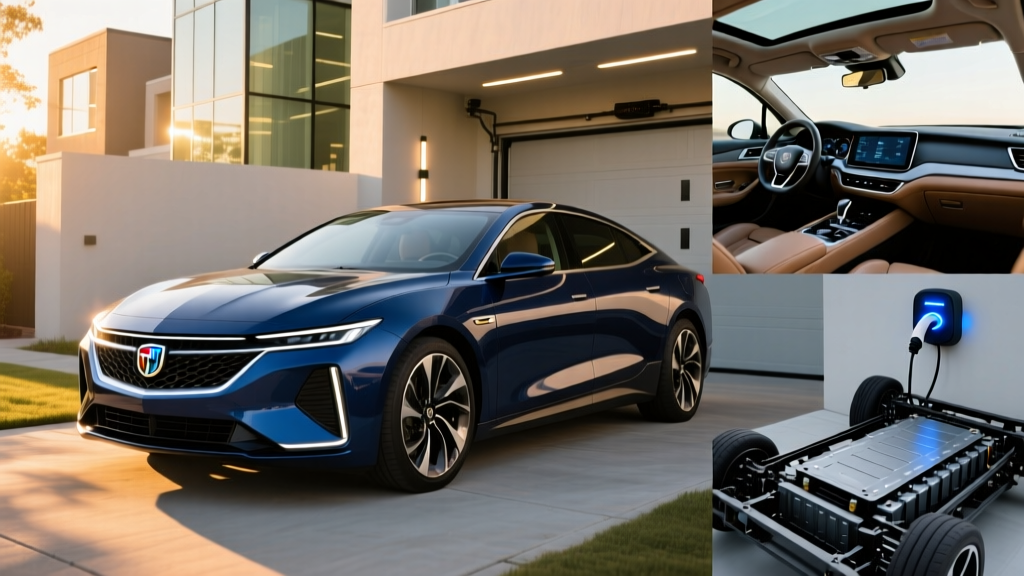
The Buick Electra E5 is not a rebadged gas crossover with a battery stuffed underneath. It rides on GM's dedicated Ultium BEV3 platform — the same architecture underpinning the Cadillac Lyriq and GMC Hummer EV. That matters because a dedicated EV platform delivers better interior packaging (flat floor, no transmission tunnel) and more efficient thermal management than a converted ICE chassis.
For the US market, the Electra E5 slots into Buick's traditional role: comfortable, quiet, value-oriented luxury without the Cadillac price tag. Think of it as the bridge between mainstream brands like Chevrolet and premium offerings from Cadillac.
| Specification | Value |
|---|---|
| Platform | GM Ultium (BEV3) |
| Battery Capacity (usable, est.) | ~95-100 kWh (NMC chemistry) |
| EPA Range (est.) | ~300-315 miles (FWD); ~280-295 miles (AWD) |
| Motor Output (FWD) | ~240-265 hp / 236-325 lb-ft torque |
| Motor Output (AWD, est.) | ~340-400 hp (dual motor) |
| 0-60 mph (FWD, est.) | ~6.5-7.0 seconds |
| 0-60 mph (AWD, est.) | ~4.5-5.5 seconds |
| Max DC Fast Charge Rate | ~150 kW (peak) |
| 10-80% DC Fast Charge (est.) | ~28-32 minutes |
| Level 2 AC Charging (est.) | 11.5 kW (~35-38 mi/hr) |
| Connector | NACS (Tesla Supercharger compatible) |
| Starting MSRP (est.) | ~$45,000-$48,000 |
| Battery/Powertrain Warranty | 8 years / 100,000 miles |
Important note: As of early 2026, GM has confirmed the Electra E5 for the US market, but final EPA certification figures and exact trim pricing may shift before deliveries begin. Always verify with fueleconomy.gov and Buick's official configurator once live.
Real-World Range: What the EPA Sticker Won't Tell You
EPA Estimated Range: ~300-315 miles (FWD configuration)
Real-World Expectation: Plan for 240-270 miles in mixed highway driving at 70+ mph. In cold weather (below 30°F), expect a further 15-25% reduction, dropping effective range to roughly 200-230 miles on the coldest days.
EPA range tests include low-speed city cycles and moderate climate-control use. They do not simulate sustained 75-80 mph highway cruising, headwinds, mountain grades, or winter battery heating demands. Every EV owner learns this quickly — the Electra E5 is no exception.
The Ultium platform does include active thermal management and a heat pump (expected on US trims), which helps mitigate cold-weather losses compared to older EVs using resistive cabin heating. But physics is physics: lithium-ion cells have higher internal resistance in cold temperatures, and cabin heating draws real energy.
Practical rule of thumb: If your longest regular drive is under 200 miles one-way and you can charge at home, the Electra E5's real-world range will cover you comfortably year-round. For 300+ mile road trips, you'll need one DC fast-charge stop.
Charging Speed, Connectors, and the NACS Advantage
GM's adoption of the North American Charging Standard (NACS) connector is one of the Electra E5's strongest practical advantages. Starting with 2025-2026 model-year Ultium vehicles, GM EVs charge natively at Tesla Supercharger stations — the most reliable and widespread DC fast-charging network in North America, with over 20,000 stalls.
| Charging Level | Power (kW) | Miles of Range Added per Hour | Typical Use Case |
|---|---|---|---|
| Level 1 (120V household) | ~1.2-1.4 kW | ~3-5 miles/hr | Overnight top-up, emergency |
| Level 2 (240V home/public) | ~11.5 kW | ~35-38 miles/hr | Daily home charging |
| DC Fast Charge (peak) | ~150 kW | ~400-500 miles/hr (at peak) | Road trips, rapid top-up |
Understanding kW vs. kWh: Kilowatts (kW) measure power — how fast energy flows into the battery. Kilowatt-hours (kWh) measure energy capacity — how much the battery holds total. A 100 kWh battery charged at 11.5 kW takes roughly 8.7 hours from empty to full (minus taper at high state of charge).
The charging curve matters: The Electra E5's ~150 kW peak rate only applies at a low state of charge (typically 10-30%). As the battery fills, the charge rate tapers to protect cell health. Expect the 10-80% charge to take approximately 28-32 minutes at a capable DC fast charger. Charging from 80-100% can take nearly as long as 10-80% — this is normal for all lithium-ion EVs and why most owners charge to 80% for daily use.
For home Level 2 charging, you'll need a 240V circuit (typically 48-60 amps) installed by a licensed electrician. At 11.5 kW, the Electra E5 recovers roughly 35-38 miles of range per hour of charging — more than enough to fully replenish overnight for virtually any daily commute.
Cost Breakdown: Electra E5 vs. a Comparable Gas SUV
The purchase decision comes down to total cost of ownership, not just the sticker price. Here's how the Electra E5 stacks up against a typical gas-powered midsize SUV (comparable to the Buick Enclave or similar three-row crossover) over five years and 75,000 miles.
| Cost Category | Buick Electra E5 (EV) | Gas Midsize SUV (22 MPG combined) |
|---|---|---|
| Purchase Price (MSRP) | ~$47,000 | ~$42,000 |
| Federal Tax Credit (§30D, if eligible) | Up to -$7,500 | $0 |
| Effective Purchase Price | ~$39,500 | $42,000 |
| Fuel / Electricity (75k mi) | ~$2,800-$3,500 (home charging) | ~$10,200 (at $3.00/gal, 22 MPG) |
| Maintenance (5 yr) | ~$800-$1,200 | ~$3,000-$4,000 |
| Insurance (5 yr, est.) | ~$9,000-$11,000 | ~$7,500-$9,500 |
| Estimated 5-Year Total | ~$52,100-$55,200 | ~$62,700-$65,700 |
Key takeaways:
- Fuel savings are substantial — roughly $6,700-$7,400 over five years if you charge primarily at home at average US residential electricity rates (~$0.14-$0.17/kWh). Public DC fast charging is more expensive ($0.30-$0.50/kWh at many networks), which reduces savings if you rely on it heavily.
- Maintenance is dramatically lower — no oil changes, no transmission fluid, no spark plugs, no exhaust system. EV brake pads last far longer thanks to regenerative braking doing most of the deceleration work.
- Insurance tends to be higher for EVs — typically 15-25% more than equivalent gas vehicles, driven by higher repair costs and battery replacement considerations. Get quotes before purchasing.
- The tax credit is not guaranteed. Under current IRS §30D rules, eligibility depends on buyer income caps ($150K single / $300K joint AGI), vehicle MSRP caps ($80K for SUVs), and battery component/critical mineral sourcing requirements that have tightened significantly. The credit can now be transferred to the dealer at point of sale, effectively reducing your purchase price upfront — but only if the specific vehicle VIN qualifies.
Federal Tax Credit: Will the Electra E5 Qualify?
§30D Clean Vehicle Credit — Current Requirements
- Buyer income cap: Modified AGI ≤ $150,000 (single) or ≤ $300,000 (married filing jointly)
- Vehicle MSRP cap: ≤ $80,000 for SUVs, vans, and pickups (Electra E5 should clear this)
- Battery sourcing: Increasing percentages of battery components must be manufactured or assembled in North America; critical minerals must be sourced from the US or free-trade-agreement partners
- Final assembly: Vehicle must be assembled in North America
- Point-of-sale transfer: Eligible buyers can transfer the credit to the dealer for an immediate price reduction
GM's Ultium battery cells are manufactured in the US (at plants in Ohio and Tennessee, in partnership with LG Energy Solution). However, the critical-mineral sourcing requirements have tightened each year since 2023, and not every Ultium vehicle configuration has qualified for the full $7,500 in every model year. Always check the specific VIN's eligibility on fueleconomy.gov before committing to a purchase. A tax professional can advise on your personal eligibility.
EV vs. Gas vs. Hybrid: Which Powertrain Fits Your Situation?
The Electra E5 is a pure battery-electric vehicle (BEV). But Buick shoppers may also be considering conventional hybrids or PHEVs from other brands. Here's a practical comparison:
| Factor | Buick Electra E5 (BEV) | Typical PHEV SUV | Gas SUV (22 MPG) |
|---|---|---|---|
| Daily Fuel Cost (30 mi commute) | ~$1.30-$1.70 (home) | ~$0.50-$1.00 (electric) + gas | ~$4.10 |
| Home Charging Needed? | Yes — strongly recommended | Beneficial but optional | No |
| Road-Trip Fuel Stops | DC fast charge (~30 min) | Gas station (5 min) | Gas station (5 min) |
| Maintenance Complexity | Lowest | Highest (two powertrains) | Moderate |
| Cold-Weather Range Loss | 15-25% reduction | Minimal (gas engine heat) | Minimal |
| Tailpipe Emissions | None | Low (electric mode) | Standard |
The honest trade-off: A BEV like the Electra E5 delivers the lowest operating costs and simplest maintenance — but only if you have reliable home charging. If you live in an apartment without charging access, or regularly drive 400+ miles in rural areas with sparse charging infrastructure, a PHEV may be a more practical bridge. If you can install a Level 2 charger at home, a BEV is almost always the more economical long-term choice.
Common Misconceptions About the Buick EV
| Myth | Fact |
|---|---|
| "The battery will need replacing in 5 years and cost $20,000." | Modern NMC Ultium batteries are warrantied for 8 years/100,000 miles at ≥70% capacity retention. Real-world data from similar GM Ultium packs shows degradation of roughly 5-10% over 100K miles. Full replacement is rare and typically covered under warranty during the coverage period. |
| "I can't take road trips — charging takes too long." | A 10-80% DC fast charge takes ~28-32 minutes. On a 600-mile trip, that's roughly two 30-minute stops — comparable to meal and rest breaks you'd take anyway. NACS access to Tesla Superchargers means reliable stops every 150-200 miles on major routes. |
| "EVs are worse in cold weather — they won't start." | EVs start instantly in any temperature (no engine oil to thicken). Range drops 15-25% in deep cold, but preconditioning the battery while plugged in recovers much of that loss. A garage or battery preconditioning feature mitigates most cold-climate concerns. |
| "The Electra E5 will qualify for the full $7,500 tax credit automatically." | Credit eligibility depends on your income, the vehicle's battery sourcing compliance for that model year, and MSRP. Not every configuration qualifies every year. Always verify the specific VIN. |
| "I need to upgrade my entire electrical panel to charge at home." | Many homes with a 200-amp panel can add a 48-amp Level 2 circuit without a full panel upgrade. A licensed electrician should assess your specific situation — costs range from $500-$1,500 for a straightforward install to $2,000-$4,000+ if a panel upgrade is needed. |
Who Should Buy the Buick Electra E5 — and Who Shouldn't?
Decision Framework
Choose the Buick Electra E5 if:
- You have access to home Level 2 charging (garage, driveway, or workplace)
- Your typical daily driving is under 100 miles round-trip
- You value a quiet, comfortable ride over sporty handling dynamics
- You want midsize SUV space at a price below the Cadillac Lyriq
- You want native Tesla Supercharger access without adapters
- You qualify for the §30D tax credit, bringing effective cost below comparable gas SUVs
Look elsewhere (or consider a PHEV) if:
- You live in an apartment or condo with no charging access and no workplace charging
- You regularly tow heavy loads (towing significantly reduces EV range — often by 40-50%)
- You frequently drive 400+ mile routes through rural areas with limited DC fast-charging infrastructure
- You need third-row seating (check whether the E5 offers it in your market; the larger Electra E7 may be more appropriate)
- You plan to keep the vehicle 12+ years and are uncomfortable with eventual out-of-warranty battery replacement costs
Frequently Asked Questions
What is the real-world range of the Buick Electra E5?
The EPA estimate is expected around 300-315 miles for the FWD configuration. In real-world highway driving at 70-80 mph, expect roughly 240-270 miles. In cold weather (below 30°F), plan for 200-230 miles. These are typical reductions for any EV in this class — the Hyundai Ioniq 5 and Ford Mustang Mach-E show similar patterns.
How long does it take to charge the Buick Electra E5 at home?
On a Level 2 home charger (240V, ~11.5 kW), a full charge from near-empty takes approximately 8-9 hours. In practice, most EV owners plug in each evening and wake up to a full battery — similar to charging a phone. A standard 120V outlet (Level 1) adds only 3-5 miles per hour and is best used as a supplement or emergency option.
Does the Buick Electra E5 work with Tesla Superchargers?
Yes. GM adopted the NACS connector for its Ultium-based EVs. The Electra E5 should charge natively at Tesla Supercharger stalls without an adapter, giving access to the largest and most reliable DC fast-charging network in North America.
How much does home Level 2 charger installation cost?
Expect $500-$1,500 for a straightforward installation (charger within 20-30 feet of your electrical panel, no panel upgrade needed). If your home has an older 100-amp panel or the charger location requires a long conduit run, costs can reach $2,000-$4,000+. A full panel upgrade to 200 amps can add $1,500-$3,000. Always get a quote from a licensed electrician — never attempt high-voltage electrical work yourself.
Is the Buick Electra E5 eligible for the $7,500 federal tax credit?
It may be, depending on several factors. Under current IRS §30D rules, you must meet income caps ($150K single / $300K joint), the vehicle must be under the $80K MSRP cap for SUVs, and battery components and critical minerals must meet North American sourcing thresholds that tighten each year. GM manufactures Ultium cells in the US, which helps, but eligibility is not guaranteed for every model year or trim. Verify the specific VIN on fueleconomy.gov before purchasing.
What happens if the battery degrades significantly?
GM warrants the Ultium battery for 8 years or 100,000 miles (whichever comes first) against capacity loss below a specified threshold (typically 60-70% of original capacity). Real-world data from similar large-format NMC packs suggests 5-10% degradation over 100,000 miles under normal use. If degradation exceeds the warranty threshold within the coverage period, GM covers repair or replacement. Out-of-warranty replacement costs for a pack of this size typically range from $10,000-$18,000, though prices are expected to decline as battery manufacturing scales.
How does the Electra E5 compare to the Cadillac Lyriq?
Both ride on the Ultium platform and share underlying engineering, but the Lyriq is positioned as a premium luxury vehicle with higher-grade interior materials, more standard technology features, and a higher starting price (typically $57,000+). The Electra E5 targets a more accessible price point with Buick's traditional comfort-focused tuning. If you want the Ultium platform without the Cadillac premium, the E5 is the value play.