The Quick Answer on Buick EVs
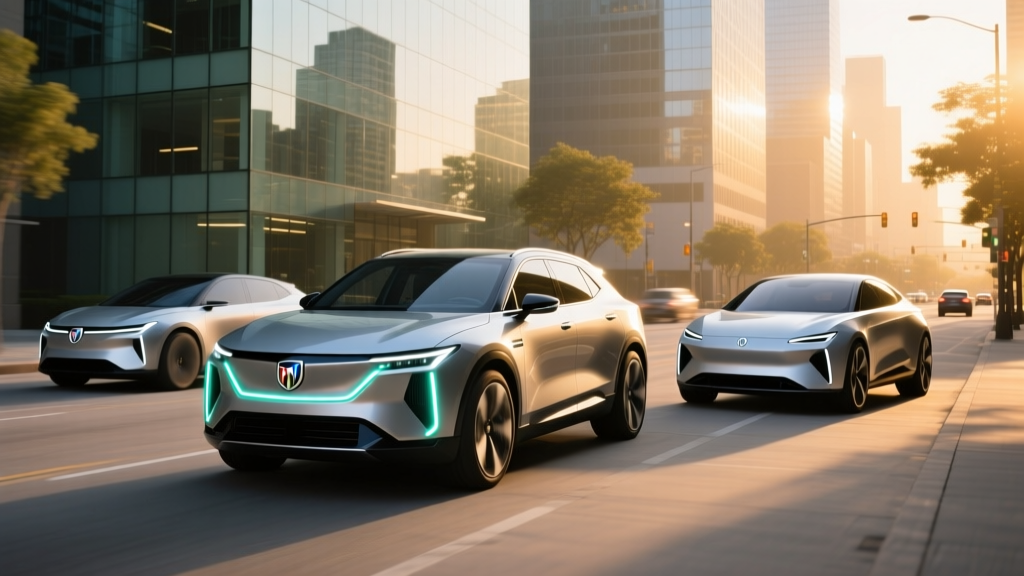
Buick's EV lineup in 2026 centers on the Electra E5 midsize SUV (EPA-estimated 260–303 miles of range, starting around $34,900) and the Electra E4 coupe-style SUV (EPA-estimated 247–286 miles, starting around $33,600). Both ride on GM's Ultium platform with 85–102 kWh battery packs, support up to 150 kW DC fast charging, and qualify for varying levels of the federal §30D tax credit depending on sourcing and income. For current Buick Encore or Enclave owners considering the switch, the E5 delivers similar interior volume with roughly $1,200–$1,500 annual fuel savings over a gas equivalent, assuming home Level 2 charging and average mileage.
The Buick EV Lineup: What's Actually Available
After years of signaling its electric transition, Buick now has two production EVs on U.S. roads. Here's the current state of the lineup:
| Spec | Electra E5 (Preferred) | Electra E5 (Essence) | Electra E4 (GS) |
|---|---|---|---|
| Battery (usable) | 85 kWh (NMC) | 102 kWh (NMC) | 85 kWh (NMC) |
| EPA Range | ~260 mi | ~303 mi | ~247 mi |
| Drivetrain | FWD, 211 hp | FWD, 211 hp / AWD, 288 hp | FWD, 211 hp |
| 0–60 mph | ~7.8 sec | ~7.8 sec (FWD) / ~6.3 sec (AWD) | ~7.8 sec |
| DC Fast Charge (peak) | 150 kW | 150 kW | 150 kW |
| 10–80% DCFC Time | ~28 min | ~33 min | ~28 min |
| Level 2 (240V) Rate | 11.5 kW | 11.5 kW | 11.5 kW |
| MPGe (combined) | ~95 MPGe | ~89 MPGe | ~97 MPGe |
| Cargo (rear seats up) | 26.4 cu ft | 26.4 cu ft | 22.1 cu ft |
| Starting MSRP | ~$34,900 | ~$39,900 | ~$33,600 |
| Battery Warranty | 8 yr / 100,000 mi | 8 yr / 100,000 mi | 8 yr / 100,000 mi |
Both models use GM's BEV3 architecture on the Ultium platform — the same underpinnings as the Chevrolet Equinox EV and Cadillac Lyriq. The key differentiator is battery size: the larger 102 kWh pack (available on the E5 Essence and above) pushes range past 300 miles, while the 85 kWh pack prioritizes affordability and slightly faster charging.
Real-World Range vs. EPA Sticker
EPA estimates assume mixed driving at moderate temperatures. In our experience and based on owner data:
- Highway-only at 75 mph: Expect 10–15% less than EPA. The E5 Essence with 303 mi EPA will deliver roughly 260–270 mi on a full charge at sustained interstate speeds.
- Cold weather (below 30°F): Range drops 15–25% depending on cabin heating use. The 85 kWh E5 could see 195–220 mi in deep winter without preconditioning. Both models include a heat pump, which mitigates some loss.
- Optimal conditions (55–65°F, city/suburban): You can match or slightly exceed EPA numbers thanks to regenerative braking recapturing energy in stop-and-go traffic.
Charging the Buick Electra E5 and E4: What to Expect
Charging speed is where the Ultium platform shows its engineering — but also where buyers need realistic expectations. Here's how Buick's EVs handle each charging level:
| Level | Power | Miles Added/Hour | Use Case |
|---|---|---|---|
| Level 1 (120V) | ~1.4 kW | ~3–4 mi/hr | Emergency / overnight top-off |
| Level 2 (240V, 48A) | 11.5 kW | ~32–36 mi/hr | Home daily charging (full in ~8–9 hr) |
| DC Fast Charge | Up to 150 kW | ~200+ mi in 30 min | Road trips; 10–80% in ~28–33 min |
The charging curve matters. The E5 and E4 peak at 150 kW only between roughly 10–40% state of charge. Above 60%, the rate tapers significantly — often dropping below 50 kW past 80%. This is standard lithium-ion behavior to protect the NMC cells, but it means a 10–90% session takes considerably longer than a 10–80% session. Plan road-trip stops around the 80% mark for efficiency.
Both models use the NACS (Tesla-style) connector as of the 2025 model year, giving them native access to Tesla Supercharger stations with V3 (250 kW) and V4 cabinets. This is a significant advantage over CCS-only vehicles, as the Supercharger network remains the most reliable DC fast-charging network in the U.S. according to multiple owner surveys.
Buick EVs vs. Gas: The Cost Breakdown
Let's compare the Electra E5 Essence (102 kWh, ~303 mi range, $39,900 MSRP) against a similarly equipped gas SUV in Buick's lineup — the Envision Avenir (starting ~$42,000, EPA 25 mpg combined).
| Cost Category | Electra E5 Essence (EV) | Buick Envision Avenir (Gas) |
|---|---|---|
| Base MSRP | $39,900 | $42,000 |
| Fed. Tax Credit (§30D) | Up to $7,500* | $0 |
| Effective Price After Credit | ~$32,400 | $42,000 |
| Fuel/Energy (15,000 mi/yr) | ~$525 (home L2 at $0.14/kWh) | ~$1,980 ($3.30/gal, 25 mpg) |
| Annual Maintenance | ~$250 (cabin filter, tire rotation) | ~$650 (oil, filters, brakes) |
| 5-Year Fuel/Energy Total | ~$2,625 | ~$9,900 |
| 5-Year Maintenance Total | ~$1,250 | ~$3,250 |
| 5-Year Total Operating Cost | ~$3,875 | ~$13,150 |
5-year savings with the E5: roughly $9,275 in operating costs, plus the lower effective purchase price after the tax credit. That's a combined advantage of $18,000+ over five years before factoring in insurance.
*The §30D federal tax credit has income caps ($150K single / $300K joint), MSRP caps ($80K for SUVs), and battery critical-mineral sourcing requirements that change annually. Check current rules at irs.gov and consult a tax professional.
Insurance, Depreciation, and the Hidden Costs
EV ownership isn't universally cheaper. Two areas where Buick EVs may cost more than gas equivalents:
- Insurance premiums: EVs typically carry 15–25% higher premiums than comparable gas vehicles due to higher repair costs (specialized parts, battery protection requirements). Expect $1,800–$2,400/year for the E5 depending on your state and driving record, versus $1,400–$1,800 for a gas Envision.
- Depreciation: EV depreciation has been volatile. The broader EV market saw steeper-than-expected depreciation in 2023–2024 due to Tesla price cuts flooding the used market. Buick's EVs are newer entries, so long-term resale data is limited, but GM's Ultium vehicles have held value better than some competitors thanks to the NACS connector and strong range figures.
- Tire wear: EVs are heavier and deliver instant torque. Expect tire replacement every 30,000–40,000 miles versus 45,000–60,000 on a gas SUV. Budget $800–$1,200 for a set of four EV-rated touring tires.
Common Misconceptions About Buick EVs
| Myth | Fact |
|---|---|
| "Buick doesn't make real EVs — they're just compliance cars." | The Electra E5 and E4 are built on GM's dedicated BEV3/Ultium platform with up to 303 miles of range. These are volume-intent products, not compliance vehicles. |
| "The battery will need replacement in 5 years." | GM warranties the Ultium battery for 8 years/100,000 miles against degradation below 60% capacity. Real-world data from GM's Bolt EV (which uses earlier-gen cells) shows ~7–10% degradation at 100K miles. The Ultium NMC chemistry with active thermal management is expected to perform at least as well. |
| "I can't road-trip an EV — charging takes too long." | A 10–80% DC fast charge on the E5 takes ~28 minutes at a 150+ kW station. With NACS access to Tesla Superchargers (17,000+ stalls nationwide), route planning is practical for most corridors. That said, rural charging deserts remain real in parts of the Mountain West and Great Plains. |
| "Buick EVs don't qualify for the tax credit." | Eligibility depends on current-year battery sourcing rules under §30D. As of 2026, some Ultium-built vehicles qualify for the full $7,500, while others may receive $3,750 depending on critical-mineral and battery-component requirements. Always verify at fueleconomy.gov before purchasing. |
| "I need to upgrade my entire electrical panel." | Most homes with a 200-amp panel can support a 48-amp Level 2 charger on a 60-amp circuit without a panel upgrade. Homes with 100-amp service may need an upgrade ($1,500–$3,000) or opt for a lower-amperage charger. A licensed electrician should assess your specific setup. |
Who Should Buy a Buick EV — and Who Shouldn't
Decision Framework: Is a Buick EV Right for You?
Choose the Electra E5 if:
- You want a comfortable midsize EV SUV with 260–303 miles of range and don't need third-row seating
- You have access to home Level 2 charging (or can install it) for daily use
- You value a quiet, smooth ride over sporty handling — the E5 is tuned for comfort, not corner-carving
- You want native Tesla Supercharger access without an adapter
- Your budget is $33K–$45K after incentives, and you want premium-cabin materials without luxury-badge pricing
Choose the Electra E4 if:
- You prefer a lower, sportier roofline and don't need maximum cargo space
- You want the most affordable entry into the Ultium platform (starting ~$33,600)
- 247 miles of range covers your daily commute with margin to spare
Look elsewhere (or consider a PHEV) if:
- You lack home charging access and your area has sparse public DC fast-charging infrastructure
- You regularly tow more than 1,500 lbs (the E5 is rated for ~1,500 lbs max — not a truck replacement)
- You frequently drive in extreme cold (below 0°F) on long highway stretches where range loss compounds
- You need third-row seating — neither the E5 nor E4 offers it; consider the upcoming three-row Electra concepts or a Chevrolet Equinox EV competitor
Home Charging Setup: What Buick EV Buyers Need to Know
If you're buying a Buick EV, your home charging setup will determine 90% of your ownership experience. Here's what to budget:
| Item | Cost Range | Notes |
|---|---|---|
| Level 2 Charger (48A, hardwired) | $400–$700 | Emporia Vue, ChargePoint Home Flex, or Wallbox Pulsar Plus are reliable picks |
| Electrical Permit | $50–$200 | Varies by municipality; required in most jurisdictions |
| Electrician Labor (standard install) | $500–$1,500 | Assumes panel is within ~50 ft of garage; longer runs cost more |
| Panel Upgrade (if needed) | $1,500–$3,000 | Only if you have 100A service or insufficient breaker spaces |
| Total (no panel upgrade) | $950–$2,400 | Most homeowners fall in this range |
| Total (with panel upgrade) | $2,450–$5,400 | Less common; older homes most likely |
At 11.5 kW on Level 2, the E5's 102 kWh battery charges from empty to full in roughly 9 hours — easily handled overnight. Even a partial overnight charge (say, 6 hours from 30% to 80%) adds ~200 miles of range, more than enough for most daily driving.
Utility rates matter. If your utility offers time-of-use (TOU) pricing, scheduling charging between 11 PM and 6 AM can cut your per-kWh cost to $0.07–$0.10, reducing annual fuel costs to under $400 for 15,000 miles of driving. Check with your local utility about EV-specific rate plans.
How Buick EVs Compare to Rivals
The E5 and E4 don't exist in a vacuum. Here's how they stack up against the midsize electric SUV competition:
| Attribute | Buick Electra E5 Essence | Hyundai Ioniq 5 (Long Range) | Ford Mustang Mach-E (Ext. Range) | Tesla Model Y (Long Range) |
|---|---|---|---|---|
| EPA Range | 303 mi | 303 mi | 320 mi | 320 mi |
| Battery | 102 kWh NMC | 77.4 kWh NMC | 91 kWh NMC | ~75 kWh (est.) |
| Peak DC Charge | 150 kW | 240 kW (350 kW capable) | 150 kW | 250 kW |
| 10–80% DCFC | ~33 min | ~18 min | ~38 min | ~25 min |
| Connector | NACS | NACS (2025+) | NACS (2025+) | NACS (native) |
| Starting Price | ~$39,900 | ~$46,000 | ~$43,000 | ~$44,990 |
| Cargo (rear up) | 26.4 cu ft | 27.2 cu ft | 29.7 cu ft | 30.2 cu ft |
| ADAS | Super Cruise avail. | Highway Driving Assist 2 | BlueCruise | Autopilot / FSD Supervised |
Where Buick wins: Price-to-range ratio. The E5 Essence at ~$39,900 with 303 miles undercuts most rivals by $4,000–$7,000 while matching range. The available Super Cruise hands-free driving system on mapped highways is among the best Level 2 systems available (though the driver must remain attentive — this is not self-driving).
Where Buick trails: DC fast-charging speed. At 150 kW peak, the E5 charges noticeably slower than the Ioniq 5 (which can hit 240 kW on a V3 Supercharger or Electrify America 350 kW stall). On a road trip, that's 10–15 extra minutes per stop. Cargo space is also slightly less than the Mach-E and Model Y.
Super Cruise: Level 2, Not Self-Driving
Buick's available Super Cruise is an SAE Level 2 driver-assistance system. It provides hands-free steering, acceleration, and braking on over 750,000 miles of pre-mapped divided highways in the U.S. and Canada. However, the driver must remain engaged — an infrared camera monitors eye gaze and will issue escalating alerts if you look away. This is fundamentally different from Level 4 robotaxi services like Waymo, which operate without any driver present. Never treat Super Cruise as a substitute for attentive driving.
Frequently Asked Questions
Do Buick EVs qualify for the $7,500 federal tax credit?
It depends on the specific model year, your income, and current battery-sourcing rules. Under §30D, the credit is split into two halves: $3,750 for meeting critical-minerals requirements and $3,750 for battery-component sourcing. As rules tighten annually, some configurations may qualify for only $3,750 or none at all. Verify current eligibility at irs.gov and confirm with your dealer's point-of-sale transfer process before signing.
What happens if the Ultium battery degrades?
GM covers the battery for 8 years or 100,000 miles against capacity loss below 60%. In practice, Ultium batteries with active liquid thermal management are expected to retain 85–90% capacity at 100K miles based on data from earlier GM EVs and industry degradation modeling. A full battery replacement (out of warranty) would cost an estimated $12,000–$18,000 at current pricing, though prices are expected to decline as battery costs fall.
Can I charge a Buick EV at Tesla Superchargers?
Yes. Starting with the 2025 model year, Buick's EVs use the native NACS connector, meaning they plug directly into Tesla Supercharger V3 and V4 stalls without an adapter. You'll need to set up charging through the Tesla app or your vehicle's infotainment system. Access to non-Tesla DC networks (Electrify America, EVgo, ChargePoint) is also available, though you may need a CCS adapter for older Electrify America stalls that haven't been retrofitted with NACS cables.
How does cold weather affect the Electra E5's range?
In temperatures below 30°F, expect 15–25% range reduction. The E5 Essence (303 mi EPA) might deliver 225–255 miles in cold conditions. Both models include a heat pump, which is more efficient than resistive heating and helps preserve range. Preconditioning the battery while plugged in (using the vehicle's scheduled departure feature) warms the cells and recovers some lost range before you leave.
Is a Buick EV a good first electric car?
For buyers transitioning from a gas Buick or similar midsize SUV, the Electra E5 is a strong first EV. It offers familiar SUV ergonomics, comfortable ride quality, 300+ mile range (Essence trim), native Supercharger access, and a price point that undercuts many competitors. The main prerequisites are access to Level 2 home charging (or a reliable nearby public charger) and realistic expectations about road-trip charging stops. If you regularly drive 400+ miles in a single day through areas with sparse charging, a plug-in hybrid like the upcoming Buick PHEV variants may be a better bridge.
How does the Buick E5 compare to a gas Enclave in daily costs?
The gas Enclave gets roughly 21 mpg combined. At $3.30/gallon and 15,000 miles/year, that's about $2,360 in annual fuel. The E5 Essence, charged at home at $0.14/kWh, costs roughly $525/year in electricity — a savings of ~$1,835 annually. Add reduced maintenance (no oil changes, less brake wear from regen), and the E5 saves approximately $2,200–$2,500/year in operating costs versus a gas Enclave.
The Bottom Line
Buick's EV entry is practical rather than flashy — which is exactly what the brand's loyal buyer base wants. The Electra E5 offers genuine 300-mile range, a quiet and comfortable cabin, native Supercharger access, and a price that makes financial sense after incentives. The E4 provides a more affordable, style-forward alternative for those who don't need maximum range or cargo.
The honest limitations: 150 kW peak charging is slower than some rivals, cargo space trails the segment leaders, and neither model offers a third row. If those aren't deal-breakers, the Buick Electra E5 represents one of the best value propositions in the midsize electric SUV segment for 2026 — particularly for current Buick owners who want to go electric without relearning how their car works.