Quick Answer: What's the Best Budget EV in 2026?
The most affordable new EVs in 2026 start between $28,000 and $37,000 before incentives. The Chevrolet Equinox EV (~$33,000 base MSRP, EPA 319 miles) and the Nissan Leaf (~$28,140, EPA 212 miles) lead on price. After the federal §30D tax credit (up to $7,500 for eligible buyers and vehicles), effective prices can drop to the low-to-mid $20,000s. A budget EV saves most owners $800–$1,500 annually on fuel and maintenance compared to a comparable gas car, but only if you have reliable home or workplace charging access.
What Qualifies as a Budget EV in 2026?
For this guide, a "budget EV" is any new battery-electric vehicle with a base MSRP under $40,000. This segment has expanded significantly: where buyers in 2020 had essentially one choice (the Nissan Leaf), the 2026 market includes compact SUVs, crossovers, and a refreshed hatchback with real highway range. The key trade-off at this price point is between range and affordability. Vehicles under $30,000 typically carry smaller battery packs (40–62 kWh) with EPA ranges between 150 and 250 miles. Step up to $33,000–$38,000, and you gain access to 75–85 kWh packs pushing 300+ miles EPA.
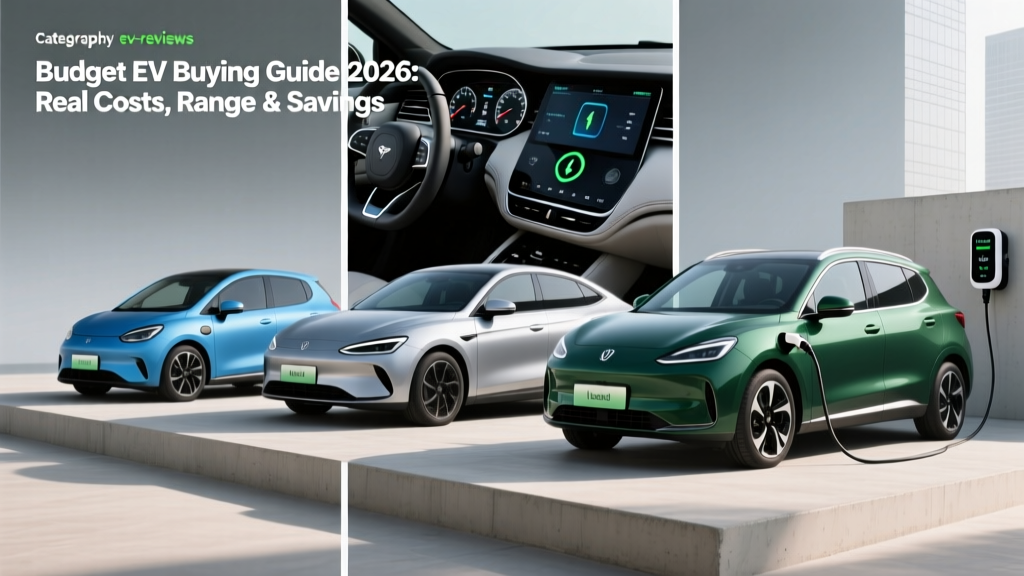
Here's how the current budget EV lineup stacks up on the numbers that matter:
| Model (2026) | Base MSRP | Battery (kWh) | EPA Range | Peak DC Charge (kW) | 10–80% Time | 0–60 mph |
|---|---|---|---|---|---|---|
| Nissan Leaf S | $28,140 | ~40 kWh (NMC) | 150 mi | 50 kW | ~40 min | 7.9 sec |
| Nissan Leaf SV Plus | $33,140 | ~62 kWh (NMC) | 212 mi | 100 kW | ~35 min | 6.9 sec |
| Chevrolet Equinox EV 2LT | $33,000 | ~85 kWh (NMC) | 319 mi | 150 kW | ~20 min | 7.7 sec |
| Hyundai Kona Electric SE | $33,550 | ~65 kWh (NMC) | 261 mi | 100 kW | ~43 min | 7.6 sec |
| Volkswagen ID.4 Standard | $37,735 | ~62 kWh (NMC) | 206 mi | 135 kW | ~28 min | 8.1 sec |
Sources: fueleconomy.gov, manufacturer spec sheets. Real-world highway range is typically 10–20% below EPA depending on speed, temperature, and terrain.
Budget EV vs. Gas Car: The Real Cost Breakdown
The sticker price of a budget EV is usually $3,000–$8,000 higher than a comparable gas compact SUV or sedan. But purchase price is only part of the equation. The total cost of ownership over five years often favors the EV — sometimes dramatically — depending on your electricity rate, annual mileage, and tax-credit eligibility.
Below is a realistic 5-year cost comparison between a 2026 Chevrolet Equinox EV 2LT and a comparably equipped gas compact SUV (e.g., Toyota RAV4 LE, MSRP ~$30,000) for a driver covering 12,000 miles per year:
| Cost Category (5 Years) | Chevy Equinox EV 2LT | Gas Compact SUV (RAV4 LE) |
|---|---|---|
| Purchase Price (MSRP) | $33,000 | $30,000 |
| Federal Tax Credit (§30D) | −$7,500 (if eligible) | $0 |
| Effective Purchase Price | $25,500 | $30,000 |
| Fuel/Energy (12k mi/yr × 5 yrs) | $3,600 (home L2, $0.14/kWh) | $9,000 ($3.50/gal, 30 MPG) |
| Maintenance | $1,200 | $3,500 |
| Insurance (avg.) | $8,500 | $7,200 |
| Estimated Depreciation | $12,000 | $10,500 |
| 5-Year Total | $50,800 | $60,200 |
Assumptions: EV charged 85% at home ($0.14/kWh avg.), 15% public DC ($0.40/kWh). Gas at $3.50/gal national avg. Insurance varies widely by state, age, and driving record — EV premiums run 10–25% higher on average. Tax credit eligibility depends on income, battery sourcing, and MSRP caps per IRS §30D rules.
Real-World Range Reality Check
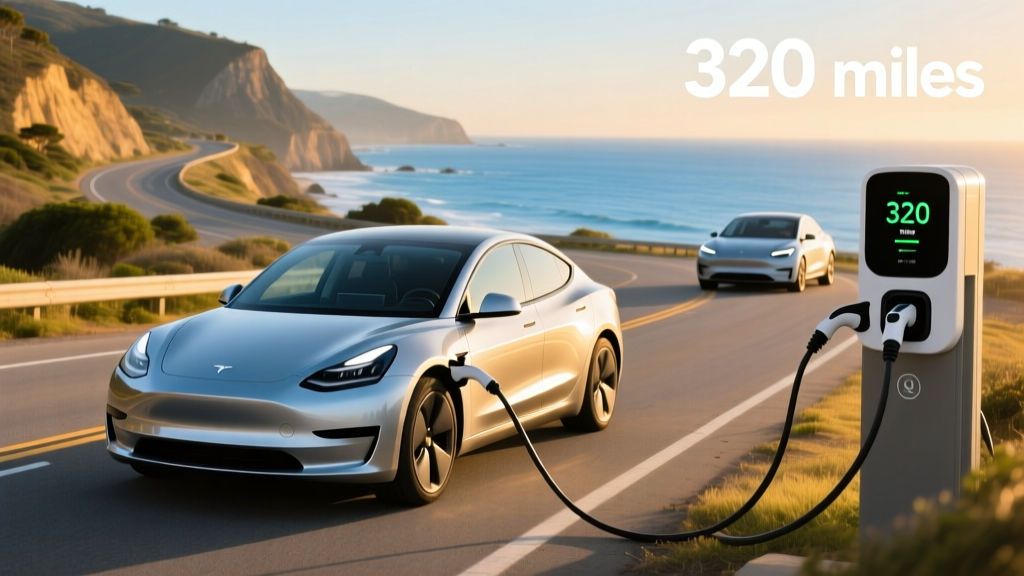
The Equinox EV's EPA-estimated 319 miles assumes a mix of city and moderate-speed driving at moderate temperatures. On a 75 mph highway trip in 35°F weather, expect 220–250 miles of usable range before needing to charge. In summer at highway speeds, plan for 260–285 miles. Always budget a 15–20% buffer for real-world conditions.
Federal Tax Credit: Can You Actually Get $7,500?
The §30D Clean Vehicle Credit remains the single biggest factor in making a budget EV truly affordable, but eligibility is not universal. The credit has three gates you must pass simultaneously:
- Buyer income cap: Modified AGI ≤ $150,000 (single), $225,000 (head of household), $300,000 (married filing jointly)
- MSRP cap: Vehicle base price must not exceed $55,000 (sedans/wagons) or $80,000 (SUVs/trucks/vans)
- Battery sourcing: Increasingly strict critical-mineral and battery-component requirements must be met — these change annually and vary by model and build date
As of 2026, the point-of-sale transfer option allows you to apply the credit directly at the dealership, reducing your out-of-pocket cost immediately rather than waiting until tax filing. However, battery sourcing rules have tightened significantly. Before signing, verify the specific VIN's eligibility with the dealer and cross-check against the DOE's qualifying vehicle list on fueleconomy.gov. A tax professional can confirm your income eligibility.
Charging a Budget EV: Home Access Is the Make-or-Break Factor
The ownership experience of a budget EV diverges sharply based on one variable: can you charge at home?
| Charging Level | Power (kW) | Miles Added/Hour | Cost per Full Charge* | Best For |
|---|---|---|---|---|
| Level 1 (120V outlet) | 1.2–1.9 kW | 3–5 mi/hr | ~$8–12 | Overnight top-up, low-mileage drivers |
| Level 2 (240V home) | 7.2–11.5 kW | 20–35 mi/hr | ~$8–12 | Daily charging, full overnight refill |
| DC Fast Charge (public) | 50–150 kW | 150–400 mi/hr | ~$18–35 | Road trips, apartment dwellers |
*Based on 60 kWh battery; home at $0.14/kWh, public DC at $0.35–$0.55/kWh.
If you have a garage or driveway with access to a 240V outlet (or can install one), a Level 2 home charger transforms EV ownership. A typical installation — 40-amp Level 2 hardwired charger with a short conduit run from a 200-amp panel — costs $800–$1,800 including equipment, electrician labor, and permit. If your panel needs an upgrade to 200A, add $1,500–$3,500. Once installed, your "fuel cost" drops to roughly $0.04–$0.06 per mile depending on your utility rate.
If you rely on public charging exclusively (apartment living, street parking), your per-mile energy cost roughly triples to $0.10–$0.16/mile at DC fast chargers, and the time cost adds up: a 10–80% session at a 50 kW CHAdeMO station (like the base Leaf requires) takes 40+ minutes. This is workable for drivers under 30 miles/day who can charge weekly, but it erodes the cost advantage and introduces reliability concerns — public charger uptime varies widely by network.
Cold Weather, Road Trips, and the Limits of Budget EVs
Budget EVs share two inherent constraints that buyers should plan around honestly:
Cold-weather range loss. Lithium-ion batteries lose efficiency in freezing temperatures. At 20°F, expect 20–35% range reduction depending on whether the vehicle has a heat pump (the Kona Electric and ID.4 do; the base Leaf does not). A 212-mile Leaf SV Plus becomes a ~140–160-mile car in a Minnesota January. Preconditioning the battery while plugged in mitigates this somewhat, but the loss is real and recurring.
Road-trip charging speed. The budget segment's weakest link is DC fast-charge capability. The Equinox EV peaks at 150 kW and can add ~180 miles in a 20-minute session — acceptable for highway travel. The base Leaf at 50 kW CHAdeMO, however, adds roughly 60 miles in 30 minutes, making intercity trips tedious. If you drive more than 200 miles one-way more than a few times per year, prioritize a vehicle with ≥100 kW DC charging capability and a CCS or NACS connector for broader network access.
| Common Misconception | What the Data Shows |
|---|---|
| "EV batteries need replacing every few years" | Federal warranty mandates 8 years/100,000 miles minimum capacity retention (typically ≥70% of original). Real-world data from Recurrent Auto shows most packs retain 90%+ at 100k miles. |
| "Budget EVs can't handle highway driving" | The Equinox EV holds 80 mph comfortably with 319 EPA miles. The Leaf SV Plus manages 212 miles EPA at highway speeds — sufficient for most commutes but tight for long corridors. |
| "Charging takes too long" | Home Level 2 charging happens while you sleep — zero active time. Public DC fast charging adds 150–200 miles in 15–25 minutes on capable vehicles. |
| "EVs are worse in the cold" | EVs start instantly in cold weather (no cranking), and cabin heat is instant. Range drops 20–35%, which is manageable with planning but a genuine limitation for long winter trips. |
Decision Framework: Should You Buy a Budget EV?
Choose a Budget EV If:
- You have home or workplace Level 2 charging access (or can install it)
- Your daily driving is under 80 miles round-trip (covers 90%+ of US commutes)
- You qualify for the §30D tax credit (income + vehicle sourcing)
- You want to eliminate oil changes, transmission fluid, and exhaust maintenance
- You primarily drive in moderate climates, or you accept winter range reduction
Choose a Hybrid (HEV/PHEV) Instead If:
- You have zero home or workplace charging access and don't want to rely on public infrastructure
- You regularly drive 300+ miles one-way in cold weather
- You need maximum cargo/towing capacity at a low price (a gas/hybrid pickup or large SUV)
- Your budget is firmly under $25,000 — the used EV market or a new Toyota Corolla Hybrid ($24,000, 50+ MPG combined) may serve you better
Wait or Look Higher If:
- You need 350+ miles of all-weather range — that requires a $45,000+ vehicle today
- You tow more than 2,500 lbs frequently — EV range under tow drops 40–50%
First-Time EV Buyer Checklist
If you've never owned an EV, here's what to verify before signing:
- Confirm your charger plan. Get a quote from a licensed electrician for a Level 2 install before purchasing. Know your panel capacity (most homes need 200A for a 40A+ charger circuit).
- Check tax credit eligibility for your specific VIN. The dealer should provide a seller report confirming battery sourcing compliance.
- Test the regenerative braking. Budget EVs vary widely — the Kona Electric offers aggressive one-pedal regen; the Equinox EV is milder. Make sure the feel suits you.
- Download the charging apps. PlugShare, ChargePoint, EVgo, and Electrify America — check which networks cover your commute and frequent routes before buying.
- Verify insurance costs. Get a quote for the exact model and trim. EV insurance runs 10–25% higher on average due to repair costs. This can eat into fuel savings if your annual mileage is low.
- Understand the warranty. All new EVs carry a minimum 8-year/100,000-mile battery and powertrain warranty per federal mandate. Some brands (Hyundai, Chevrolet) offer 10-year/100,000-mile coverage.
Frequently Asked Questions
What's the cheapest new EV I can buy in 2026?
The Nissan Leaf S starts at $28,140 MSRP with 150 miles of EPA range. After the $7,500 federal tax credit (if eligible), effective cost drops to ~$20,640. However, the Leaf uses the older CHAdeMO charging standard with a 50 kW peak rate on the base model, limiting road-trip practicality. The Chevrolet Equinox EV at $33,000 (~$25,500 after credit) offers far better range (319 mi) and charging speed (150 kW CCS/NACS) for $5,000 more upfront.
Is a budget EV cheaper than a gas car over 5 years?
For most drivers with home charging, yes. Our analysis shows a $9,400 five-year savings for the Equinox EV vs. a comparable gas SUV when the buyer qualifies for the full $7,500 tax credit. Without the credit, the savings narrow to ~$1,900, driven by lower fuel and maintenance costs. If you rely solely on expensive public DC charging, the savings shrink further — run the math with your local electricity and gas prices.
Do budget EVs qualify for the full $7,500 tax credit?
It depends on the specific vehicle's battery sourcing, your income, and the MSRP cap. As of 2026, several budget EVs (including certain builds of the Equinox EV) qualify for the full credit, while others may qualify for $3,750 (meeting only the critical-minerals or battery-component requirement, not both). Check the DOE qualifying list and consult a tax professional for your specific situation.
Can I road-trip in a budget EV?
Yes, with planning. The Equinox EV (319 mi EPA, 150 kW charging) handles highway trips with 20–25 minute stops every 200–240 real-world miles. The Leaf SV Plus (212 mi EPA, 100 kW CCS) requires stops every ~150 miles. The base Leaf S (150 mi, 50 kW CHAdeMO) is not recommended for frequent long-distance travel. Precondition the battery before each fast-charge stop to maintain peak charge speed.
How long will a budget EV battery last?
Modern NMC lithium-ion packs are engineered for 1,500–2,000+ full charge cycles before reaching 70–80% of original capacity. For a 250-mile-range vehicle, that translates to 375,000–500,000 miles of theoretical cycle life. Real-world degradation data from Recurrent shows most EV batteries retain 90–95% capacity at 50,000 miles and 85–92% at 100,000 miles. The federal warranty guarantees at least 70% retention at 8 years/100,000 miles. Full battery replacement costs $8,000–$15,000 out of warranty but is rarely needed within the vehicle's typical lifespan.
Should I buy a used budget EV instead?
A used EV can be an excellent value, especially models that have already taken their initial depreciation hit. The used clean vehicle credit offers up to $4,000 (30% of sale price, max $4,000) for EVs priced at $25,000 or less, with lower income caps ($75k single, $150k joint). A 2-year-old Equinox EV or Kona Electric in this price range can be a strong deal — but have the battery State of Health (SoH) checked by a dealer before purchasing.