Quick Answer: When Was the First Electric Car Invented?
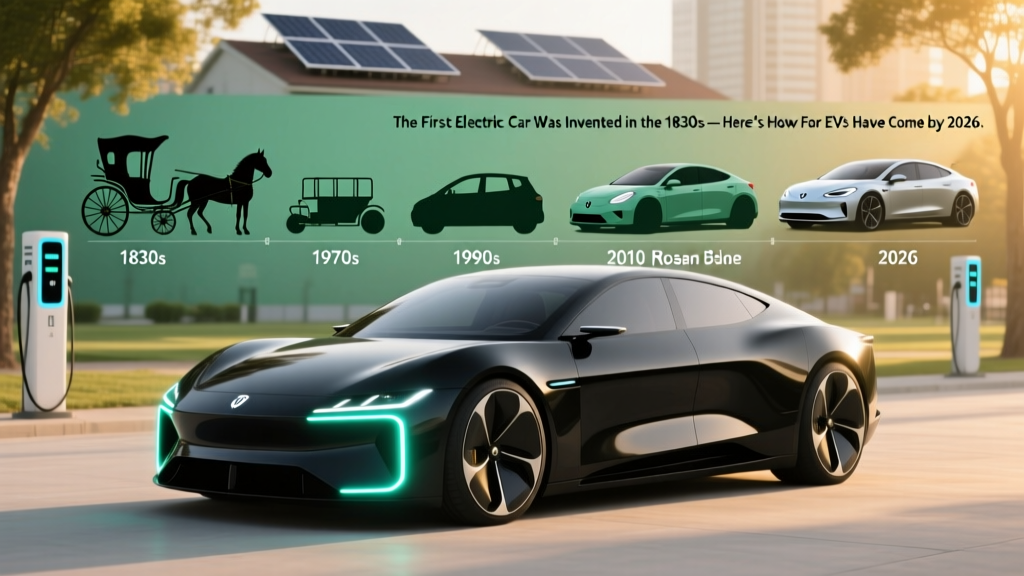
The first electric car was invented around 1832–1839 by Scottish inventor Robert Anderson, who built a crude electric carriage powered by non-rechargeable primary cells. By the 1890s, electric vehicles outsold gasoline cars in the United States. It took nearly two centuries of battery chemistry breakthroughs — from lead-acid to today's lithium iron phosphate (LFP) and nickel-manganese-cobalt (NMC) packs — for EVs to become practical daily drivers with 300+ miles of EPA range and DC fast-charging speeds exceeding 350 kW.
If you're researching EVs for the first time, that 190-year arc matters because it explains why modern EVs only recently became viable: the energy density of lithium-ion cells finally crossed the threshold where range, cost, and charging speed converged for mass adoption. Below, we break down what that history means for your wallet, your commute, and your next car purchase in 2026.
A Brief Timeline: From Robert Anderson to the 2026 Model Year
Understanding where EV technology started helps calibrate expectations about where it's going. Here are the pivotal milestones:
- 1832–1839: Robert Anderson builds the first crude electric carriage in Scotland using non-rechargeable voltaic cells.
- 1889–1891: William Morrison builds the first practical US electric vehicle — a six-passenger wagon capable of 14 mph with a ~100-mile range on lead-acid batteries.
- 1900: Electric cars account for roughly 38% of all automobiles on US roads, outselling gasoline cars (source: U.S. Department of Energy).
- 1912: The electric starter makes gas cars easier to operate; cheap Texas crude oil tips the economic scales. EVs fade into niche use.
- 1996: GM launches the EV1 — the first mass-produced modern electric car, with ~80 miles of range on lead-acid, later 140+ miles on NiMH.
- 2008: The Tesla Roadster arrives with a lithium-ion pack and 244 miles of range, proving the chemistry's potential.
- 2010: The Nissan Leaf and Chevy Volt debut, launching the modern EV/PHEV era.
- 2022–2023: The Inflation Reduction Act (IRA) reshapes EV incentives with the §30D tax credit, introducing MSRP caps, income limits, and critical-mineral sourcing requirements.
- 2025–2026: NACS (Tesla's charging connector) becomes the dominant North American standard. LFP chemistry proliferates in base trims. Multiple models exceed 300+ miles EPA range with 10–80% DC fast-charge times under 20 minutes.
The through-line: battery chemistry and manufacturing scale are what unlocked the modern EV. Everything else — motors, power electronics, software — was largely ready decades earlier.
2026 EV Specs vs. Gas and Hybrid: The Numbers That Matter
History is interesting, but you're here to decide what to drive. Let's put a representative 2026 battery-electric vehicle (BEV), a plug-in hybrid (PHEV), and a conventional hybrid (HEV) side by side. We'll use the Hyundai Ioniq 6 SE Long Range (BEV), Toyota RAV4 Prime (PHEV), and Toyota RAV4 Hybrid (HEV) as benchmarks because they're popular, well-documented, and span the electrification spectrum.
| Metric | 2026 Hyundai Ioniq 6 SE LR (BEV) | 2026 Toyota RAV4 Prime (PHEV) | 2026 Toyota RAV4 Hybrid (HEV) |
|---|---|---|---|
| Powertrain | Single-motor RWD BEV | 2.5L I4 PHEV AWD | 2.5L I4 Hybrid AWD |
| EPA Range / Electric-Only | ~361 mi (EPA est.) | ~42 mi electric, then hybrid | N/A (hybrid only) |
| Battery Capacity | 77.4 kWh usable (NMC) | 18.1 kWh usable | 1.6 kWh (buffer only) |
| Fuel Economy / Efficiency | ~140 MPGe combined | ~94 MPGe (EV mode), ~38 MPG (gas) | ~40 MPG combined |
| Max DC Fast Charge | ~240 kW peak (10–80% in ~18 min) | No DC fast charge (Level 2 only) | N/A |
| Level 2 Charge Rate | ~10.9 kW | ~6.6 kW | N/A |
| 0–60 mph | ~7.1 sec | ~5.7 sec | ~7.4 sec |
| Horsepower | 225 hp | 302 hp combined | 219 hp combined |
| Starting MSRP | ~$38,650 | ~$44,500 | ~$33,500 |
| Federal Tax Credit (§30D) | Up to $7,500 (eligibility varies) | Up to $7,500 (eligibility varies) | Not eligible (not a BEV/PHEV with ≥4 mi EV) |
| Battery Warranty | 10 yr / 100,000 mi | 10 yr / 150,000 mi | 10 yr / 150,000 mi |
Real-world range caveat: The Ioniq 6's 361-mile EPA figure assumes moderate temperatures and mixed driving. Expect ~280–310 miles on sustained highway driving at 70+ mph, and ~220–260 miles in sub-freezing winter conditions due to cabin heating demand and reduced battery chemistry efficiency. A heat pump (standard on many 2026 models) recovers some of that loss.
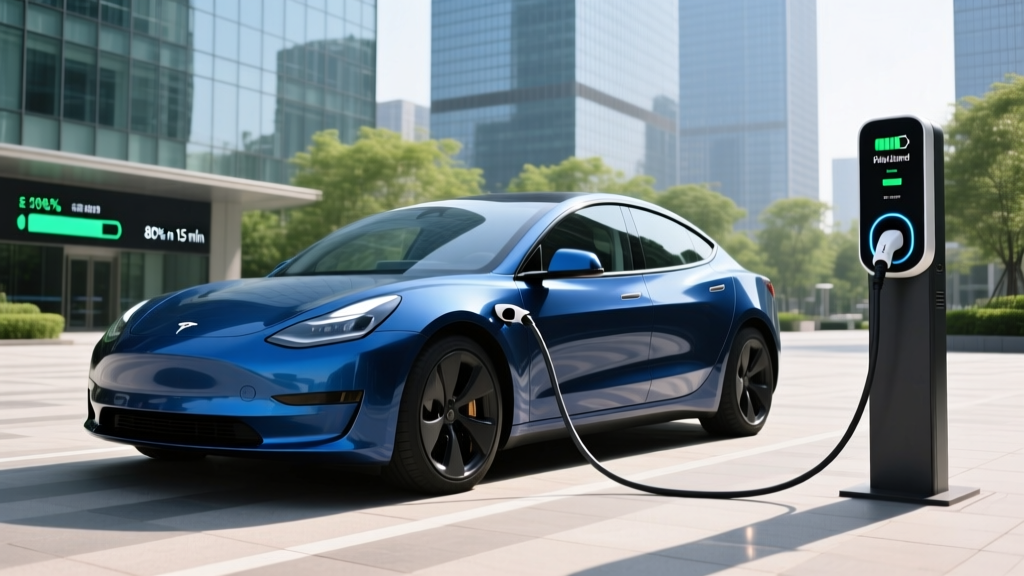
Charging-curve reality: That 240 kW peak on the Ioniq 6 is not sustained for the full session. The vehicle holds peak rate roughly from 10–45% state of charge (SoC), then tapers progressively. A 10–80% session takes ~18 minutes; 80–100% can take another 20+ minutes. Plan road-trip stops around 10–80% charges.
Real Cost Breakdown: What EV Ownership Actually Costs in 2026
The sticker price is just the start. Here's a five-year total cost of ownership (TCO) estimate for a typical driver covering 12,000 miles/year, comparing a mid-price BEV, a PHEV, and a gas-only equivalent. These numbers use national averages — your mileage, electricity rate, and state incentives will shift them.
| Cost Category (5 years / 60k mi) | BEV (~$40k MSRP) | PHEV (~$44k MSRP) | Gas Car (~$33k MSRP, 28 MPG) |
|---|---|---|---|
| Purchase Price (after est. credit) | $32,500 (assumes $7,500 §30D + point-of-sale) | $36,500 (assumes $7,500 §30D) | $33,000 |
| Fuel / Energy | $3,600 (home L2 at $0.14/kWh avg) | $4,200 (mix of electric + gas) | $8,100 (at $3.15/gal avg) |
| Maintenance | $1,800 (no oil changes, fewer moving parts) | $3,000 (engine maintenance + EV system) | $4,200 (oil, filters, brakes, transmission) |
| Insurance (avg) | $9,500 (EV premiums ~15–25% higher) | $8,200 | $7,500 |
| Estimated Depreciation | $16,000 (EV depreciation moderating but still steep) | $17,500 | $14,000 |
| Total 5-Year TCO | $63,400 | $69,400 | $66,800 |
| Cost Per Mile | $1.06/mi | $1.16/mi | $1.11/mi |
Key takeaways:
- The BEV wins on energy and maintenance costs — dramatically. Home charging at $0.14/kWh is roughly equivalent to paying $1.05/gallon for gasoline.
- Insurance is the BEV's biggest ongoing penalty. Get quotes before you buy; some insurers have closed the gap, others haven't.
- Depreciation has historically hurt EVs, but as the used-EV market matures and battery longevity data solidifies (many packs retaining 90%+ capacity at 100k miles), the gap is narrowing.
- The §30D credit is the swing factor. If you qualify for the full $7,500 and take it as a point-of-sale reduction (allowed under current IRS rules), the BEV's effective purchase price drops substantially. But eligibility depends on your income, the vehicle's MSRP, and battery component/critical-mineral sourcing. Always check the latest on IRS.gov and confirm with a tax professional.
First-Time EV Buyer: What You Must Know Before Signing
After nearly a decade of driving, charging, and writing about EVs, here's the practical checklist I wish someone had handed me before my first electric purchase:
1. Home Charging Is the Make-or-Break Factor
Over 80% of EV charging happens at home. If you can install a Level 2 (240V) home charger — ideally a 48-amp hardwired unit on a 60-amp circuit — daily EV ownership is effortless. You wake up every morning with a "full tank." Expect to pay $800–$2,500 for a quality Level 2 EVSE (like a ChargePoint Home Flex or Wallbox Pulsar Plus) plus $500–$2,000+ for electrician installation, depending on panel capacity and run length. If your electrical panel is maxed out, a panel upgrade can add $1,500–$3,000.
If you cannot charge at home (apartment, street parking, no garage), an EV is still possible but requires planning around public Level 2 and DC fast-charging infrastructure. Check the Alternative Fuels Data Center for chargers near your home and workplace before committing.
2. Cold Weather Steals Range — Budget for It
Lithium-ion batteries lose efficiency below freezing, and cabin heating is a major energy draw. In sustained 20°F weather, expect 20–35% range reduction depending on the vehicle. A heat pump (standard on many 2026 EVs from Hyundai, Tesla, BMW, and others) recovers roughly 5–10 percentage points of that loss. If you live in Minnesota or Maine, buy more range than you think you need.
3. DC Fast Charging: Peak kW ≠ Sustained kW
Automakers advertise peak charge rates (e.g., "up to 350 kW"), but no vehicle sustains that rate for a full session. The charge curve tapers as the battery fills to protect cell longevity. What matters is the 10–80% time and the area under the curve. A vehicle peaking at 250 kW with a flat curve may actually charge faster than one peaking at 350 kW with a steep taper. Always look up real-world charging tests, not just spec-sheet peaks.
4. LFP vs. NMC Battery Chemistry
Many 2026 base-trim EVs now use LFP (lithium iron phosphate) batteries instead of NMC (nickel-manganese-cobalt). LFP offers longer cycle life, better thermal stability, and lower cost — but with slightly lower energy density (heavier pack for the same range). LFP packs also tolerate being charged to 100% daily, which NMC packs don't recommend for long-term health. If your daily commute is short and you want a battery that'll outlast the car, LFP is a smart trade-off.
5. The §30D Tax Credit Is Not Guaranteed
The federal EV tax credit under IRS §30D has multiple gates:
- Income caps: AGI must not exceed $300,000 (joint), $225,000 (head of household), or $150,000 (single).
- MSRP caps: Vans/SUVs/pickups ≤ $80,000; sedans/other ≤ $55,000.
- Battery sourcing: Increasingly strict critical-mineral and battery-component requirements tied to US/free-trade-agreement sourcing. These tighten annually.
- Point-of-sale transfer: You can now transfer the credit to the dealer at purchase, reducing your out-of-pocket cost immediately — but you must still meet all eligibility criteria when you file taxes.
Always verify your specific vehicle's eligibility on the IRS qualified vehicles list and consult a tax professional.
Common EV Misconceptions — Myth vs. Fact
| Myth | Fact |
|---|---|
| "EV batteries need replacing every few years." | Modern EV packs are warrantied for 8–10 years / 100,000–150,000 miles (with a capacity-retention threshold, typically 70%). Real-world data from Tesla, Hyundai, and others shows most packs retaining 88–95% capacity at 100k miles. Full replacement, if ever needed, costs $5,000–$20,000 depending on the vehicle. |
| "The electrical grid can't handle EVs." | Most EV charging happens overnight during off-peak hours, when grid capacity is underutilized. A single EV adds roughly the same load as a central air conditioner. Utilities are upgrading distribution, but the grid handles current EV adoption levels without issue in most regions. |
| "EVs are worse for the environment because of battery mining." | Lifecycle analyses from Argonne National Laboratory and the ICCT consistently show that even on today's US grid mix, a BEV produces 60–68% fewer lifetime greenhouse gas emissions than a comparable gas car. As the grid decarbonizes, that gap widens further. |
| "Autopilot / FSD means the car drives itself." | Tesla Autopilot and FSD (Supervised), GM Super Cruise, and Ford BlueCruise are all SAE Level 2 driver-assistance systems. The driver must remain attentive and ready to take over at all times. No consumer vehicle sold in 2026 is SAE Level 4 (fully driverless). Only dedicated robotaxi services like Waymo operate at Level 4, and only in geofenced areas. |
| "You can't take an EV on a road trip." | With 300+ miles of range and DC fast-charging networks (Tesla Supercharger, Electrify America, EVgo), multi-state road trips are routine. Plan 15–25 minute charge stops every 200–250 miles. Apps like A Better Routeplanner optimize routes around charger availability and terrain. |
Decision Framework: Should Your Next Car Be an EV, PHEV, or Hybrid?
Choose a BEV (Battery Electric Vehicle) If:
- You can install Level 2 charging at home or have reliable workplace charging.
- Your daily driving is under 100 miles round-trip (covers ~95% of US commutes).
- You want the lowest per-mile fuel and maintenance costs.
- You qualify for the §30D tax credit, bringing effective purchase price closer to a gas equivalent.
- You're willing to plan charging stops on road trips (15–25 min every ~220 miles).
Choose a PHEV (Plug-In Hybrid) If:
- You want electric-only commuting (30–45 miles) but need gas-engine range flexibility for frequent long trips.
- You have home Level 2 charging but live in a region with sparse DC fast-charging infrastructure.
- You regularly tow or haul heavy loads where battery weight and range loss are concerns.
- You want to reduce fuel consumption without fully committing to electric-only driving.
Choose a Hybrid (HEV) or Gas Vehicle If:
- You have no access to home or workplace charging and public infrastructure in your area is limited.
- Your budget is tight and you can't absorb the EV price premium (even after incentives).
- You drive in extreme cold regularly and need maximum range predictability without charging logistics.
- You drive very low annual miles (< 5,000/year), where the fuel savings don't offset the purchase premium.
Frequently Asked Questions
Who invented the first electric car?
Scottish inventor Robert Anderson built the first crude electric carriage between 1832 and 1839, powered by non-rechargeable primary cells. It was more of a proof-of-concept than a practical vehicle. The first practical, rechargeable electric vehicle is credited to various inventors in the 1880s, including Gustave Trouvé in France (1881) and William Morrison in the United States (1891).
Why did electric cars disappear in the early 1900s?
Three factors converged: the invention of the electric starter (1912) eliminated hand-cranking gas cars, cheap petroleum from Texas oil fields made gasoline affordable, and Henry Ford's Model T mass production made gas cars dramatically cheaper. Electric vehicles couldn't compete on cost or range and became a niche technology for nearly a century.
How much does it cost to charge an EV at home in 2026?
At the US average residential electricity rate of approximately $0.16/kWh, fully charging a 77 kWh battery (like the Ioniq 6) costs about $12.30 — enough for roughly 340 miles of range. That works out to approximately $0.036 per mile, compared to $0.11–$0.15 per mile for a 28 MPG gas car at $3.15/gallon. Annual fuel savings for a 12,000-mile driver: roughly $900–$1,400.
Do EV batteries degrade quickly?
No. Modern liquid-cooled battery packs with advanced thermal management degrade slowly. Typical annual capacity loss is 1–2% per year under normal use. Most owners report 90%+ state of health (SoH) at 80,000–100,000 miles. The federal minimum warranty requirement is 8 years/100,000 miles with at least 70% capacity retention; many automakers exceed this.
What happens if I can't charge at home?
Public charging is viable but less convenient and more expensive than home charging. DC fast-charging costs $0.30–$0.55/kWh at networks like Electrify America and EVgo — roughly 2–4× the cost of home charging. If public charging is your only option, a PHEV may be a better fit, as you can rely on the gas engine and only use electricity when convenient.
Is the federal EV tax credit still available in 2026?
The §30D Clean Vehicle Credit remains available, but eligibility rules have tightened. Battery-component and critical-mineral sourcing requirements are stricter in 2026 than in prior years, disqualifying some models that previously qualified. Always check the current IRS qualified vehicle list before purchasing, and verify your income falls under the AGI caps. A tax professional can confirm your specific situation.
Are EVs actually better for the environment?
Yes, in nearly every scenario. Even accounting for battery mining, manufacturing emissions, and the current US electricity grid mix (which still includes fossil fuels), lifecycle analyses consistently show BEVs producing significantly lower total CO₂-equivalent emissions over their lifetime. As the grid adds more renewables, the advantage grows. According to fueleconomy.gov, a BEV's upstream emissions vary by state — in states with heavy coal generation the gap narrows, but it never disappears entirely.
The first electric car was invented nearly two centuries ago, but the convergence of lithium-ion chemistry, charging infrastructure, and manufacturing scale has only recently made EVs a practical choice for the majority of drivers. In 2026, the question is no longer "do electric cars work?" — it's whether one works for your commute, your home, and your budget. With the data above, you can answer that with numbers instead of guesswork.