The Bottom Line on BrightDrop Electric Vehicles
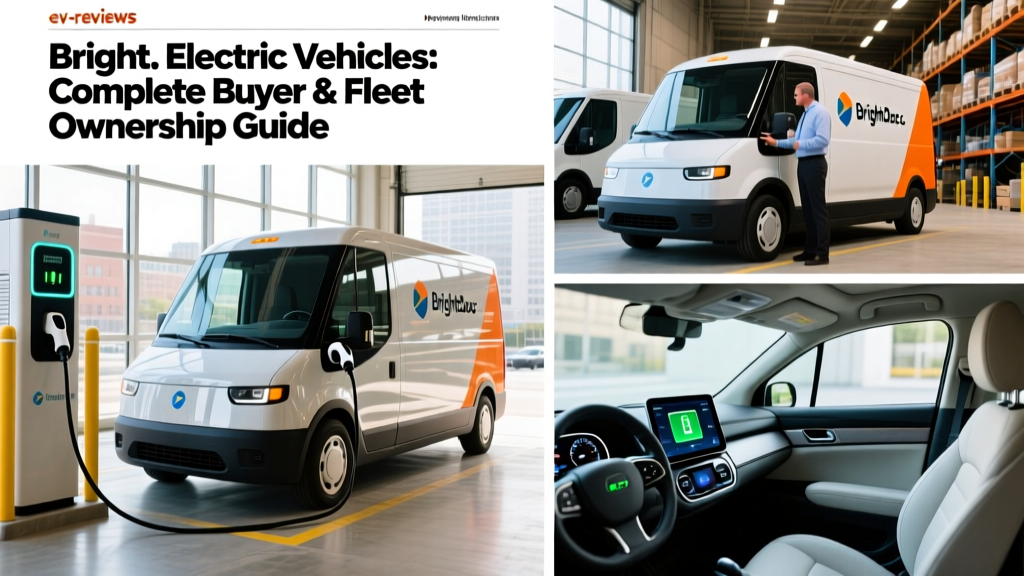
BrightDrop electric vehicles are GM-backed commercial delivery vans built for last-mile and middle-mile fleet operations. The lineup includes the Zevo 400 (compact, ~250 cu ft cargo) and the Zevo 600 (full-size, ~410 cu ft cargo). Both use GM's Ultium battery platform with EPA-estimated ranges up to 272 miles (Zevo 600). Fleet buyers should expect base pricing in the mid-$60,000 to low-$80,000 range depending on configuration, with DC fast charging up to 120 kW. These vans are designed for depot charging and predictable daily routes — not consumer retail purchase. If your fleet runs under 200 miles daily with overnight depot access, BrightDrop is a strong electrification candidate. If routes exceed 250 miles or lack reliable depot charging, a conventional or hybrid commercial van remains more practical.
What Are BrightDrop Electric Vehicles?
BrightDrop (formerly BrightDrop by GM) is General Motors' commercial electric vehicle and software ecosystem targeting delivery fleet operators. The company launched its first vehicles in 2022, with FedEx and Walmart among early deployment partners. By 2026, BrightDrop has scaled production at its CAMI Assembly plant in Ingersoll, Ontario, and expanded its dealer network through select GM commercial dealerships.
The product lineup centers on two battery-electric delivery vans:
- Zevo 600: Full-size step van with approximately 410 cubic feet of cargo volume, targeting parcel delivery, grocery fulfillment, and middle-mile logistics.
- Zevo 400: Compact cargo van with approximately 250 cubic feet of cargo volume, aimed at last-mile urban delivery and smaller fleet operators.
Both vehicles ride on GM's Ultium battery architecture using nickel-manganese-cobalt (NMC) lithium-ion chemistry, shared with the GMC Hummer EV and Chevrolet Silverado EV. BrightDrop also offers fleet management software and consulting services, though the hardware — the Zevo vans — is the core purchase decision.
| Spec | Zevo 600 | Zevo 400 |
|---|---|---|
| EPA-Estimated Range | Up to 272 miles | Up to 250 miles (est.) |
| Battery Capacity (usable) | ~165 kWh (NMC Ultium) | ~100 kWh (NMC Ultium) |
| Cargo Volume | ~410 cu ft | ~250 cu ft |
| Max Payload | ~2,000 lbs | ~2,200 lbs (est.) |
| DC Fast Charge (peak) | 120 kW | 120 kW |
| 10–80% DC Charge Time | ~55 minutes | ~40 minutes |
| Level 2 AC Charging | 11.5 kW (accepts up to 19.2 kW) | 11.5 kW |
| Drive Configuration | RWD, single motor | FWD, single motor |
| Horsepower | ~300 hp | ~200 hp (est.) |
| Base MSRP (approx.) | ~$74,000 | ~$62,000 |
| Warranty (battery) | 8 years / 100,000 miles | 8 years / 100,000 miles |
Note: Zevo 400 specifications marked "est." reflect preliminary manufacturer data. Confirm with your BrightDrop commercial dealer before ordering. Pricing varies with fleet volume agreements and configuration.
Range, Charging, and Real-World Fleet Operations
The Zevo 600's EPA-estimated 272-mile range is competitive among full-size electric cargo vans. However, fleet managers need to plan around real-world variables that reduce usable range well below the sticker number.
Real-World Range Reality Check
EPA Estimate: 272 miles (Zevo 600)
Realistic Daily Usable Range: 180–220 miles under typical delivery conditions (frequent stops, cargo load, HVAC use)
Cold Weather (below 32°F): Expect 25–35% range reduction, dropping effective range to 150–180 miles. NMC chemistry is more cold-sensitive than LFP, and the Zevo's large cabin volume demands significant heating energy.
Highway-Centric Routes: At sustained 65–70 mph, efficiency drops roughly 15–20% versus city stop-and-go with regenerative braking recovery.
For charging, the Zevo 600's 120 kW peak DC fast-charge rate is moderate by 2026 passenger-EV standards but reasonable for a commercial van that will primarily charge overnight at a depot. At 120 kW peak, a 10–80% session takes approximately 55 minutes. However, the charge curve tapers significantly above 60% state of charge (SoC), so sustained average charging power is closer to 80–90 kW across the full session.
Depot charging is the expected use case. Level 2 AC charging at 11.5 kW adds roughly 25–30 miles of range per hour. A full overnight session (8–10 hours) on Level 2 replenishes 200–280 miles — sufficient for most daily routes. Fleet operators should plan for dedicated Level 2 infrastructure at their depot, ideally with networked chargers from providers like ChargePoint, EVgo Fleet, or Blink that support load management across multiple vehicles.
| Charging Level | Power (kW) | Approx. Miles Added/Hour | Use Case |
|---|---|---|---|
| Level 1 (120V) | ~1.4 kW | ~3–4 mi/hr | Not practical for fleet ops |
| Level 2 (240V, depot) | 11.5–19.2 kW | ~25–40 mi/hr | Overnight depot charging (primary) |
| DC Fast Charge | Up to 120 kW | ~150–180 mi/hr (peak) | Mid-day top-up, opportunity charging |
Home charging is not the primary scenario here. BrightDrop vehicles are fleet-purchased, and depot electrification — including utility coordination, panel upgrades, and potential demand charges — is the critical infrastructure decision. Fleet operators should engage their utility provider 6–12 months before vehicle delivery to assess site capacity and available commercial EV rate schedules.
BrightDrop vs. Gas Vans: Total Cost of Ownership
The purchase decision for BrightDrop electric vehicles comes down to total cost of ownership (TCO), not sticker price. A gas-powered Ford E-Transit competitor or a Ram ProMaster with a conventional drivetrain will typically cost less upfront. The TCO equation flips over a 5-year fleet lifecycle when fuel, maintenance, and incentive savings are factored in.
| Cost Category | BrightDrop Zevo 600 | Gas Van (e.g., Ram ProMaster 2500) |
|---|---|---|
| Purchase Price (base) | ~$74,000 | ~$46,000 |
| Federal Commercial Clean Vehicle Credit (§45W) | Up to –$40,000* | $0 |
| Effective Purchase Price | ~$34,000–$74,000 | ~$46,000 |
| Fuel/Energy (5 yrs, 75k miles) | ~$5,500–$8,000 (electricity) | ~$16,000–$19,000 (gasoline) |
| Maintenance (5 yrs) | ~$1,500–$2,500 | ~$4,500–$6,000 |
| Insurance (5 yrs, est.) | ~$9,000–$12,000 | ~$7,500–$10,000 |
| Depot Charging Install (amortized/vehicle) | ~$3,000–$8,000 | $0 |
| Estimated 5-Year TCO | ~$53,000–$104,500 | ~$74,000–$81,000 |
*The §45W Commercial Clean Vehicle Credit provides up to $40,000 for qualifying commercial EVs (or 30% of cost basis if not subject to depreciation rules). Eligibility depends on battery sourcing requirements, vehicle weight class, and your business tax position. Consult a tax professional — this is not the consumer §30D credit.
The TCO range for the Zevo 600 is wide because the §45W credit's impact varies dramatically by fleet tax situation. For a fleet that can fully utilize the credit, the Zevo 600 can achieve cost parity with a gas van within 2–3 years. Without the credit, the payback period stretches to 5–7 years depending on mileage and electricity rates.
Fuel Savings Breakdown
Electricity costs for commercial fleets average $0.10–$0.18/kWh depending on region and rate schedule. The Zevo 600 consumes roughly 50–55 kWh per 100 miles in mixed driving. That translates to approximately $0.05–$0.10 per mile in energy costs. A comparable gas van averaging 14 MPG at $3.50/gallon costs roughly $0.25 per mile in fuel. Over 15,000 annual miles, that's a $2,250–$3,000 annual fuel savings per vehicle.
What First-Time Fleet EV Buyers Must Know
If your fleet is evaluating electrification for the first time, several realities separate the marketing from the operational truth:
1. Depot Electrification Takes Time
Installing depot Level 2 chargers is not a weekend project. Expect 4–12 months for site assessment, utility coordination, permitting, and installation. For a 10-vehicle fleet, you may need a panel upgrade to 400A or 800A three-phase service, adding $15,000–$50,000 to infrastructure costs. Engage a commercial electrician and your utility early.
2. Route Analysis Is Non-Negotiable
Before ordering, audit your actual daily route distances — not the planned routes, the real ones with detours, traffic, and HVAC load. If more than 20% of your daily routes exceed 200 miles (especially in cold climates), you need a mixed fleet strategy or opportunity charging mid-day.
3. Maintenance Is Lower, Not Zero
EVs eliminate oil changes, spark plugs, and transmission fluid. But tire wear is often higher on EVs due to vehicle weight (the Zevo 600 weighs over 8,000 lbs), and suspension components see similar wear to gas vans. Budget for tire replacement every 25,000–35,000 miles.
4. Insurance Premiums Run Higher
Commercial EV insurance typically runs 15–30% higher than equivalent gas vehicles due to higher repair costs for battery and structural components. Get quotes before committing to your fleet order.
| Myth | Fact |
|---|---|
| "The 272-mile range means I can run 272-mile routes daily" | Real-world range with cargo, HVAC, and stops is 180–220 miles. Plan routes at 70% of EPA range. |
| "Electric vans cost more to own, period" | With the §45W credit and fuel savings, TCO can be lower than gas within 3 years for high-mileage fleets. |
| "I can charge at public stations during routes" | Public DC chargers are unreliable for fleet scheduling. Depot charging is the primary strategy; public charging is backup only. |
| "The battery will need replacing in 5 years" | GM's Ultium batteries are warranted for 8 years/100,000 miles at 60%+ capacity retention. Fleet data shows NMC packs retaining 85–90% capacity at 100k miles under normal use. |
| "BrightDrop vans are self-driving" | BrightDrop offers driver-assist features (SAE Level 2). The driver must remain fully engaged at all times. No Level 4 autonomy is available. |
Decision Framework: Is BrightDrop Right for Your Fleet?
If / Then Guide for Fleet Electrification
Choose BrightDrop if:
- Your daily routes are under 200 miles (loaded, with HVAC margin)
- You have depot or warehouse space where Level 2 chargers can be installed
- Your fleet qualifies for the §45W Commercial Clean Vehicle Credit
- You operate in a state or utility district with commercial EV charging incentives
- Your routes are urban/suburban with frequent stops (maximizing regenerative braking)
- You want to lock in lower per-mile energy costs and reduce maintenance budgets
- Corporate sustainability reporting or client ESG requirements favor fleet electrification
Stick with gas or hybrid vans if:
- Your routes regularly exceed 220 miles per day, especially in cold-weather regions
- You lack depot charging access and cannot install infrastructure within your timeline
- Your fleet operates in rural areas with limited utility capacity for charger installation
- Your business cannot utilize the §45W tax credit (insufficient tax liability, ineligible entity)
- You need immediate vehicle availability and BrightDrop lead times don't match your cycle
- Your vans tow heavy trailers (the Zevo lineup is not optimized for heavy towing)
Consider a mixed fleet if:
- 60–80% of routes are EV-friendly but some long-haul or rural routes remain
- You want to pilot 2–5 BrightDrop vehicles before committing the full fleet
- Charging infrastructure is being phased in over multiple years
BrightDrop vs. Competing Electric Commercial Vans
BrightDrop doesn't exist in a vacuum. The commercial EV van space in 2026 includes several alternatives worth cross-shopping:
| Vehicle | EPA Range | Cargo Volume | DC Fast Charge | Approx. Base Price |
|---|---|---|---|---|
| BrightDrop Zevo 600 | 272 mi | 410 cu ft | 120 kW | ~$74,000 |
| Ford E-Transit (extended) | 126 mi | 487 cu ft | 115 kW | ~$58,000 |
| Mercedes eSprinter (150 kWh) | ~200 mi | 533 cu ft | 115 kW | ~$74,000 |
| Ram ProMaster EV | ~162 mi | 463 cu ft | 150 kW | ~$62,000 |
The Zevo 600's range advantage is significant — it offers roughly 100 more miles of EPA range than the Ford E-Transit. However, the E-Transit costs less upfront and offers slightly more cargo volume. The eSprinter provides the largest cargo bay but at a similar price point. Fleet decisions here hinge on whether range (BrightDrop), cost (Ford), or cargo volume (Mercedes) is the priority constraint.
Battery Longevity and Warranty
GM's Ultium NMC battery pack in the Zevo 600 carries an 8-year / 100,000-mile warranty guaranteeing at least 60% capacity retention. In practice, fleet data from early BrightDrop deployments suggests Ultium packs retain approximately 85–90% of original capacity at 100,000 miles under typical delivery-cycle usage (daily charge to 80–90%, partial discharge cycles).
For fleet managers concerned about battery replacement cost: a full Ultium pack replacement currently costs an estimated $15,000–$25,000 depending on configuration, though module-level repair (replacing individual degraded modules rather than the full pack) can reduce this significantly. GM's commercial service network handles warranty claims through authorized BrightDrop dealers.
Longevity tip: Avoid daily charging to 100% unless routes require it. Setting fleet management software to cap charge at 85–90% SoC can extend battery life by reducing calendar degradation. For vehicles that sit idle on weekends, a 50–60% storage charge is ideal.
Frequently Asked Questions
Can individual consumers buy a BrightDrop Zevo van?
BrightDrop primarily sells through fleet and commercial channels. While there is no hard prohibition on individual purchases, the ordering process, pricing, and dealer network are structured for fleet buyers. If you're an owner-operator or small business, work with an authorized BrightDrop commercial dealer to explore availability.
How does the §45W Commercial Clean Vehicle Credit work for BrightDrop?
The IRS §45W credit provides up to $40,000 for qualified commercial clean vehicles with a gross vehicle weight rating (GVWR) above 14,000 lbs, or up to $7,500 for lighter vehicles. The Zevo 600's GVWR places it in a position where the credit value depends on your specific tax situation, depreciation method, and the vehicle's battery sourcing compliance. This is not the same as the consumer §30D credit. Engage a tax professional who understands commercial fleet taxation.
What happens if a BrightDrop van runs out of charge on a route?
The same thing that happens with a gas van that runs out of fuel — it stops. Plan routes with a 20–30% range buffer. BrightDrop's fleet management software includes route optimization and range prediction tools. If a mid-day charge is needed, the Zevo can use any CCS1-compatible public DC fast charger (with adapter for NACS stations), adding ~100 miles in about 35 minutes.
Does BrightDrop offer all-wheel drive?
As of the 2026 model year, the Zevo 600 is rear-wheel drive and the Zevo 400 is front-wheel drive. AWD is not currently available. For fleets operating in heavy snow regions, winter tires and route planning for reduced range are necessary accommodations.
How does cold weather affect BrightDrop van range?
In sustained temperatures below 32°F, expect 25–35% range reduction on the Zevo 600 due to battery chemistry limitations and cabin/cargo heating demand. In extreme cold (below 0°F), reduction can reach 40%. Fleets in northern climates should size routes for worst-case winter range, not summer range. Preconditioning the battery while still plugged in at the depot can recover some of this loss.
What is the BrightDrop software ecosystem?
BrightDrop offers a suite of fleet management tools including route optimization, vehicle telematics, charge scheduling, and energy cost tracking. This software is typically bundled or offered as a subscription alongside vehicle purchases. It integrates with common fleet management platforms and can coordinate charging schedules with utility time-of-use rates to minimize electricity costs.
Sources: BrightDrop official specifications, IRS §45W Commercial Clean Vehicle Credit, EPA fueleconomy.gov. All specifications and pricing are approximate and subject to change. Confirm with your BrightDrop commercial dealer for current model-year data.