What Is the Tesla Unboxed Process?
The Tesla unboxed process is a radical rethinking of vehicle assembly first detailed by Tesla at its 2023 Investor Day and subsequently refined through 2024–2025 production engineering updates. Rather than building a car sequentially along a traditional stamping-body-paint-assembly line, the unboxed approach breaks the vehicle into discrete sub-assemblies — front structure, rear underbody, floor, doors, roof, and interior modules — that are built in parallel and then snapped together late in the production sequence.
The goal is starkly quantitative: Tesla claims the unboxed process reduces factory footprint by roughly 40%, cuts production-related capital expenditure by up to 50%, and lowers per-unit manufacturing cost substantially. For buyers, the practical question is whether these factory-floor efficiencies translate into cheaper, faster-delivered EVs — and which vehicles will actually use the process.
Which Tesla Models Use the Unboxed Process?
As of early 2026, the unboxed process is not yet in full-scale production for any consumer vehicle. Tesla has confirmed it will underpin the company's next-generation, smaller, more affordable EV platform — widely referred to as the "Model 2" or next-gen compact — expected to begin production at Gigafactory Texas and potentially Giga Mexico in the 2026–2027 timeframe. Current models (Model 3, Model Y, Model S, Model X, Cybertruck) still use evolved versions of Tesla's traditional sequential assembly, though elements of modular sub-assembly (particularly gigacast rear underbodies) have already been adopted.
This is critical context: the unboxed process is a manufacturing methodology, not a vehicle. You cannot walk into a Tesla showroom today and buy an "unboxed" car. Its relevance to current shoppers lies in what it signals about Tesla's future pricing power, delivery timelines, and competitive positioning against rivals like the Chevrolet Equinox EV, Hyundai Ioniq 5, and upcoming BYD models entering global markets.
How the Unboxed Process Works: A Technical Breakdown
Traditional auto assembly follows a linear path: stamped body panels are welded into a body-in-white, dipped in anti-corrosion baths, painted, then moved down a single mile-long line where workers and robots sequentially install the powertrain, battery, wiring harness, seats, glass, and trim. This is capital-intensive, space-hungry, and bottlenecked by the slowest station on the line.
The unboxed process inverts this logic:
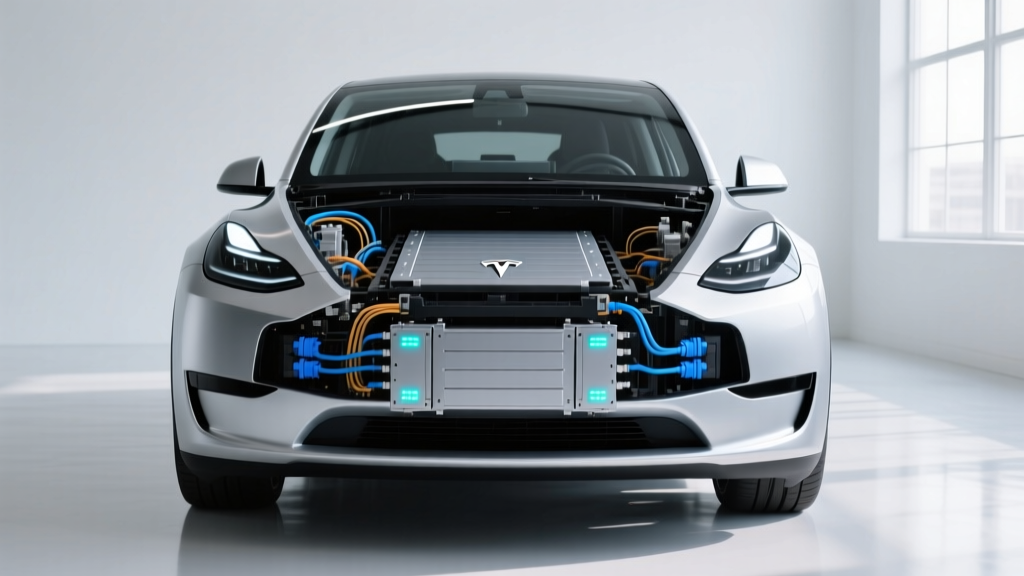
- Parallel sub-assemblies: The front casting, rear gigacasting, battery/structural floor, left and right side structures, roof, doors, and interior cockpit module are each built on independent mini-lines running simultaneously.
- Pre-integration: Wiring harnesses, HVAC ducting, seat mounts, and electronics are installed into sub-modules before final vehicle marriage — dramatically improving worker ergonomics and reducing the contortion required to thread components through a nearly-complete body shell.
- Late-stage marriage: Sub-modules converge at the final assembly station, bolted and bonded together. Doors and closures are attached last, reducing paint-damage risk and eliminating the need to ship open doors through the paint shop.
- Gigacasting integration: Massive single-piece aluminum castings (already used for Model Y rear underbody) replace dozens of stamped-and-welded parts, further shrinking part count and robot time.
Tesla estimates this approach lets a factory produce the same volume in 60% of the floor space, or significantly more volume in the same footprint — a decisive advantage as the company scales toward its stated goal of 20 million vehicles annually.
Impact on Future Tesla EV Specs: What We Know
Because the unboxed process is a manufacturing system rather than a specific vehicle, published EPA range, battery kWh, and 0–60 figures for the next-gen compact do not yet exist. However, Tesla executives and supply-chain reporting through 2025 point to a likely spec envelope for the first unboxed-platform vehicle:
| Attribute | Projected Spec | Notes |
|---|---|---|
| Target MSRP | ~$25,000 | Pre-incentive; Tesla-stated goal |
| EPA Range (est.) | 250–300 miles | Based on ~50–60 kWh usable LFP pack |
| Battery Chemistry | LFP (CATL / BYD Blade) | Lower cost, longer cycle life, no nickel/cobalt |
| DC Fast Charge (peak) | ~170–200 kW (est.) | 400V architecture likely; 10–80% in ~25 min |
| Level 2 Home Charge | 11.5 kW / ~38 mi/hr | Standard Tesla Wall Connector compatibility |
| Drivetrain | RWD single motor (base); AWD dual motor (optional) | Next-gen drive unit, permanent magnet + induction |
| 0–60 mph (est.) | ~5.5–6.5 sec (RWD) | Tesla historically over-delivers on acceleration |
| ADAS | Autopilot standard; FSD (Supervised) optional | SAE Level 2 — driver engagement required |
| Production Start | 2026–2027 (announced) | Giga Texas first; Giga Mexico TBD |
All figures above are preliminary estimates based on executive statements, supply-chain reporting, and platform extrapolation. Final EPA-certified specs will not be available until production vehicles are tested, likely late 2026 or 2027.
What the Unboxed Process Means for Pricing and Tax Credits
The most buyer-relevant consequence of the unboxed process is cost. Tesla has publicly targeted a ~$25,000 starting MSRP for the next-gen compact — a price point that, combined with the federal §30D clean vehicle credit, could produce an effective purchase price in the low-$20,000s for eligible buyers.
| Trim | Est. MSRP | §30D Credit (if eligible) | Effective Price |
|---|---|---|---|
| Base RWD | $25,000 | Up to $7,500 | ~$17,500 |
| Long Range RWD | $29,000 | Up to $7,500 | ~$21,500 |
| AWD Dual Motor | $33,000 | Up to $7,500 | ~$25,500 |
But §30D eligibility is not automatic. Under current IRS rules, buyers must clear several hurdles:
- Income caps: AGI ≤ $150,000 single / $300,000 joint filers
- MSRP caps: ≤ $55,000 for sedans, ≤ $80,000 for SUVs/trucks/vans — a $25,000 compact easily qualifies
- Battery sourcing: Increasing percentages of critical minerals and battery components must be sourced from the U.S. or FTA partners; LFP cells from CATL (China) may face sourcing-rule headwinds depending on final phase-in schedules
- Point-of-sale transfer: Eligible buyers can apply the credit as an immediate dealer discount rather than a tax-time offset
- FEOC restriction: Vehicles containing battery components from a "foreign entity of concern" (largely Chinese-owned suppliers) may be disqualified — a live risk for LFP supply chains
Consult a tax professional and check the latest IRS guidance before counting on the full credit. Rules have tightened annually since 2023 and may evolve further by the time the unboxed-platform vehicle reaches production.
Competitive Position: Unboxed Tesla vs. Today's Affordable EVs
Even at a projected $25,000 MSRP, the next-gen Tesla won't be the only player in the compact EV space by 2027. Here's how it's likely to stack up against confirmed competitors:
| Model | MSRP | EPA Range | DC Fast Charge | Platform |
|---|---|---|---|---|
| Chevrolet Equinox EV (2025) | ~$33,000 | 319 mi | 150 kW, ~30 min 10–80% | Ultium (traditional) |
| Hyundai Ioniq 5 (2025) | ~$42,000 | 303 mi | 240 kW, ~18 min 10–80% | E-GMP (traditional) |
| Next-Gen Tesla Compact (projected) | ~$25,000 | 250–300 mi (est.) | 170–200 kW (est.) | Unboxed |
| Volvo EX30 (2025) | ~$35,000 | 275 mi | 153 kW, ~26 min 10–80% | SEA (traditional) |
The unboxed process's structural advantage is price, not necessarily range or charging speed. Tesla's manufacturing cost reduction lets it undercut competitors by $8,000–$15,000 at similar range — a margin advantage rivals cannot match without their own manufacturing reinvention. However, 800V architectures (Hyundai/Kia) still hold a clear fast-charging edge that Tesla's likely 400V compact platform may not close.
Pros, Cons, and Who Should Wait
Pros
- Target $25,000 MSRP could make it the cheapest long-range BEV in the U.S. market
- LFP battery = longer cycle life, lower fire risk, no cobalt/nickel supply-chain ethics concerns
- Full Supercharger network access (NACS native)
- OTA updates, Tesla app ecosystem, and likely class-leading software integration
- Compact footprint ideal for urban parking and commuting
Cons
- Not yet in production — earliest deliveries likely late 2026 or 2027
- LFP chemistry means worse cold-weather range loss and slower DC charging in winter
- Projected 170–200 kW peak charge rate trails Hyundai/Kia 800V rivals
- FSD (Supervised) remains SAE Level 2 — driver must stay engaged; no hands-off driving
- Battery sourcing rules could jeopardize §30D credit depending on LFP supplier mix
- Compact size likely means limited cargo space vs. Model Y or Equinox EV
Who should wait for it: Budget-conscious buyers, urban commuters, second-car households, and rideshare drivers who prioritize low purchase price and low running cost over maximum range or towing capability. If your daily drive is under 60 miles and you have Level 2 home charging, a 250-mile LFP pack is more than sufficient and will degrade more slowly than NMC alternatives.
Who should buy now instead: Families needing three rows, buyers in cold climates where LFP range loss is punishing, road-trippers who want 350+ miles and 20-minute fast charges, and anyone who simply cannot wait 12–24 months for an unproven production ramp. A 2025 Model 3 RWD ($38,990, 363 mi EPA, §30D eligible) remains an outstanding benchmark today.
Frequently Asked Questions
Can I buy a Tesla built with the unboxed process today?
No. As of early 2026, no production vehicle has been assembled using the full unboxed process. Current Model 3, Model Y, Model S, Model X, and Cybertruck use evolved sequential assembly with selective gigacasting. The first fully unboxed vehicle is expected in the 2026–2027 timeframe.
Will the unboxed process make Teslas cheaper to repair?
Potentially, yes — modular sub-assemblies could allow body shops to swap damaged sections (e.g., a front casting) rather than perform intricate structural repairs. However, gigacastings are expensive single-piece components, and early Model Y rear-subframe replacements have been costly. Insurance industry data on unboxed-platform repair economics does not yet exist.
Does the unboxed process affect battery warranty?
Tesla's standard battery warranty — 8 years / 100,000 miles with 70% minimum capacity retention — is expected to carry over to the next-gen platform. LFP chemistry typically exhibits slower degradation than NMC, which may translate to stronger real-world state-of-health over the warranty period.
How does this compare to Toyota's or BYD's manufacturing?
BYD's e-Platform 3.0 already uses cell-to-body battery integration and high levels of vertical integration (BYD makes its own Blade LFP cells), achieving similar cost-reduction goals through different means. Toyota's "gigacasting" adoption is more cautious. Tesla's unboxed process is distinctive in its degree of parallel sub-assembly and late-stage vehicle marriage, but BYD is arguably Tesla's closest peer in manufacturing-cost competitiveness.
Will unboxed Teslas qualify for the $7,500 federal tax credit?
Likely, but not guaranteed. A ~$25,000 MSRP easily clears the §30D price cap, and buyer income caps apply as usual. The risk factor is battery sourcing: if LFP cells or critical minerals are sourced from FEOC-linked suppliers (primarily Chinese entities), the vehicle could be disqualified. Tesla is working to localize LFP supply, but final eligibility depends on the sourcing rules in effect at the time of purchase. Always verify against current IRS §30D guidance.