Boston Tesla Ownership: What New England Drivers Actually Need to Know
If you live in Boston and are considering a Tesla, you're not just evaluating an electric vehicle — you're evaluating how that EV performs in one of the most demanding climates in the lower 48. Nor'easters, sub-freezing commutes on I-93, salted roads, and limited home-charging options in neighborhoods like Somerville and Dorchester all shape the ownership equation in ways a sunny-California review simply can't capture.
This guide uses the 2026 Tesla Model Y Long Range AWD — the most popular Tesla in Massachusetts by registration volume — as our reference vehicle. We'll layer in Boston-specific data on Supercharger density, cold-weather range loss, winter efficiency, and whether the federal tax credit actually applies to your purchase.
| Spec | Value |
|---|---|
| EPA Range | 320 miles |
| Battery Capacity | ~75 kWh usable (NMC chemistry) |
| Drivetrain | Dual-motor AWD |
| Horsepower | 384 hp combined |
| 0–60 mph | 4.8 seconds |
| Peak DC Fast Charge | 250 kW (V3 Supercharger) |
| 10–80% DC Time | ~25 minutes |
| Level 2 Home Charge | 11.5 kW (~44 mi/hr) |
| Efficiency | 122 MPGe combined / 28 kWh/100 mi |
| Cargo Volume | 30.2 cu ft (rear seats up), 72.0 cu ft (folded) |
| Base MSRP | $48,990 |
| Battery Warranty | 8 years / 120,000 miles |
Real-World Range in Boston: EPA vs. New England Reality
The EPA rates the 2026 Model Y Long Range AWD at 320 miles. That figure is derived from a standardized test cycle that blends city and highway driving at moderate temperatures. In Boston, your real-world experience will deviate — sometimes significantly — depending on the season and your route.
- Spring/Fall, mixed driving: 290–310 miles — close to EPA, thanks to mild temps and regenerative braking in stop-and-go traffic on Route 2 or I-90.
- Summer highway (Mass Pike at 70+ mph): 260–285 miles — higher speeds increase aerodynamic drag, and A/C use adds load.
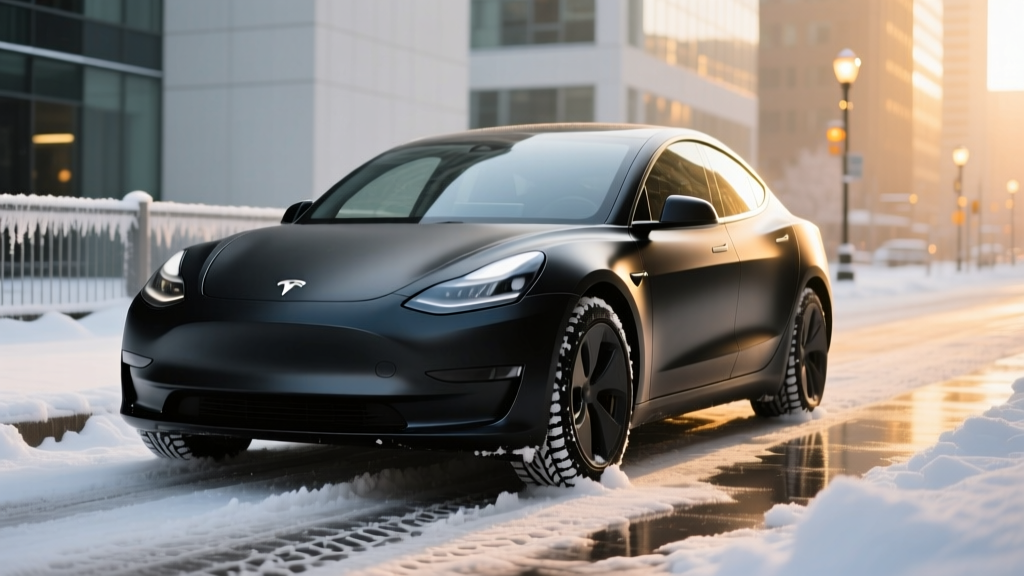
- Winter city/highway mix (20°F–35°F): 220–260 miles — cold batteries reduce charge acceptance, cabin heating demands energy, and winter-blend tires increase rolling resistance.
- Deep cold snap (below 10°F, highway): 190–230 miles — expect 30–40% range loss versus EPA. This is the scenario that causes range anxiety if you're unprepared.
Tesla's heat pump (standard on all 2026 Model Y trims) helps significantly — it's roughly 3–4× more efficient than resistive heating at extracting warmth from cold ambient air. But physics is physics: when it's 5°F in Charlestown and you're blasting the cabin to 70°F while defrosting the windshield, energy consumption spikes. Data from fueleconomy.gov confirms the Model Y's combined efficiency of 122 MPGe, but real-world winter efficiency in New England can drop to 90–100 MPGe equivalent.
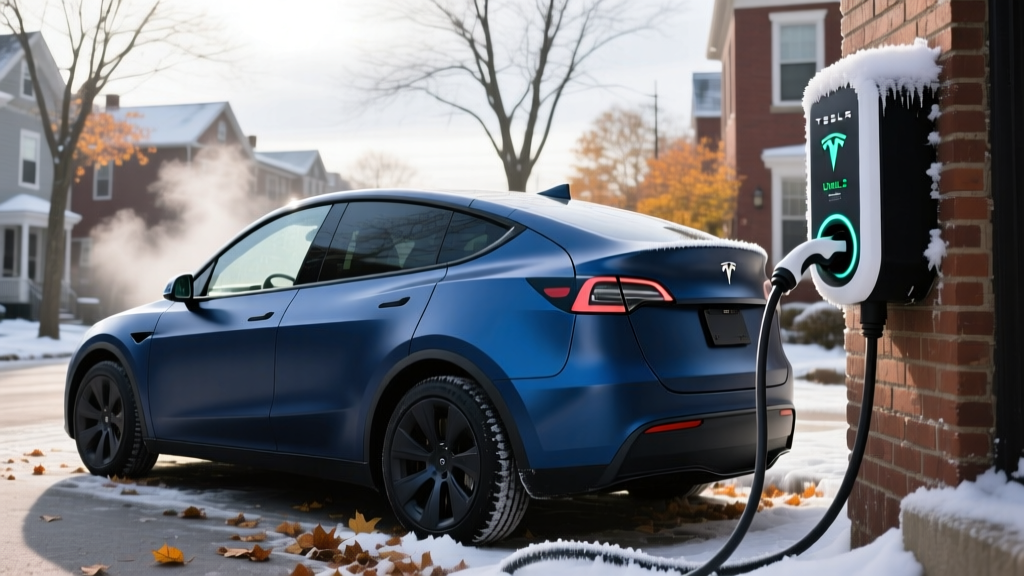
Practical tip: Always precondition your Model Y while it's still plugged in at home. This warms the battery using grid power rather than battery power, preserving range for your commute. Tesla's scheduled departure feature makes this automatic.
Charging in Boston: Superchargers, Home Setup, and Winter Caveats
Charging infrastructure is where Boston Tesla ownership either shines or frustrates, depending on your housing situation. Let's break down all three charging levels and what they mean in practice.
| Level | Power | Speed | Boston Context |
|---|---|---|---|
| Level 1 (120V outlet) | ~1.2 kW | ~3–5 mi/hr | Emergency/trickle only. A full charge takes 4+ days. Not viable as a primary strategy. |
| Level 2 (240V home) | 11.5 kW | ~44 mi/hr | Full charge in ~7 hours overnight. Ideal for daily use. Requires a NEMA 14-50 outlet or Tesla Wall Connector on a 60A circuit. |
| DC Fast (V3 Supercharger) | Up to 250 kW peak | ~175 mi in 15 min | Peak rate only at low SoC. Expect 10–80% in ~25 min. Tapers significantly above 80%. |
Boston Supercharger Network
Greater Boston has strong Supercharger coverage as of early 2026. Key stations include the South Bay Center (Dorchester), Burlington Mall, Dedham Mall, Natick, and the Prudential Center garage. For road trips, the I-95/I-495 corridor and I-90 (Mass Pike) are well-served, with chargers roughly every 60–80 miles heading toward Providence, Worcester, Springfield, or up to Portsmouth, NH.
One Boston-specific note: urban Superchargers like the one at South Bay are often limited to 150 kW (urban stalls) rather than the full 250 kW available at highway-adjacent stations. You'll still charge fast, but don't expect the maximum rate at every city location.
Home Charging: The Boston Condo Problem
If you own a single-family home in the Boston area, installing a Level 2 charger is straightforward — budget $800–$2,000 for a licensed electrician to install a NEMA 14-50 outlet or hardwired Tesla Wall Connector, assuming your electrical panel has capacity. Older homes in neighborhoods like Jamaica Plain or Cambridge may need a panel upgrade ($1,500–$3,000 additional) if they still have 100-amp service.
For condo owners and apartment dwellers — a huge segment of Boston — home charging is far more complex. Many buildings lack dedicated parking with electrical access. Your options:
- Check if your building's HOA or management company has EV charging plans (some newer developments in the Seaport and Fenway areas include EV-ready parking).
- Explore shared public Level 2 chargers near your home via ChargePoint or EVgo apps.
- Rely primarily on Superchargers — feasible if one is within 5–10 minutes of your home or workplace, but adds $80–$150/month in charging costs versus home electricity.
Cold-Weather Charging Reality
In January and February, expect DC fast-charging sessions to take 20–30% longer than in summer. A cold battery can't accept peak charge rates until it warms up. The Model Y's battery preconditioning feature (activated when you navigate to a Supercharger) mitigates this, but you should still budget 30–35 minutes for a 10–80% session in deep cold rather than the 25-minute ideal.
Pricing, Tax Credits, and Total Cost for Boston Buyers
The 2026 Tesla Model Y Long Range AWD starts at $48,990 (including destination). The Performance trim is $54,990. The Standard Range RWD, when available, starts around $44,990.
| Trim | MSRP | Federal Credit (§30D) | Effective Price |
|---|---|---|---|
| Standard Range RWD | $44,990 | Up to $7,500 (if eligible) | ~$37,490 |
| Long Range AWD | $48,990 | Up to $7,500 (if eligible) | ~$41,490 |
| Performance AWD | $54,990 | Up to $7,500 (if eligible) | ~$47,490 |
Federal Tax Credit Eligibility — The Fine Print
Under IRS §30D rules, the full $7,500 credit is not guaranteed. Eligibility depends on three concurrent requirements:
- Buyer income caps: Modified AGI must not exceed $150,000 (single), $225,000 (head of household), or $300,000 (joint). Many dual-income Boston professionals exceed these thresholds.
- MSRP caps: The Model Y qualifies as an SUV under IRS classification, so the cap is $80,000 — all trims clear this easily.
- Battery sourcing requirements: A percentage of critical minerals and battery components must be sourced from the U.S. or free-trade-agreement countries. Tesla's supply chain has been shifting, and eligibility can change mid-year. Always verify current status on the fueleconomy.gov tax credit lookup before purchasing.
As of early 2026, the Model Y Long Range AWD qualifies for the full $7,500 credit for eligible buyers, and Tesla offers point-of-sale transfer — meaning the credit reduces your purchase price at the dealership rather than requiring you to claim it on your tax return.
Massachusetts State Incentives
Massachusetts offers the MOR-EV rebate program, which provides up to $3,500 for new EV purchases (income-tiered, with higher rebates for lower-income buyers). Combined with the federal credit, a qualifying buyer could save up to $11,000 on a Model Y. Check the Massachusetts MOR-EV program page for current availability and income tiers, as funding is subject to legislative renewal.
Performance, Tech, and Daily Driving in Boston
The dual-motor AWD powertrain produces 384 hp and rockets the Model Y from 0–60 mph in 4.8 seconds. More relevant for Boston driving: the instant torque and low center of gravity make it confident merging onto I-93 from the Storrow Drive on-ramps, and the AWD system provides strong traction in snow without the efficiency penalty of a mechanical AWD system.
Winter Driving Notes
The Model Y's traction control and low weight distribution are excellent in snow, but ground clearance is only 6.6 inches — adequate for plowed Boston streets but marginal for unplowed side streets after a major nor'easter. Many Boston Tesla owners switch to dedicated winter tires (e.g., Michelin X-Ice or Bridgestone Blizzak) from November through March. Expect a 5–8% range reduction from winter tire rolling resistance alone.
Standout Tech Features
- 15.4-inch center touchscreen: Controls everything — no physical buttons. Love it or hate it, it's the Tesla way. Navigation, media, climate, and vehicle settings all route through this display.
- Autopilot (standard): SAE Level 2 driver assistance — adaptive cruise control and lane centering on highways. Useful for stop-and-go traffic on I-93, but you must remain engaged with hands on the wheel. This is not self-driving.
- Full Self-Driving (Supervised): Optional $8,000 upgrade (or $99/month subscription as of 2026). Adds automatic lane changes, navigation-on-autopilot, and traffic light/stop sign recognition. Still SAE Level 2 — the driver is fully responsible at all times.
- Sentry Mode: Cameras record activity around the parked car. Valuable in Boston's tight street-parking environment where door dings and hit-and-runs are common.
- Over-the-air updates: Tesla regularly pushes software updates that can add features, improve efficiency, or adjust charging behavior.
Notable Drawbacks
- No physical controls: Adjusting climate or wipers requires screen taps — distracting in heavy traffic.
- Ride quality: The Model Y's suspension is firm. Boston's pothole-riddled streets (looking at you, Commonwealth Ave) transmit more impact than competitors like the Hyundai Ioniq 5 or Ford Mustang Mach-E.
- Visibility: The rear window is small, and the sloping roofline limits rearward sightlines. The backup camera compensates, but mirror checks require more effort.
- Insurance costs: Tesla insurance in Massachusetts averages 15–25% higher than comparable gas-powered SUVs, driven by repair costs and parts pricing. Get a quote before committing.
Who Should Buy a Boston Tesla Model Y?
- You have reliable home Level 2 charging (single-family home or condo with EV-ready parking).
- Your daily commute is under 60 miles round-trip, with occasional road trips to Cape Cod, New Hampshire, or New York.
- You value Supercharger network access for longer trips — Tesla's proprietary network remains the most reliable DC fast-charging option in the Northeast.
- You want dual-motor AWD for New England winters without stepping up to a larger, more expensive EV.
- You lack any home charging and would rely solely on public infrastructure — the convenience gap versus a plug-in hybrid becomes significant.
- You need more than 30 cu ft of cargo space regularly (the Hyundai Ioniq 5 offers 37.5 cu ft behind the rear seats).
- You want physical buttons, a softer ride, or a more traditional interior layout.
- Your household income exceeds §30D caps, reducing the financial case versus a well-equipped hybrid like the Toyota RAV4 Prime.
Model Y vs. Key Competitors in Boston
| Spec | Tesla Model Y LR AWD | Hyundai Ioniq 5 Limited AWD | Ford Mustang Mach-E Premium AWD |
|---|---|---|---|
| EPA Range | 320 mi | 290 mi | 300 mi |
| DC Fast Charge (peak) | 250 kW | 238 kW (800V) | 150 kW |
| 10–80% DC Time | ~25 min | ~18 min | ~38 min |
| 0–60 mph | 4.8 sec | 5.1 sec | 5.6 sec |
| Cargo (rear seats up) | 30.2 cu ft | 27.2 cu ft | 29.7 cu ft |
| Base MSRP | $48,990 | $52,600 | $47,995 |
| Charging Network | Tesla Supercharger (native) | NACS adapter for Superchargers | NACS adapter for Superchargers |
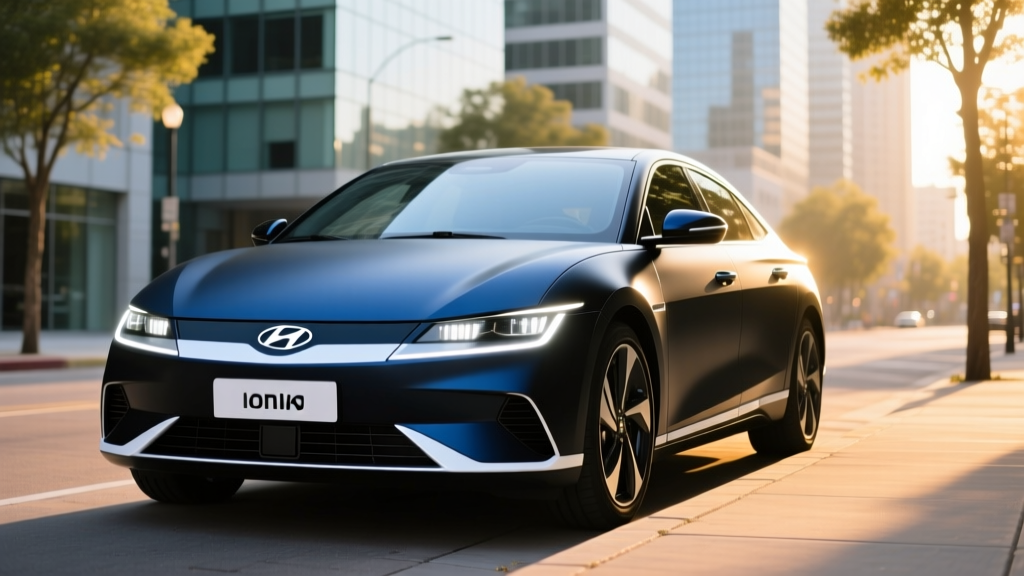
The Ioniq 5's 800V architecture gives it a charging-speed edge in ideal conditions, but the Model Y's Supercharger access remains the most seamless plug-and-charge experience on road trips. The Mach-E's slower charging is its biggest weakness for New England drivers who take regular long trips.
Frequently Asked Questions
What is the real-world range of the Tesla Model Y in Boston winters?
Expect 220–260 miles in typical winter conditions (20°F–35°F, mixed driving) and as low as 190–230 miles during deep cold snaps below 10°F with highway driving. The EPA rates it at 320 miles, but cold weather, cabin heating, and reduced regenerative braking all consume energy. Preconditioning while plugged in helps recover 15–25 miles of that loss.
How fast does the Model Y charge at home and on the road?
At home on a 240V Level 2 charger (11.5 kW), you'll add roughly 44 miles per hour — enough to fully recharge overnight in about 7 hours. On a V3 Supercharger (250 kW peak), you'll go from 10% to 80% in approximately 25 minutes under ideal conditions, adding up to 175 miles in 15 minutes. Cold weather adds 5–10 minutes to DC fast-charge sessions.
Does the 2026 Model Y qualify for the $7,500 federal EV tax credit?
It can, but eligibility is not automatic. Under IRS §30D rules, you must meet income caps ($150K single / $300K joint), the vehicle must be under the $80K MSRP cap (all Model Y trims qualify), and the battery must meet critical-mineral and component-sourcing requirements that can change throughout the year. Verify current eligibility on fueleconomy.gov before purchasing. The credit can be transferred at point of sale to reduce your purchase price directly.
Is a Tesla worth buying in Boston versus a competitor like the Ioniq 5?
If seamless Supercharger access for road trips, strong software/OTA updates, and proven AWD winter performance matter to you, the Model Y holds an edge. If faster peak DC charging, a more comfortable ride on rough roads, and physical interior controls are priorities, the Ioniq 5 is a strong alternative. Both are excellent EVs — the decision hinges on your charging situation and driving preferences.
What are the biggest pros and cons of owning a Tesla in Boston?
Pros: Supercharger network access, strong AWD winter traction, over-the-air updates, low running costs with home charging (~$0.04/mile vs. ~$0.14/mile for gas), excellent cargo versatility, Sentry Mode for street parking.
Cons: Significant cold-weather range loss (30–40% in deep cold), firm ride on Boston potholes, no physical controls, higher insurance premiums, limited home-charging options for condo/apartment dwellers, 6.6-inch ground clearance in heavy snow.
How long will the Model Y battery last, and what does replacement cost?
Tesla warranties the Model Y's battery for 8 years or 120,000 miles (whichever comes first), guaranteeing at least 70% capacity retention over that period. Real-world data from high-mileage Tesla owners suggests NMC batteries typically retain 85–90% capacity at 100,000 miles under normal use. A full battery replacement outside warranty currently costs $12,000–$16,000 at a Tesla service center, though this is rarely needed within the first decade of ownership.