Quick Answer: Bosch Electric Bike Systems at a Glance
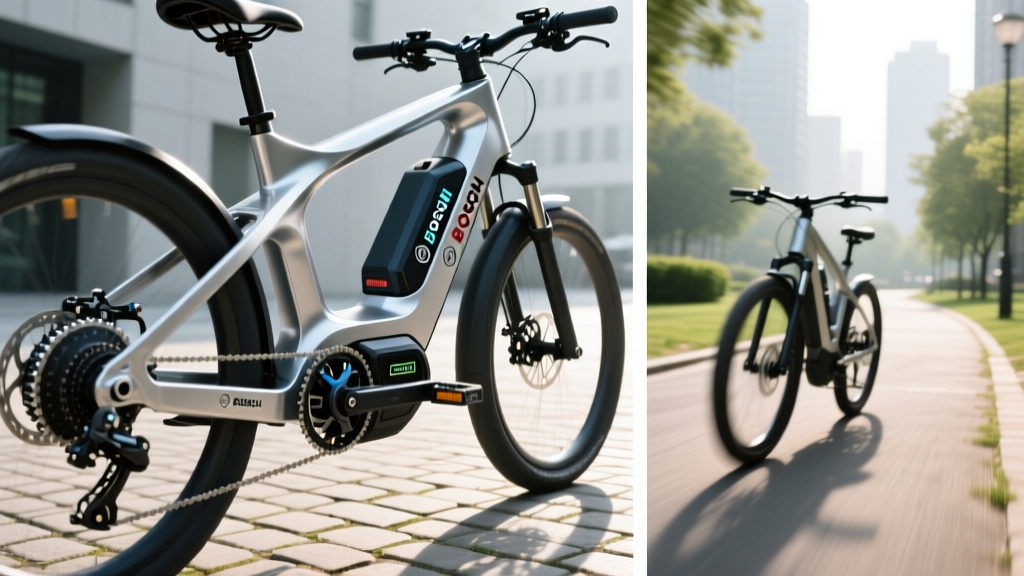
Bosch does not manufacture complete electric bicycles — it supplies mid-drive e-bike powertrain systems (motor, battery, display, and software) that brands like Trek, Cannondale, Riese & Müller, and Giant integrate into their frames. As of 2026, Bosch's flagship Performance Line CX motor delivers 85 Nm of torque and up to 340% assist, paired with PowerTube batteries ranging from 400 Wh to 750 Wh. Real-world range on a Bosch-equipped e-bike typically falls between 30 and 75 miles per charge depending on assist level, terrain, rider weight, and temperature — roughly analogous to how an electric car's EPA range shrinks under highway or cold-weather driving. A full charge costs approximately $0.06–$0.12 at the US average electricity rate of $0.16/kWh, making e-bike commuting dramatically cheaper than either a gas car or even a full-size EV for short urban trips.
Why EV Owners Are Looking at Bosch e-Bike Systems
If you already own an electric car, you understand the core value proposition of battery-electric propulsion: instant torque, minimal maintenance, and fuel cost measured in pennies per mile. Bosch electric bike systems apply that same philosophy to two wheels, and the parallel is closer than you might think. Bosch's e-bike division operates essentially as a Tier 1 powertrain supplier — the same role it plays in the automotive world — providing integrated motor-battery-software packages to bicycle manufacturers rather than selling direct to consumers.
The reason this matters for EV-curious buyers: a Bosch-equipped e-bike can serve as a practical complement to an electric car, replacing short car trips (the EPA notes that most daily driving trips are under 40 miles) while sidestepping the challenges of public charging infrastructure, parking, and insurance that come with a full-size EV. For apartment dwellers who lack home Level 2 charging access for a car, an e-bike with a removable Bosch PowerPack battery — chargeable from any standard 120V outlet — can be the more accessible entry point to electric mobility.
Bosch e-Bike Motor Lineup: Specs and Real-World Performance
Bosch offers several motor families in 2026, each tuned for different use cases. Here's how they compare on the metrics that matter:
| Motor | Max Torque | Max Assist | Weight | Best For | Typical Bike MSRP Range |
|---|---|---|---|---|---|
| Active Line | 40 Nm | 250% | 2.9 kg | City commuting, flat terrain | $2,200–$3,800 |
| Active Line Plus | 50 Nm | 270% | 3.2 kg | Suburban commuting, light hills | $2,800–$4,500 |
| Performance Line | 75 Nm | 300% | 2.9 kg | Sporty riding, moderate terrain | $3,500–$6,000 |
| Performance Line CX | 85 Nm | 340% | 2.6 kg | E-MTB, cargo, steep climbs | $4,500–$10,000+ |
| Cargo Line | 85 Nm | 400% | 2.9 kg | Heavy cargo e-bikes | $5,500–$9,000 |
Real-world note on assist levels: Bosch's assist percentage indicates how much additional power the motor adds on top of your pedaling input. At 340% assist (Turbo mode on the Performance CX), if you're putting in 100 watts of pedaling effort, the motor adds 340 watts — for a combined 440 watts at the crank. This is the e-bike equivalent of an EV's Sport mode: thrilling but range-devouring. Most riders get the best balance in Tour or eMTB mode, which dynamically adjusts assist based on pedal input, similar to how an EV's regenerative braking adapts to driving conditions.
Battery Options and Real-World Range
Bosch's PowerTube (integrated) and PowerPack (external) batteries come in several capacities. Just as with EV batteries, the Wh (watt-hour) rating tells you the energy capacity — think of it as the e-bike equivalent of an EV's kWh rating, scaled down by a factor of roughly 100.
| Battery | Capacity | Weight | Eco Mode Range | Turbo Mode Range | Charge Time (0–100%) |
|---|---|---|---|---|---|
| PowerPack 400 | 400 Wh | 2.5 kg | 55–75 mi | 20–30 mi | 3.5 hours |
| PowerTube 500 | 500 Wh | 2.6 kg | 60–85 mi | 22–35 mi | 3.5 hours |
| PowerTube 625 | 625 Wh | 3.5 kg | 70–100 mi | 28–42 mi | 4.8 hours |
| PowerTube 750 | 750 Wh | 4.3 kg | 80–120 mi | 32–50 mi | 5.5 hours |
The range reality check: Just like EV EPA estimates, Bosch's published ranges assume moderate assist usage, flat terrain, a 175-lb rider, and mild temperatures. In practice, expect 25–40% less range if you ride primarily in Turbo mode, tackle steep hills, carry heavy cargo loads, or ride in temperatures below 40°F. Cold weather reduces lithium-ion battery performance in e-bikes the same way it does in EVs — a phenomenon well-documented by fueleconomy.gov for electric cars, where cold can reduce range by 20–30%. The physics are identical at any scale.
Dual-battery option: Some Bosch-equipped cargo bikes (like the Riese & Müller Load 75 or Multicharger) support Bosch's DualBattery system, pairing two batteries for up to 1,250 Wh of capacity. This is the e-bike equivalent of choosing the long-range battery pack on an EV — more upfront cost and weight, but meaningful range extension for daily commuters or cargo haulers.
Cost Comparison: Bosch e-Bike vs. Electric Car vs. Gas Car
For urban and suburban commuters, a Bosch e-bike can replace a significant percentage of car trips at a fraction of the cost. Here's a 5-year cost comparison for a 10-mile daily round-trip commute (2,500 miles/year):
| Cost Category | Bosch e-Bike (Performance CX, 625 Wh) | EV (e.g., Chevy Equinox EV, 115 MPGe) | Gas Car (30 MPG combined) |
|---|---|---|---|
| Purchase Price | $5,200 | $33,600 (after est. $7,500 credit) | $28,000 |
| "Fuel" Cost (5 yrs) | $150 ($0.012/mi) | $1,875 ($0.15/mi) | $2,920 ($0.23/mi at $3.50/gal) |
| Maintenance (5 yrs) | $1,200 (tires, chain, brake pads, tune-ups) | $1,500 (tires, cabin filter, fluid top-offs) | $3,500 (oil, filters, brakes, belts) |
| Insurance (5 yrs) | $600 (e-bike-specific policy) | $9,000 ($150/mo avg) | $7,200 ($120/mo avg) |
| Parking/Tolls (5 yrs) | $0 | $3,000 | $3,000 |
| Total 5-Year Cost | $7,150 | $48,975 | $44,620 |
| Cost Per Mile | $0.57 | $3.92 | $3.57 |
Key takeaway: The e-bike's per-mile cost is dominated by its purchase price, which is amortized over far fewer miles than a car. But for short urban commutes, the operational savings are massive. The electricity cost to charge a 625 Wh Bosch battery from empty to full is roughly $0.10 at $0.16/kWh — the US residential average. That's enough energy for 30–50 miles of assisted riding, depending on mode. By comparison, the same distance in a 30 MPG gas car costs about $3.50, and in an EV about $0.75.
Important caveat: This comparison assumes the e-bike replaces car trips entirely, which is realistic only for solo commuting in fair-to-moderate weather within about a 15-mile radius. For highway trips, passenger hauling, grocery runs, or inclement weather, a car remains necessary. Think of the e-bike as a complement to your EV, not a replacement — though some urban households have successfully gone from two cars to one car plus e-bikes.
Charging a Bosch e-Bike: What EV Owners Already Know
If you charge an EV at home, you'll find Bosch e-bike charging refreshingly simple — and refreshingly free of infrastructure anxiety.
Charging hardware: Bosch supplies a dedicated charger (the PowerTube/PowerPack charger) with each battery system. It plugs into any standard 120V household outlet — no Level 2 installation, no electrician visit, no panel upgrade. The 4A fast charger delivers approximately 200W of charging power.
Charging speed context: While EV owners track charging in kW and 10–80% times, e-bike charging operates at a much smaller scale. A 625 Wh battery charging at ~200W takes about 3.1 hours for a full charge from empty. Bosch's chargers taper above 80% state of charge, exactly like DC fast charging on an EV — the same lithium-ion charge-curve physics apply regardless of pack size. In practice, most riders plug in overnight and wake to a full battery, just as EV owners do with Level 2 home charging.
Removable battery advantage: Bosch PowerPack batteries and most PowerTube batteries can be removed from the bike for indoor charging. This solves the apartment-charging problem that plagues many prospective EV buyers: you can carry the 3–4 kg battery into your apartment and charge it on a kitchen counter. No garage, no dedicated circuit, no permit required.
Common Misconceptions About Bosch e-Bike Systems
| Myth | Fact |
|---|---|
| "Bosch makes complete electric bikes" | Bosch makes the motor, battery, display, and control software. Bicycle brands (Trek, Cannondale, Gazelle, Riese & Müller, etc.) design and build the actual bikes around Bosch's system. |
| "The battery will need replacing in 2–3 years" | Bosch guarantees its batteries retain at least 60% of original capacity after 500 full charge cycles or 2 years (whichever comes first). In practice, most Bosch e-bike batteries retain 70–80% capacity after 5 years of regular use. Replacement batteries cost $600–$950. |
| "You can't ride a Bosch e-bike in the rain" | All Bosch e-bike systems are IP-rated for water resistance and are designed for all-weather use. The motor and battery are sealed against rain, puddles, and wet conditions. Avoid pressure-washing directly at seals. |
| "E-bikes with Bosch motors are too expensive" | Entry-level Bosch Active Line bikes start around $2,200. Compared to the total cost of car ownership, a $3,500–$5,000 Bosch e-bike used for daily commuting pays for itself in fuel, insurance, and parking savings within 1–2 years. |
| "You need a special electrical outlet to charge" | Bosch e-bike chargers use standard 120V household outlets. No special wiring, permits, or electrical upgrades needed. Charging draws about 200W — less than a desktop computer. |
| "Bosch e-bikes are 'self-driving' or throttle-powered" | Bosch systems sold in the US are Class 1 (pedal-assist only, up to 20 mph) or Class 3 (pedal-assist up to 28 mph). The motor only engages when you pedal — there is no throttle. This is analogous to SAE Level 1 driver assist, not autonomous operation. |
Decision Framework: Should You Add a Bosch e-Bike to Your EV Household?
Choose a Bosch-Equipped e-Bike If:
- Your commute is under 15 miles one-way and includes bike lanes or low-traffic roads — a Performance Line or Active Line model handles this easily with range to spare.
- You live in an apartment or condo where installing a home EV charger is impractical or prohibited — the removable Bosch battery charges from any outlet.
- You want to reduce car trips for errands, coffee runs, and school drop-offs — a Bosch Cargo Line-equipped cargo bike can carry 100+ lbs of groceries or kids.
- You already own an EV and want a zero-emission option for the 60–70% of trips that are under 10 miles, extending your EV's battery life and reducing tire wear.
- You want the reliability of a major Tier 1 supplier — Bosch's dealer network, diagnostic software, and 2-year battery warranty provide support infrastructure that smaller e-bike motor brands can't match.
Stick With Your EV (or Get One) If:
- Your daily driving exceeds 30 miles or includes highways — e-bikes are not practical or legal on most high-speed roads.
- You regularly carry passengers beyond one child in a cargo bike seat — a car is safer and more practical.
- Your climate includes extended periods of extreme cold, ice, or heavy snow — e-bike commuting in these conditions requires specialized gear and carries safety risks that a heated EV cabin eliminates.
- You need cargo capacity beyond panniers or a cargo box — furniture runs, big-box store hauls, and road trips still demand a vehicle.
Ownership Practicalities: What First-Time Bosch e-Bike Buyers Should Know
Dealer support matters. Bosch e-bike systems require dealer-level diagnostics for firmware updates, error codes, and motor service. Before buying, verify that a local bike shop is an authorized Bosch e-bike service center. Bosch's dealer locator on their eBike Systems website lists certified partners. This is analogous to choosing an EV brand with a nearby service center — convenience matters when something needs attention.
Insurance is recommended but not always required. Unlike cars, e-bikes don't require liability insurance in most US states. However, a $4,000–$6,000 Bosch e-bike is theft-prone, and homeowner's or renter's insurance often doesn't cover e-bikes above $1,000–$2,000 in value. Dedicated e-bike insurance from providers like Velosurance or Spoke Insurance runs $100–$200/year and covers theft, crash damage, and liability.
Maintenance is low but not zero. The Bosch motor and battery are essentially maintenance-free — no oil changes, no fluid top-offs, no filter replacements. But the bicycle components (chain, cassette, brake pads, tires) wear with use. Budget approximately $200–$300/year for routine bike shop maintenance. The motor's internal belt drive is sealed and requires no service under normal conditions.
Software updates are real. Bosch periodically releases firmware updates for its motor and display systems, delivered through the Bosch eBike Flow app or at a dealer. These updates can improve assist algorithms, battery management, and add features — much like an EV's over-the-air updates, though e-bike updates sometimes require a dealer visit.
Theft prevention is critical. Bosch offers an integrated eBike Lock feature that disables motor assist when the bike is locked via the app or display — the bike still rides, but without power, reducing its appeal to thieves. Combine this with a high-quality U-lock (Abus Granit or Kryptonite New York series, $80–$130) and GPS tracking (Apple AirTag or Bosch's ConnectModule with built-in GPS, available on select models).
Tax Credits and Incentives: Can You Write Off an e-Bike?
As of 2026, the federal §30D clean vehicle tax credit applies only to four-wheeled vehicles — e-bikes do not qualify. However, several states and municipalities offer e-bike purchase incentives:
- Colorado: Up to $500 rebate on e-bike purchases through participating dealers (income-tiered; higher rebates for lower-income buyers).
- California: Various air-district and utility rebates ranging from $200 to $1,000, particularly for cargo e-bikes and e-bikes replacing car trips.
- Washington, DC: The e-bike rebate program offers up to $1,000 for standard e-bikes and $1,500 for cargo or adaptive e-bikes, with income-based enhanced rebates.
- Employer pre-tax benefits: Some employers offer e-bike purchase programs through commuter benefit platforms, allowing pre-tax payroll deductions.
Check your state energy office, local air quality district, and utility provider for current programs — these change frequently and often have limited funding windows.
Frequently Asked Questions
How long does a Bosch e-bike battery last before it needs replacing?
Bosch guarantees at least 60% capacity retention after 500 full charge cycles or 2 years. In real-world use, most riders report 70–80% capacity after 5 years of regular riding (approximately 15,000–25,000 miles). A replacement PowerTube 625 battery costs approximately $800–$950 through authorized dealers. The battery's built-in Battery Management System (BMS) protects against overcharging, deep discharge, and thermal damage — the same protections found in EV battery packs.
Can I charge a Bosch e-bike battery from my EV's V2L outlet?
Yes, if your EV supports Vehicle-to-Load (V2L) — such as the Hyundai Ioniq 5, Ford F-150 Lightning, or Kia EV6 — you can plug the Bosch e-bike charger into the V2L outlet and charge from your car's traction battery. This is useful for multi-day bike trips or if you lack home charging access. A 625 Wh e-bike charge draws less than 0.7 kWh from a 77 kWh EV battery — essentially negligible.
What's the difference between Bosch Class 1 and Class 3 e-bike systems?
Class 1 (e.g., Active Line, Performance CX in standard mode) provides pedal assist up to 20 mph — the motor cuts off above that speed. Class 3 (e.g., Performance Line Speed) assists up to 28 mph and may require a speedometer, helmet, and registration depending on your state. Class 3 bikes are generally not permitted on bike paths and multi-use trails. Check your local regulations before choosing.
Is a Bosch motor more reliable than Shimano or Brose?
Bosch has the largest authorized dealer network in the US and Europe, which matters for warranty service and diagnostics. In terms of motor longevity, all three systems (Bosch, Shimano Steps, and Brose) have proven reliable over 5+ years of widespread use. Bosch's advantage is ecosystem breadth: battery options, display choices (Kiox, Purion, Intuvia), smartphone connectivity via the Flow app, and the widest compatibility across bike brands. Shimano offers competitive pricing and simpler integration; Brose is known for quieter operation and natural pedal feel.
Do I need to worry about Bosch e-bike motor recalls or safety issues?
Bosch has issued very few recalls on its e-bike systems. Like any major automotive supplier, Bosch monitors field data and issues service bulletins through its dealer network. Register your Bosch e-bike system through the Flow app or at your dealer to receive safety notifications. The US Consumer Product Safety Commission (CPSC) tracks e-bike recalls broadly, including battery-related incidents across all brands.