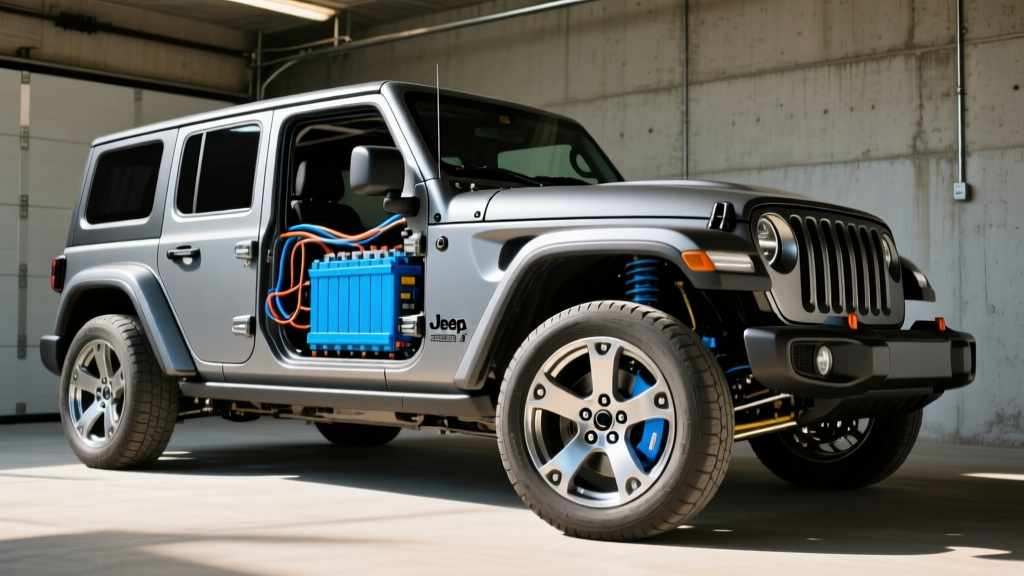
The 2015 Jeep Wrangler (JK generation) remains one of the most modified vehicles on the planet. With its solid axles, removable top, and massive aftermarket support, it's a prime candidate for electrification — whether you're dropping in a Tesla drive unit, a NetGain Hyper9 system, or a full EV crate motor. But before any EV swap begins, you need to understand the foundational hardware: the bolt pattern on the 2015 Jeep Wrangler is 5×127 mm (5×5 inches). This determines wheel compatibility, hub-centric adapters, brake clearance for EV-specific rotors, and ultimately how your electrified JK handles the added weight and torque of an electric powertrain.
This guide breaks down the 2015 Wrangler's bolt pattern in the context of EV conversions — wheel fitment for heavier builds, brake upgrades for regenerative braking compatibility, drivetrain swap considerations, and the real numbers behind popular electrified JK builds in 2026.
2015 Jeep Wrangler Bolt Pattern: The Core Specs
Every 2015 Jeep Wrangler (JK and JK Unlimited) shares the same wheel mounting specification:
| Specification | Value |
|---|---|
| Bolt Pattern (PCD) | 5×127 mm (5×5 in) |
| Center Bore | 71.5 mm |
| Lug Nut Thread Size | 1/2"-20 UNF |
| Lug Nut Torque Spec | 100 lb-ft (135 Nm) |
| Stock Wheel Offset | +44 mm (17" Sport) to +44 mm (18" Sahara) |
| Factory Wheel Sizes | 16", 17", 18" |
| Stock Tire Diameter | ~30.5" (255/75R17) to ~32" (265/65R18) |
The 5×127 pattern is shared with several other vehicles — older Grand Cherokees (WJ/WK), some Dodge trucks, and certain Mercedes-Benz models. This cross-compatibility matters for EV builds because it opens up a wider wheel selection when you need stronger rims to handle the instant torque and increased curb weight of a battery pack.
Why Bolt Pattern Matters for EV Conversions
When converting a 2015 Wrangler to electric power, the bolt pattern affects four critical areas:
1. Weight Distribution and Wheel Load Rating
A typical EV-swapped JK gains 400–800 lbs over stock (curb weight ~4,400 lbs stock, ~5,000–5,200 lbs with batteries). Your wheels must carry this load. Stock 17" JK wheels are rated for roughly 1,500 lbs per corner. Aftermarket wheels in the 5×127 pattern from brands like Method Race, Black Rhino, or Fuel Off-Road often carry 2,500+ lb ratings — essential when battery boxes sit over or near the axles.
2. Brake Clearance for EV-Specific Upgrades
Regenerative braking reduces pad wear, but the added mass of an EV-swapped Wrangler demands larger rotors and calipers. Big brake kits (like those from Baer or Teraflex) may require 17" or larger wheels with specific spoke clearance. The 5×127 pattern limits some big-brake options compared to 6-lug patterns, so verify caliper-to-spoke clearance before ordering.
3. Hub-Centric vs. Lug-Centric Fitment
The 71.5 mm center bore is critical. Hub-centric wheels center on the hub flange, reducing vibration — especially important when an electric motor delivers instant torque from 0 RPM. If using wheels with a larger bore (common with universal-fit aftermarket wheels), use hub-centric rings (71.5 mm outer to match your wheel's inner bore) to prevent high-speed shimmy.
4. Drivetrain Swap Packaging
Popular EV swap configurations — Tesla rear drive unit (small or large), NetGain Hyper9 paired with the stock transmission, or a Cascade EV kit — all interact with the axle assembly. The Dana 30 front and Dana 44 rear axles on a 2015 JK have specific flange patterns. If you're replacing the rear axle with an EV-specific unit (like a Tesla drive unit with CV axles), you may need custom axle shafts with 5×127 flanges or adapter plates.
Popular EV Swap Configurations for the 2015 Wrangler JK
Here are the most common electrified builds for the JK platform as of 2026, with real-world data from the conversion community:
| Build Type | Motor | Battery (kWh) | Est. Range | 0-60 mph | Est. Build Cost |
|---|---|---|---|---|---|
| Budget Commuter | NetGain Hyper9 (AC) | 30–40 kWh (LFP) | 60–80 mi | ~10 sec | $15,000–$22,000 |
| Mid-Range Trail | Tesla SDU (small) | 50–60 kWh (NMC) | 100–130 mi | ~7 sec | $25,000–$35,000 |
| Performance Build | Tesla LDU (large) | 70–85 kWh (NMC) | 140–170 mi | ~5 sec | $40,000–$55,000 |
| Dual-Motor AWD | Tesla SDU + LDU | 75–100 kWh (NMC) | 130–180 mi | ~4.5 sec | $55,000–$75,000 |
Chemistry note: LFP (lithium iron phosphate) packs are favored for budget/commuter builds because they tolerate 100% daily charging, offer longer cycle life (~3,000+ cycles), and are less prone to thermal runaway — ideal for a vehicle that sees rough terrain. NMC (nickel manganese cobalt) packs deliver higher energy density for range-critical builds but should be charged to 80% daily and are more sensitive to heat.
Charging Setup for an EV-Swapped Wrangler
Charging infrastructure is where most EV conversion projects succeed or fail. Here's what to expect:
| Level | Power (kW) | Charge Time (10–80%) | Miles Added/Hour | Equipment Cost |
|---|---|---|---|---|
| Level 1 (120V) | 1.4–1.9 kW | 30–50 hours (60 kWh) | 3–5 mi/hr | $0 (included) |
| Level 2 (240V) | 7.2–11.5 kW | 5–7 hours (60 kWh) | 18–30 mi/hr | $500–$1,200 + install |
| DC Fast Charge | 20–50 kW* | 45–90 min (60 kWh) | 50–120 mi/hr | $2,000–$5,000 (vehicle-side) |
*Most aftermarket EV conversions use CHAdeMO or CCS1-compatible DC fast-charge controllers. A 50 kW peak is realistic for a well-configured system; many budget builds max out at 20–25 kW DC, making road trips challenging. Companies like EV West and Cascade Motion offer integrated fast-charge solutions.
For a daily-driver JK conversion, a Level 2 home charger is essentially mandatory. A 7.2 kW ChargePoint Home Flex or Wallbox Pulsar Plus on a 40-amp circuit will replenish a 60 kWh pack overnight in roughly 7 hours — perfect for a commuter build. Installation typically runs $800–$2,000 depending on panel proximity and whether a 200-amp service upgrade is needed.
Wheel and Tire Fitment for Electrified JK Builds
The added weight and instant torque of an EV drivetrain change the wheel and tire equation significantly:
Recommended Wheel Specs for EV-Swapped 2015 Wranglers
- Size: 17×8.5 or 17×9 (best balance of tire sidewall for off-road and brake clearance)
- Bolt Pattern: 5×127 (5×5) — mandatory, no adapter recommended for safety
- Offset: +12 to +25 mm (pushes wheels slightly out for wider track stability with added weight)
- Load Rating: 2,500+ lbs per wheel minimum
- Center Bore: 71.5 mm hub-centric, or use precision rings
Tire Selection for EV Weight
Standard JK tires (255/75R17) are rated for ~2,400 lbs each. With a 5,000+ lb EV-swapped Wrangler, you need Load Range D or E tires. Popular choices include:
- BFGoodrich All-Terrain T/A KO3 (LT285/70R17) — 3,415 lbs per tire, low rolling resistance for EV range
- Falken Wildpeak A/T4W (LT295/70R17) — 3,640 lbs, good wet traction for regen braking
- Goodyear Wrangler Duratrac (LT285/70R17) — 3,195 lbs, aggressive tread (expect 10–15% range loss vs. highway tires)
Every inch of tire diameter added and every switch to a more aggressive tread pattern reduces efficiency. A JK on 35" mud-terrain tires may consume 4.0+ kWh/mile, cutting a 60 kWh pack's range to under 100 miles. For commuter builds, stick with 31–33" all-terrain tires to preserve range.
Federal Tax Credits and Incentives for EV Conversions
This is where EV-swapped Wranglers diverge sharply from factory EVs. Under current IRS §30D rules:
- New factory EVs: Up to $7,500 credit, subject to MSRP caps ($80,000 SUVs/trucks), buyer income limits ($150K single / $300K joint), and battery critical-mineral sourcing requirements.
- EV conversions / aftermarket swaps: The federal §30D new-vehicle credit does NOT apply to aftermarket conversions of existing ICE vehicles. The converted vehicle was not manufactured as a clean vehicle and does not carry a manufacturer's certificate of conformity.
- Used EV credit (§25E): Up to $4,000 or 30% of sale price (whichever is less) on qualifying used EVs — but this applies to dealer-sold used EVs, not DIY conversions.
- State incentives: Some states (California, Colorado, Oregon) offer additional rebates for EV conversions or zero-emission vehicle modifications. Check your state's energy office for current programs.
Cost Breakdown: EV-Swapped 2015 Wrangler vs. Factory EV SUV
| Item | EV-Swapped 2015 JK (Mid-Range) | 2026 Ford Bronco EV (Est.) |
|---|---|---|
| Base Vehicle | $10,000–$14,000 (used) | $55,000–$65,000 (new) |
| EV Drivetrain Kit | $12,000–$20,000 | Included |
| Battery Pack | $8,000–$15,000 | Included |
| Charging Hardware | $1,500–$4,000 | Included |
| Labor (if not DIY) | $5,000–$12,000 | N/A |
| Wheels/Tires (EV-rated) | $1,800–$3,000 | $0–$2,000 |
| Federal Tax Credit | $0 | Up to $7,500* |
| Total (Est.) | $38,300–$68,000 | $47,500–$64,500 |
| Warranty | None (DIY) / 1-yr (shop) | 8-yr/100,000-mi battery |
*Subject to IRS §30D eligibility. Verify at fueleconomy.gov and consult a tax professional.
Pros and Cons: Electrifying a 2015 Wrangler
Pros
- Instant torque from 0 RPM — transforms off-road crawling (no clutch feathering)
- Silent trail operation — ideal for wildlife areas and stealth camping
- Regenerative braking reduces brake wear on heavy descents
- V2L capability possible with inverter — power tools, camp lights, fridge
- Low "fuel" cost: ~$0.04–$0.08/mile on home solar vs. $0.25+/mile on gas
- Unique build — no two EV-swapped JKs are alike
- Solid axle durability handles EV torque well (Dana 44 especially)
Cons
- No federal tax credit for aftermarket conversions
- Limited range (80–170 mi typical) vs. factory EVs (250–350 mi)
- Zero factory warranty — you are the manufacturer
- Insurance challenges — many carriers won't cover modified EVs at agreed value
- Poor aerodynamics kill highway range (3.0+ kWh/mile at 70 mph)
- DC fast charging requires expensive controllers ($2,000–$5,000+)
- Resale market is niche — harder to sell than stock or factory EV
- Heating cabin in winter drains battery significantly (no waste engine heat)
Who Should (and Shouldn't) EV-Swap a 2015 Wrangler
Choose an EV-Swapped JK If:
- You want a silent, torque-rich trail rig for technical crawling and don't need highway range
- You have fabrication skills or a trusted EV conversion shop
- Your daily commute is under 50 miles round-trip with home charging
- You value uniqueness and enjoy the build process as much as the result
- You have solar panels and want near-zero operating cost
Choose a Factory EV SUV If:
- You need 250+ miles of range for road trips without planning
- You want full warranty coverage and dealer service
- You qualify for the $7,500 federal tax credit and want maximum incentive value
- You need reliable DC fast charging (150–250 kW) for long-distance travel
- You want modern ADAS features (adaptive cruise, lane-keep) that aftermarket builds lack
Frequently Asked Questions
What is the bolt pattern on a 2015 Jeep Wrangler?
The 2015 Jeep Wrangler (JK) uses a 5×127 mm bolt pattern, also expressed as 5×5 inches. It has 5 lug nuts on a 127 mm (5-inch) bolt circle diameter. The center bore is 71.5 mm, and lug nuts are 1/2"-20 UNF thread, torqued to 100 lb-ft.
Can I use wheel adapters to change the bolt pattern on my JK for an EV swap?
Billet aluminum adapters (e.g., 5×127 to 5×114.3) exist, but they add 25–38 mm of thickness, push wheels outward, and introduce a failure point under the high instant torque of an EV drivetrain. For safety, stick with native 5×127 wheels rated for 2,500+ lbs.
How much does a 2015 Wrangler EV conversion cost in 2026?
A basic conversion (Hyper9 motor, 30 kWh LFP pack, Level 2 charging) starts around $25,000–$30,000 all-in including the donor vehicle. A mid-range Tesla drive unit build with 60 kWh NMC runs $40,000–$55,000. Performance dual-motor builds exceed $70,000.
Does an EV-swapped Wrangler qualify for any tax credits?
No. The IRS §30D federal new clean vehicle credit applies only to vehicles manufactured as EVs by a qualified manufacturer with proper certification. Aftermarket conversions of ICE vehicles do not qualify. Some state-level incentives may apply — check your state energy office.
What's the real-world range of an EV-converted 2015 Wrangler?
Expect 2.5–4.0 kWh/mile depending on tires, lift, speed, and temperature. A 60 kWh pack delivers roughly 100–130 miles in mild conditions with all-terrain tires, dropping to 70–90 miles in winter or at sustained highway speeds. Aerodynamics are the Wrangler's biggest efficiency enemy.
What wheels fit a 2015 Wrangler JK for an EV build?
Any 5×127 (5×5) wheel with a 71.5 mm center bore (or hub-centric rings) and adequate load rating. For EV swaps, prioritize 17×8.5 or 17×9 wheels with +12 to +25 mm offset and 2,500+ lb load ratings. Method 701, Black Rhino Arsenal, and Konig Countersteer are popular choices in this pattern.