Why the 2011 F-150 Bolt Pattern Still Matters in the EV Era
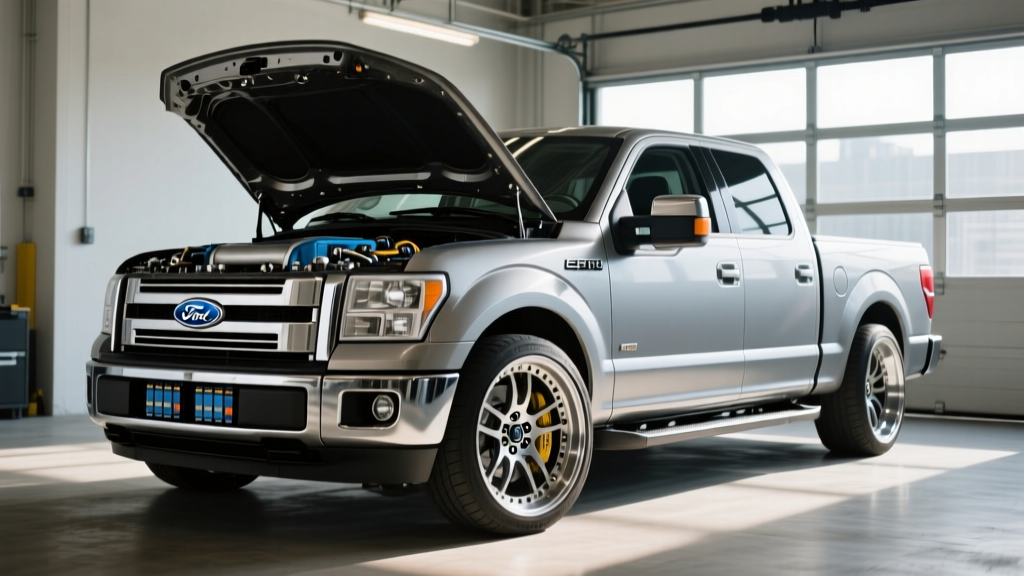
If you own a 2011 Ford F-150 and are exploring wheel upgrades, an EV conversion project, or simply wondering whether your current rims will carry over to a future electric swap, the starting point is the same: the bolt pattern for 2011 Ford F-150 is 6x135mm (6 lug bolts on a 135mm circle). That measurement — six lugs spaced on a 135-millimeter bolt circle diameter — defines every wheel that will physically mount to your hub.
This may seem like a purely mechanical detail, but as the EV aftermarket matures and conversions gain traction, understanding your truck's bolt pattern, center bore, offset, and load rating becomes essential for safety, legality, and performance. A 2011 F-150 carrying a 400–600 lb battery pack in the bed demands wheels rated for the added gross vehicle weight, not just the right lug count.
Below, we break down the exact fitment specs, real-world EV conversion implications, and how this legacy truck's wheel architecture compares to Ford's purpose-built electric F-150 Lightning.
2011 Ford F-150 Wheel Fitment Specifications
| Specification | Value | Notes |
|---|---|---|
| Bolt Pattern | 6x135mm | 6 lugs, 135mm bolt circle diameter |
| Center Bore | 87.1mm | Hub-centric; use hub rings if aftermarket |
| Lug Nut Thread | M14 x 2.0 | Acorn-style, 60° conical seat |
| Stock Offset Range | +44mm to +50mm | Varies by wheel size/trim |
| Stock Wheel Sizes | 17", 18", 20" | XL base = 17"; Lariat/King Ranch = 18-20" |
| Recommended Torque | 150 lb-ft | Re-torque after 50 miles on new wheels |
| Gross Axle Weight Rating (GAWR) | ~3,900–4,100 lbs (front) | Check door jamb sticker for your truck |
The 6x135mm bolt pattern is shared across the entire 2004–2020 F-150 generation span, which gives you a broad used-wheel market. However, the 2021+ F-150 (14th generation) switched to a different platform, and the F-150 Lightning uses a modified version of that newer architecture — meaning Lightning wheels are not directly interchangeable with your 2011 model without adapters, which introduce safety and load-rating concerns we'll address below.
EV Conversion Considerations: Weight, Load Rating, and Regenerative Braking
Converting a 2011 F-150 to electric power is a real and growing niche. Companies like Ford Performance have showcased crate motor programs (the Eluminator, rated at 281 hp and 317 lb-ft), and independent shops regularly drop Tesla drive units or NetGain HyPer 9 motors into these trucks. But wheels are often an afterthought — and that's a mistake.
Added Weight Demands Higher Load-Rated Wheels
A typical EV conversion adds 500–1,000 lbs of battery mass compared to the stock curb weight of roughly 4,800–5,500 lbs (depending on cab/bed configuration). If your conversion pushes the truck toward or past its original 7,050-lb GVWR, stock 17" wheels with a ~2,300-lb per-wheel load rating may be inadequate. Look for aftermarket wheels rated at 2,800+ lbs per wheel in the 6x135mm pattern — brands like Method Race Wheels, Fuel Off-Road, and American Force offer options in this spec.
Regen Braking and Wheel Stress
Regenerative braking in an EV conversion applies torque to the wheels differently than friction brakes. Peak regen can impose 150+ kW of deceleration force through the drivetrain, which translates to significant stress at the hub and lug interface. Ensure your chosen wheels are one-piece forged or high-quality flow-formed construction — avoid cheap cast replicas, which are more prone to cracking under cyclic regen loads.
Offset and Suspension Geometry
If your conversion uses a solid rear axle with leaf springs (stock 2011 layout), you have more offset flexibility. But if you're doing an independent rear suspension swap to accommodate a Tesla or GM EV drive unit, you'll need to recalculate offset to maintain proper scrub radius and avoid premature bearing wear. A +44mm offset is the safe baseline; going more than ±10mm from stock without a full alignment and bearing upgrade is not recommended.
2011 F-150 vs. F-150 Lightning: Bolt Pattern and Platform Comparison
Many F-150 owners considering an EV transition wonder whether Lightning wheels fit their older truck, or vice versa. The short answer: they do not share a bolt pattern.
| Specification | 2011 F-150 | 2025 F-150 Lightning |
|---|---|---|
| Bolt Pattern | 6x135mm | 6x135mm |
| Center Bore | 87.1mm | 87.1mm |
| Platform | 12th Gen (2009-2014) | 14th Gen modified |
| Stock Wheel Sizes | 17"–20" | 18"–22" |
| Curb Weight | ~4,800–5,500 lbs | ~6,000–6,500 lbs |
| Wheel Load Rating Needed | ~2,300 lbs/wheel | ~2,800+ lbs/wheel |
| Hub-Driven vs. Axle | Conventional axle | Conventional axle (e-motors inboard) |
Interestingly, both trucks share the 6x135mm bolt pattern and 87.1mm center bore — a carryover Ford has maintained for decades. However, the Lightning's significantly higher curb weight (roughly 1,000+ lbs heavier) means its OEM wheels are engineered with higher load ratings. Lightning wheels can physically bolt onto a 2011 F-150, and doing so may actually benefit a conversion project by providing the extra load margin you need. Just verify the offset is within the acceptable range (+44mm to +50mm) and that the tire diameter doesn't interfere with the 2011's smaller wheel wells.
Aftermarket Wheel Options in 6x135mm for EV-Build Use Cases
The 6x135mm bolt pattern is common enough that you have solid aftermarket choices. Here's what to target based on your build goal:
- Commuter/Street Build: Flow-formed 18"–20" wheels (e.g., TSW, Niche) — lighter unsprung weight improves range by 2–4% in EV conversions.
- Off-Road/Overland: Forged 17" beadlock-capable wheels (Method 701, ICON Alloy) — smaller diameter allows taller sidewall for trail use; forged construction handles regen stress.
- Towing/Heavy-Duty: 20" forged wheels with 3,000+ lb load rating (American Force, HRE) — essential if your converted truck will tow near its rated capacity with battery weight added.
Regardless of your choice, always verify three things: the wheel's published load rating exceeds your converted GVWR divided by four, the center bore is 87.1mm or uses precision hub-centric rings (not lug-centric), and the offset stays within ±10mm of stock unless you've upgraded suspension components.
Frequently Asked Questions
What is the bolt pattern for 2011 Ford F-150?
The bolt pattern for the 2011 Ford F-150 is 6x135mm — six lug bolts arranged on a 135-millimeter bolt circle diameter. This applies to all trims (XL, XLT, Lariat, King Ranch, Platinum, Raptor) and all cab configurations (Regular, SuperCab, SuperCrew).
Will F-150 Lightning wheels fit my 2011 F-150?
Yes, physically — both share the 6x135mm bolt pattern and 87.1mm center bore. Lightning wheels also carry higher load ratings, which can benefit an EV-converted 2011 truck. Verify offset (+44mm to +50mm) and tire diameter clearance before committing.
Can I use wheel adapters to change the bolt pattern?
Adapters exist to convert 6x135mm to patterns like 6x5.5" (6x139.7mm), but they add 25–40mm of spacer thickness, change your effective offset, reduce thread engagement, and introduce a failure point under the higher torsional loads of regenerative braking. For an EV conversion, we strongly recommend buying wheels in the correct 6x135mm pattern rather than relying on adapters.
What torque spec should I use on the lug nuts?
Ford specifies 150 lb-ft for the 2011 F-150 lug nuts (M14 x 2.0). Always use a calibrated torque wrench in a star pattern, and re-torque after the first 50 miles of driving on any new wheel installation. This is especially critical for EV conversions where regen braking cycles impose repeated stress on the hub interface.
Does wheel weight affect EV range in a conversion?
Yes. Every pound of unsprung weight (wheels, tires, brakes) has a disproportionate effect on efficiency compared to sprung weight. Switching from heavy cast 20" wheels to lighter flow-formed or forged alternatives can recover 2–5% of range in a conversion — meaningful when your total battery capacity might only be 60–100 kWh.