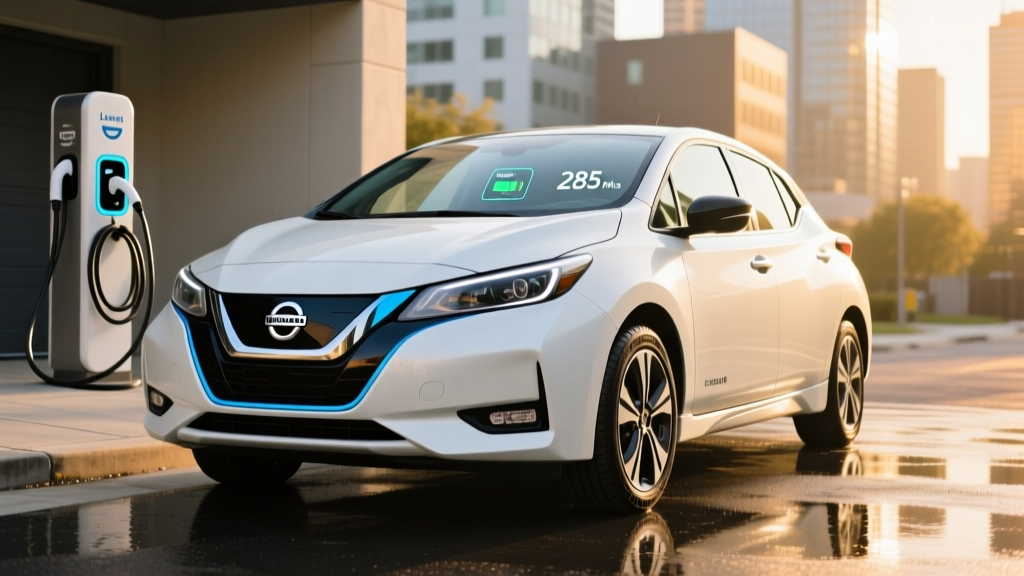
The 2021 Nissan Leaf occupies a unique position in the used EV market of 2026. As one of the original mass-market electric vehicles, it offers an accessible entry point into EV ownership — but its CHAdeMO connector, passive battery cooling, and modest fast-charging speeds mean buyers need to go in with eyes wide open. This review covers the real-world range, charging behavior, ownership economics, and whether the Leaf still holds up against newer competition.
2021 Nissan Leaf Quick Verdict
The 2021 Leaf is a practical, comfortable commuter EV that excels in city driving and Level 2 home charging. The standard Leaf (40 kWh) delivers an EPA-estimated 149 miles of range, while the Leaf Plus (62 kWh) pushes that to 226 miles. If your daily routine involves a predictable commute with overnight home charging, the Leaf remains one of the most affordable ways to drive electric. However, its CHAdeMO DC fast-charging connector is increasingly orphaned in a North American market that has standardized on NACS (Tesla's connector), and its passive air-cooled battery limits sustained fast-charging and long-term longevity in hot climates. For 2026 buyers shopping the used market, the Leaf's eligibility for the up-to-$4,000 used-EV tax credit (IRS §25E) makes certain trims remarkably affordable.
| EPA Range | 149 mi (S/SV) / 212-226 mi (Plus) |
| Battery | 40 kWh / 62 kWh usable — NMC chemistry |
| DC Fast Charge | 50 kW peak (CHAdeMO) — 10-80% in ~40-60 min |
| Level 2 (Home) | 6.6 kW onboard charger — ~22-25 mi/hr |
| 0-60 mph | 7.9 sec (S) / 6.5 sec (Plus SL) |
| Horsepower | 147 hp (S/SV) / 214 hp (Plus) |
| Efficiency | 111 MPGe combined (S) / 104 MPGe (Plus SL) |
| Original MSRP | $31,670 - $44,970 |
| Battery Warranty | 8 years / 100,000 miles |
Range and Efficiency: EPA vs. Real World
The 2021 Leaf comes in two battery configurations, and the difference in real-world usability is substantial.
Leaf S/SV (40 kWh): EPA-estimated 149 miles. In real-world mixed driving, expect 130-145 miles. On sustained highway trips at 70+ mph, plan for 110-125 miles. In cold weather (below 32°F), range drops to roughly 95-115 miles due to cabin heating demands and reduced battery efficiency.
Leaf Plus (62 kWh): EPA-estimated 212-226 miles (varies by trim/wheel size). Real-world mixed driving yields 185-210 miles. Highway cruising nets 160-180 miles. Cold-weather range falls to approximately 140-165 miles.
The Leaf lacks a heat pump (standard on many 2024+ EVs), so cold-weather range loss is more pronounced than competitors like the Hyundai Kona Electric or Tesla Model 3. Source: fueleconomy.gov
The Leaf's efficiency numbers are respectable. The standard S trim achieves 111 MPGe combined (30 kWh/100 mi), while the Plus SL returns 104 MPGe combined (32 kWh/100 mi). These figures are competitive with other compact EVs, though the Model 3 and Bolt EUV edge ahead slightly. The Leaf's e-Pedal one-pedal driving mode maximizes regenerative braking in city traffic, helping recover energy that would otherwise be lost.
Charging: CHAdeMO in a NACS World
Charging is the 2021 Leaf's most significant compromise for buyers in 2026. The Leaf uses the CHAdeMO DC fast-charging standard, which has been effectively abandoned by the North American charging industry in favor of CCS and, increasingly, NACS (Tesla's connector, now adopted by Ford, GM, Rivian, and most major automakers).
Charging Speed Breakdown
| Level | Power / Connector | Speed (mi/hr) | 10-80% Time |
|---|---|---|---|
| Level 1 (120V) | ~1.4 kW / J1772 | ~4-5 mi/hr | Not practical (20+ hrs) |
| Level 2 (240V) | 6.6 kW / J1772 | ~22-25 mi/hr | ~5-7 hours (full charge) |
| DC Fast Charge | 50 kW peak / CHAdeMO | ~120-150 mi/hr (peak) | ~40 min (40 kWh) / ~60 min (62 kWh) |
Key charging realities:
- Peak vs. sustained: The 50 kW peak rate applies only in ideal conditions (battery preconditioned, 20-60% SoC). The Leaf's passive air-cooling system means the battery heats up during fast charging, causing the charge rate to taper aggressively above 60-70% SoC. On a hot day, sustained rates may drop to 30-35 kW.
- CHAdeMO availability: As of 2026, Electrify America has removed most CHAdeMO connectors from new stations. Remaining CHAdeMO infrastructure is concentrated in legacy installations and some regional networks. Check PlugShare or A Better Routeplanner for CHAdeMO stations along your routes before relying on the Leaf for road trips.
- No NACS adapter option: Unlike CCS vehicles (which can access Tesla Superchargers via Magic Dock or adapters), no reliable CHAdeMO-to-NACS adapter exists for the Leaf. You're locked into the CHAdeMO ecosystem.
- Home charging is fine: The 6.6 kW onboard Level 2 charger is adequate for overnight replenishment. A full charge of the 62 kWh Plus takes roughly 9-10 hours on a 240V/32A home charger — perfectly practical for daily use.
Performance and Driving Experience
The standard Leaf's 147 hp and 236 lb-ft of instant electric torque deliver adequate acceleration for city merging and passing, with a 0-60 mph time of approximately 7.9 seconds. The Leaf Plus upgrades to a 160 kW motor producing 214 hp and 250 lb-ft, cutting 0-60 to roughly 6.5 seconds — brisk enough for confident highway on-ramp merges.
Both versions are front-wheel drive only (no AWD option). The ride is comfortable and well-damped for a compact hatchback, and the low center of gravity from the floor-mounted battery pack keeps body roll reasonable. The e-Pedal mode provides strong regenerative braking that enables true one-pedal driving in most city conditions, though it doesn't bring the car to a complete hold on steep inclines (the friction brakes engage as needed).
Nissan's ProPILOT Assist is standard on SV and SL trims — a Level 2 driver-assistance system combining adaptive cruise control with lane-centering. It works well on marked highways but requires continuous driver supervision (hands on wheel). It is not an autonomous driving system.
Interior, Cargo, and Technology
The 2021 Leaf's cabin is functional rather than luxurious. Soft-touch materials appear on the dashboard and door panels in higher trims, but hard plastics dominate the lower surfaces. The 8-inch touchscreen infotainment system (standard on all trims) supports Apple CarPlay and Android Auto, though the interface feels dated compared to 2025-2026 competitors.
Dimensions:
- Cargo volume: 23.6 cu ft (rear seats up) / 30.0 cu ft (rear seats folded)
- Front legroom: 42.1 inches
- Rear legroom: 33.5 inches
- Seating: 5 passengers (comfortably 4 adults)
The cargo area is generous for a compact hatchback — comparable to a VW Golf — but the Plus model's larger battery slightly intrudes into the under-floor storage area. There is no front trunk (frunk); the space under the hood is occupied by the electric motor and power electronics.
Notable tech includes a standard 7-inch driver information display, available Bose premium audio (SL trim), Around View Monitor (360° camera), and Nissan's Safety Shield 360 suite (automatic emergency braking, blind-spot warning, rear cross-traffic alert, lane departure warning).
Pricing and Tax Credit Eligibility in 2026
As a used vehicle in 2026, the 2021 Leaf's value proposition hinges heavily on the federal used clean vehicle credit (IRS §25E), which offers up to $4,000 (30% of the sale price, capped at $4,000) for eligible pre-owned EVs purchased from a dealer.
| Trim (Original) | Original MSRP | Est. Used Price (2026) | After §25E Credit |
|---|---|---|---|
| Leaf S (40 kWh) | $31,670 | $13,000-$16,000 | $9,000-$12,000 |
| Leaf SV (40 kWh) | $34,670 | $15,000-$18,000 | $11,000-$14,000 |
| Leaf Plus SL (62 kWh) | $44,970 | $19,000-$24,000 | $15,000-$20,000 |
§25E Used-EV Credit Eligibility Requirements (2026):
- Sale price must be $25,000 or less
- Buyer income cap: $75,000 (single) / $112,500 (head of household) / $150,000 (joint)
- Vehicle must be purchased from a licensed dealer (private sales don't qualify)
- Vehicle must be at least 2 model years old (2021 qualifies in 2026)
- The credit is non-refundable but can be transferred to the dealer at point of sale for an upfront price reduction
- Vehicle must have a battery capacity of at least 7 kWh (both Leaf variants qualify)
Credit rules are subject to change. Consult IRS.gov §25E guidance and a tax professional for your specific situation.
Battery Health and Warranty
The 2021 Leaf uses NMC (nickel manganese cobalt) lithium-ion battery chemistry in both the 40 kWh and 62 kWh packs. Nissan's battery warranty covers 8 years or 100,000 miles against capacity loss below 9 bars on the 12-bar capacity gauge (roughly 70-75% state of health).
The Leaf's biggest battery vulnerability is its passive air-cooling system. Unlike the active liquid thermal management in the Chevy Bolt, Tesla Model 3, and Hyundai Ioniq 5, the Leaf relies on ambient air to cool the battery. This means:
- Hot climates accelerate degradation: Owners in Arizona, Texas, and the Southeast report faster capacity loss (3-5% per year in extreme cases vs. 1-2% for liquid-cooled packs).
- Repeated DC fast charging causes heat buildup: The battery management system throttles charge speeds to protect the pack, but cumulative thermal stress is real. Nissan's "Rapidgate" controversy (originally with earlier Leafs) was partially addressed in the 2021 model year, but the fundamental cooling limitation remains.
- Cold-weather performance suffers: Without an active thermal system to warm the battery, cold-weather charging is slower and range loss is more severe than liquid-cooled competitors.
For 2026 used buyers, requesting a battery health report (the Leaf's dashboard shows remaining capacity bars) is essential. A 2021 Leaf with 50,000-70,000 miles should still show 11-12 bars in moderate climates, but 9-10 bars is possible in hot regions with frequent fast charging.
Pros and Cons
- Among the cheapest used EVs available — as low as ~$9,000 after tax credit
- Comfortable ride quality and spacious hatchback cargo area
- e-Pedal one-pedal driving is intuitive and effective
- Reliable, proven powertrain with extensive service history
- Standard Safety Shield 360 driver assists across most trims
- Low running costs — ~3-4¢/mile on home electricity
- CHAdeMO DC connector — shrinking public charging network
- Passive battery cooling — faster degradation in hot climates
- 50 kW max DC fast charge — slow by 2026 standards
- No heat pump — significant cold-weather range loss
- Dated infotainment and interior materials
- Front-wheel drive only — no AWD option
- No frunk (front trunk)
Who Should Buy the 2021 Nissan Leaf in 2026?
- Budget-conscious commuters with a round-trip commute under 80 miles (standard) or 140 miles (Plus) who can charge at home overnight
- Second-car households that need an efficient runabout for errands and local driving
- Mild-climate residents (Pacific Northwest, coastal California, Northeast corridor) where passive battery cooling isn't a major liability
- First-time EV buyers who want to try electric driving with minimal financial commitment
❌ Not Ideal For:
- Frequent road-trippers (CHAdeMO scarcity makes long trips stressful)
- Hot-climate residents (Arizona, Texas, Deep South) concerned about battery longevity
- Those without home/workplace Level 2 charging access
- Buyers who need AWD or towing capability (Leaf tows nothing)
Frequently Asked Questions
What is the real-world range of the 2021 Nissan Leaf?
The standard 40 kWh Leaf delivers roughly 130-145 real-world miles in mixed driving, dropping to 110-125 on the highway and 95-115 in cold weather. The 62 kWh Plus manages 185-210 mixed miles, 160-180 highway, and 140-165 in the cold. The lack of a heat pump makes winter range loss more significant than in newer EVs equipped with heat pump HVAC systems.
How fast does the 2021 Leaf charge at home and on DC fast chargers?
At home on a 240V Level 2 charger, the Leaf's 6.6 kW onboard charger adds roughly 22-25 miles of range per hour — a full overnight charge is easily achievable. On DC fast chargers, the Leaf peaks at 50 kW via CHAdeMO, reaching 10-80% in approximately 40 minutes (40 kWh) or 60 minutes (62 kWh). However, passive battery cooling causes charge speeds to taper significantly above 70% SoC and in hot conditions. Peak 50 kW rates are rarely sustained for more than a few minutes.
Does the 2021 Nissan Leaf qualify for the federal EV tax credit?
As a used vehicle in 2026, the 2021 Leaf is eligible for the §25E used clean vehicle credit — up to $4,000 (30% of sale price) — if the dealer sale price is under $25,000 and buyer income falls under IRS caps ($75K single / $150K joint). It does not qualify for the new-vehicle §30D credit (which ended for the Leaf when it was new, due to battery sourcing rules). Always verify current rules at IRS.gov.
Is the 2021 Leaf worth buying vs. a used Chevy Bolt EV or Tesla Model 3?
It depends on your priorities. The Chevy Bolt EV (2017-2023) offers similar range (238-259 mi EPA), CCS fast charging (more widely supported), liquid-cooled battery, and a comparable price range — making it the stronger pick for most buyers. The Tesla Model 3 (2018-2020 used) provides far superior range (220-330 mi), Supercharger access, and over-the-air updates, but at a higher used price ($18,000-$28,000+). The Leaf wins purely on entry price — a base S trim after the §25E credit can dip below $10,000, which neither competitor can match. If budget is the overriding factor and you can charge at home, the Leaf is defensible. For everyone else, the Bolt EV is the better used compact EV.
How long will the 2021 Leaf battery last?
In moderate climates with mostly Level 2 home charging, expect the Leaf's NMC battery to retain 80-85% capacity after 100,000 miles (roughly 8-10 years of typical use). In hot climates with frequent DC fast charging, degradation can accelerate to 70-78% retention at the same mileage. Nissan's 8-year/100,000-mile battery warranty covers failures below ~70% state of health. A full battery replacement (out of warranty) costs approximately $6,500-$9,000 at a Nissan dealer, though refurbished packs are sometimes available for $3,500-$5,000.
Can I charge a 2021 Leaf at Tesla Superchargers?
No. Tesla Superchargers use the NACS connector (or CCS via Magic Dock at select locations), neither of which is compatible with the Leaf's CHAdeMO DC inlet. There is no commercially available CHAdeMO-to-NACS adapter. You'll need to rely on remaining CHAdeMO-equipped stations (check PlugShare) and your home Level 2 charger.
Sources: EPA fueleconomy.gov, IRS §25E Used Clean Vehicle Credit, NHTSA 2021 Nissan Leaf