Why the 2002 Ford F-150 Bolt Pattern Matters for EV Conversions
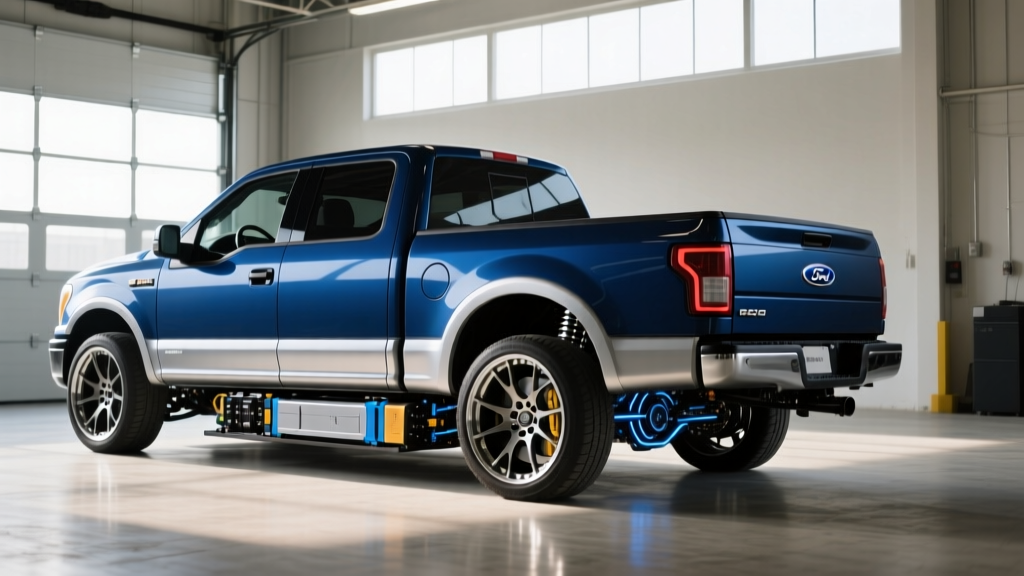
The 2002 Ford F-150 remains one of the most popular platforms for DIY electric vehicle conversions and restomod projects. Its body-on-frame construction, abundant aftermarket support, and straightforward mechanical layout make it an ideal candidate for dropping in a modern EV powertrain. But before you source wheels for your electric F-150 build — whether you're fitting it with a salvaged Tesla drive unit, a NetGain Hyper9 motor, or a Cascadia Motion system — you need to nail down the bolt pattern for 2002 Ford F-150 and understand how electric drivetrain weight changes your wheel and tire requirements.
This guide covers the exact bolt pattern specification, hub bore dimensions, and torque specs, then translates that data into practical advice for EV conversion builders selecting wheels, adapters, and tires that can handle the instant torque and altered weight distribution of an electrified F-150.
Exact Bolt Pattern for 2002 Ford F-150
The 2002 Ford F-150 uses a 6-lug bolt pattern measuring 6x139.7mm (also expressed as 6x5.5 inches). This is the same pattern Ford used across the F-150 lineup from 1997 through 2003 (the tenth generation), and it's shared with several other Ford trucks and SUVs of the era, including the Expedition and some Ranger configurations.
| Specification | Value |
|---|---|
| Bolt Pattern | 6x139.7mm (6x5.5") |
| Center Bore | 86.7mm (hub-centric) |
| Lug Thread Size | 1/2"-20 UNF |
| Lug Nut Torque Spec | 100 lb-ft (135 Nm) |
| Stock Wheel Diameter | 16" (base) / 17" (XLT/Lariat) |
| Stock Offset Range | +14mm to +25mm |
| Recommended Tire Size (stock) | 235/70R16 or 255/65R17 |
The hub-centric design means the center bore (86.7mm) carries a significant portion of the wheel load, not just the lug nuts. When sourcing aftermarket wheels or adapters for an EV swap, maintaining hub-centric fitment is critical — especially under the higher unsprung loads an electric powertrain introduces.
How EV Conversion Weight Changes Your Wheel Requirements
A stock 2002 F-150 with the 4.6L V8 weighs roughly 4,700-5,100 lbs depending on cab configuration and bed length. An EV conversion typically shifts that number significantly. Battery packs sized for 150-200 miles of range (roughly 60-100 kWh of usable capacity using modern NMC modules) add 800-1,500 lbs, though you're also removing the engine, transmission, fuel tank, and exhaust — recovering 400-600 lbs.
The net result is usually a converted F-150 weighing 5,200-5,800 lbs, with weight distribution shifted rearward if batteries are mounted in the bed or underfloor. This has direct implications for wheel selection:
Load Rating Requirements
Stock 16" F-150 wheels are typically rated for 1,800-2,100 lbs per wheel. For an EV-converted truck at 5,500+ lbs GVWR, you need wheels rated for at least 2,300-2,500 lbs per corner to maintain a safe margin, particularly under dynamic loads (cornering, braking, pothole impacts). Many lightweight aftermarket wheels designed for street trucks won't meet this threshold — look for wheels explicitly rated for heavy-duty or towing applications.
Torque and Lug Nut Considerations
Electric motors deliver instant torque from zero RPM. A typical EV conversion using a Tesla large drive unit or equivalent produces 300-450 lb-ft at the wheels (after gear reduction), applied instantly. This puts higher shear stress on lug nuts and wheel studs during hard launches than a stock V8's progressive torque curve. Always:
- Re-torque lug nuts after the first 50 miles post-installation
- Use grade-8 or ARP wheel studs if upgrading from stock
- Verify lug nut seat type (the 2002 F-150 uses a 60° conical seat)
- Consider switching to 14mm studs if running high-torque drive units
Wheel Adapter Options for EV Drivetrain Swaps
One of the most common challenges in an F-150 EV conversion is mating a salvaged EV drive unit (from a Tesla Model S/X, Chevrolet Bolt, or Nissan Leaf) to the Ford's 6x139.7mm bolt pattern. Tesla's drive units, for example, use a 5x120mm bolt pattern at the hub flange. This mismatch requires one of several solutions:
| Source Drivetrain | Source Bolt Pattern | Adapter Needed | Thickness Required |
|---|---|---|---|
| Tesla Model S/X (rear) | 5x120mm | 5x120 → 6x139.7 | 25-32mm |
| Chevrolet Bolt EV | 5x105mm | 5x10⁵ → 6x139.7 | 25-30mm |
| Nissan Leaf (custom subframe) | 5x114.3mm | 5x114.3 → 6x139.7 | 25-30mm |
| Custom CV axle (hub-centric) | N/A — custom hub | Machine hub to 6x139.7 | Varies |
Best Wheel and Tire Choices for an Electrified F-150
Once your bolt pattern and adapter setup are sorted, wheel and tire selection should prioritize three EV-specific factors: load capacity, rolling resistance (which directly affects range), and noise (since there's no engine masking tire noise).
Recommended Wheel Specs
- Diameter: 17" or 18" — gives enough sidewall for load capacity while clearing larger brake calipers if you've upgraded
- Width: 8"-9" — supports the wider tires needed for the increased vehicle weight
- Offset: +10mm to +20mm — maintains proper scrub radius with adapters
- Load Rating: Minimum 2,500 lbs per wheel (look for "Light Truck" or LT-rated wheels)
Tire Selection for EV Range Optimization
Low rolling resistance (LRR) tires can recover 5-10% of range compared to standard all-terrain tires on an EV conversion. For a converted F-150 with a 75 kWh usable pack, that's the difference between ~155 miles and ~170 miles of real-world range. Top picks include:
- Michelin Defender LTX M/S2 — LT-rated, low rolling resistance, excellent wet grip
- Bridgestone Alenza AS Ultra — highway-focused, quiet, EV-friendly compound
- Hankook iON evo AS — specifically engineered for EV weight and instant torque
Avoid aggressive mud-terrain or all-terrain tires unless your build is purpose-built for off-road use. The rolling resistance penalty on an EV conversion is severe — expect 15-20% range loss with 33" AT tires versus stock-size highway tires.
Real-World EV Conversion Specs: What to Expect
For builders planning a 2002 F-150 EV conversion, here are realistic performance and range figures based on common build configurations using modern components:
| Build Spec | Battery | Motor | Est. Range | 0-60 mph | Est. Cost |
|---|---|---|---|---|---|
| Budget Build | 45 kWh (used Leaf modules) | NetGain Hyper9 (120 hp) | 70-90 mi | 12-15 sec | $12,000-$18,000 |
| Mid-Range Build | 75 kWh (LG NMC modules) | Cascadia iM-225 (225 hp) | 140-170 mi | 7-9 sec | $22,000-$35,000 |
| Performance Build | 100 kWh (Tesla modules) | Tesla large drive unit (380 hp) | 180-220 mi | 4.5-5.5 sec | $35,000-$55,000 |
Charging Your Converted F-150: What You Need to Know
Charging infrastructure for a DIY EV conversion depends entirely on the BMS (Battery Management System) and onboard charger you select. Most 2002 F-150 EV conversions use one of these configurations:
| Charging Level | Power | Miles Added/Hour | Equipment Needed |
|---|---|---|---|
| Level 1 (120V) | 1.4-1.9 kW | 3-5 mi/hr | Standard J1772 EVSE + OEM charger |
| Level 2 (240V) | 3.3-7.2 kW | 10-25 mi/hr | J1772 EVSE + Elcon/TC Charger unit |
| Level 2 (240V, high-power) | 11.5-19.2 kW | 35-60 mi/hr | High-power onboard charger (Grizzly, etc.) |
| DC Fast Charge | 25-50 kW (typical) | 80-150 mi/hr | CCS-compatible BMS + DC inlet |
Most DIY conversions top out at Level 2 charging due to the complexity and cost of integrating DC fast-charge capability. A 7.2 kW onboard charger is the sweet spot for a 75 kWh pack — it'll replenish from 20-80% overnight in about 6-7 hours on a 240V/32A circuit. For the bolt pattern question specifically: if you're running adapter plates, ensure your charging inlet location (typically where the fuel filler was) doesn't interfere with wheel clearance at full steering lock.
Federal Tax Credits and Registration for Converted EVs
Unfortunately, DIY EV conversions of existing vehicles do not qualify for the federal §30D new clean vehicle tax credit (up to $7,500) or the used EV credit (up to $4,000). These credits apply only to vehicles purchased from a manufacturer or dealer that meet specific battery sourcing, MSRP caps, and buyer income requirements as outlined by the IRS §30D guidelines.
However, converted EVs do qualify for state-level benefits in many jurisdictions — including HOV lane access, reduced registration fees, and utility company rebates for home charger installation. Check your state's DMV and energy office for specific programs.
Registration requirements vary by state. Most states require a rebuilt/specially constructed vehicle inspection, VIN verification, and proof of insurance. Some states (California, Oregon, Washington) have streamlined processes for EV conversions; others require more extensive documentation.
Is a 2002 F-150 EV Conversion Worth It?
The honest answer depends on your goals. If you're looking for a cost-effective daily-driver EV truck, a conversion will almost certainly cost more and offer less range than buying a used production EV like a Ford F-150 Lightning (starting around $35,000-$40,000 on the used market in 2026) or a Rivian R1T. The Lightning offers EPA-estimated 240-320 miles of range, DC fast charging to 150+ kW, and a full warranty — things no DIY build can match.
Where the conversion shines is as a project vehicle, a learning platform, or a custom truck with character that no production EV can replicate. The 2002 F-150's simple frame, widely available parts, and straightforward 6x139.7mm bolt pattern make it one of the most accessible platforms for the job.
Choose a Conversion If:
- You want a hands-on engineering project with a practical outcome
- You need a specific body style or configuration unavailable in production EVs
- You're comfortable sourcing components, fabricating mounts, and troubleshooting
- You accept 100-170 miles of real-world range as adequate for your use case
Choose a Production EV Truck If:
- You need reliable daily transportation with warranty coverage
- You require 200+ miles of range and DC fast charging for road trips
- You want to qualify for federal and state EV tax credits
- You value dealer service support and proven safety ratings from IIHS and NHTSA
Frequently Asked Questions
What is the bolt pattern for a 2002 Ford F-150?
The 2002 Ford F-150 uses a 6x139.7mm bolt pattern (also written as 6x5.5 inches). It has 6 lug nuts on a 139.7mm bolt circle diameter, with an 86.7mm center bore and 1/2"-20 UNF lug thread.
Will F-150 wheels from other years fit a 2002 model?
F-150 wheels from 1997-2003 (10th generation) share the same 6x139.7mm bolt pattern and will bolt on directly. The 2004+ F-150 switched to a 6x135mm pattern — those wheels will NOT fit without adapters. Always verify the center bore (86.7mm for hub-centric fitment).
Can I use Tesla wheels on my F-150 EV conversion?
Not directly. Tesla wheels use a 5x120mm bolt pattern with a 64.1mm center bore. You'd need a 5x120-to-6x139.7 adapter plate, which adds thickness, changes offset, and increases bearing load. It's mechanically possible but not recommended — better to use wheels natively drilled for 6x139.7mm.
What torque spec should I use for lug nuts on a converted EV F-150?
The factory spec is 100 lb-ft (135 Nm) for the 1/2"-20 lug nuts. For an EV conversion with higher torque loads, maintain the 100 lb-ft spec but re-torque after the first 50 miles and inspect every 5,000 miles. If you've upgraded to aftermarket studs, follow the stud manufacturer's torque specification.
How much does a 2002 F-150 EV conversion cost?
Expect $12,000-$18,000 for a basic 70-90 mile range build, $22,000-$35,000 for a 140-170 mile mid-range build, and $35,000-$55,000 for a performance build with 180+ miles of range. These figures include battery, motor, controller, BMS, charger, and fabrication — but not the donor truck or body/paint work.
Do I need to upgrade the brakes on an EV-converted F-150?
Yes, in most cases. The added weight (500-800 lbs net increase) and regenerative braking's reduced effectiveness at emergency stopping distances mean you should upgrade to at least the Heavy-Duty payload package brakes (larger rotors and calipers from the 7700 GVWR F-150 variant). Many builders use aftermarket slotted rotors and performance pads to compensate.